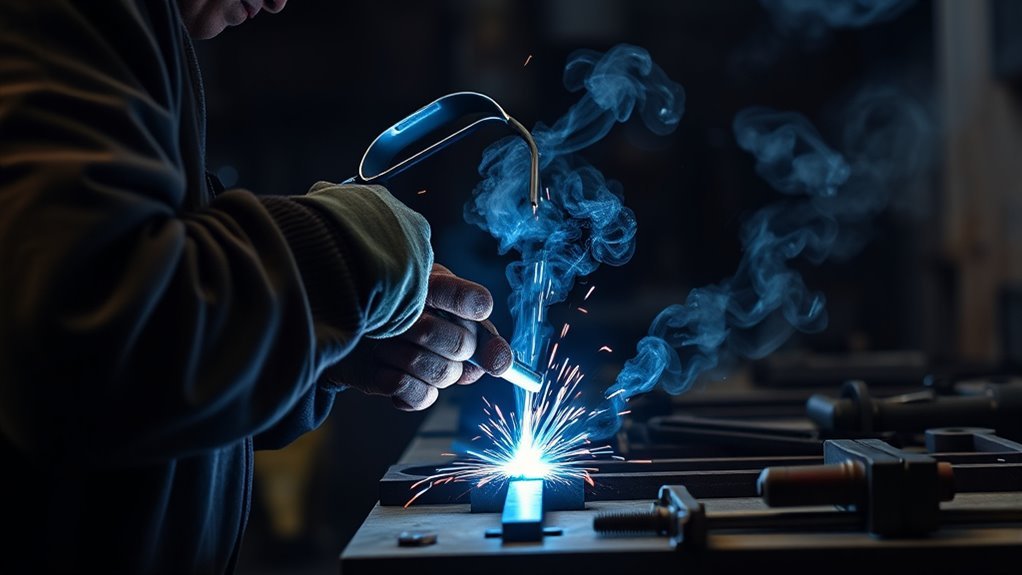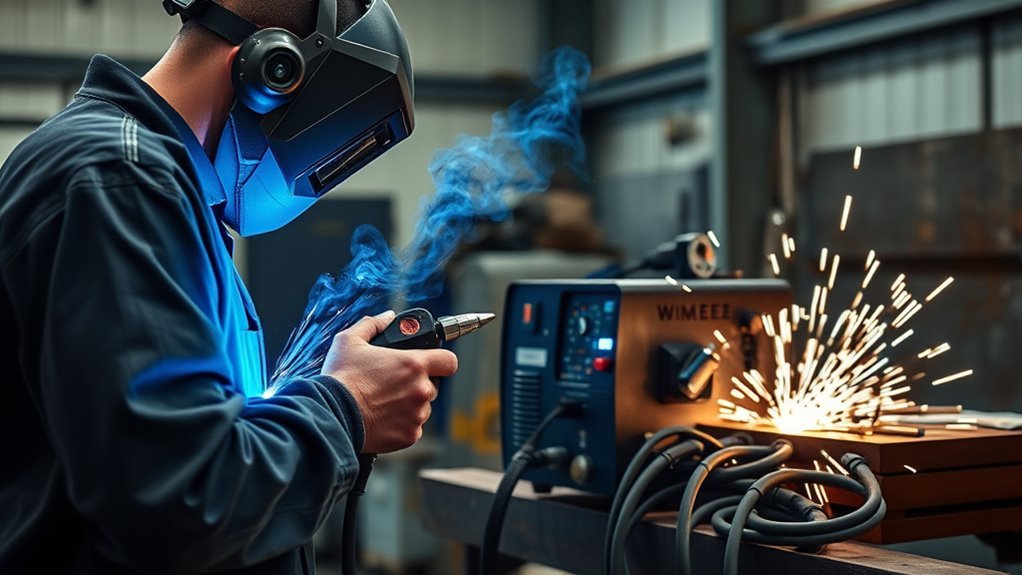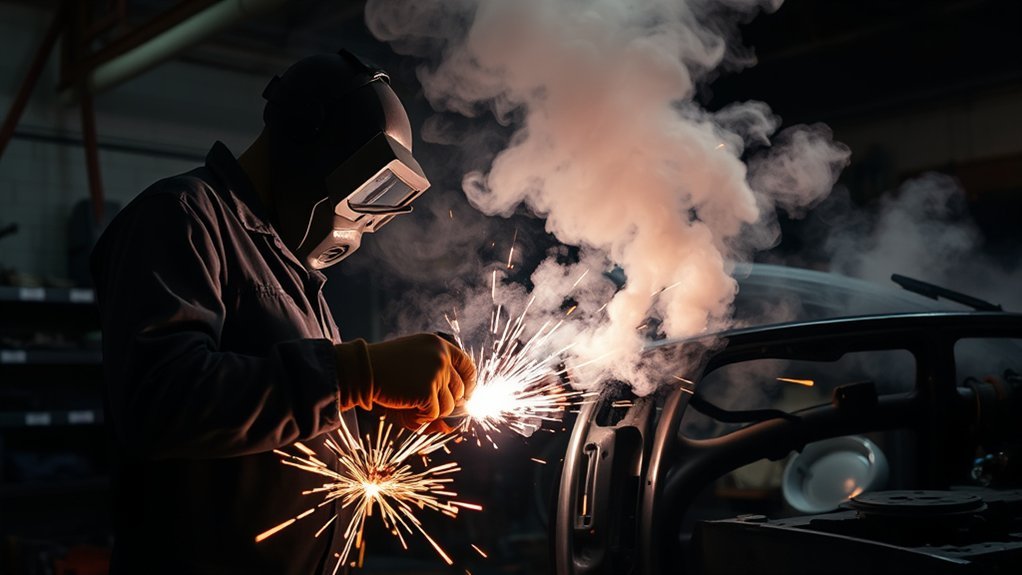
Welding fumes are not just ordinary smoke. They are a mix of tiny metal particles, gases, and by-products that can irritate your throat, damage your lungs, affect your nervous system, and raise long-term cancer risk when exposure is not controlled. The exact risk depends on what you weld, the filler metal, coatings, ventilation, work position, and how long you stay in the fume plume.
Quick Answer
Welding fumes can be dangerous because they may contain manganese, zinc oxide, hexavalent chromium, nickel, lead, cadmium, and other harmful substances. Protect yourself by cleaning coatings first, keeping your head out of the plume, using local exhaust ventilation, wearing the right respirator when needed, and monitoring air quality on higher-risk jobs.
Key Takeaways
- Welding fume composition changes with the base metal, filler wire, flux, coating, paint, primer, and shielding gas.
- Short-term exposure can cause throat irritation, coughing, chest tightness, headache, and metal fume fever, especially after welding galvanized metal.
- Long-term exposure can increase the risk of lung disease, neurological effects from manganese, and lung cancer.
- Local exhaust ventilation and source capture usually protect better than relying on a respirator alone.
- Confined-space welding needs atmospheric testing, ventilation, an attendant, and a rescue plan before work starts.
At a Glance
| Time Required | 5 to 10 minutes for a basic pre-job fume check; longer if air monitoring, coating removal, or confined-space setup is needed. |
| Difficulty | Moderate. Basic ventilation is simple, but respirator selection and exposure monitoring should be handled through a proper safety program. |
| Tools Needed | Local exhaust hood or fume extractor, clean air replacement, suitable respirator when required, welding helmet, gloves, flame-resistant clothing, and gas meter for confined spaces. |
| Cost | Varies widely. A simple fan is not enough for many jobs; proper local exhaust, air monitoring, and respirator programs may require professional setup. |
What Are Welding Fumes Made Of?
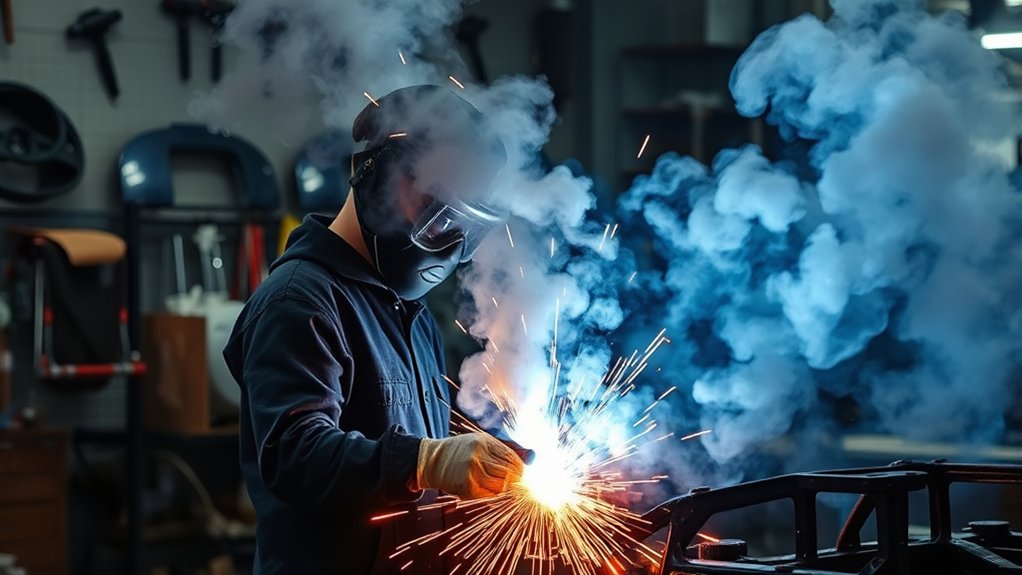
Welding fumes are made when intense heat vaporizes metal and other materials near the arc. As that vapor cools, it forms very small particles you can breathe deep into your lungs. The fume may include iron oxide, manganese, zinc oxide, nickel, chromium compounds, copper, aluminum, lead, cadmium, and other substances.
The exact mix depends on the job. Mild steel MIG welding usually creates a different fume than stainless steel TIG, flux-cored welding, stick welding, brazing, soldering, or welding over old coatings. Paint, primer, rust, oil, undercoating, zinc galvanizing, and plated parts can make the fume more hazardous.
CDC/NIOSH explains that welding fumes are composed of metals and that most welding fumes contain some manganese. Inhaled manganese is a concern because it can bypass some of the body’s normal defenses and may affect the lungs, liver, kidneys, and central nervous system when exposure is high or repeated. You can review the CDC/NIOSH welding fume guidance here: Welding Fumes and Manganese.
Stainless steel welding deserves extra care because it can create hexavalent chromium, also called Cr(VI). OSHA’s Chromium (VI) standard sets a permissible exposure limit of 5 micrograms per cubic meter of air as an 8-hour time-weighted average. That is why stainless work often needs local exhaust, air monitoring, and the right respiratory protection.
Note: Visible smoke is not a reliable exposure meter. A job can look only mildly smoky and still expose you to a specific metal or gas above a safe limit.
Acute vs. Chronic Health Effects of Welding Fumes
Welding fumes can affect you right away or after years of repeated exposure. Short-term symptoms often involve your eyes, nose, throat, lungs, and chest. Long-term effects may involve your lungs, nervous system, and cancer risk.
| Exposure Type | Possible Effects | Common Triggers |
|---|---|---|
| Acute exposure | Burning throat, coughing, shortness of breath, chest tightness, headache, dizziness, and eye irritation. | Poor ventilation, welding in the plume, enclosed work areas, coated metal, and long welds without breaks. |
| Metal fume fever | Flu-like symptoms such as fever, chills, muscle aches, dry throat, cough, metallic taste, headache, and weakness. | Often linked to zinc oxide fumes from welding, cutting, or heating galvanized steel. See the NIOSH zinc oxide entry. |
| Chronic exposure | Reduced lung function, chronic bronchitis-like symptoms, asthma-like symptoms, neurological effects, and higher lung cancer risk. | Repeated exposure over months or years, especially with poor source capture, stainless steel, manganese-containing filler, and dusty or confined work. |
| Carcinogenic risk | Welding fumes are classified as carcinogenic to humans by IARC. | Risk depends on exposure level, duration, material, process, and controls. See the IARC welding fume evaluation. |
Warning: Stop welding and get into fresh air if you feel chest tightness, unusual shortness of breath, dizziness, fever, chills, confusion, or a strong metallic taste. Get medical help right away for severe breathing trouble, chest pain, fainting, or symptoms that do not improve.
Which Auto Body Welding Jobs Create the Most Fume?
Auto body work can be risky because panels and frames are often coated, painted, galvanized, rusted, oily, or contaminated. The fume problem is not only the weld wire. It is everything that gets heated near the arc.
- Galvanized steel: Heating zinc coating can create zinc oxide fumes and metal fume fever. Grind or remove the coating from the weld zone when the repair procedure allows it, then use strong ventilation.
- Stainless steel: Stainless work can produce nickel compounds and hexavalent chromium. It often needs air monitoring and stricter fume controls.
- Painted or primed panels: Old paint, epoxy primer, undercoating, seam sealer, and body filler can release irritating or toxic decomposition products when heated.
- Flux-cored and stick welding: These often create more visible fume than clean TIG welding because flux ingredients add to the fume load.
- Confined or boxed sections: Rocker panels, frame rails, tanks, enclosed cavities, and tight shop corners can trap fume and shielding gas.
- Long welds and overhead work: The longer you weld, and the closer your breathing zone is to the plume, the higher your likely exposure.
Before welding on coated or unknown metal, clean the work area, check the safety data sheet for filler metals and coatings, and follow the vehicle or equipment repair procedure. Your shop’s effective ventilation setup should keep fumes moving away from your breathing zone, not across your face.
How to Reduce Welding Fume Exposure
The safest approach is to control the fume before it reaches your lungs. Do not treat a respirator as the first or only fix. Use layered controls.
- Remove the hazard when possible. Avoid welding on coated, plated, oily, or painted metal until the weld area is properly cleaned.
- Substitute a safer method when allowed. Use OEM-approved adhesives, mechanical fasteners, squeeze-type resistance spot welding, or lower-fume processes when the repair procedure permits them.
- Capture fume at the source. Use local exhaust ventilation, fume extraction guns, or movable hoods positioned close to the arc.
- Keep your head out of the plume. Position the work, your body, and the airflow so smoke moves away from your face.
- Limit exposure time. Take fresh-air breaks, rotate tasks, and avoid unnecessary welding in enclosed areas.
- Use respiratory protection when needed. Wear a properly selected, fit-tested respirator as part of a respiratory protection program.
- Monitor air when risk is high. Use personal breathing-zone sampling for stainless steel, manganese-heavy work, galvanized metal, confined spaces, and repeated production welding.
OSHA’s welding ventilation standard says local exhaust hoods should be placed as close as practicable to the work and arranged to remove fumes and smoke at the source. It also states that replacement air must be clean and respirable, and oxygen must not be used for ventilation. You can read the OSHA ventilation requirements here: 29 CFR 1926.353.
Pro Tip: Place the fume hood close enough to pull the plume away from your face, but not so close that it disrupts shielding gas and causes weld defects. If smoke curls past your helmet, adjust the hood, your body position, or both.
Products Worth Considering

99.97% Purification Rate: The FumeClear FC100A fume extractor is ideal for small bench soldering. It has a maximum no-load power of 100W and is highly effective at filtering dust particles below 0.3 microns. The purification efficiency far exceeds that of small fume smoker absorbers. Keep your eyes and lungs free from pollution. Note: The FC100A is not suitable for the fume extraction needs of large laser engravers. Please select the FC-2002, FC-2003 and FC-2004 fume extractor models if required

Powerful & Energy-Efficient: Equipped with a high-performance 585W AC motor, it delivers outstanding ventilation performance, achieving an airflow volume of 3198CFM. Quickly and thoroughly eliminate smoke, odors, and hot air.

【Soundproof Chamber with Acoustic + Damping Foam, Exclusive Downward Exhaust】 Most fume extractors have weak suction or loud noise. Zericuf solved this. The all-metal casing houses a soundproof chamber with acoustic and damping foam to trap motor noise—even at 320m³/h, noise stays below 58dB. Exclusive downward-sloping rear vent prevents hot exhaust from blowing onto your desk or floor. This design works with natural convection, dramatically reducing noise. Whether for soldering or laser cutting, Zericuf delivers power without the pain.
Respirators and PPE for Welding Fumes
PPE helps, but it does not replace ventilation. A disposable dust mask is not enough for many welding fume hazards. The right respirator depends on the metal, coating, fume concentration, oxygen level, and whether gases are present.
For some welding jobs, a properly fit-tested half-mask or full-face respirator with suitable particulate filters may be used. For higher exposures, poor ventilation, certain stainless steel work, or confined spaces, a powered air-purifying respirator or supplied-air respirator may be needed. In oxygen-deficient spaces, air-purifying respirators are not enough because they do not supply oxygen.
A proper respiratory protection program should include hazard assessment, respirator selection, medical clearance, fit testing, training, cleaning, storage, and filter change rules. Facial hair can break the seal on tight-fitting respirators, so fit matters as much as the filter rating.
Wear the rest of your PPE too: welding helmet, eye protection, flame-resistant clothing, gloves, hearing protection, and boots. Protective clothing reduces burns and spatter injuries, while ventilation systems and respirators reduce inhalation risks. For smaller soldering or bench work, a solder fume extractor may help with local capture, but it should not be treated as a substitute for industrial welding fume control when welding larger parts.
Products Worth Considering
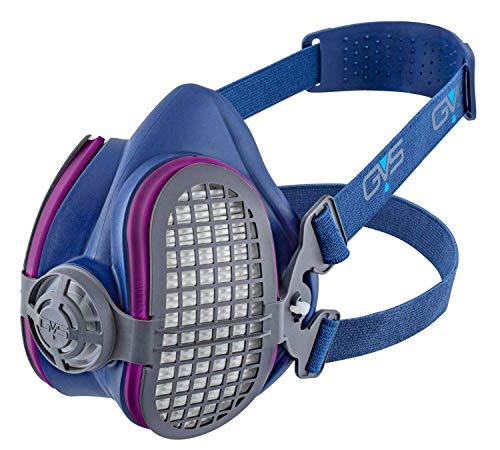
This mask is recommended for dust and fumes containing substances such as micro-organisms, marble, gypsum, titanium oxide, soapstone, rock wool, wood, detergents, textile fibres, spices, salt, animal feeds, etc.. Protects against dust that can cause lung disease. In particular, protects against coal, silica, cotton, iron ore, graphite, kaolin, zinc, aluminium dusts. Protects against harmful dusts such as asbestos, bauxite, coal, silica, iron, and against toxic dusts.
This is recommended for dust and fumes containing substances such as micro-organisms, marble, gypsum, titanium oxide, soapstone, rock wool, wood, detergents, textile fibres, spices, salt, animal feeds, etc.. Protects against dust that can cause lung disease. In particular, protects against coal, silica, cotton, iron ore, graphite, kaolin, zinc, aluminium dusts. Protects against harmful dusts such as asbestos, bauxite, coal, silica, iron, and against toxic dusts.

✅Arc & Flame Resistant for Life - This 7 oz material is a soft, breathable cotton. They will remain arc and flame retardant regardless of the washes and wear cycles. These cotton fr balaclavas are NFPA 70E Compliant, HRC / CAT 2, EBT = 12 cal/cm² and meet ASTM F1506.
Confined-Space Welding and Asphyxiation Risks
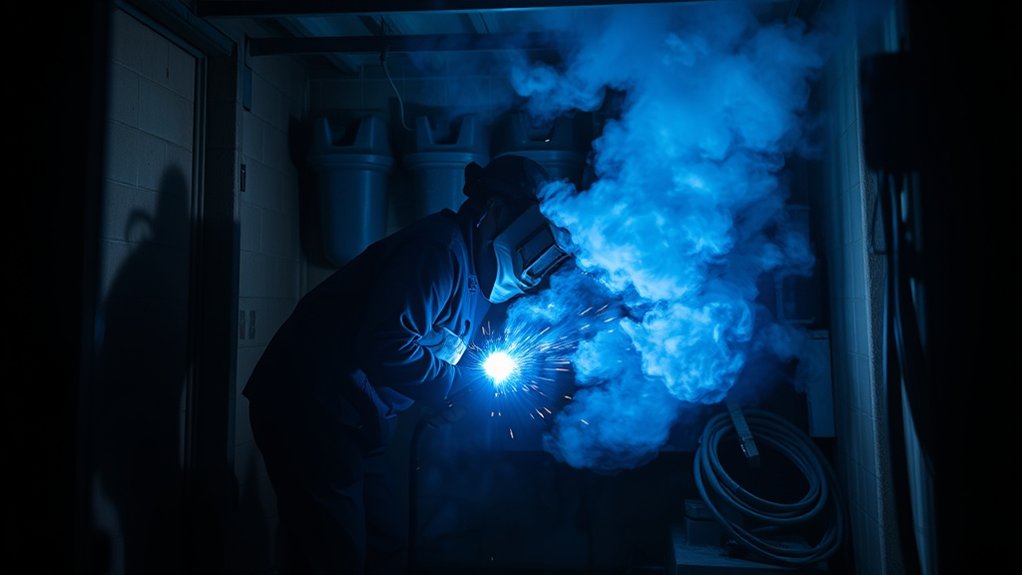
Confined spaces can become dangerous fast. Welding fumes can build up, and shielding gases such as argon or carbon dioxide can displace oxygen. You may not smell or see the danger before it affects you.
OSHA defines an oxygen-deficient atmosphere as less than 19.5% oxygen by volume. Do not enter or weld in a suspect confined space unless the atmosphere has been tested and safe entry controls are in place.
OSHA’s permit-required confined space standard covers spaces that may contain hazardous atmospheres or other serious hazards. Depending on the workplace, a permit-space program may require testing, ventilation, communication, an attendant, rescue procedures, and written authorization before entry.
| Safety Measure | What It Means |
|---|---|
| Atmospheric testing | Test oxygen, flammable gases, and toxic gases before entry and as conditions change. |
| Ventilation | Use general or local exhaust ventilation that keeps fumes and gases below applicable limits. |
| No oxygen for ventilation | Never use oxygen to blow dust, cool a worker, or ventilate a space. It can create a severe fire hazard. |
| Attendant and communication | A trained person outside the space should maintain contact and know how to start emergency response. |
| Rescue plan | Do not rely on an unplanned rescue. Many confined-space fatalities happen when someone rushes in to help without protection. |
Awareness of toxic fumes is only one part of confined-space safety. You also need oxygen testing, gas detection, ventilation, and a plan for what happens if conditions change during the job.
Health Monitoring and When to Get Help
Health monitoring matters if you weld often, weld stainless steel, work around manganese-containing filler, weld galvanized metal, or weld in areas where fume control is uncertain. Monitoring may include exposure sampling, lung function testing, medical review, and symptom tracking, depending on your workplace and the materials used.
Watch for symptoms that happen during welding or several hours after welding. These include coughing, wheezing, chest tightness, fever, chills, headache, metallic taste, unusual fatigue, tremor, poor balance, memory changes, or mood changes. Do not ignore repeated symptoms just because they improve after a night of rest.
Seek medical care if breathing symptoms are severe, if chest pain occurs, if flu-like symptoms appear after welding galvanized metal, or if neurological symptoms such as tremor, poor coordination, or slowed movement develop. Tell the clinician what you welded, what coatings were present, how long you were exposed, what ventilation was used, and what respirator you wore.
For employers and shop managers, health protection should include regular air quality assessments, maintenance of fume extraction systems, worker training, written procedures, and a respiratory protection program when respirators are required. Using mechanical ventilation correctly can reduce the concentration of harmful fumes, but it still needs inspection and maintenance to keep working.
Common Myths About Welding Fumes
Myth 1: If you cannot smell fumes, the air is safe. Some hazardous gases and oxygen displacement risks may not give you a useful smell warning. Use testing and ventilation, not smell.
Myth 2: Drinking milk protects your lungs. Milk does not stop inhaled metal particles from reaching your lungs. It may be a long-running shop myth, but it is not a fume-control method.
Myth 3: A fan behind you is always enough. A fan can push fumes across your breathing zone or disturb shielding gas. Source capture is usually better than random air movement.
Myth 4: Respirators solve everything. Respirators can help when properly selected and fit-tested, but they are the last layer after cleaning, substitution, ventilation, and safe work practices.
Frequently Asked Questions
Why do some welders have shorter lifespans?
Welding does not automatically mean a shorter life, but unmanaged exposure can raise health risks. Long-term inhalation of welding fumes, smoking, poor ventilation, confined-space work, burns, noise, and other shop hazards can all add up. Good ventilation, exposure monitoring, PPE, medical checks, and safer work practices reduce that risk.
Can your lungs heal from welding fumes?
Your lungs may recover from mild short-term irritation after exposure stops, especially if you get fresh air and avoid more fume. But repeated or heavy exposure can contribute to chronic lung problems that may not fully reverse. Get medical advice if you have chest tightness, wheezing, fever, shortness of breath, or symptoms that keep coming back after welding.
Why do welders drink milk?
Some welders drink milk because of an old belief that it protects against welding fumes or metal fume fever. It does not. Welding fumes are inhaled into your lungs, while milk goes through your digestive system. Use ventilation, source capture, clean metal, and proper respiratory protection instead.
Can fumes from welding make you sick?
Yes. Welding fumes can cause throat irritation, coughing, headache, dizziness, chest tightness, and flu-like metal fume fever. Long-term exposure can raise the risk of respiratory disease, neurological effects, and lung cancer. The risk is higher when ventilation is poor or when you weld galvanized, stainless, painted, or coated metal.
How do I know if my welding ventilation is good enough?
A good sign is that the plume moves away from your breathing zone and is captured near the arc. But the only reliable way to know exposure levels is air monitoring, especially for stainless steel, galvanized metal, manganese-heavy work, confined spaces, or repeated production welding. If fumes pass your face, the setup needs adjustment.
Is stainless steel welding more hazardous than mild steel welding?
It can be. Stainless steel welding may create hexavalent chromium and nickel compounds, which need stricter control than ordinary mild steel fumes. Use local exhaust, avoid breathing the plume, follow your shop’s exposure assessment, and use the required respirator when ventilation alone does not control exposure.
Conclusion
Welding fumes deserve serious attention because they can affect your lungs, nervous system, and long-term health. The best protection is not one single item of gear. It is a system: clean the metal, avoid coated materials when possible, capture fumes at the source, keep your head out of the plume, monitor high-risk exposures, and use the right respirator when needed. If you weld in a confined space or feel symptoms after welding, stop and treat it as a real safety issue, not just part of the job.
Sources
- International Agency for Research on Cancer, welding fumes evaluation — backs up the carcinogenic classification of welding fumes.
- CDC/NIOSH, Welding Fumes and Manganese — backs up manganese exposure and neurological risk discussion.
- CDC/NIOSH Pocket Guide, Zinc Oxide — backs up metal fume fever symptoms linked to zinc oxide fumes.
- OSHA 29 CFR 1926.353, Ventilation and protection in welding, cutting, and heating — backs up local exhaust, confined-space ventilation, clean replacement air, and no oxygen for ventilation.
- OSHA 29 CFR 1910.1026, Chromium (VI) — backs up the Cr(VI) action level and permissible exposure limit.
- OSHA 29 CFR 1910.146, Permit-required confined spaces — backs up oxygen-deficient atmosphere and permit-space hazard controls.