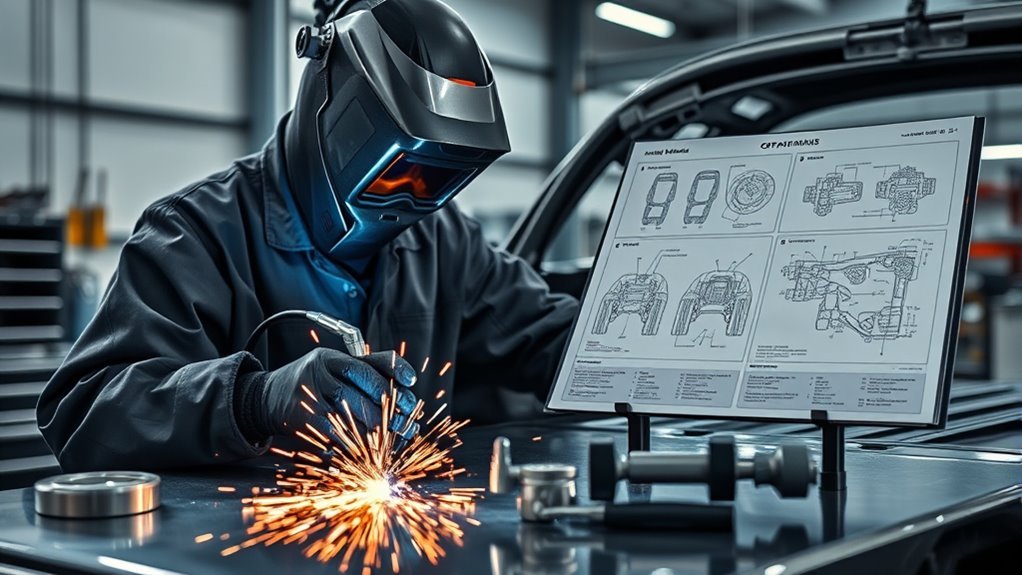
OEM welding procedures are manufacturer-approved instructions that tell you how to weld a specific part, joint, or assembly without guessing. They define the approved welding process, base material, filler metal, joint design, heat input range, equipment settings, inspection method, and acceptance criteria. When you follow them, you protect weld quality, meet manufacturer requirements, and create records that can stand up during audits, warranty reviews, or safety investigations.
Quick Answer
OEM welding procedures are the manufacturer’s approved welding instructions for a specific part or assembly. They tell you which process, material, filler, joint design, settings, qualifications, and inspections to use so the weld matches the original design intent and meets the required standard.
Key Takeaways
- OEM welding procedures are not shop preferences. They are controlled instructions tied to a specific manufacturer, part, material, and revision.
- A WPS tells you how to weld. A PQR or WPQR proves the procedure can make an acceptable weld. A WPQ or welder qualification record proves the welder can perform the required weld.
- Compliance depends on matching the latest OEM document, approved WPS, qualified welder, correct filler, calibrated equipment, and required inspection records.
- Never override an OEM procedure without written engineering, manufacturer, or code-approved direction.
At a Glance
| Time Required | 15 to 60 minutes for a document check; longer if procedure qualification, test coupons, or third-party inspection is required. |
| Difficulty | Intermediate to advanced, depending on the code, material, joint access, and inspection requirements. |
| Tools Needed | OEM procedure, approved WPS, PQR or WPQR, welder qualification records, material specs, filler data, inspection plan, calibration records, PPE, and job traveler. |
| Cost | Varies by document access, test coupons, inspection, code review, and whether a new procedure qualification is needed. |
What Are OEM Welding Procedures?
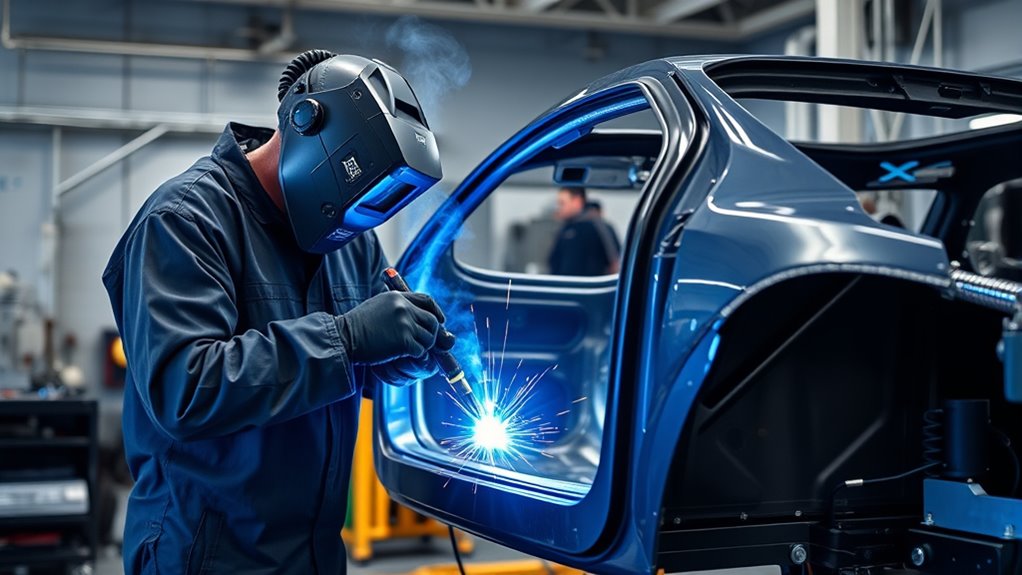
OEM welding procedures are standardized methods developed or approved by an Original Equipment Manufacturer. You use them as controlled instructions for welding a specific component, vehicle structure, machine frame, pressure part, bracket, casting, or assembly.
These procedures usually point to a Welding Procedure Specification, or WPS. The WPS tells you the approved welding process, base material, joint design, filler metal, shielding gas, preheat, interpass temperature, polarity, voltage, amperage, travel speed, position, and technique. It also tells you what the finished weld must look like and how it will be inspected.
A strong OEM procedure does more than say “weld here.” It connects the weld to the manufacturer’s design intent. That means the procedure should match the correct material grade, part revision, joint location, load path, corrosion protection, and inspection standard.
OEM welding procedures turn a weld from guesswork into a controlled, repeatable process with defined materials, settings, inspection criteria, and records.
Well-documented OEM welding procedures also create traceability. You can show who made the weld, which revision they followed, which filler lot they used, what settings were recorded, and which inspection results were accepted. That record strengthens accountability and simplifies audits.
In practice, you depend on these procedures to limit variation, protect product integrity, and keep production under disciplined control. If a design calls for a fillet weld, the WPS and drawing should also control size limits, because excessive weld size can create distortion or unwanted stress. Understanding maximum fillet weld size guidelines helps support the structural integrity of welded joints.
WPS vs. PQR vs. WPQ: Know the Difference
One of the biggest mistakes in welding documentation is using WPS, PQR, and WPQ as if they mean the same thing. They do not. Each document answers a different compliance question.
| Document | What It Means | What It Proves |
|---|---|---|
| WPS | Welding Procedure Specification | The approved instructions for making the weld. |
| PQR / WPQR | Procedure Qualification Record / Welding Procedure Qualification Record | The test weld and results used to qualify the procedure. |
| WPQ / WQTR | Welder Performance Qualification / Welder Qualification Test Record | The welder can make acceptable welds within the qualified range. |
| Inspection record | Visual, dimensional, destructive, or nondestructive test record | The completed weld meets acceptance criteria. |
For pressure equipment, ASME BPVC Section IX is a common qualification standard for welding, brazing, and fusing. For structural steel, AWS D1.1 is commonly used. For ISO-based systems, ISO 15609 covers welding procedure specifications, while ISO 15612 may apply when a standard welding procedure is adopted. Use the standard named by the drawing, purchase order, contract, repair manual, or governing code.
Note: “OEM approved” does not automatically mean “code qualified.” You still need the required WPS, qualification record, welder qualification, inspection method, and revision control named by the job.
Why OEM Welding Procedures Matter
Because they are tailored to specific manufacturing or repair requirements, OEM welding procedures help you produce consistent welds across repeated work. You gain tighter control over the welding process, so the finished joint does not depend only on habit, memory, or operator preference.
By following OEM welding procedures, you reduce defects that can lead to cracks, poor fusion, porosity, distortion, corrosion problems, rejected inspections, warranty disputes, or unsafe service performance.
- They align your work with the manufacturer’s design intent.
- They help control heat input, penetration, bead profile, and distortion.
- They tell welders which filler, settings, joint prep, and position are allowed.
- They make training easier because everyone follows the same controlled method.
- They make audits and inspections faster because the documentation is clear.
- They support proper metal preparation techniques, which are critical for weld quality.
When you treat these procedures as operational rules, you create a more reliable and transparent welding environment. You also reduce the chance that one person’s shortcut becomes a repeat defect across several parts.
What Goes Into an OEM Procedure
When you examine an OEM procedure, look for the elements that control materials, joint design, welding parameters, inspection criteria, and documentation. If any of these items are missing, unclear, or out of revision, stop and clarify before welding.
You also need to verify specification and qualification details. They establish who can perform the weld, which process controls apply, and how the procedure was validated. Understanding common metals and their characteristics can also help you understand why one OEM procedure cannot simply be copied to another material.
Essential Procedure Elements
At the core of an OEM welding procedure are the variables that control weld quality and repeatability. These variables may include:
- Base metal: grade, thickness range, coating, heat treatment, and material group.
- Welding process: GMAW, GTAW, SMAW, FCAW, resistance spot welding, laser welding, friction stir welding, or another approved method.
- Joint design: groove, fillet, lap, plug, slot, flange, edge preparation, root gap, bevel angle, and fit-up tolerance.
- Filler metal: classification, diameter, lot control, storage requirements, and compatibility.
- Electrical settings: current, voltage, polarity, wire feed speed, pulsing mode, and travel speed.
- Thermal controls: preheat, interpass temperature, heat input limits, cooling rate, and post-weld heat treatment if required.
- Welding position: flat, horizontal, vertical, overhead, pipe position, or robotic orientation.
- Technique: torch angle, stickout, weave limits, pass sequence, backstep, stringer bead, or multi-pass sequence.
- Inspection: visual acceptance criteria, dimensional checks, destructive testing, nondestructive examination, or sample coupon testing.
- Documentation: revision number, operator ID, machine ID, calibration status, consumable lot, inspection signoff, and deviation approval.
Specification and Qualification
Once the procedure variables are set, the OEM process is formalized through documents. The Welding Procedure Specification tells the welder what to do. The Procedure Qualification Record or Welding Procedure Qualification Record shows the test conditions and results used to qualify that procedure. The welder qualification record shows whether a specific welder is qualified for the process, position, material, and range required.
This structure gives you traceability and accountability across production. It also helps you meet regulatory or customer requirements without ambiguity. When you follow these controls, you do more than satisfy paperwork. You protect weld integrity, reduce liability, and keep your process technically defensible.
Pro Tip: Do not qualify the job by memory. Build a small document packet before welding: OEM revision, drawing, WPS, PQR, welder qualification, filler data, equipment calibration, and inspection plan.
How OEM Procedures Protect Weld Quality
OEM welding procedures protect weld quality by standardizing the exact technique, filler material, process parameters, and acceptance criteria you must follow. That keeps the weld aligned with the part’s design intent.
You maintain control over OEM specifications, reduce defects, and preserve weld integrity across every joint you make. These welding procedures lock in quality standards from one production run to the next, so output does not drift with operator preference or shop variability.
OEM welding procedures keep your welds consistent, reduce defects, and preserve integrity across every joint you make.
- You follow defined settings that keep heat input, penetration, and bead profile within limits.
- You use fit-up and cleaning requirements to reduce porosity, lack of fusion, and contamination.
- You use testing and inspection to verify each weld against acceptance criteria.
- You support regulatory compliance with documented, repeatable process control.
- You protect critical components in aerospace, automotive, structural, pressure, and other high-consequence applications by following required safety protocols.
Warning: An OEM welding procedure does not replace hot-work safety rules. Follow site permits, ventilation rules, fire protection, eye protection, PPE, and applicable OSHA requirements before welding.
When to Write Custom OEM Procedures

When standard WPSs do not fully cover your material, geometry, process, or compliance requirements, you need a custom OEM procedure or a procedure approved through the required engineering channel. Use custom procedures when unique project requirements, non-standard materials, unusual thicknesses, coatings, restricted access, or complex geometries push beyond preset limits.
Custom work requires more than changing a machine setting. You need to analyze the base metal, filler metal, heat input, joint access, distortion risk, cleaning method, and inspection criteria. That analysis supports better weld quality and tighter defect reduction.
In welding aluminum, proper cleaning techniques are essential to reduce contamination and porosity. However, never substitute an aluminum method, filler, or process unless the OEM procedure or qualified engineering authority allows it.
| Trigger | Why It Matters | Result |
|---|---|---|
| Non-standard materials | Standard WPSs may not cover weldability or heat response | Better material-specific control |
| Complex geometries | Access, restraint, and distortion change the weld behavior | Controlled weld sequence |
| Sector rules | Automotive, aerospace, structural, and pressure work differ | Stronger compliance |
| Harsh conditions | Heat, moisture, corrosion, vibration, and fatigue matter | Better long-term integrity |
| Critical parts | Failure costs are high | Improved safety and reliability |
Custom procedures help you specify parameters that protect performance without using a blanket method that does not match the job. They also give inspectors, welders, and supervisors one controlled standard to follow.
How to Check for OEM Compliance
You should start by reviewing the OEM documents and applicable project specifications. Then verify that your WPS matches those requirements and that each process, parameter, qualification step, and inspection record is documented.
Finally, confirm code compliance against the stated standard, such as ASME Section IX, AWS D1.1, ISO 15609, ISO 15612, or another standard named by the contract. Good visibility also matters during weld prep and inspection, so suitable eye and face protection, lighting, and true-color optics can help welders see the puddle and joint clearly while staying protected.
Products Worth Considering

SUPERIOR PROTECTION — Experience all-around face protection thanks to the curved design of this faceshield. The visor of this face guard is ANSI Z87+ certified, and up to 2x thicker for increased durability. Plus, you can comfortably wear your grinding face shield over prescription glasses.

Detachable Design: Our welding helmet offers the convenience of a separable design where the face shield and the welding goggles can be detached, ensuring an easier and more comfortable use for welders.

✅Arc & Flame Resistant for Life - This 7 oz material is a soft, breathable cotton. They will remain arc and flame retardant regardless of the washes and wear cycles. These cotton fr balaclavas are NFPA 70E Compliant, HRC / CAT 2, EBT = 12 cal/cm² and meet ASTM F1506.
Review OEM Documents
To verify OEM compliance, review the welding documents against the manufacturer’s requirements. Confirm that the WPS matches the stated materials, processes, equipment, joint design, and performance limits.
- Confirm the OEM document number, revision level, and effective date.
- Check that the drawing, repair manual, job traveler, and WPS all describe the same joint.
- Verify base metal grade, thickness, coating, and heat treatment condition.
- Check consumables, shielding gas, preheat, interpass temperature, and equipment settings.
- Verify qualification records before welding starts.
- Record findings so the compliance review is traceable.
When you document your findings, you create traceable proof of conformance and reduce liability, warranty, and rework exposure.
Verify WPS Alignment
Verify WPS alignment by comparing the Welding Procedure Specification against the OEM’s stated requirements and the supporting qualification records. Confirm the process, materials, consumables, equipment settings, and performance limits all match.
Trace each WPS variable to the OEM documentation. Make sure the revision is controlled and that old printed copies are removed from the work area. Use a traceable system for welder qualifications and recordkeeping so your compliance evidence stays auditable.
Conduct regular audits of welding procedures against the WPS to expose deviations before they spread. When you find gaps, correct them immediately to protect quality standards and maintain verification integrity.
If you ignore non-compliance, you risk product failures, rejected inspections, safety hazards, warranty denials, and greater liability.
Confirm Code Compliance
Once the WPS is aligned with the OEM’s requirements, check that it also satisfies the governing code framework named by the job. Do not assume every job uses the same code. Structural, pressure, automotive, aerospace, and repair work can have different requirements.
Review the WPS for code compliance. Confirm welding methods, materials, techniques, qualification ranges, and inspection criteria match the applicable standard and customer requirements.
- Check documentation against the required standard and revision.
- Confirm essential variables are explicitly defined.
- Verify welder qualifications for process, position, and material range.
- Use qualified inspectors or certified welding inspectors when required.
- Perform audits to catch deviations early.
Before, During, and After Welding Checklist
A practical compliance check should cover the full job, not just the final bead. Use this workflow before you start, while you weld, and after inspection.
Products Worth Considering

Our DOT multi-point inspection report forms included all information needed to estimate for any type of vehicle and designed to cover all critical aspects of a multi-point check.

Comprehensive Coverage: our package includes 540 sheets of multipoint vehicle inspection sheets across 6 pads, perfect for all your car inspection needs; Each book has 90 sheets: 30 sheets each of white, pink, and yellow carbonless copies, ensuring a thorough vehicle inspection report every time

AUTO VISUAL VEHICLE INSPECTION FORMS: Designed for professional use as a visual vehicle inspection report, these automotive inspection forms support multi-point vehicle checkups in auto repair shops, dealerships, and service centers.
Before Welding
- Confirm you have the latest OEM procedure and drawing revision.
- Verify the WPS matches the material, thickness, joint, and process.
- Check the PQR or WPQR if the procedure requires qualification support.
- Confirm the welder is qualified for the process, position, and material range.
- Inspect fit-up, cleaning, edge prep, backing, clamps, and access.
- Confirm filler metal, gas, electrodes, storage, and lot control.
- Check machine calibration and required PPE.
During Welding
- Record current, voltage, wire feed speed, travel speed, and heat input when required.
- Monitor preheat and interpass temperature.
- Follow the approved pass sequence and technique limits.
- Stop if joint fit-up, material condition, access, or settings fall outside the WPS.
- Keep unauthorized tools, filler metals, and settings out of the work area.
After Welding
- Perform visual inspection before coating, grinding, or hiding the weld.
- Check weld size, length, location, contour, undercut, cracks, porosity, and spatter limits.
- Complete required nondestructive or destructive testing.
- Record inspection results and any repair welds.
- Attach signoffs, photos, machine records, and traceability documents to the job packet.
Common Mistakes That Cause Non-Compliance
Most OEM welding failures start before the arc. They happen when the job is set up from memory instead of the current procedure.
- Using the wrong revision: An old OEM procedure may list outdated filler, locations, or inspection criteria.
- Substituting filler metal: A similar wire or rod is not always acceptable.
- Skipping material verification: Coated, heat-treated, high-strength, stainless, or aluminum parts may need special controls.
- Changing heat input: More heat can distort parts, weaken heat-treated material, or damage coatings.
- Ignoring qualification range: A welder qualified in one position or thickness range may not be qualified for another.
- Repairing without approval: Weld repairs often need a separate repair procedure and inspection step.
- Weak records: If you cannot prove what was done, compliance becomes difficult to defend.
Note: If the OEM instruction, WPS, drawing, or code requirement conflicts, do not choose the easiest option. Stop and get written clarification from the responsible engineer, OEM, inspector, or contract authority.
Documentation and Traceability Records to Keep
Good welding documentation protects the shop as much as the customer. It shows that the correct procedure was available, the welder was qualified, the materials were controlled, and the weld met acceptance criteria.
Keep these records with the job when they apply:
- OEM welding procedure number and revision.
- Engineering drawing, repair manual page, or work instruction.
- Approved WPS and supporting PQR or WPQR.
- Welder qualification records.
- Material certificates or material identification records.
- Filler metal classification, lot number, and storage record.
- Shielding gas type and mixture.
- Machine identification and calibration status.
- Preheat, interpass temperature, and heat input records.
- Inspection reports, NDE reports, photos, and signoffs.
- Deviation approvals, repair approvals, and reinspection records.
This record set creates the audit trail. If the weld is questioned later, you can show the procedure, the qualification basis, the person who performed the work, and the inspection evidence.
Safety Requirements Still Apply
OEM procedures focus on how to make the weld meet the manufacturer’s requirement. They do not remove your duty to follow hot-work safety rules. Welding can create fire hazards, arc radiation, fumes, electrical risk, burns, and confined-space hazards.
Before welding, check local rules, site permits, ventilation, fire protection, PPE, and the work area. OSHA 1910.252 covers general welding, cutting, and brazing requirements, including fire prevention and eye protection. In a shop, that usually means controlling combustibles, using the right helmet or shield, protecting nearby workers, and keeping fire extinguishing equipment ready.
Do not weld in explosive atmospheres, on uncleaned containers, near unprotected combustibles, or in a confined space unless the required controls are in place. Safety compliance and OEM weld compliance must work together.
Frequently Asked Questions
What are the 5 essential procedures in welding?
The five practical stages are preparation, welding execution, inspection, documentation, and maintenance or repair control. In OEM work, preparation includes material verification, WPS review, joint fit-up, filler selection, safety setup, and welder qualification. Inspection and documentation are just as important as the weld itself.
Why do welders face health risks?
Welders can face risks from fumes, gases, heat, arc radiation, noise, awkward posture, and fire hazards. The risk is not from welding alone, but from uncontrolled exposure and weak safety practices. Use ventilation, correct PPE, eye protection, fire prevention, and site-specific hot-work controls.
Why is a WPS important?
A WPS is important because it gives the welder approved instructions for making a repeatable weld. It controls process, material, filler, joint design, heat input, position, technique, and inspection criteria. Without it, weld quality can vary from person to person.
What is a WPQ in welding?
WPQ usually means Welder Performance Qualification. It documents that a welder has passed a test within a defined range, such as process, position, material, thickness, and joint type. It is different from a PQR or WPQR, which supports qualification of the welding procedure.
Can I change an OEM welding procedure if my shop has a better method?
No, not without written approval from the responsible authority. A shop method may be faster or familiar, but it is not automatically OEM compliant. Changes to filler metal, weld location, heat input, joint design, or inspection method may require engineering approval and procedure requalification.
How do I know if I am using the latest OEM welding procedure?
Check the document number, revision level, effective date, and source system. Use the OEM service portal, engineering document control system, customer specification, or approved repair manual. Remove old printed copies from the work area so welders do not follow outdated instructions.
Conclusion
When you follow OEM welding procedures, you reduce guesswork and protect weld integrity where it matters most. You also create proof that the weld was made with the right process, material, filler, settings, qualification, inspection, and revision.
The safest approach is simple: verify the current OEM document, match the WPS, confirm qualification records, control the weld variables, inspect the result, and keep the records. If the procedure is unclear or conflicts with another requirement, stop and get written clarification before welding. That discipline protects safety, repeatability, warranty coverage, and long-term performance.
Sources
- ASME BPVC Section IX: Welding, Brazing, and Fusing Qualifications — supports procedure and performance qualification context.
- OSHA 1910.252 Welding, Cutting, and Brazing General Requirements — supports hot-work safety, fire prevention, and eye protection guidance.
- American Welding Society Standards — supports use of AWS welding codes and standards.
- ISO 15609-1 Welding Procedure Specification — supports ISO-based WPS documentation context.
- ISO 3834 Quality Requirements for Fusion Welding — supports welding quality-management context.