Weld contamination in auto body work happens when oil, grease, rust, paint, moisture, zinc coating, dirty filler wire, or poor shielding gas reaches the weld zone. These contaminants can cause porosity, weak fusion, cracking, excess spatter, and fumes. Clean metal, dry consumables, steady gas coverage, and safe ventilation are the main ways to prevent it.
Quick Answer
The most common causes of weld contamination in auto body work are dirty metal, moisture, coatings, poor shielding gas coverage, and contaminated filler metal. Remove paint, rust, oil, seam sealer, and moisture before welding, then check gas flow, gun parts, and consumable storage before striking an arc.
Key Takeaways
- Porosity usually points to trapped gas from poor shielding, moisture, paint, oil, grease, rust, or dirty filler metal.
- Clean the weld area to bright metal unless the OEM repair procedure says otherwise for a specific collision repair process.
- Drafts, fans, leaks, clogged nozzles, and excessive gas flow can all pull air into the weld pool.
- Moisture in electrodes, flux, filler wire, or the panel surface can introduce hydrogen and weaken the weld.
- After welding, restore corrosion protection on repaired auto body panels to protect the joint long term.
At a Glance
| Time Required | 10 to 30 minutes for cleaning and inspection before welding |
| Difficulty | Beginner to intermediate, depending on the panel, metal type, and repair procedure |
| Tools Needed | Degreaser, lint-free cloths, grinder or abrasive disc, wire brush, clean gloves, dry filler metal, flowmeter, and PPE |
| Cost | Usually $0 to $30 in cleaning supplies if you already have welding equipment |
Warning: Welding over paint, galvanized coating, seam sealer, adhesive, solvent residue, or dirty metal can create hazardous fumes and weak welds. Read the product Safety Data Sheet, use proper ventilation, wear suitable welding PPE, and follow the vehicle maker’s collision repair procedure before welding structural parts.
Understanding Weld Contaminants in Auto Body Work
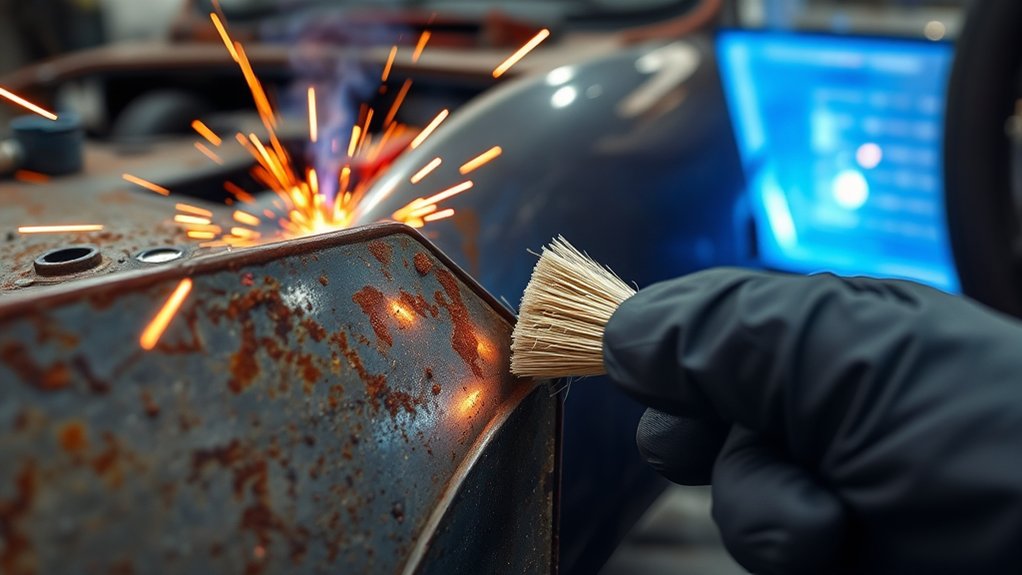
Weld contaminants are unwanted materials that enter the weld area before or during welding. In auto body work, they often come from old paint, primer, undercoating, seam sealer, panel adhesive, rust, road grime, body filler dust, galvanizing, or oils from your hands.
These contaminants fall into three practical groups:
- Surface contaminants: oil, grease, wax, rust, paint, mill scale, zinc coating, and sanding dust on the base metal.
- Consumable contaminants: rusty filler wire, damp electrodes, dirty filler rods, wet flux, or wire that picked up shop dust.
- Process contaminants: poor shielding gas, air leaks, drafts, clogged nozzles, wrong gas flow, or moisture in the weld area.
When these materials reach the molten weld pool, they can create trapped gas, poor wetting, lack of fusion, spatter, cracking, and weak joints. That is why proper cleaning techniques matter before welding, not after a defect appears.
Common Sources of Contamination During Welding
The most common sources of weld contamination are dirty metal, moisture, poor shielding gas coverage, and poorly maintained welding equipment. In auto body repair, you also need to watch for factory coatings and repair materials that may be hidden between panels.
Surface Contaminants and Their Impact
Surface contaminants can release gas, block fusion, or produce fumes when heated. Even a small amount of oil or paint near a plug weld can cause pinholes or wormholes. Rust and scale can keep the weld from tying into clean metal.
| Contaminant Type | How It Affects the Weld |
|---|---|
| Paint and primer | Can release gases and cause porosity, wormholes, soot, and fumes. |
| Oil, wax, and grease | Can add hydrogen and carbon-rich residue, leading to porosity and poor fusion. |
| Rust and scale | Can prevent clean bonding and trap oxygen or moisture near the weld. |
| Zinc coating | Can produce fumes and may contribute to porosity if the repair procedure does not account for it. |
| Antispatter compound | Can contaminate the joint if sprayed into the weld zone instead of around it. |
Environmental Factors That Affect Weld Cleanliness
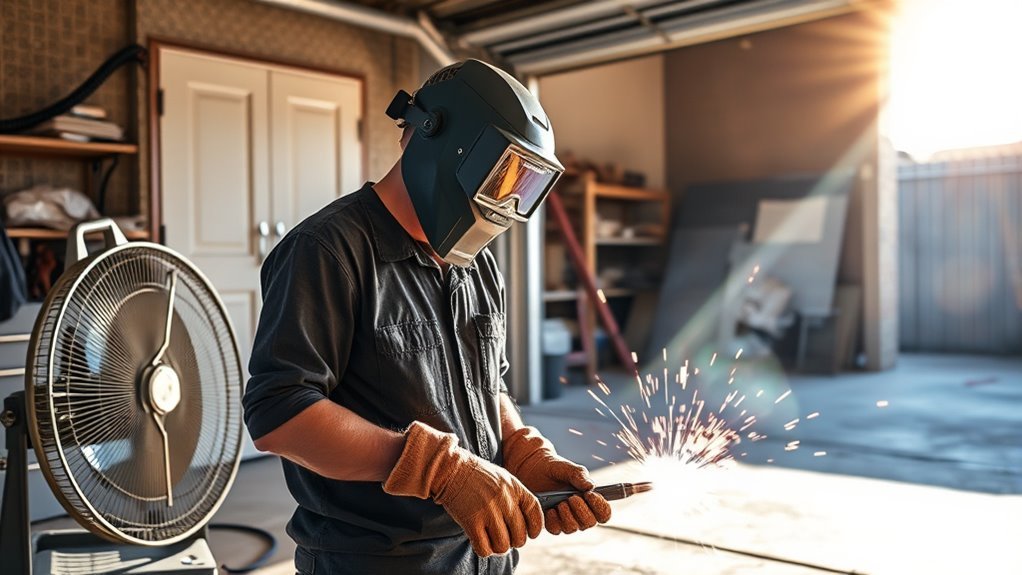
Drafts, fans, open doors, and outdoor wind can disturb shielding gas and let oxygen or nitrogen enter the weld pool. That can cause porosity even when the metal looks clean. Moisture is another problem because condensation on cold panels can turn into hydrogen in the arc.
If you are welding in a cold shop, near a fan, or close to an open bay door, check for drafts before blaming the machine settings. Shield the work area, stop direct airflow across the arc, and make a test weld on clean scrap before welding the vehicle panel.
Equipment Maintenance Necessity
Dirty or damaged welding equipment can contaminate a weld even after careful panel prep. Inspect the gas hose, regulator, fittings, nozzle, diffuser, contact tip, liner, and ground clamp. A plugged nozzle can restrict gas flow. A cracked hose or loose fitting can pull air into the gas stream.
For GMAW/MIG welding, clean spatter from the nozzle and confirm gas flow at the gun, not only at the cylinder regulator. A regulator reading does not prove the weld pool is getting clean shielding gas.
How Surface Conditions Affect Weld Contamination
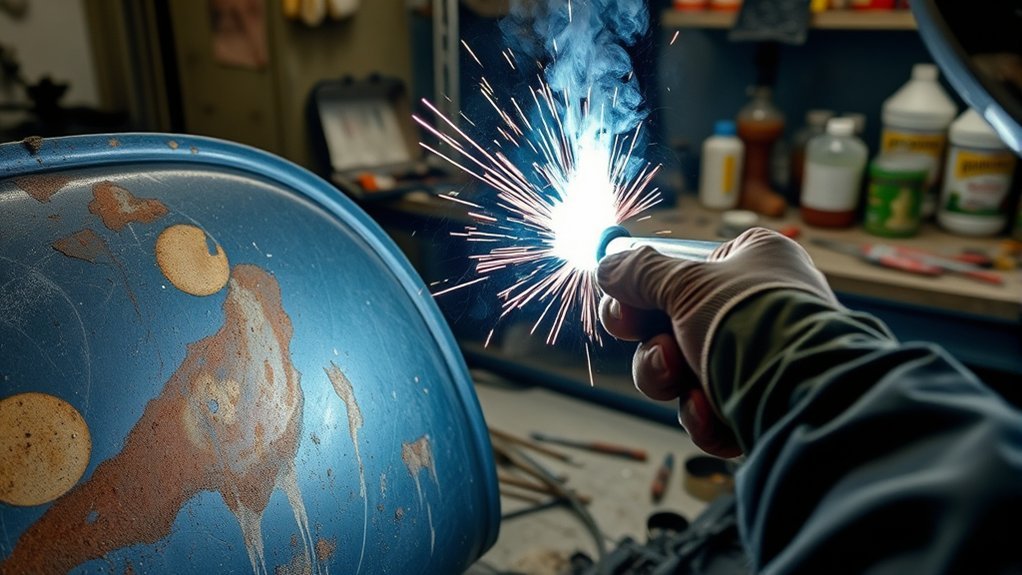
Surface condition has a direct effect on weld quality. If you weld over paint, adhesive, corrosion, or greasy metal, the arc burns those materials and can trap gas inside the weld. The result may look like pinholes, worm tracks, soot, excess spatter, or a bead that sits on top instead of tying in.
For most steel auto body welding, clean the weld area to bright metal on both sides where possible. Remove coatings far enough from the weld so heat does not draw residue back into the molten pool. Pay special attention to lap joints, plug welds, and flanges because hidden contamination can sit between panels.
Coatings like paint and galvanizing need extra care. Removing zinc coating may be required for some welding operations, but some collision repair procedures for MIG brazing call for leaving specific zinc coating intact for corrosion protection. Follow the OEM repair information when working on structural vehicle panels.
Note: Weld-through primer is not a cure for poor prep. Use it only where the product instructions and OEM repair procedure allow it, and keep it out of the actual weld zone when required.
How Moisture Affects Welding Performance
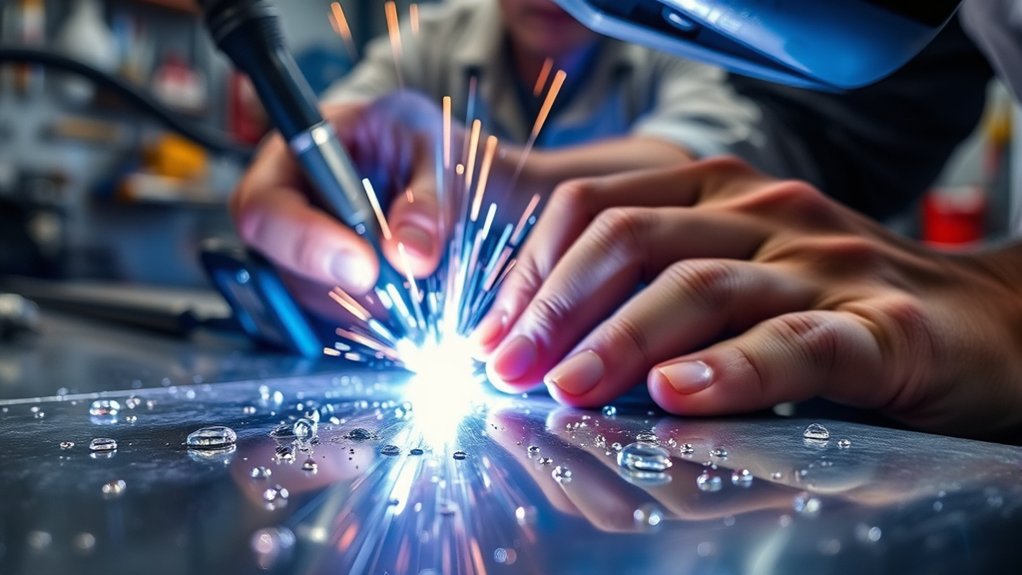
Moisture can damage welding performance because it can add hydrogen to the weld pool. That hydrogen may create porosity, delayed cracking in susceptible steels, or weak welds. Moisture can come from condensation, wet panels, damp filler wire, wet gloves, damp flux, or electrodes that were stored incorrectly.
Cold panels are a common problem in body shops. When cold metal moves into a warmer shop, water can condense on the surface. Wipe the metal dry and give it time to reach shop temperature before welding. If a procedure allows gentle warming, warm the area enough to drive off surface moisture, but do not overheat thin panels or ignore OEM limits.
Shielded Metal Arc Welding, Flux-Cored Arc Welding, and Submerged Arc Welding are especially sensitive to damp electrodes or flux. Store consumables as directed by the manufacturer. For low-hydrogen electrodes, proper oven storage can reduce moisture-related defects. Learn more about which welding rods need oven storage.
Keep abrasives dry as well. Damp or dirty discs can smear residue onto the joint instead of cleaning it. Regular inspection for moisture damage helps keep prep tools from adding new contamination.
Managing Environmental Factors
Environmental control is part of weld preparation. Even clean metal can turn into a porous weld if air movement blows away shielding gas. Fans, open doors, compressed air blow-off, and nearby equipment can all disturb the gas envelope around a MIG or TIG arc.
| Environmental Factor | Impact on Welding |
|---|---|
| Air drafts | Can push shielding gas away from the weld pool. |
| High humidity or condensation | Can add moisture to panels, filler, electrodes, or flux. |
| Poor ventilation | Can increase fume exposure and leave pollutants near the work area. |
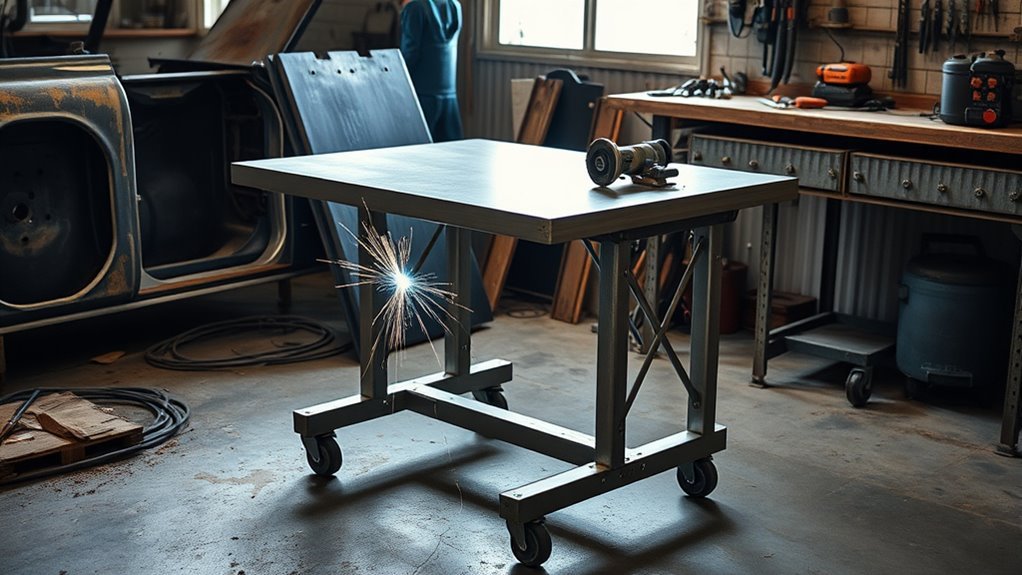
| Dirty workbench or floor | Can transfer dust, grinding debris, oil, or body filler residue to the panel. |
Use ventilation to control fumes without blowing directly across the weld. The same safety mindset used in plasma cutter safety and PPE setup also applies here: move fumes away from your breathing zone while keeping the arc protected.
Why Equipment Maintenance Matters for Clean Welding
Clean equipment helps produce clean welds. A spotless panel will still weld poorly if the gas line leaks, the nozzle is packed with spatter, or the liner is dirty. Make equipment checks part of your setup routine before welding on a vehicle.
Products Worth Considering
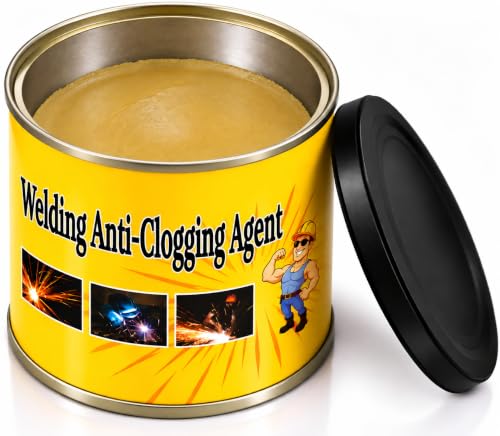
Eliminate Tip Clogging for Smooth MIG Welding: Essential welding accessories & supplies. Works as an anti spatter welding spray alternative, keeps MIG welding accessories clog-free for consistent welds.

Gel eliminates erratic operation with a film that will not clog orifices and threads on MIG nozzles and contact tips

The blades cut away the built up spatter helping prolong the nozzle life, and reduces the chances of wire sticking.
Regular Inspections Required
Inspect the nozzle, diffuser, contact tip, liner, gas hose, regulator, and fittings. Replace cracked hoses, worn O-rings, blocked tips, and dirty liners. Check that the ground clamp has clean metal contact. Poor grounding can create arc instability that looks like a contamination problem.
Proper Equipment Storage Techniques
- Keep hoses and leads protected: Avoid kinks, cuts, pinches, and contamination from oil or solvents.
- Store electrodes and flux correctly: Follow the manufacturer’s storage instructions to reduce moisture pickup.
- Keep guns and nozzles clean: Store them where dust, grinding grit, and body filler residue cannot collect inside the gun.
Equipment Cleaning Protocols
Clean MIG nozzles often, especially during plug welds or short stitch welds on thin panels. Spatter buildup can narrow the gas opening and create uneven coverage. If porosity appears suddenly, stop and inspect the gun before changing every machine setting.
Use clean, lint-free cloths when wiping parts. Do not use oily shop rags. Do not spray antispatter into the joint. If you use a solvent, let it fully evaporate before welding and keep ignition sources away from open containers or vapors.
Best Practices for Cleaning Before Welding
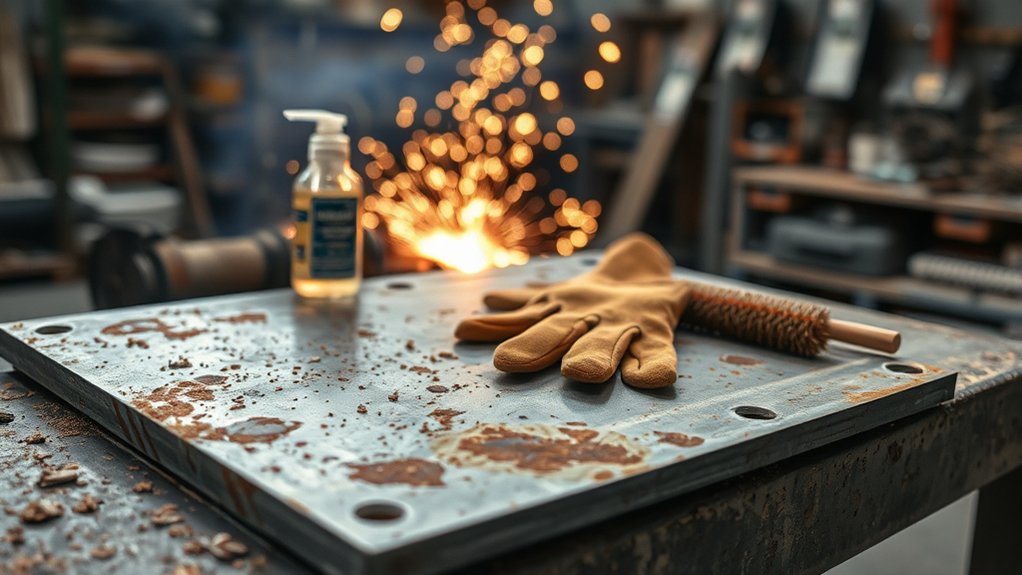
Before welding, clean the metal in a set order. If you grind first and degrease later, you reduce the chance of smearing oil or wax into the surface with an abrasive disc.
Products Worth Considering

Essential Pre-Coating Prep Effectively removes polishing oils, waxes, and residue—perfect for prepping surfaces before ceramic coatings or sealants.

MULTI-PURPOSE CLEANER: Max Strip Painter's Prep is a versatile pre-painting surface cleaner that removes grease, dirt, grime, adhesive residues, and paint splashes from various substrates
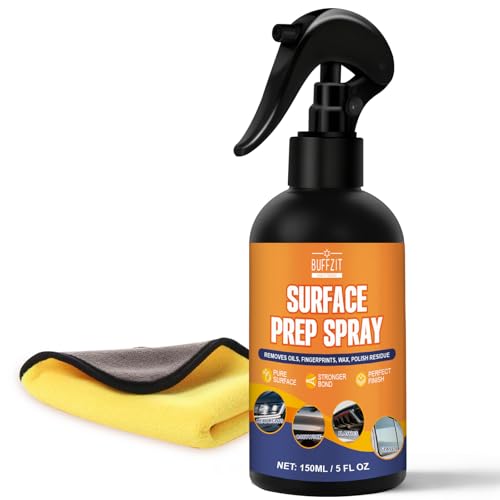
Surface Prep Spray for Perfect Paint & Coating Adhesion: This automotive surface degreaser removes oil, wax, silicone, and road grime in seconds, leaving a perfectly clean surface ready for paint, ceramic coating, or vinyl wrap application. Enhances adhesion for longer-lasting, professional results.
Clean Weld Checklist
- Check the repair procedure: Confirm the correct welding or MIG brazing method, joint type, and coating instructions.
- Remove heavy dirt: Brush or vacuum dust, body filler powder, loose rust, and grinding debris.
- Degrease first: Wipe oil, wax, and grease with an approved cleaner and a lint-free cloth.
- Remove coatings: Grind or sand paint, primer, undercoating, seam sealer, and rust from the weld zone.
- Degrease again: Remove abrasive residue and leftover contamination after grinding.
- Dry the panel: Make sure the surface is dry before welding.
- Inspect filler metal: Reject rusty, oily, kinked, or damp filler wire and rods.
- Make a test weld: Use clean scrap of similar thickness before welding the vehicle panel.
Pro Tip: Use the “white cloth test” after cleaning. Wipe the weld area with a clean cloth. If the cloth picks up black, brown, oily, or powdery residue, the panel is not ready to weld.
When cleaning or grinding, protect yourself from sparks, dust, and sharp edges. Wearing appropriate protective clothing and safety gear helps prevent burns, eye injuries, and skin exposure during prep work.
How to Handle Filler Metals Properly
Filler metal can carry contamination into the weld even when the panel is clean. Keep filler wire, rods, and electrodes dry, sealed, and protected from shop dirt. Wear clean gloves when handling filler rods so skin oil does not transfer onto the metal.
Proper Storage Techniques
- Use a dry storage area: Keep filler metals away from open doors, wet floors, wash bays, and humid corners of the shop.
- Keep packages closed: Reseal opened filler rods or wire when not in use.
- Label materials: Do not mix wire types, rod types, or unknown filler metals.
- Discard damaged filler: Do not use filler that is rusty, greasy, wet, or visibly contaminated.
Cleaning Before Use
Inspect filler rods before welding. If a rod has oil, rust, or shop dust on it, clean it with an approved solvent and let it dry fully. For MIG wire, check the spool for rust, dust, and poor feeding. If rusty wire has already run through the gun, inspect the liner because contamination may remain inside it.
Moisture in electrodes can also cause hydrogen-related porosity and cracking. This is one reason proper electrode storage matters when dealing with porosity in arc welding.
Monitoring Contamination Sources
Contamination control is not a one-time step. Watch for new contamination during fit-up and tack welding. Do not touch cleaned edges with bare hands. Do not set cleaned panels on a dirty bench. Do not blow oily compressed air across the weld zone.
How Contaminated Gas Supply Affects Weld Quality
A contaminated or unstable gas supply can cause porosity, oxidation, an erratic arc, and weak welds. In GMAW and GTAW, shielding gas protects the molten weld pool from air. If oxygen, nitrogen, moisture, or shop air reaches the weld pool, gas can become trapped as the weld solidifies.
Check the full gas path:
- Cylinder: Confirm the gas type is correct for the welding process and metal.
- Regulator and flowmeter: Set flow according to the machine, wire, nozzle, and process recommendations.
- Hoses and fittings: Check for leaks, cracks, loose connections, and damaged O-rings.
- Gun cable: Look for pinched or damaged sections that can restrict gas flow.
- Nozzle and diffuser: Remove spatter that blocks gas coverage.
- Work area: Stop fans or drafts from crossing the arc.
Do not confuse welding shielding gas with compressed air used for plasma cutting. Compressed air can be useful for some cutting systems, but it is not a substitute for proper shielding gas in MIG or TIG welding.
Troubleshooting Weld Contamination Defects
The shape and timing of the defect can help you find the cause. Stop welding as soon as you see repeated porosity or soot. Grinding out and rewelding without fixing the source usually repeats the same failure.
| What You See | Likely Cause | What to Check First |
|---|---|---|
| Pinholes in the bead | Porosity from poor gas coverage, moisture, oil, or rust | Cleanliness, gas flow, nozzle, leaks, and drafts |
| Long worm-like holes | Heavy gas generation from paint, primer, moisture, or trapped coating | Hidden coating between panels and joint fit-up |
| Black soot or oxidized bead | Air entering the shield or wrong gas coverage | Nozzle distance, flow rate, leaks, and wind |
| Bead sitting on top | Lack of fusion from contamination, poor settings, or poor technique | Clean metal, voltage, wire speed, travel speed, and fit-up |
| Sudden porosity after good welds | Equipment or gas delivery problem | Gas cylinder, hose, nozzle, diffuser, and contact tip |
Auto Body-Specific Contamination Risks
Auto body welding is different from clean bench fabrication because panels often have coatings on both sides. A panel may look clean on the front but still have primer, zinc, undercoating, cavity wax, seam sealer, or adhesive on the back side.
Before welding or MIG brazing, check for:
- Factory zinc coating or galvanized steel
- Weld-through primer instructions
- Panel adhesive near the joint
- Seam sealer trapped between flanges
- Old undercoating or cavity wax
- Body filler dust from nearby repairs
- Paint overspray on replacement panels
Do not guess on structural repairs. Modern vehicles may use mild steel, high-strength steel, ultra-high-strength steel, boron steel, aluminum, or mixed materials. Welding the wrong area or overheating a panel can weaken the repair. Use OEM repair information and current collision repair guidance before welding load-bearing parts.
Training Welders to Prevent Contamination
Training helps welders prevent contamination before it becomes a repair failure. A good training routine covers cleaning, gas setup, fit-up, weld testing, defect recognition, and post-weld corrosion protection.
- Cleanliness protocols: Teach welders to clean both sides of the joint, remove coatings, and prevent recontamination during handling.
- Gas and equipment checks: Train welders to test gas flow, inspect nozzles, check for leaks, and recognize gas-related porosity.
- Technique control: Cover nozzle distance, travel speed, gun angle, tack spacing, heat control, and tight panel fit-up.
- Environmental awareness: Teach welders to spot drafts, condensation, dirty work surfaces, and fume hazards.
- Defect review: Cut, bend, or destructively test practice welds when appropriate so welders learn what contamination looks like inside the joint.
Technique training should also include heat control and distortion prevention. Understanding thermal properties helps welders see why overheating, poor travel speed, and bad fit-up can create problems even when the metal is clean.
Post-Weld Corrosion Protection
Cleaning before welding removes coatings that once protected the panel. After welding, restore corrosion protection according to the repair procedure. This may include grinding only as needed, cleaning the area, applying epoxy primer, seam sealer, cavity wax, or other approved coatings.
This step matters because a clean weld can still fail early if moisture enters an unprotected flange or lap joint. In auto body work, contamination prevention and corrosion protection work together: clean enough to weld safely, then protect the repaired metal after welding.
Frequently Asked Questions
What is the most common weld defect caused by surface contamination?
Porosity is one of the most common defects caused by surface contamination. Oil, grease, paint, rust, moisture, and coatings can release gas in the weld pool. When that gas becomes trapped as the weld cools, it leaves pinholes or internal voids.
What health risks can contaminated welding create?
Contaminated welding can increase fume exposure, especially when you weld over paint, zinc coating, solvents, adhesives, or dirty metal. Welding fumes can affect the lungs, eyes, skin, and nervous system depending on the material and exposure level. Use ventilation, PPE, SDS guidance, and safe work practices.
What is the main cause of undercut?
Undercut is usually caused by excessive heat, incorrect travel speed, poor gun angle, or settings that wash away the edge of the base metal. Contamination can make the weld less stable, but technique and settings are usually the first things to check.
What tools detect welding porosity?
Surface porosity can often be found with visual inspection after cleaning the weld. Hidden porosity may require radiographic testing, ultrasonic testing, dye penetrant testing, or other inspection methods. In auto body work, destructive testing on practice coupons is also useful for checking setup and technique.
Can you weld over paint if it is only a small area?
No, you should not weld over paint when you can remove it safely. Paint can create fumes, soot, porosity, and weak fusion. Clean the weld zone to bare metal unless the OEM repair procedure gives a different instruction for a specific process.
Why do my MIG welds get porosity even after I clean the metal?
If the metal is clean and dry, check gas coverage next. Look for drafts, clogged nozzles, leaks, loose fittings, wrong gas flow, excessive stickout, or a damaged gas hose. Also inspect filler wire for rust or oil.
Conclusion
Weld contamination in auto body work is preventable when you control the basics: clean the panel, remove unsafe coatings, dry the weld area, protect the shielding gas, inspect the filler metal, and maintain the welding gun. If defects appear, stop and find the source before adding more weld. Clean preparation, safe ventilation, and proper corrosion protection after welding give you stronger, cleaner, longer-lasting repairs.
Sources
- OSHA, Controlling Hazardous Fume and Gases during Welding — supports welding fume, gas, ventilation, and exposure-control guidance.
- American Welding Society, ANSI Z49.1:2021 Safety in Welding, Cutting, and Allied Processes — supports PPE, SDS, ventilation, and safe welding practices.
- TWI, Porosity in Welding — supports porosity causes, including poor gas shielding, drafts, moisture, grease, oil, and coatings.
- AWS A5.32/A5.32M Specification for Welding Shielding Gases — supports shielding gas purity and moisture-control relevance.
- I-CAR, MIG Brazing Panel Preparation — supports collision repair guidance for paint removal, zinc coating, weld-through primer, and OEM corrosion protection.
- CDC/NIOSH, Welding Fumes and Manganese — supports welding fume health-risk context.