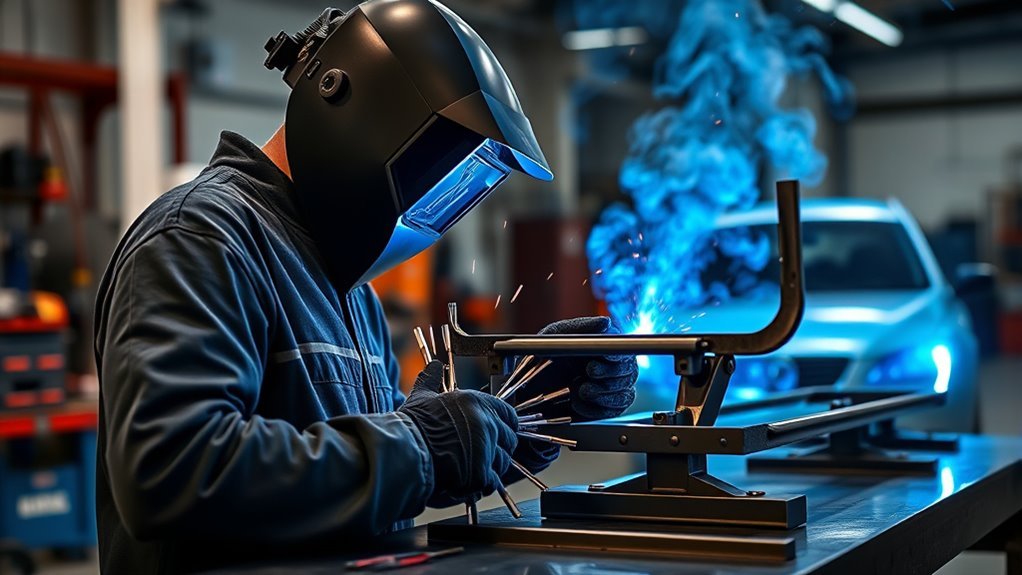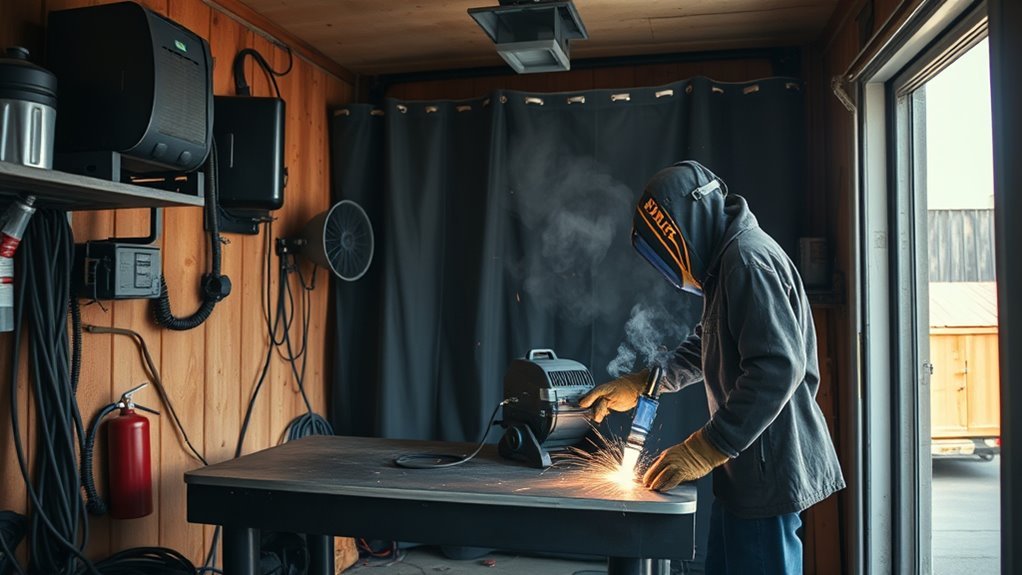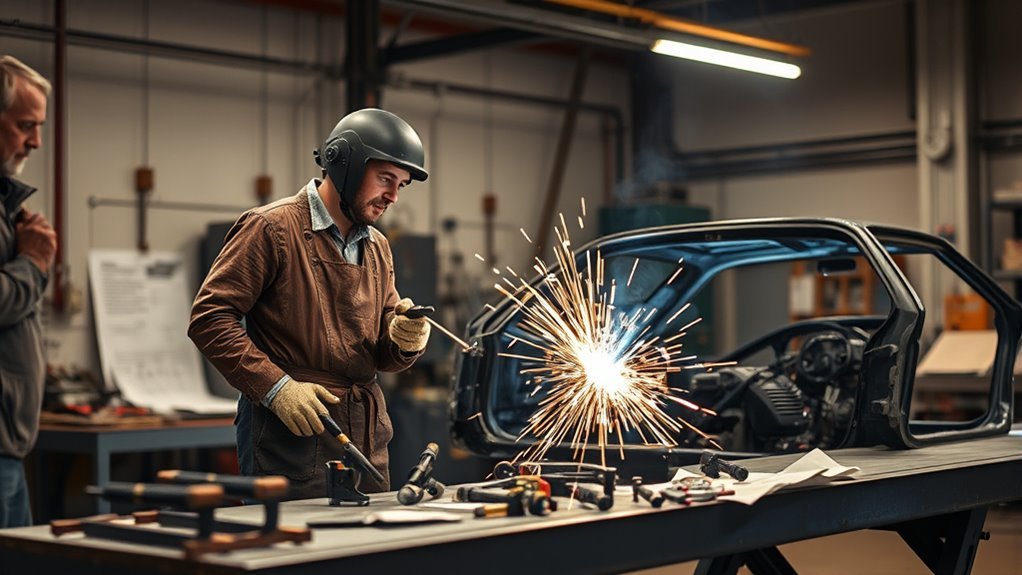
An automotive welding apprenticeship gives you paid, supervised shop experience while you build the welding, fabrication, safety, and measurement skills used in vehicle repair and custom work. The exact path varies by employer, but most programs blend on-the-job training with related classroom or technical instruction, steady feedback from experienced welders, and skill-based wage growth.
Quick Answer
An automotive welding apprenticeship is paid, supervised training that teaches shop safety, measurement, fit-up, metal prep, and welding processes used in vehicle repair and fabrication. Program length varies by employer, but expect months to several years of on-the-job work, related classroom training, wage steps, and certification preparation.
Key Takeaways
- You earn while you learn, but the training length depends on the shop, sponsor, credential path, and your starting skill level.
- The first month usually focuses on safety, tool use, measuring, fit-up, material handling, and shadowing skilled welders.
- MIG and resistance spot welding are common in automotive repair, while TIG, FCAW, and stick welding appear more often in fabrication, exhaust, heavy repair, or specialized work.
- Strong apprentices document their work, follow OEM procedures, control heat, ask good questions, and treat safety as part of the job, not an extra step.
At a Glance
| Time Required | Several months to several years, depending on whether it is an employer trainee role, school-linked program, or registered apprenticeship. |
| Difficulty | Moderate to hard. You need patience, safety discipline, hand control, measuring accuracy, and comfort working around heat, sparks, noise, and heavy parts. |
| Tools Needed | Welding helmet, gloves, jacket, safety glasses, hearing protection, respirator when required, tape measure, square, clamps, grinders, wire brushes, and shop-approved welding equipment. |
| Cost | Usually paid training. You may still need to budget for boots, basic PPE, transportation, testing fees, or optional technical-school classes. |
How Automotive Welding Apprenticeships Work
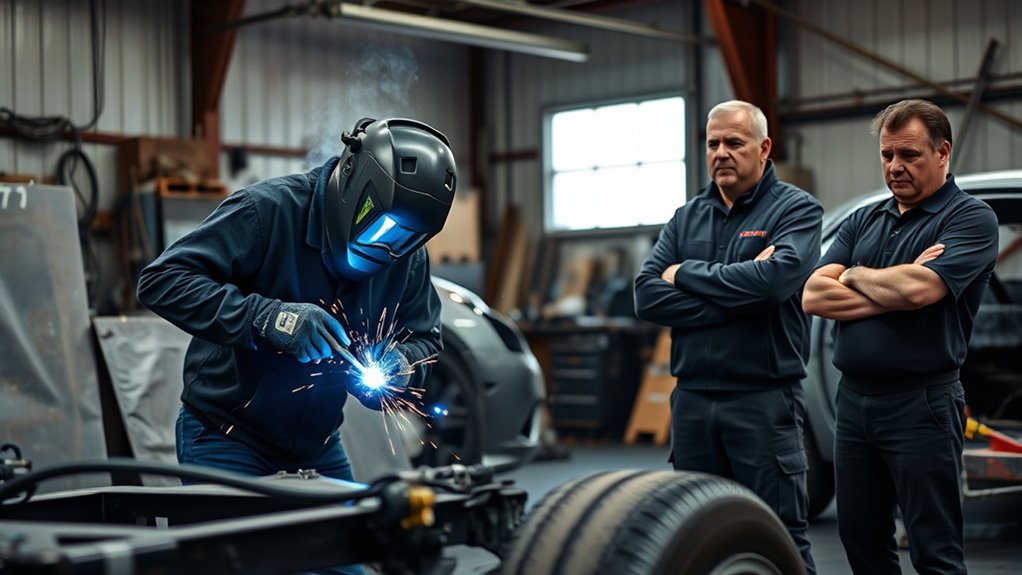
Automotive welding apprenticeships work by pairing you with experienced welders, fabricators, or collision repair technicians while you learn real shop tasks. In a formal Registered Apprenticeship, you receive paid work experience, mentoring, wage progression, classroom instruction, and an industry credential. In a smaller repair or custom shop, the structure may be less formal but still built around supervised work and skill growth.
Your first jobs are usually simple but important: cleaning metal, moving parts safely, setting up tools, reading work orders, checking measurements, and learning how the shop controls sparks, fumes, heat, and distortion. As your supervisor trusts your consistency, you move into tack welds, practice coupons, non-structural repairs, exhaust work, brackets, and fabrication jobs with tighter tolerances.
Do not assume every program lasts the same amount of time. Some employer trainee roles may take months before you can work independently on basic tasks. A formal apprenticeship or combined work-and-school path can take several years. The best question to ask is not only “How long is it?” but “What skills, tests, and wage steps prove I am moving forward?”
Note: “Apprentice,” “trainee,” “helper,” and “entry-level fabricator” are not always used the same way. Ask whether the role is a registered apprenticeship, a shop-run training program, or an entry-level job with informal mentoring.
Requirements Before You Apply
You do not need to be a master welder before applying, but you should bring the basics. Most employers want a high school diploma or GED, steady attendance, basic math, safe work habits, and the physical ability to stand, lift, bend, and work in awkward positions. A driver’s license can help because automotive shops often move vehicles, parts, and supplies.
Useful starter skills include reading a tape measure, understanding fractions and decimals, using hand tools safely, following written instructions, and staying calm when a task takes several tries. Blueprint reading, shop math, mechanical drawing, and basic electricity are also helpful because welders often work from specifications, dimensions, and repair procedures.
If you have no experience, practice the habits that make supervisors comfortable training you:
- Show up on time with clean PPE and a ready attitude.
- Measure twice before cutting, grinding, or welding.
- Ask before touching unfamiliar equipment.
- Keep cords, gas hoses, and flammables out of the work path.
- Write down settings, materials, and feedback after each practice weld.
What You’ll Learn in Your First 30 Days
During your first 30 days, you’ll likely shadow experienced production welders, collision technicians, or motorsports fabricators. You will watch how they plan a job, stage parts, verify dimensions, clamp work, and sequence welds so heat does not pull panels or brackets out of shape.
This early stage builds foundational knowledge. You learn where tools belong, how the shop labels materials, how to move panels or tubing without damage, and how to clean metal before welding. Precision starts before the arc, so expect repeated practice with measuring, marking, cutting, deburring, fit-up, and tack placement.
Hands-on training also introduces fixtures, clamps, grinders, wire brushes, drill presses, band saws, and material handling equipment. You may not weld critical parts right away, but you will learn how to protect the work, protect nearby vehicles, and keep your area safe for the next person.
The first month is less about speed and more about repeatable habits: clean metal, accurate fit-up, safe setup, and asking before guessing.
By the end of the first month, you should understand the shop’s rhythm, who checks your work, where safety equipment is located, and what quality looks like before a finished weld is painted, hidden, or put back into service. Background knowledge of cutting amperage and metal thickness can also help you understand why setup choices matter before fabrication begins.
How Your Training Progresses After the First Month
After the first month, your work should become more measurable. You may start logging practice welds, getting bend-test or cut-and-etch feedback, and learning which defects matter most: lack of fusion, porosity, undercut, burn-through, spatter, poor penetration, and distortion.
- Months 2–3: You may practice more tack welds, basic MIG beads, plug welds, lap joints, butt joints, grinding, and simple repairs under close supervision.
- Months 3–6: You may help with brackets, exhaust sections, non-structural sheet metal, fixtures, and fabrication prep while learning how settings change by metal thickness.
- Months 6–12: You may take on more fit-up, layout, documentation, and welding on approved parts after your supervisor checks your technique.
- Year 2 and beyond: In longer programs, you may move toward structural procedures, aluminum, stainless steel, advanced fabrication, certification tests, mentoring newer helpers, or specialized automotive work.
Pro Tip: Keep a small training notebook. Record material type, thickness, process, wire or rod, gas, amperage or voltage, travel speed notes, and what your supervisor corrected. That habit makes your progress visible.
Welding Processes You’ll Use on the Job
On the job, you’ll work with several welding processes, and each one serves a different repair or fabrication need. Your apprenticeship training should teach you when to use a process, when not to use it, and when to stop and check the written procedure before adding heat to a vehicle part.
MIG welding, or gas metal arc welding, is common for automotive sheet metal, brackets, and general fabrication because it is fast and adaptable. TIG welding gives finer control on stainless, aluminum, exhaust components, and thin custom work. FCAW can be useful on heavier sections, outdoor work, or fabrication tasks where the procedure calls for it. Stick welding appears more often in general repair, farm, heavy equipment, and structural fabrication than in late-model auto body panel work.
- MIG welding: fast, versatile, and useful for many panels, brackets, and shop fabrication jobs.
- TIG welding: clean and controlled, often used for aluminum, stainless, exhaust, and custom work.
- Resistance spot welding: common in collision repair when replacing factory-style spot welds with approved equipment and procedures.
- FCAW: useful for heavier fabrication and some outdoor work when the material and procedure allow it.
- Stick welding: valuable to understand, but usually less common on thin automotive body panels.
You’re not just joining metal. You’re learning how heat changes metal, how joint design affects strength, and how cleanup affects inspection. Related knowledge of flux core welding and cutting gases can help you understand broader shop processes, even when your main job is welding.
Warning: Never weld structural, suspension, wheel, airbag-adjacent, battery-adjacent, or high-voltage vehicle parts just because the metal “looks weldable.” Modern automotive repairs must follow the employer’s written process and the vehicle manufacturer’s repair procedure.
Products Worth Considering

PORTABLE HANDHELD WELDING MACHINE: The SeeSii handheld welder measures is 10*10 inch, weighs only 3.9 pounds. compact and portable design makes it easy to use in a variety of work environments. It is great for aerial work, which can be easily operated with one hand

Safety Rules You’ll Be Expected to Follow
Welding safety is not a box to check after the job. It is part of the job. The Occupational Safety and Health Administration addresses welding, cutting, and brazing in specific standards for general industry, maritime, and construction. In a shop, that translates into real habits: proper PPE, ventilation, fire prevention, equipment checks, and clear communication.
At minimum, expect to use a welding helmet with the right shade, safety glasses, gloves, flame-resistant clothing, hearing protection, and safety footwear. Depending on the material, coating, ventilation, and process, your employer may also require fume extraction or respiratory protection. Painted, galvanized, oily, rusty, or coated metals need extra caution because surface contamination can create defects and harmful fumes.
Automotive work adds extra safety concerns. Vehicles can contain fuel vapors, airbags, pretensioners, electronics, adhesives, foams, and high-voltage battery systems. Before welding near a vehicle, learn the shop’s rules for disconnecting power, protecting glass and interiors, removing flammables, checking behind panels, and using a fire watch after hot work.
- Inspect leads, clamps, torch parts, hoses, regulators, and grounds before use.
- Keep sparks away from fuel, solvents, upholstery, batteries, and paper products.
- Use ventilation or fume extraction when required.
- Protect nearby workers from arc flash with screens or curtains.
- Stop work if you smell fuel, see smoke behind a panel, or find unknown wiring.
- Report damaged equipment instead of “making it work.”
Products Worth Considering

High Quality-100% Heavy Duty Leather Apron with Gloves

✅Arc & Flame Resistant for Life - This 7 oz material is a soft, breathable cotton. They will remain arc and flame retardant regardless of the washes and wear cycles. These cotton fr balaclavas are NFPA 70E Compliant, HRC / CAT 2, EBT = 12 cal/cm² and meet ASTM F1506.

True Color Clear View: A 3.64" x 1.67" viewing area with 1/1/1/1 optical clarity delivers a true color view for improved visibility and reduced eye strain.
Skills Automotive Employers Want
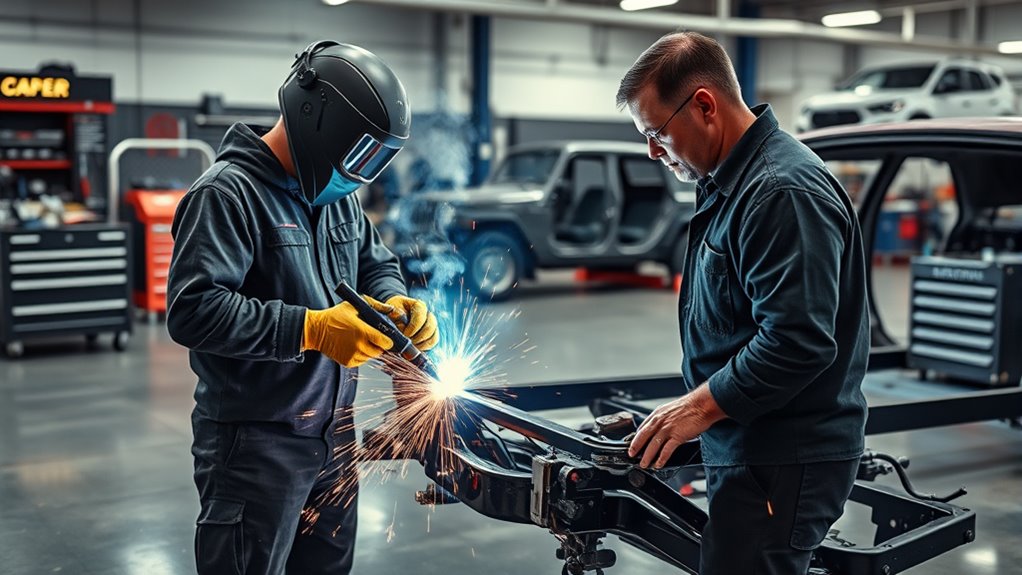
Employers look for apprentices who can become accurate, safe, and consistent. Clean beads matter, but so do the steps before and after the weld. The O*NET profile for welders, cutters, solderers, and brazers lists tasks such as operating safety equipment, measuring workpieces, preparing surfaces, aligning parts, setting up welding equipment, and monitoring heat to avoid warping or distortion.
You’ll need welding skills that hold tight tolerances, control heat, and protect structural integrity. Show attention to detail in every bead, cut, and fit-up because small defects can create safety risks and expensive rework. You should also learn how steel, high-strength steel, aluminum, and stainless steel react differently to heat, grinding, and contamination.
Strong problem-solving skills help you diagnose distortion, poor access, material mismatch, and bad fit-up before the weld gets worse. Employers also value hands-on experience with band saws, drill presses, grinders, clamps, squares, calipers, and basic layout tools because fabrication depends on precise preparation.
During on-the-job training, focus on five habits:
- Clean prep: remove rust, paint, oil, coatings, and moisture before welding.
- Accurate fit-up: set gaps, clamps, and alignment before striking an arc.
- Heat control: use stitch welds, sequence, cooling time, and settings that limit distortion.
- Inspection mindset: look for defects before a supervisor has to point them out.
- Documentation: follow work orders, repair procedures, and supervisor notes.
How to Find an Automotive Welding Apprenticeship
Start with shops that actually use welding every week: collision repair centers, restoration shops, custom fabrication shops, exhaust shops, race teams, trailer repair shops, manufacturing plants, and vocational schools with employer partnerships. Search for “welding apprentice,” “fabrication helper,” “entry-level MIG welder,” “auto body apprentice,” “collision repair apprentice,” and “motorsports fabricator helper.”
You can also use Apprenticeship.gov, local American Job Centers, community colleges, trade schools, union training centers, and employer career pages. If a posting asks for more experience than you have, do not ignore it. Some shops will still consider a dependable beginner if you show strong safety habits, basic tool sense, and willingness to learn.
Before you accept a role, ask these questions:
- Who will train me day to day?
- What welding processes will I practice first?
- Will I work on vehicles, fabrication projects, or both?
- Are wage increases tied to time, tests, or skill checkoffs?
- Does the shop pay for PPE, classes, or certification tests?
- Do you follow OEM repair procedures for structural and collision work?
- How soon can an apprentice weld on customer work, and who inspects it?
Pay, Outlook, and Certifications
Your apprentice pay depends on location, shop type, prior experience, and whether the program is registered or informal. The U.S. Bureau of Labor Statistics reported a May 2024 median annual wage of $51,000 for welders, cutters, solderers, and brazers. BLS also projected 2% employment growth from 2024 to 2034, which is slower than average, but still estimated about 45,600 openings per year because workers retire, transfer, or leave the occupation.
BLS projects about 45,600 welder, cutter, solderer, and brazer openings per year from 2024 to 2034, even with slower-than-average overall job growth.
Certifications can help once you have enough practice to pass a performance test. The American Welding Society lists several professional welding credentials, including the Certified Welder Program. Some employers also value I-CAR, ASE collision-related training, manufacturer-specific training, OSHA safety training, or in-house procedure qualifications.
Do not chase certificates without skill. A certificate can open doors, but your test coupons, fit-up, safety record, attendance, and ability to follow procedures are what keep you employed.
Career Paths After an Automotive Welding Apprenticeship
After you complete an automotive welding apprenticeship, you can move into roles that match your strongest skills. Common paths include automotive welder, collision repair technician, structural repair specialist, custom fabricator, exhaust fabricator, restoration technician, motorsports fabricator, manufacturing welder, or performance modification technician.
These career paths often start in repair shops and fabrication bays, then expand into automotive manufacturing, restoration, race teams, or specialty shops. The best long-term opportunities usually come from combining clean welding with layout, measurement, blueprint reading, metallurgy, documentation, and troubleshooting.
- Repair approved structural or non-structural damage with controlled welding.
- Fabricate brackets, panels, exhaust parts, cages, tabs, and custom components.
- Build or modify performance systems for racing and off-road applications.
- Move into quality control, welding inspection, training, or team lead roles.
- Keep advancing through specialized training, procedure tests, and certifications.
Specialization can raise your ceiling. Aluminum fabrication, stainless TIG, motorsports chassis work, restoration metal shaping, robotic welding, and inspection all require deeper practice. Learning topics such as fillet weld size and plate thickness can also help when you move from basic auto work into heavier fabrication or code-focused welding.
Frequently Asked Questions
Is a welding apprenticeship worth it?
Yes, a welding apprenticeship can be worth it if you want paid training, hands-on practice, mentor feedback, and a path into a skilled trade without relying only on classroom learning. It is especially useful if the employer has clear wage steps, safety training, and a plan for helping you build testable skills.
Can you make $100,000 as a welder?
Yes, some welders can reach $100,000 or more, but it is not the typical early automotive apprenticeship outcome. Higher pay is more common in specialized, overtime-heavy, travel, union, industrial, pipeline, underwater, inspection, or advanced fabrication roles. Start by building clean welds, certifications, reliability, and process knowledge.
Why is welding hard on the body?
Welding can be hard on the body because you work around heat, sparks, fumes, bright arc light, noise, awkward positions, and heavy materials. Good PPE, ventilation, lifting technique, breaks, hearing protection, eye protection, and safe work habits reduce risk and help you stay in the trade longer.
Is 27 too old for an apprenticeship?
No, 27 is not too old for an apprenticeship. Many employers care more about attendance, safety, attitude, physical readiness, and willingness to learn than your exact age. If you can follow instructions, handle shop conditions, and improve with feedback, you can still build a strong welding career.
Do you need welding school before an automotive welding apprenticeship?
Not always. Some apprenticeships accept beginners, while others prefer applicants who completed a vocational welding or collision repair program. Welding school can help you learn basic safety, MIG, TIG, blueprint reading, and shop math before applying, but a strong employer-based program can also train you from the ground up.
What should you bring to an apprenticeship interview?
Bring a simple resume, any school or training records, photos of safe practice projects if you have them, a list of tools you can use, and questions about training, PPE, wage steps, and supervision. If you have no welding samples, focus on reliability, safety, mechanical interest, and willingness to start with prep work.
Conclusion
An automotive welding apprenticeship gives you a structured way to earn, practice, and grow into skilled shop work. You’ll start with safety, prep, measuring, and fit-up before moving into more complex welds and fabrication tasks. If you stay consistent, protect yourself, follow procedures, and learn from every correction, beginner tasks can turn into real career momentum in repair, custom fabrication, manufacturing, restoration, or motorsports.
Sources
- Apprenticeship.gov Career Seekers — supports paid apprenticeship structure, wage progression, classroom instruction, mentoring, and credentials.
- U.S. Bureau of Labor Statistics: Welders, Cutters, Solderers, and Brazers — supports training requirements, duties, 2024 median pay, work environment, safety hazards, and 2024–2034 outlook.
- OSHA: Welding, Cutting, and Brazing — supports safety standards and hazard awareness for welding, cutting, and brazing operations.
- O*NET OnLine: Welders, Cutters, Solderers, and Brazers — supports common welding tasks, work activities, safety equipment use, measuring, fit-up, and surface preparation.
- American Welding Society Professional Certification — supports AWS welding certification pathways, including the Certified Welder Program.