Quick answer: You can weld some salvage-car repairs, but the deciding factor is not whether a MIG, TIG, or spot welder can make the joint. It is whether the vehicle maker allows that exact part, material, location, and attachment method to be repaired. Nonstructural mild-steel body patches and some exhaust repairs may be weldable. Structural rails, pillars, rockers, crush-zone parts, high-strength steel, aluminum structures, suspension or steering parts, and hybrid/EV areas may require replacement, factory-seam repair, squeeze-type resistance spot welding (STRSW), MIG brazing, rivet-bonding, or another OEM-specific method. Before welding, identify the material, measure the structure, make the vehicle electrically and fire safe, and follow the vehicle-specific body repair manual.
Last updated: August 8, 2026.
What Salvage-Car Welding Can Fix
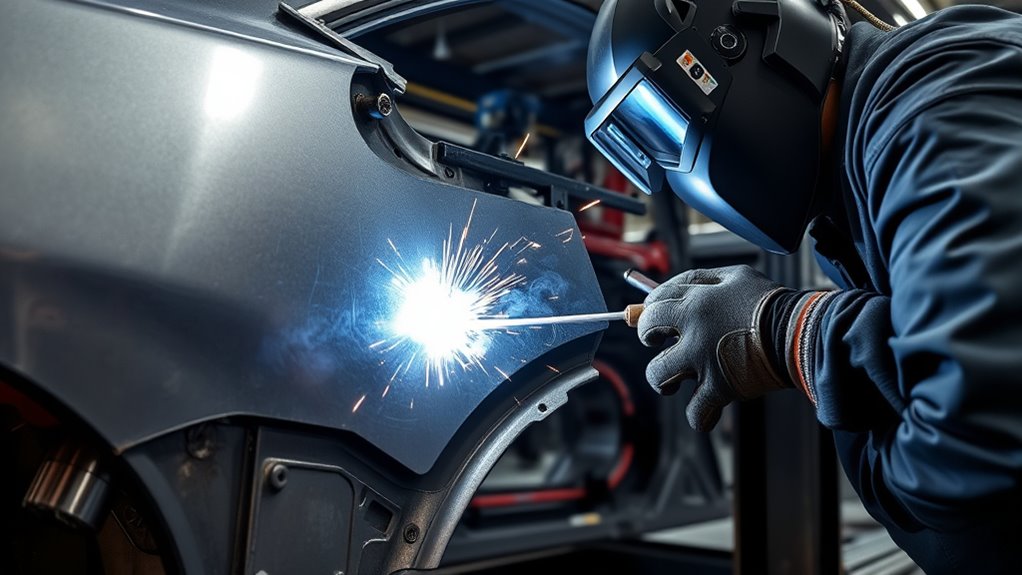
Salvage car welding can repair some damaged panels, brackets, exhaust sections, and OEM-approved structural joints, but not every damaged vehicle component should be welded. The safe repair method depends on the vehicle, material grade, damage location, original joining method, and manufacturer instructions.
Start by separating cosmetic damage from structural damage. A rust patch in a nonstructural mild-steel outer panel is a very different repair from sectioning a rail, pillar, rocker reinforcement, crush-zone component, or suspension mounting area. Modern vehicles can combine mild steel, high-strength steel (HSS), advanced high-strength steel (AHSS), ultra-high-strength steel (UHSS), aluminum, adhesives, rivets, spot welds, GMA welds, and MIG-brazed joints.
I-CAR recommends checking vehicle-specific repair information because material repairability and attachment methods change by vehicle and component. Some high-strength components can be repaired under controlled procedures, while others must be replaced at factory seams rather than heated, straightened, sectioned, or conventionally welded. Review I-CAR’s steel repairability guidance before treating an unfamiliar structural part as ordinary weldable steel.
| Vehicle Area | Typical Repair Decision | Do Not Assume |
|---|---|---|
| Nonstructural mild-steel outer panel | Patch or replace when the OEM permits the repair | That every visible panel is nonstructural |
| Frame rail, pillar, rocker, or structural unibody part | Use the vehicle-specific sectioning and attachment procedure | That MIG is acceptable because the steel looks thick enough |
| HSS, AHSS, or UHSS | Identify grade and follow OEM heat, repair, and joining limits | That all high-strength steel can be fusion welded |
| Exhaust tubing | Weld sound material when the component and location are suitable | That severely thinned or contaminated metal will make a durable repair |
| Suspension or steering component | Replace damaged parts unless the OEM explicitly provides a repair | That a control arm, strut, or steering part should be straightened or welded |
| Hybrid or EV structure | Follow OEM low-voltage and high-voltage disabling/removal procedures before hot work | That disconnecting one 12-volt terminal makes the vehicle safe |
Before deciding that a salvage vehicle is repairable, inspect the full damage path. Measure structural reference points, check adjoining panels and mounting locations, and look for corrosion, torn seams, buckling, previous repairs, or hidden deformation. Cutting back to sound material is useful only when the vehicle maker actually permits a welded repair in that location.
Weldable Parts on Salvage Cars
Common weldable areas can include approved body-panel sections, some brackets and exhaust tubing, and structural replacement joints specifically identified by the manufacturer. The word weldable does not mean the same repair method applies everywhere.
Body Panels And Fenders
Nonstructural mild-steel body panels and fenders are among the more practical salvage-car welding jobs when the remaining metal is sound and the vehicle maker permits the repair.
For a conventional steel patch, MIG/GMAW is often practical because it makes short tacks and permitted plug welds efficiently. TIG can provide fine control in skilled hands, but either process can overheat thin sheet when fit-up or technique is poor. For a detailed nonstructural procedure, see this guide to welding sheet metal on a car.
- Confirm the panel is suitable for sectioning or patching.
- Cut back to solid, full-thickness metal.
- Match the patch material and thickness closely.
- Test-fit every edge before welding.
- Use separated tacks to control shrinkage and distortion.
- Restore backside and seam corrosion protection after welding.
Aluminum panels require separate tools, cleaning practices, filler selection, and welding equipment. Do not treat an aluminum outer panel or aluminum structure as if it were mild steel.
Frame And Chassis
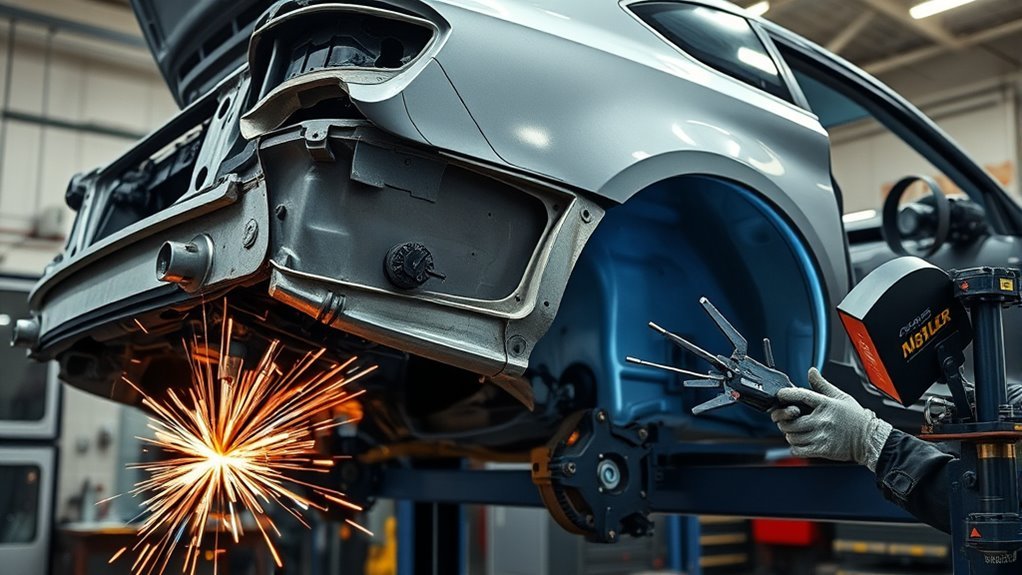
Frame and unibody welding is a structural repair, so the vehicle-specific repair procedure determines whether welding is allowed and which attachment method must be used.
Before cutting or welding, identify every damaged rail, reinforcement, bracket, crush-management feature, and suspension or powertrain mounting location. Measure the structure using the vehicle maker’s dimensions and an appropriate measuring system so the repair is not welded permanently out of alignment.
Do not choose MIG, TIG, stick, or spot welding solely from metal thickness. Modern structural procedures may specify STRSW, GMA plug welding, MIG brazing, weld bonding, rivet bonding, factory-seam replacement, or complete part replacement. UHSS may also have strict restrictions on sectioning or heat.
Fit-up and clamping still matter when welding is permitted. Keep the structure at the required dimensions during attachment and confirm whether the OEM measurement procedure calls for loaded or unloaded suspension conditions.
After the repair, verify the structure again before alignment or final assembly. A weld can look acceptable while the vehicle remains dimensionally incorrect.
Exhaust And Suspension
Exhaust tubing and damaged suspension parts should not be treated as the same type of weld repair.
Exhaust tubing can often be welded when corrosion has not reduced the surrounding metal to thin scale. Inspect the full circumference for rust, cracks, leaks, contaminated joints, nearby fuel components, wiring, heat shields, and sensors before starting. Replace a section when there is not enough sound metal to support a durable weld.
Use much stricter judgment with suspension and steering parts. A bent, cracked, or collision-damaged control arm, steering component, strut-related component, or subframe may be manufactured from special steel, aluminum, cast material, or a heat-treated alloy. Treat a damaged component as a replacement item unless the vehicle maker explicitly provides an approved repair procedure.
- Inspect steering and suspension mounting points for structural displacement.
- Check the OEM repair manual before heating, straightening, or welding.
- Do not hide cracks or previous weld repairs under coating.
- Replace components when the OEM prohibits repair.
- Complete wheel alignment only after structural and suspension damage is corrected.
Pick MIG, TIG, or Spot Welding
Choose the welding process from the repair procedure first, then consider material, thickness, access, and heat control.
MIG/GMAW is common in automotive repair because it is efficient for mild-steel sheet, permitted plug welds, and many fabrication tasks. On modern collision structures, however, a conventional GMA weld is acceptable only where the repair procedure permits it.
TIG/GTAW gives precise control and can suit custom fabrication, thin nonstructural parts, stainless steel, or aluminum in skilled hands. It should not be substituted for an OEM-required spot weld, MIG-brazed joint, adhesive/mechanical joint, or other specified collision-repair attachment.
Squeeze-type resistance spot welding (STRSW) reproduces a factory-style attachment on overlapping sheet and is required or preferred for many modern panel replacements. Equipment setup, electrode condition, weld location, material stack, and destructive testing affect whether the spot weld is acceptable.
MIG brazing is another distinct joining process used by some vehicle makers to reduce heat input on specified high-strength components. Use it only where the vehicle-specific procedure calls for it.
Surface preparation remains essential with every process. Paint, rust, oil, seam sealer, adhesive, undercoating, and zinc coating in the active weld area can affect weld quality or create fumes. Review proper preparation when MIG welding galvanized steel, while giving the OEM body repair procedure priority for the vehicle itself.
Products Worth Considering

Professional Dent Removal: VEVOR Stud Welder Dent Puller offers a fast and efficient solution for removing dents from steel car body panels, all while providing precise dent pulling and controlled force for a professional-grade dent repair every time.

Highly Durable Design: The shell of stud welder kit is made of high-quality ABS body, has good stability under high temperature conditions, withstand temperature of 93-118℃, and the movement is pure copper electrode. This welder stud kit is wear-resistant, strong and sturdy.

Professional Dent Removal: VEVOR Stud Welder Dent Puller offers a fast and efficient solution for removing dents from car body, all while providing precise dent pulling and controlled force for a professional-grade dent repair every time.
Match Metals and Filler Wire
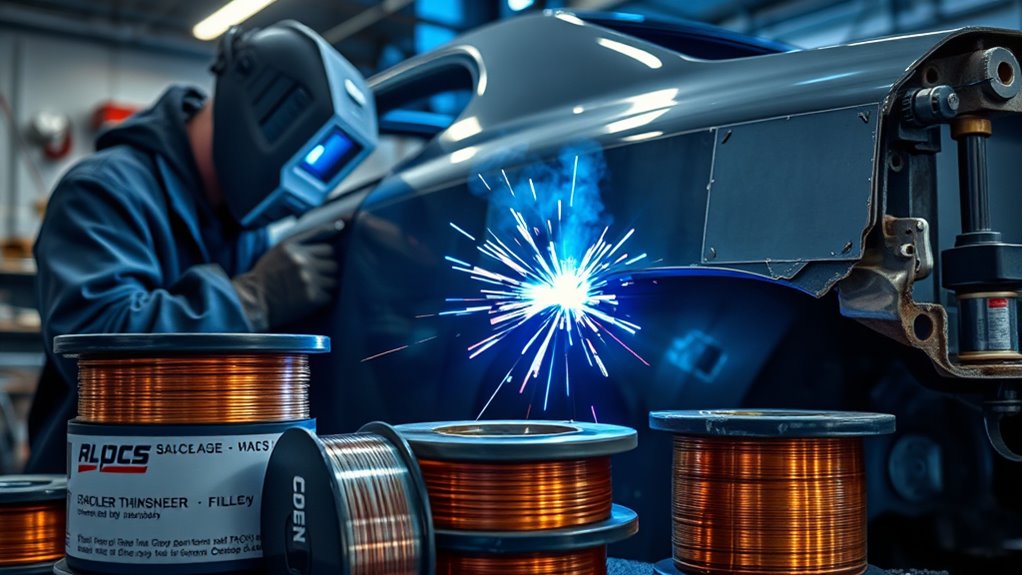
Match filler metal to the identified base material and approved repair process rather than choosing filler from the broad label “steel” or “aluminum.”
For an OEM-approved nonstructural mild-steel repair, ER70S-6 is a common GMAW filler, but the vehicle maker or welding procedure can require something different. High-strength structural steel may have limits on welding method, heat input, filler, and attachment location, so do not solve an HSS compatibility question simply by choosing a “stronger” wire.
Aluminum requires the actual base alloy to be identified. 4043 and 5356 are common aluminum fillers, but neither is universally correct; strength, crack sensitivity, service temperature, finishing, and the alloys being joined affect the selection.
- Identify the base material before selecting filler.
- Use the OEM-specified attachment method on structural repairs.
- Follow filler-manufacturer compatibility guidance when an OEM specification does not provide the answer.
- Keep aluminum filler, tools, and abrasives free from steel contamination.
- Do not mix dissimilar filler and base metals merely because a bead can be formed.
Correct filler selection supports fusion, ductility, corrosion resistance, and the intended load path. Incorrect filler can create a visually acceptable joint that does not perform as intended.
Products Worth Considering

High-quality: ARCCAPTAIN's ER70S-6 mig welding wire .030" meets industry standards(Net Weight: 10lbs), ensuring consistent performance, superior strength. With its smooth feeding and stable welding parameters, you can achieve optimal penetration, high deposition rates, and exceptional overall welding performance.

High-quality: ARCCAPTAIN's ER70S-6 mig welding wire .035" meets industry standards(Net Weight: 10lbs), ensuring consistent performance, superior strength. With its smooth feeding and stable welding parameters, you can achieve optimal penetration, high deposition rates, and exceptional overall welding performance.

ER70S-6 MIG WIRE: It's the most common wire of the copper-coated mild steel GMAW (MIG) wires for single or multiple pass welding.
Prep Panels and Joints for Welding
Good automotive weld preparation starts with deciding that the repair is allowed, then exposing clean, sound metal on both sides of the joint wherever access permits.
Remove dirt, oil, loose rust, paint, body filler, undercoating, seam sealer, adhesive, foam, and other contamination from the hot-work area as required by the repair procedure. Cut out perforated or deeply thinned metal rather than trying to bridge rust with weld.
For a body-panel patch, test-fit the replacement before welding. Aim for a flush, even fit without large gaps or forced alignment. Clamp the pieces securely and place locating tacks only after panel gaps, body lines, and surrounding fit have been checked.
Before welding the vehicle, make practice welds on scrap that matches the material type, thickness, coating condition, joint design, and number of layers as closely as possible. Inspect and destructively test those coupons where the repair procedure calls for it. This lets you correct machine setup or technique before the actual vehicle is committed.
For detailed rust-patch preparation, see the guide to removing rust before welding auto body panels.
Control Heat and Prevent Warping
Control heat with the approved welding method, correct machine setup, tight fit-up, short arc-on time, and adequate cooling—not with one universal travel speed or cooling interval.
Thin exterior sheet metal can shrink and distort quickly. When a continuous seam is required on an approved nonstructural repair, build it gradually with separated tacks or short welds as the procedure allows. Move to a cooler area rather than stacking heat next to the previous tack.
Structural HSS and UHSS need a different mindset: do not improvise heat limits or welding sequences. Follow the vehicle maker’s material-specific straightening, sectioning, and joining rules.
Manage Heat Input
Heat input depends on amperage, voltage, wire-feed speed, travel speed, arc time, material thickness, joint design, and welding process. Start with the welder manufacturer’s or OEM procedure’s settings and prove the setup on matching scrap.
- Use the correct wire, polarity, shielding gas, and machine mode.
- Keep body-panel fit-up tight and flush.
- Use short welds or tacks where the repair procedure permits them.
- Move around the seam instead of repeatedly heating one location.
- Stop and reassess if the panel begins pulling out of shape.
Do not assume simply lowering amperage makes an AHSS or UHSS repair safe. The component may prohibit that welding method altogether.
Stagger Weld Passes
Staggering permitted body-panel welds helps spread heat across the repair instead of concentrating shrinkage in one area.
Place a short tack or weld, move to a separated cool location, and continue alternating around the seam. Check alignment and surface shape regularly rather than closing a long section in one direction.
Minor distortion on a nonstructural steel skin can sometimes be corrected carefully with hammer-and-dolly work, but structural straightening and high-strength materials must follow their specific repair limits.
Cool Between Tacks
Let thin body sheet cool enough that accumulated heat is not continually increasing as you close the seam. The necessary pause varies with material, joint design, ambient conditions, machine setup, and panel size, so a fixed number of seconds is not a reliable rule.
- Move to a cool section after each tack.
- Inspect panel shape during cooling periods.
- Check the back of the panel for overheated trim, sealer, wiring, or insulation.
- Allow normal cooling rather than automatically quenching the joint with water.
- Follow the OEM procedure if it specifies a particular heat-control method.
The objective is to preserve alignment and material properties while producing an adequately fused joint.
Inspect Weld Quality Before You Continue
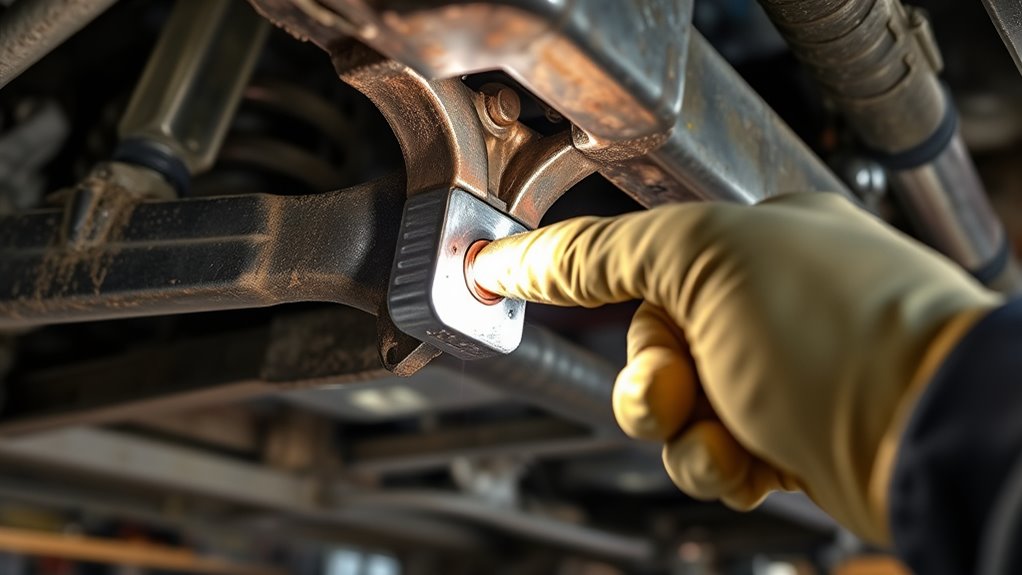
Weld quality should be verified before, during, and after the repair rather than judged only from the appearance of the finished bead.
Before welding the vehicle, make representative test welds on matching material and visually inspect them. Where required, destructively test the sample so the machine settings and technique can be adjusted before the replacement panel or structural part is attached. I-CAR explains why destructive weld testing is an important pre-repair verification step.
During the vehicle repair, watch for porosity, incomplete fusion, lack of penetration where penetration is required, burn-through, cracks, undercut, excessive distortion, or an attachment that does not match the specified weld location and count.
After welding, inspect accessible sides of the repair and follow any OEM-required inspection method. Non-destructive testing may be appropriate for certain materials or critical repairs, but it should not be added as a generic substitute for the vehicle maker’s required weld tests and repair procedure.
If you are troubleshooting fusion or penetration problems, review these MIG welding problems and solutions before continuing on the vehicle.
Document structural measurements and important repair steps when required for the vehicle, insurer, shop procedure, rebuilt inspection, or local regulations.
Follow Safety Rules for Welding Repairs
Automotive welding safety includes fire, fumes, electricity, electronics, batteries, restraint systems, fuel, and—in hybrids and EVs—high-voltage components.
Wear a welding helmet with the appropriate shade, safety glasses, welding gloves, suitable footwear, hearing protection when needed, and flame-resistant or non-synthetic clothing. Review appropriate protective clothing for arc welding and follow applicable OSHA welding, cutting, and brazing requirements in covered workplaces.
Before welding on a vehicle, follow the vehicle maker’s battery and restraint-system disabling procedure. I-CAR advises keeping the welding-current path short, placing the work clamp close to the weld on the same panel, isolating battery power as required, routing welding cables away from computers and sensors, and following OEM instructions for sensitive electronic systems. See I-CAR’s battery and welding guidance.
Hybrid and EV repairs require additional precautions. The high-voltage system may need to be de-energized, disconnected, or components may need removal before welding in specific areas. Only perform those steps according to the vehicle maker’s procedure and required technician qualification.
Control fire hazards before striking an arc. Remove or protect carpet, insulation, foam, seam sealer, cavity wax, wiring, fuel-related components, trim, glass, and other combustible material near the heat path. Inspect hidden surfaces during and after welding because conducted heat and sparks can start a fire where the welder cannot immediately see it.
Provide ventilation or local fume extraction appropriate for the material and coatings being removed or welded. Do not position your breathing zone directly in the welding plume.
Before welding a vehicle, confirm the OEM repair method, make the electrical and high-voltage systems safe, expose hidden fire hazards, position the work clamp correctly, and verify the weld setup on matching material.
- Use complete PPE for the task.
- Follow the OEM battery, SRS, and HV disabling sequence.
- Keep the work clamp close to the weld.
- Remove or shield hidden combustibles.
- Use adequate ventilation or fume extraction.
- Keep suitable fire-extinguishing equipment available.
- Inspect the repair area for heat or smoldering material after hot work.
How to Repair Auto Body Panels
This simplified procedure applies to an OEM-approved, nonstructural mild-steel body-panel repair. Do not use it as a substitute for a structural sectioning procedure.
| Step | Action |
|---|---|
| Plan | Confirm the panel may be patched and identify material, nearby hazards, and required corrosion protection |
| Fit | Cut back to sound metal and fit a matching patch flush with the surrounding panel |
| Test | Make and inspect representative welds on matching scrap before welding the vehicle |
| Weld | Use separated tacks or the OEM-approved technique to control heat and distortion |
| Finish | Dress only excess weld metal without thinning the surrounding sheet |
| Protect | Restore primer, seam sealer, backside protection, undercoating, and cavity protection as required |
If the patch does not fit tightly, correct the fit before adding more weld metal. Large gaps increase heat input and burn-through risk. Keep checking panel shape as the seam closes, and do not grind aggressively enough to thin the original sheet.
After the weld has passed inspection, restore every corrosion-protection layer removed during the repair. Bare backside steel and unsealed overlaps can turn a visually clean repair into another rust problem.
For a more detailed patch-panel workflow, see how to weld patch panels onto a car body.
Frequently Asked Questions
What Is the Golden Rule in Welding?
For automotive collision repair, the safest rule is to follow the vehicle-specific repair procedure before choosing a welding method. Confirm the material and attachment method, prepare clean sound metal, make test welds where required, control heat, and inspect the completed repair.
How Much Would It Cost for Weld Work on a Car?
There is no reliable universal price for car welding. Cost depends on teardown, corrosion, structural measuring, access, replacement parts, welding method, labor rate, refinishing, corrosion protection, scanning or calibration, and local inspection requirements. Get a written estimate after the damage has been exposed and measured.
Which Type of Welding Is Most Commonly Used for Automotive Repairs and Why?
MIG/GMAW is widely used because it is efficient for many steel body repairs and approved plug welds, but modern collision work also relies heavily on STRSW, MIG brazing, adhesives, rivets, and mixed attachment methods. Use the process specified for the exact vehicle and component rather than assuming MIG is correct everywhere.
What Are the 7 Common Welding Defects?
Common weld problems include porosity, incomplete fusion, insufficient penetration where penetration is required, undercut or underfill, distortion, cracks, and inclusions or contamination. The relevant defect types vary with the welding process, so inspect test welds and the finished repair using the applicable procedure.
Can You Weld a Salvage Car Frame?
A salvage car frame or structural unibody part can be welded only when the vehicle-specific repair procedure permits that repair, sectioning location, material, and attachment method. Some structural and ultra-high-strength parts must be replaced at factory seams or joined by a specified process instead of conventional MIG welding.
Should You Weld Damaged Suspension Components?
Do not assume a damaged control arm, steering part, strut-related component, or subframe is repairable by welding. Treat damaged suspension and steering components as replacement items unless the vehicle maker explicitly provides an approved repair procedure for the exact component.
Conclusion
Safe salvage car welding starts with a repairability decision, not with choosing a welder. Identify the material, locate the structural load path, measure the vehicle, and check the OEM body repair procedure before cutting or welding. Use the specified attachment method, verify the setup on matching material, control heat, inspect the repair, and restore corrosion protection. If the manufacturer prohibits sectioning, heating, straightening, or welding a damaged component, replace it rather than improvising a joint that may change the vehicle’s crash performance.
Finally, remember that a technically completed weld does not by itself make a salvage vehicle roadworthy. Rebuilt-title, inspection, documentation, and road-use requirements vary by jurisdiction, so confirm the applicable rules before returning the vehicle to service.