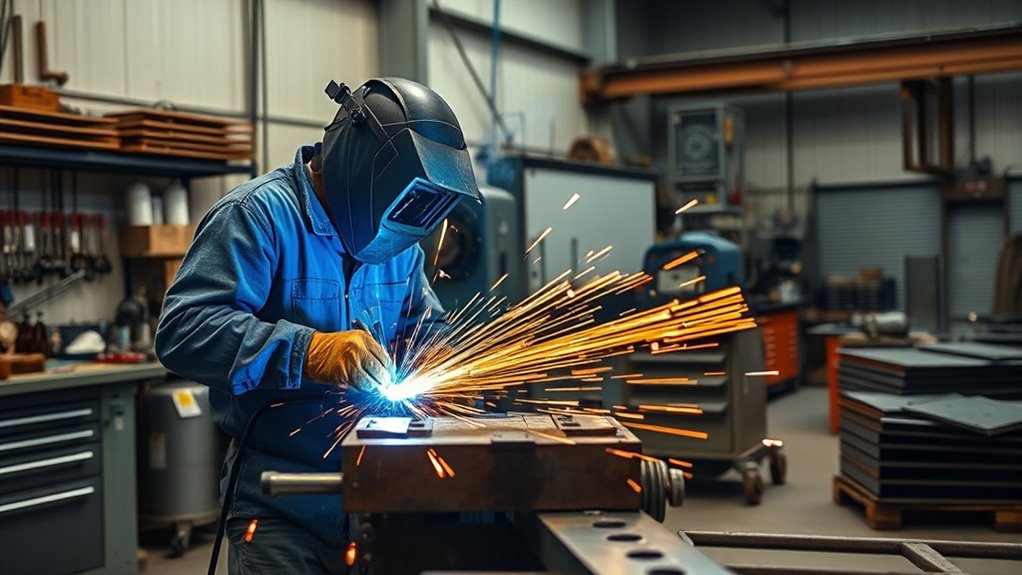
Arc eye from welding, also called welder’s flash or photokeratitis, is a painful ultraviolet injury to the cornea and conjunctiva. It can happen after a short unprotected look at a welding arc, and the symptoms often show up later. You may feel burning pain, tearing, redness, gritty eyes, light sensitivity, blurred vision, or swollen eyelids. Stop welding, protect your eyes from light, and get medical care if pain is severe, vision changes, or symptoms do not improve.
Quick Answer
Arc eye from welding is a UV burn on the surface of your eye. Symptoms usually appear 30 minutes to 12 hours after exposure and may include burning pain, watery eyes, redness, light sensitivity, blurred vision, and a gritty feeling. Most cases improve with rest and proper care, but vision loss, severe pain, or symptoms lasting more than two days need medical attention.
Key Takeaways
- Arc eye is caused by ultraviolet radiation from a welding arc, not by heat alone.
- Symptoms are often delayed, so you may feel fine right after exposure and hurt badly later.
- Do not rub your eyes, use leftover eye drops, or keep welding after symptoms start.
- Use a properly rated helmet, correct shade lens, ANSI Z87.1 safety glasses, and welding screens to protect yourself and bystanders.
At a Glance
| Time Required | Symptoms often begin 30 minutes to 12 hours after exposure. Many cases improve within 24 to 48 hours, but healing can take up to 72 hours. |
| Difficulty | Easy to prevent with correct PPE, but painful and risky to self-diagnose once symptoms start. |
| Tools Needed | Correct-shade welding helmet, ANSI Z87.1 safety glasses or goggles, welding curtains or screens, clean artificial tears, and a cold compress. |
| Cost | Prevention costs less than treatment. Use proper PPE before every weld and seek professional eye care if symptoms are severe or persistent. |
What Is Arc Eye From Welding?
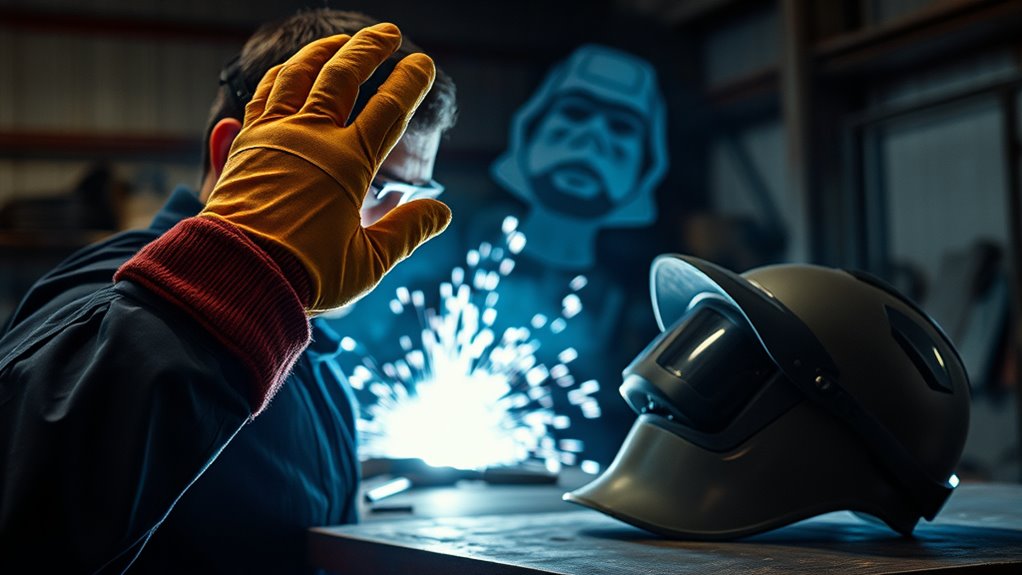
Arc eye is the welding-related form of photokeratitis. It happens when ultraviolet radiation damages the outer surface of your eye. The cornea absorbs much of that UV energy, and the damaged surface cells can shed hours later. That is why the pain often feels delayed instead of immediate.
You can think of arc eye as a sunburn on your eye surface, but it is not something to brush off. The exposed nerve endings can cause intense pain, tearing, light sensitivity, and a gritty feeling. Both eyes are often affected, especially when the exposure comes from looking toward an arc without enough shielding.
Arc eye can feel delayed because symptoms may not start until 30 minutes to 12 hours after UV exposure.
Most cases are temporary when treated properly, but you should not self-diagnose if you have vision loss, severe pain, chemical exposure, or symptoms in only one eye. Those signs can point to a foreign body, corneal abrasion, infection, or another eye injury that needs prompt care.
What Causes Arc Eye in Welders?
Arc eye in welders usually comes from unprotected or under-protected exposure to ultraviolet radiation from the welding arc. The arc can injure your eyes even if the exposure is brief, especially if your helmet is lifted, your shade is too light, your safety glasses lack side protection, or nearby reflective surfaces bounce light back toward you.
UV Radiation From Arcs
Welding arcs give off intense radiant energy. OSHA requires eye and face protection when workers are exposed to potentially injurious light radiation, and the filter lens must have a shade number appropriate for the work being performed under 29 CFR 1910.133.
The danger is not limited to the person holding the torch. Anyone watching the weld, helping nearby, or doing fire watch can be exposed if curtains, screens, and PPE are not used.
Poor Fit and Side Exposure
Arc eye often happens when the helmet is technically present but not working as a full barrier. Gaps at the side, a cracked cover lens, a dirty lens, a poorly adjusted auto-darkening helmet, or safety glasses without side shields can let harmful light reach your eyes.
Flying particles are another concern. OSHA notes that where flying-object hazards exist, workers using a welding helmet may also need glasses with side shields or goggles under the helmet. That lower layer protects your eyes when the hood is raised and helps block stray side exposure.
High-Risk Welding Tasks
TIG, MIG, flux-cored, stick, plasma welding, and plasma cutting can all produce hazardous radiant energy. Your risk rises when the amperage is higher, the arc is clearly visible, the workpiece is reflective, or the area is open enough for bystanders to see the arc.
Water, polished metal, light-colored concrete, and shiny vehicle panels can reflect UV and visible light. Treat reflected arc flash as a real hazard, not just glare.
Note: Arc eye is an eye-surface injury from UV exposure. Welding fumes, ventilation, burns, and electrical shock are separate welding hazards that still need their own controls.
Arc Eye Symptoms to Watch For
Arc eye symptoms can feel mild at first, then become much worse later. Watch for symptoms after any unprotected arc exposure, even if you only glanced at the weld or stood nearby without proper shielding.
| Symptom | What it may feel like | Why it matters |
|---|---|---|
| Burning or sharp pain | A hot, raw, or scratched feeling | Common sign of corneal surface irritation |
| Light sensitivity | Normal light feels harsh or unbearable | Often appears with photokeratitis |
| Watery, red eyes | Tearing, bloodshot eyes, swelling | The eye is reacting to injury or irritation |
| Blurred vision | Hazy sight, halos, trouble focusing | Needs care if severe, worsening, or persistent |
Pain and Light Sensitivity
Pain and light sensitivity are often the symptoms that make welders realize something is wrong. You may feel burning, stabbing, or sand-like pain. Bright light can trigger squinting, watering, headache, or the urge to keep your eyes closed.
Do not keep welding through these symptoms. More exposure can worsen irritation and delay recovery.
Redness and Watery Eyes
Redness and watery eyes are common after UV injury. Your eyes may look bloodshot, and tears may stream even when you are not crying. Your eyelids may also feel swollen or heavy.
These signs overlap with other eye problems, including infection, chemical exposure, dry eye, and foreign-body injuries. That is why a clear exposure history matters, and why worsening symptoms should be checked by an eye care professional.
Blurred Vision and Swelling
Blurred vision can happen when the injured eye surface becomes irritated and watery. Swelling around the eyelids can make it hard to open your eyes, especially in bright rooms.
Temporary blur can occur with arc eye, but you should treat any vision loss as a red flag. If your vision is reduced, one eye is much worse than the other, or the pain feels severe, get medical attention promptly.
Warning: Seek urgent eye care if you have vision loss, severe pain, a suspected metal particle in the eye, chemical exposure, symptoms mainly in one eye, contact-lens-related pain, pus, fever, or symptoms that last more than two days.
How to Tell If You Have Arc Eye
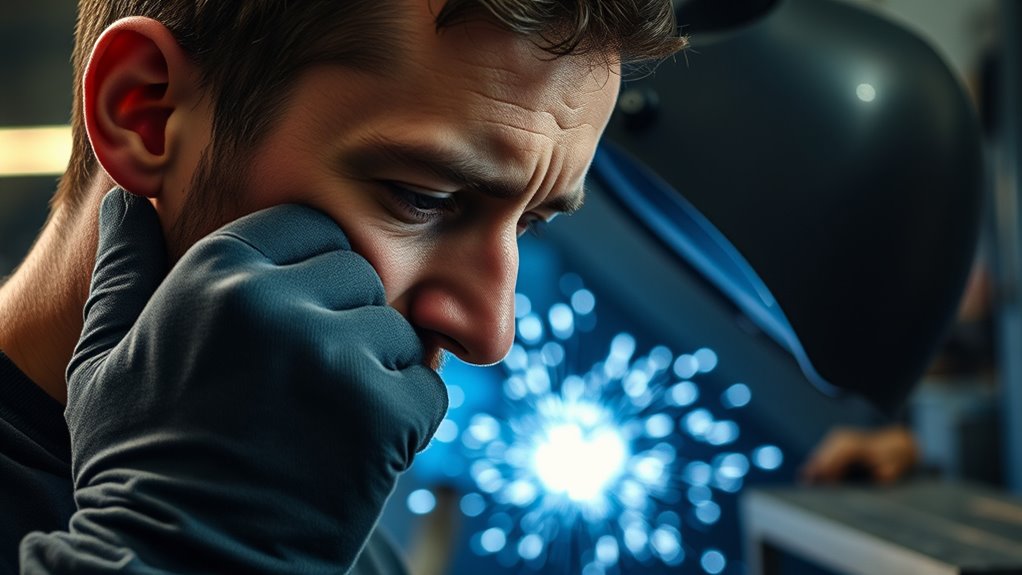
You may have arc eye if symptoms begin after welding exposure and include burning pain, light sensitivity, tearing, redness, gritty eyes, or blurred vision. The delayed timing is a strong clue. Arc eye often appears 30 minutes to 12 hours after exposure, not always during the weld itself.
Ask yourself these questions:
- Did you look at an arc without a helmet, even briefly?
- Was your helmet lifted, cracked, dirty, or set to the wrong shade?
- Were you nearby while someone else welded without curtains or screens?
- Did your eyes start hurting later, especially in both eyes?
- Do bright lights feel unusually painful?
If the answer is yes, arc eye is possible, but it is not the only possibility. Metal fragments, grinding dust, chemicals, infection, and contact lens problems can feel similar. When symptoms are severe or uncertain, an eye exam is the safest next step.
Arc Eye First Aid: What to Do Now
If you suspect welder’s flash, stop welding and move away from the arc. Your goal is to prevent more UV exposure, reduce irritation, and avoid making the eye surface worse.
- Go indoors or into a dim room. Bright light can increase pain and squinting.
- Remove contact lenses. Do not wear contacts again until your eyes have healed and a clinician says it is safe.
- Do not rub your eyes. Rubbing can worsen the irritated surface or grind in debris.
- Use a cold compress. Place a clean, cool, damp cloth over closed eyelids for comfort.
- Use preservative-free artificial tears if available. Avoid medicated drops unless a clinician tells you to use them.
- Take an oral over-the-counter pain reliever if you normally can use it safely. Follow the label and avoid medicines you have been told not to take.
- Get medical care if symptoms are severe, vision changes, or symptoms do not improve.
If there is dust, spatter, or chemical contamination, flush the eye with sterile saline or clean running water and seek care. If the problem is UV exposure only, do not keep rinsing aggressively, and do not use leftover antibiotic, steroid, numbing, or redness-relief drops.
Pro Tip: Keep preservative-free artificial tears, sterile saline, and clean compress materials in your shop first-aid kit, but treat them as comfort measures, not a replacement for an eye exam.
Products Worth Considering
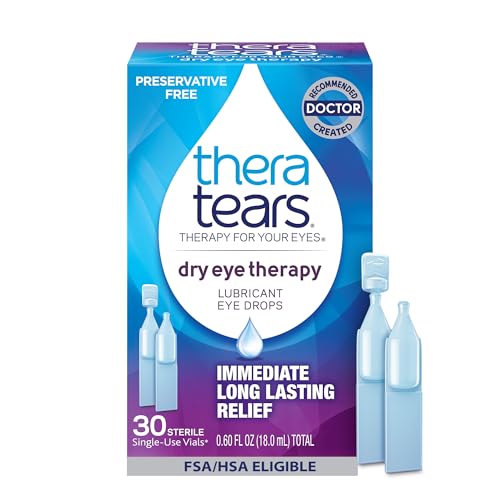
Preservative-free relief: Provide relief for sensitive eyes, with TheraTears preservative-free eye drops in convenient single-use vials that are easy to take along wherever you go

ORIGINAL STRENGTH: Provides temporary relief for mild, occasional dry eye symptoms

LASTING RELIEF: Original strength lubricating formula soothes mild symptoms of eye dryness
How Doctors Diagnose and Treat Arc Eye
An eye care professional will ask about your welding exposure, symptoms, contact lens use, and whether dust, metal, chemicals, or grinding debris could be involved. They may check visual acuity, examine the eye surface, and use fluorescein dye with a slit lamp to look for corneal surface damage.
| Finding | What it can suggest | Why it matters |
|---|---|---|
| Punctate staining on the cornea | UV-related epithelial injury | Supports photokeratitis diagnosis |
| Foreign body or rust ring | Metal or debris injury | Needs different treatment |
| One-eye symptoms | Scratch, particle, infection, or contact lens issue | Should not be assumed to be arc eye |
Treatment is usually supportive. A clinician may recommend artificial tears, ointment, oral pain relief, rest from contacts, and light avoidance while the eye surface heals. They may prescribe antibiotic ointment or drops if infection risk is a concern. Do not use topical anesthetic drops at home unless directly supervised by a clinician, because they can slow healing and hide worsening injury.
How Long Arc Eye Takes to Heal
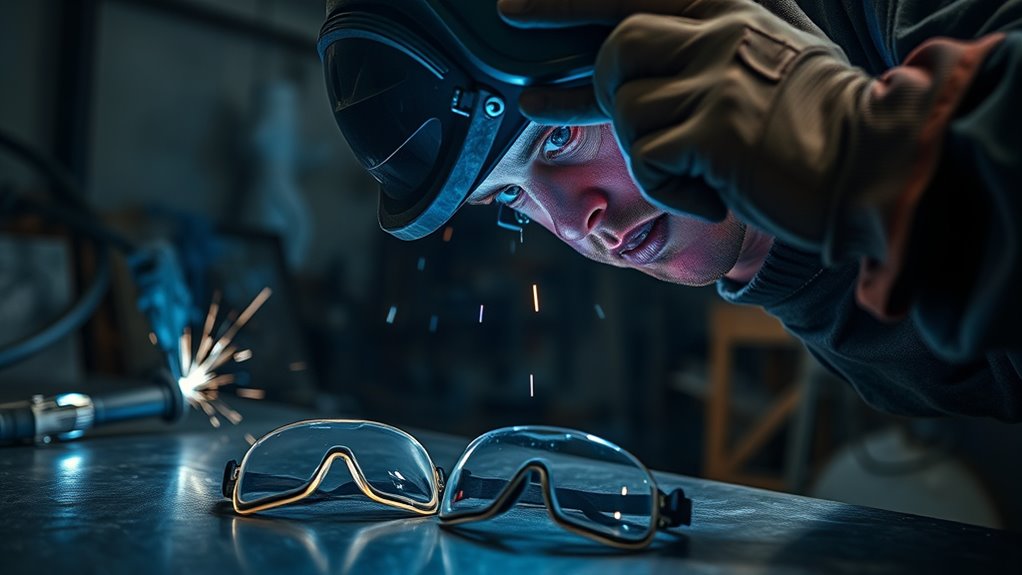
Many mild cases start improving within 24 to 48 hours once UV exposure stops and the eyes are protected. The corneal surface may take 24 to 72 hours to fully re-cover, depending on the exposure and whether there is another injury.
A typical recovery may look like this:
- First few hours: You may feel normal or only mildly irritated.
- 30 minutes to 12 hours: Burning pain, tearing, redness, and light sensitivity can appear.
- 24 to 48 hours: Many people notice clear improvement with rest and proper care.
- 48 to 72 hours: The surface often finishes healing, but persistent pain or blur needs evaluation.
Do not return to welding just because the pain fades. Fix the PPE or setup problem that caused the exposure before striking another arc.
Eye Protection That Prevents Arc Eye
Proper eye protection is the best way to prevent arc eye. Use a welding helmet or face shield with the correct filter shade for the process and amperage, and wear safety glasses or goggles with side protection underneath when flying particles or side exposure are possible.
OSHA explains in its welding eye-protection fact sheet that a higher shade number means less light passes through the filter lens. OSHA also advises starting with a shade too dark to see the weld zone, then moving lighter only while staying at or above the minimum required shade.
| Process | OSHA minimum shade examples | Practical note |
|---|---|---|
| SMAW stick welding | Shade 7 to 11, depending on electrode size and current | Higher amperage usually needs darker protection. |
| MIG / FCAW | Shade 7 to 10, depending on current | Do not rely on comfort alone; verify the shade chart. |
| TIG / GTAW | Shade 8 to 10 minimum, depending on current | ANSI/AWS recommendations may be darker at higher current. |
| Plasma arc welding or cutting | Shade 6 to 11 for plasma welding; shade 8 to 10 for many plasma cutting ranges | Use the equipment manual and OSHA table for the actual current. |
| Gas welding and oxygen cutting | Shade 3 to 6, depending on operation and thickness | Oxyfuel work still needs filter lenses, even though it is not an electric arc. |
Choose eye and face protection marked to recognized safety standards, such as ANSI Z87.1. If you use an auto-darkening helmet, confirm that it is suitable for the process, shade range, sensitivity, delay setting, and amperage. Replace cracked lenses and scratched cover plates before they become a safety problem.
Products Worth Considering
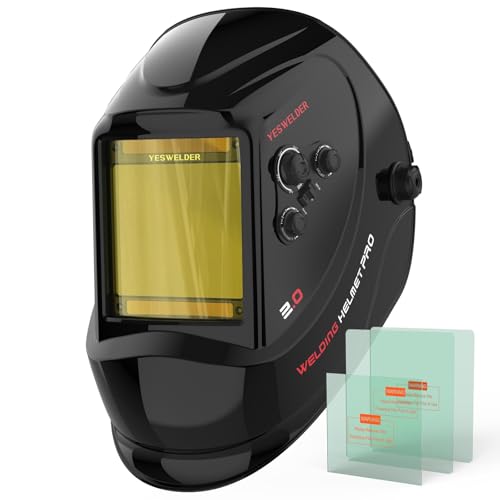
LARGE VIEW WITH TRUE COLOR CLARITY: See more of the weld puddle, joint edges, and work position through a wide 3.93" x 3.66" viewing area. The 1/1/1/1 true-color optical clarity provides a clearer, more natural view than traditional green-tinted lenses, helping support better visibility for detailed welding, fabrication, and garage projects.

LIGHTWEIGHT WELDING HOOD - Jackson Safety's HLX 100 Welding Helmet features a durable, lightweight design, weighing only 6 ounces to reduce neck tension; Hydraflex shell provides ultimate flexibility and durability

Advanced Eye Protection with Blue Light Blocking Technology: This welding helmet features cutting-edge Blue Light Blocking outer lens, shielding your eyes from harmful blue light during welding, protects your eyes by filtering out most of harmful high energy blue light rays while letting through the less harmful portion of the blue light spectrum. This ensures long-lasting eye comfort and safety, making it ideal for extended welding sessions
Pre-Weld Eye Protection Checklist
- Helmet shell has no cracks, gaps, or loose headgear.
- Filter lens or auto-darkening cartridge is rated for the process.
- Shade setting matches the process and amperage.
- Cover lens is clean, flat, and not deeply scratched.
- Auto-darkening sensors are clean and not blocked by your hand, fixture, or workpiece.
- Safety glasses or goggles fit under the hood and provide side protection.
- Welding curtains or screens are in place before the arc starts.
How to Protect Others From Arc Eye
Arc eye can affect helpers, apprentices, nearby mechanics, fire watch, and visitors. To protect others, contain the arc and control who can see it.
- Use welding curtains or screens. Place them before striking an arc, not after someone complains.
- Post warning signs. Mark the area so people know not to look at the arc.
- Set a controlled zone. Keep unprotected people out of the line of sight.
- Require observer PPE. Helpers and fire watch need proper eye protection too.
- Watch reflective surfaces. Cover or reposition shiny metal, glass, and light-colored surfaces when possible.
- Train the crew. Make “hood down before arc” a shop rule.
A buddy system helps because another person can spot lifted hoods, missing side shields, blocked auto-darkening sensors, or open curtain gaps before exposure happens.
Common Mistakes That Cause Arc Eye
Most arc eye cases come from small shortcuts repeated in a busy shop. Watch for these common mistakes:
- Tacking with the hood up: Even a quick tack can be enough exposure.
- Watching someone else weld: Bystanders need protection too.
- Using the wrong shade: A lens that feels easier to see through may be too light for the job.
- Skipping safety glasses under the helmet: Side light and debris can still reach your eyes.
- Ignoring cracked or dirty lenses: Damaged lenses can weaken visibility and protection.
- Trusting an untested auto-darkening helmet: Check batteries, sensors, shade range, and reaction before use.
- Welding around reflective surfaces: Reflected arc flash can still injure unprotected eyes.
Frequently Asked Questions
What does arc eye feel like?
Arc eye often feels like burning, scratching, sand, or grit in the eyes. You may also have tearing, redness, swollen eyelids, light sensitivity, headache, blurred vision, or trouble keeping your eyes open.
What should you do to prevent arc eye?
Wear a properly rated welding helmet with the correct shade for the process and amperage. Add ANSI Z87.1 safety glasses or goggles with side protection, inspect lenses before welding, use curtains or screens, and keep bystanders out of the arc line of sight.
What is the best way to get rid of arc eye?
Stop exposure, rest in a dim room, remove contact lenses, avoid rubbing your eyes, use a clean cold compress, and use preservative-free artificial tears if available. Seek medical care if pain is severe, vision changes, or symptoms last more than two days.
Can arc eye cause permanent damage?
A typical mild case is usually temporary, but you should not gamble with your vision. Repeated UV exposure adds eye-health risk over time, and persistent vision loss, severe pain, or a suspected particle in the eye needs urgent evaluation.
Should you rinse your eyes after arc eye?
If dust, metal, or chemicals may be in the eye, flush with sterile saline or clean running water and get care. If the issue is UV exposure only, use artificial tears for comfort and avoid harsh rinsing, rubbing, or medicated drops unless a clinician advises them.
Why do welders not live long?
Welding can expose workers to fumes, UV radiation, burns, noise, electrical hazards, awkward postures, and fire risk. Lifespan depends on the workplace, controls, PPE, ventilation, training, medical care, and lifestyle. Good safety systems reduce risk.
How do you protect your eyes from arc welding?
Use a welding helmet with the correct filter shade, wear side-protected safety glasses or goggles underneath, inspect the helmet and lenses, use welding screens, and never watch an arc without proper eye protection.
Conclusion
Arc eye from welding is painful, but it is also highly preventable. Use the right helmet shade, wear side-protected safety glasses under the hood, inspect your gear, and shield anyone nearby before you strike an arc. If symptoms start, stop exposure, avoid rubbing your eyes, remove contacts, rest in dim light, and seek care for severe pain, vision changes, or symptoms that do not improve. Your eyes are precision tools, and prevention is far easier than recovery.
Sources
- Cleveland Clinic: Photokeratitis — symptoms, causes, treatment, prevention, and when to seek care.
- EyeWiki / American Academy of Ophthalmology: Photokeratitis — delayed presentation, diagnosis, treatment, follow-up, and prevention.
- OSHA 29 CFR 1910.133: Eye and Face Protection — eye and face protection requirements and filter lens shade table.
- OSHA Fact Sheet: Eye Protection against Radiant Energy during Welding and Cutting — welding shade guidance, observer protection, and side-protection notes.
- CDC/NIOSH: Eye Safety for Workers — workplace eye hazards, PPE fit, and employer controls.