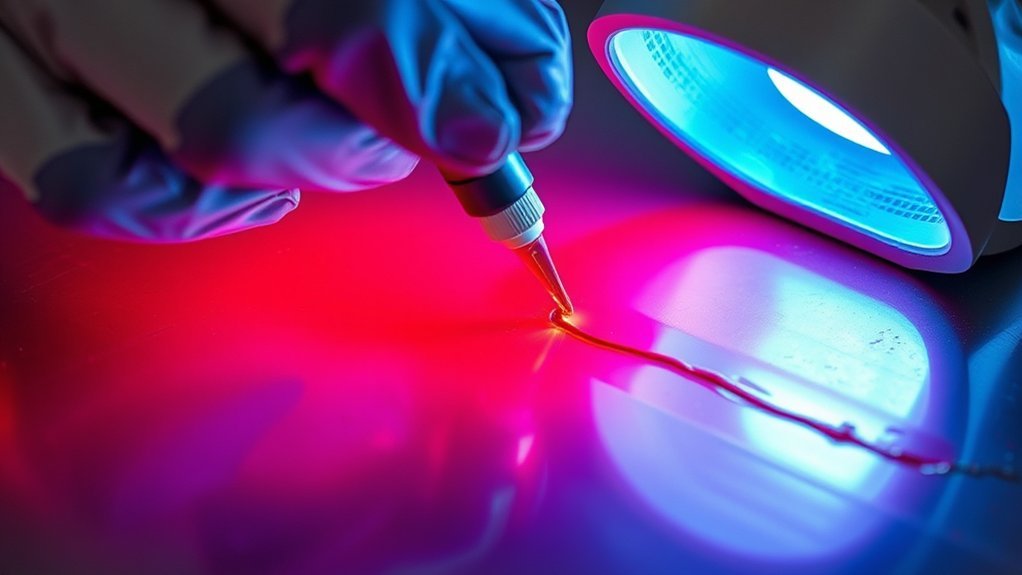
Dye penetrant testing, also called liquid penetrant testing or PT, is a practical way to check welds for defects that are open to the surface. You clean the weld, apply penetrant, let it dwell, remove the excess, apply developer, and inspect the surface for visible indications. It is useful for finding surface cracks, pores, seams, and some surface-open lack of fusion on nonporous materials, but it cannot find hidden defects deep inside a weld.
Quick Answer
Dye penetrant testing checks welds for surface-breaking flaws by using a colored or fluorescent liquid that seeps into open defects. After the excess penetrant is removed, a developer pulls trapped penetrant back to the surface so cracks, pores, and other surface indications become easier to see.
Key Takeaways
- Dye penetrant testing works only on defects that are open to the surface.
- Clean, dry, nonporous surfaces are required for reliable results.
- Visible dye is inspected under white light; fluorescent dye needs UV-A lighting and a darker inspection area.
- A visible indication is not automatically a failed weld. Acceptance depends on the project code, drawing, procedure, or customer requirement.
- For structural, pressure, aerospace, or code-controlled work, use a qualified inspector and an approved written procedure.
At a Glance
| Time Required | About 30 to 90 minutes for most small weld checks, depending on cleaning, dwell time, developer time, and documentation. |
| Difficulty | Moderate for basic shop screening; professional qualification is needed for code acceptance work. |
| Tools Needed | Cleaner or remover, penetrant, developer, lint-free cloths, timer, gloves, eye protection, proper lighting, and UV-A light for fluorescent systems. |
| Cost | Low for basic aerosol kits; higher when certified personnel, formal reports, calibrated lighting, or code procedures are required. |
Warning: Do not use a simple dye penetrant kit as a substitute for a required certified inspection. If the weld is part of a pressure vessel, lifting point, trailer frame, roll cage, structural connection, aircraft part, pipeline, or customer-controlled job, follow the approved code and use qualified inspection personnel.
Why Use Dye Penetrant Testing for Welds?
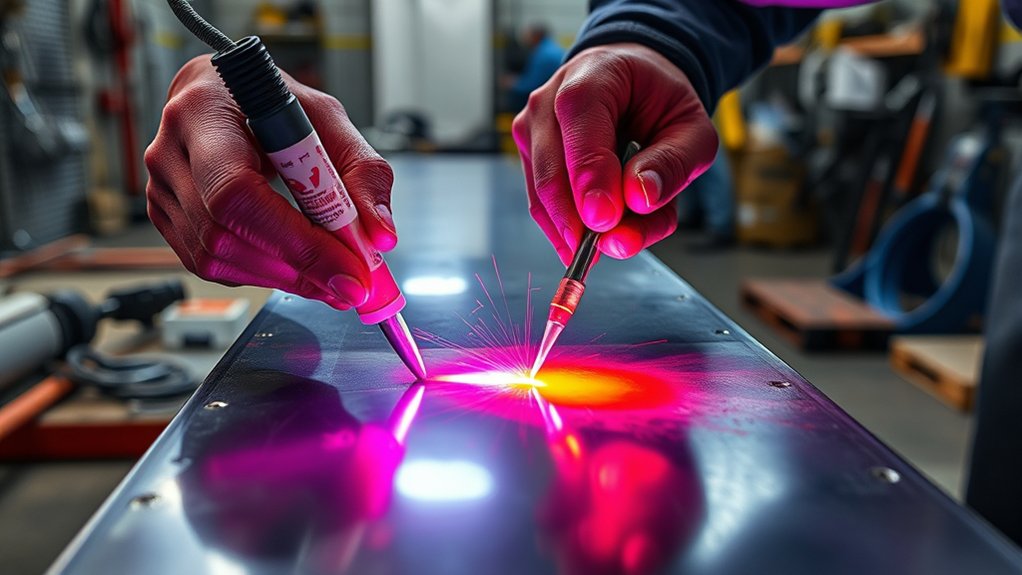
When you need to check weld integrity without cutting the part apart, liquid penetrant testing is one of the most accessible non-destructive testing methods. It is especially useful for finding surface-breaking discontinuities such as cracks, seams, pores, laps, and surface-open lack of fusion on solid, nonporous materials.
DPT is popular because it is portable, sensitive to small surface flaws, and less expensive than many advanced inspection methods. A basic visible dye kit can be used in a shop or field setting, while fluorescent penetrant systems can provide higher sensitivity when the job requires controlled lighting and more formal inspection conditions.
This test also helps you catch defects after cutting, grinding, fabrication, repair welding, or heat-related cracking. Good inspection does not replace good welding technique, though. Strong weld quality still starts with the right joint prep, clean base metal, correct filler, and controlled welding parameters. If you are still building basic weld quality, reviewing flux core welding techniques can help reduce the defects you later have to inspect.
What Dye Penetrant Testing Can and Cannot Find
Dye penetrant testing is a surface inspection method. It can only reveal a discontinuity if that discontinuity is open to the surface and can hold penetrant. This makes the method useful for weld toe cracks, crater cracks, surface porosity, surface-breaking lack of fusion, undercut-related cracking, and cracks caused by grinding, bending, fatigue, or heat stress.
DPT cannot prove that a weld is free of internal defects. It will not reliably find buried porosity, slag inclusions, internal lack of fusion, incomplete penetration hidden under the surface, or cracks sealed by smearing, paint, scale, or weld spatter. For hidden flaws, you may need ultrasonic testing, radiographic testing, or another method required by the job specification.
Note: An indication shows where penetrant bled out. It does not automatically prove the exact defect size, depth, or acceptability. Final acceptance must come from the applicable code, drawing, inspection procedure, or customer requirement.
Importance of Surface Preparation for Effective Testing
Surface preparation is the step that most often decides whether a dye penetrant test works. The penetrant must reach an open flaw. Grease, oil, paint, rust, weld scale, heavy oxidation, anti-spatter spray, primer, moisture, and grinding dust can block defects or create false indications.
Start by removing loose contamination, then clean the inspection area with the cleaner recommended for your penetrant system. The weld and nearby heat-affected zone should be dry before you apply penetrant. If the surface has paint, primer, rust converter, or coating, do not test over it unless your approved procedure specifically allows it. A coating can seal cracks and hide the very defect you are trying to find. If you are dealing with coated or rusted steel, understand how coatings behave before testing; for example, a rust converter and primer may stabilize a surface for painting, but it is not a proper inspection surface for DPT.
Be careful with aggressive grinding, wire brushing, peening, or blasting. These methods can smear soft metal over a fine crack and close it at the surface. If heavy mechanical cleaning is required, the inspection procedure may call for extra cleaning or etching before penetrant is applied.
Tools and Materials Needed for Dye Penetrant Testing
For a basic visible dye penetrant test on a weld, you usually need:
- Cleaner or remover approved for the penetrant system
- Visible red penetrant or fluorescent penetrant
- Developer compatible with the penetrant
- Lint-free cloths or wipes
- Timer or stopwatch
- Disposable chemical-resistant gloves
- Safety glasses or goggles
- Good white light for visible dye inspection
- UV-A lamp and low ambient light for fluorescent inspection
- Inspection form, camera, marker, or sketch for documentation
If you are inspecting after plasma cutting, grinding, or weld repair, follow safe shop setup before cleaning or spraying chemicals. Heat, sparks, and flammable aerosols do not mix. Safety habits used for cutting operations, such as those covered in a plasma cutter safety checklist, also matter when preparing parts for inspection.
Products Worth Considering

Dye Penetrant - Penetrant: Solvent removable

The Dye Penetrant Crack Finder Kit (For Cast Iron and Aluminum) is a simple 4 step process that eas

All-in-One NDT Kit: This RADNOR Aerosol Nuclear Inspection Kit includes everything you need—penetrant, developer, two cleaners, a wiper, and a paint marker for precision crack inspection.
Key Steps in the Dye Penetrant Testing Process
Use the product instructions and the approved inspection procedure first. The steps below explain the normal workflow for weld inspection.
- Confirm the test is appropriate. Make sure the weld material is nonporous and that DPT is allowed by the job specification. It works well on many stainless steel, carbon steel, aluminum, nickel alloy, and nonporous metal surfaces. It can also be used on certain nonporous plastics, glass, and ceramics when the product is compatible.
- Clean the surface. Remove oil, dirt, paint, slag, scale, spatter, moisture, and loose oxides from the weld and surrounding area. Let the part dry fully.
- Apply the penetrant. Spray, brush, or dip the penetrant so it fully wets the inspection area. Avoid dry spots, puddles, and uneven coverage.
- Allow dwell time. Let the penetrant sit for the time listed in the product instructions or written procedure. Many shop checks use several minutes of dwell time, but the correct time depends on material, temperature, penetrant type, and the defects being sought.
- Remove excess penetrant. Wipe gently in one direction with a clean cloth. If using solvent remover, apply it to the cloth rather than flooding the weld surface. Too much remover can pull penetrant out of shallow defects.
- Apply developer. Apply a thin, even developer film. The developer acts like a blotter and draws trapped penetrant back out of surface openings.
- Allow development time. Inspect after the required development time. Watch indications as they form because growth, shape, and bleed-out pattern can help interpretation.
- Inspect under proper lighting. Use bright white light for visible dye. Use the correct UV-A light and low ambient light for fluorescent penetrant.
- Evaluate indications. Record location, length, shape, orientation, and type of indication. Compare results with the acceptance criteria for the job.
- Post-clean the part. Remove testing residue, especially if the part will be welded again, painted, coated, or placed in service.
Pro Tip: Before inspecting an important weld, test your cleaner, penetrant, and developer on a scrap coupon or known reference surface. This helps confirm spray pattern, contrast, developer coverage, and lighting before you inspect the real part.
Types of Dye Penetrants and Their Applications
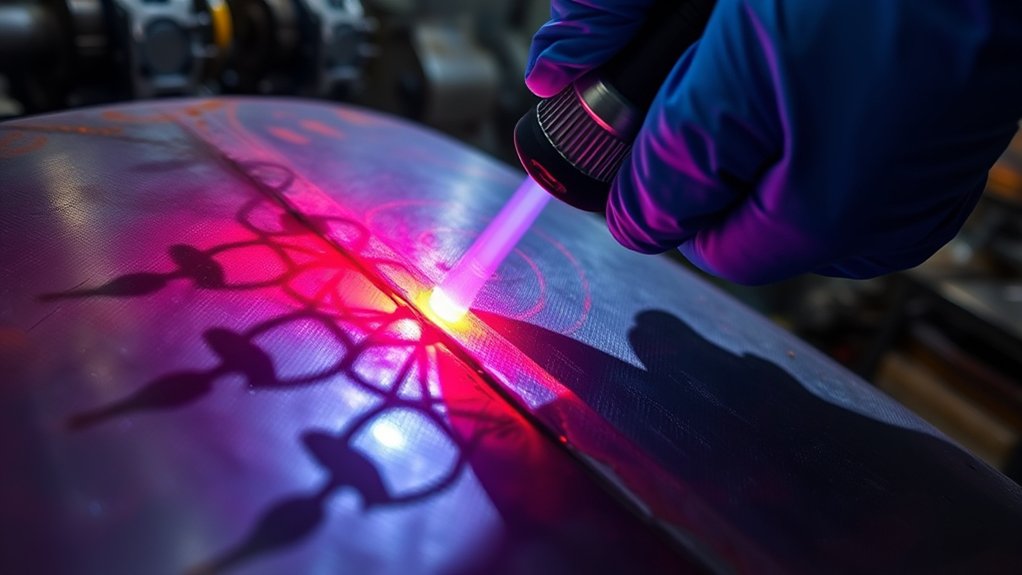
Penetrants are commonly grouped by how they are viewed and how they are removed. Choosing the right system matters because penetrant, remover, emulsifier, and developer must work together.
Products Worth Considering

Crack Detection for Aluminum cylinder heads

Magnaflux SKD-S2 solvent-based developer for visible and fluorescent liquid penetrant inspection.

Treats 6,000+ Gallons – This concentrated neon green tracer dye is engineered for efficiency—just 1 oz treats up to 100 gallons of water. One 64 oz bottle covers over 6,000 gallons, making it ideal for everything from pool leak detection and household plumbing to large-scale testing and inspections.
Visible Dye Penetrants
Visible dye penetrants are usually red and are inspected under white light after a light-colored developer is applied. They are common for field checks, repair shops, fabrication work, and general weld screening because they do not require UV lighting. They are useful when you need a fast, low-cost way to look for surface cracks or surface porosity on clean, nonporous welds.
The tradeoff is sensitivity. Visible dye systems are generally less sensitive than fluorescent systems for very fine indications. They also depend heavily on clean developer coverage and enough white light to create clear contrast.
Fluorescent Dye Penetrants
Fluorescent penetrants are viewed under UV-A light, usually in a darker inspection area. They can make small indications stand out more clearly than visible dye because the fluorescent bleed-out glows against the background. These systems are common in aerospace, critical manufacturing, and other high-sensitivity inspection work.
Fluorescent testing requires more control. The UV light, ambient light, surface condition, inspector adaptation time, and cleanliness all affect results. Do not mix fluorescent and visible products unless the manufacturer and procedure allow it.
Penetrant Removal Methods
Liquid penetrant systems also differ by removal method:
- Water-washable: Excess penetrant is removed with water. It is fast, but over-washing can remove penetrant from defects.
- Solvent-removable: Common for spot checks and field work. You normally wipe with a cloth lightly moistened with remover.
- Post-emulsifiable lipophilic: Uses an oil-based emulsifier before rinsing. It gives more control for certain high-sensitivity inspections.
- Post-emulsifiable hydrophilic: Uses a water-based emulsifier, often after a pre-rinse, and is common in controlled inspection lines.
DPT can be useful on aluminum welds because aluminum is nonmagnetic, so magnetic particle testing is not an option. For aluminum welding background, see this guide on how to weld aluminum with flux core, but remember that the inspection method must still match the material, procedure, and service requirement.
Choosing the Best Developer for Effective Weld Inspections
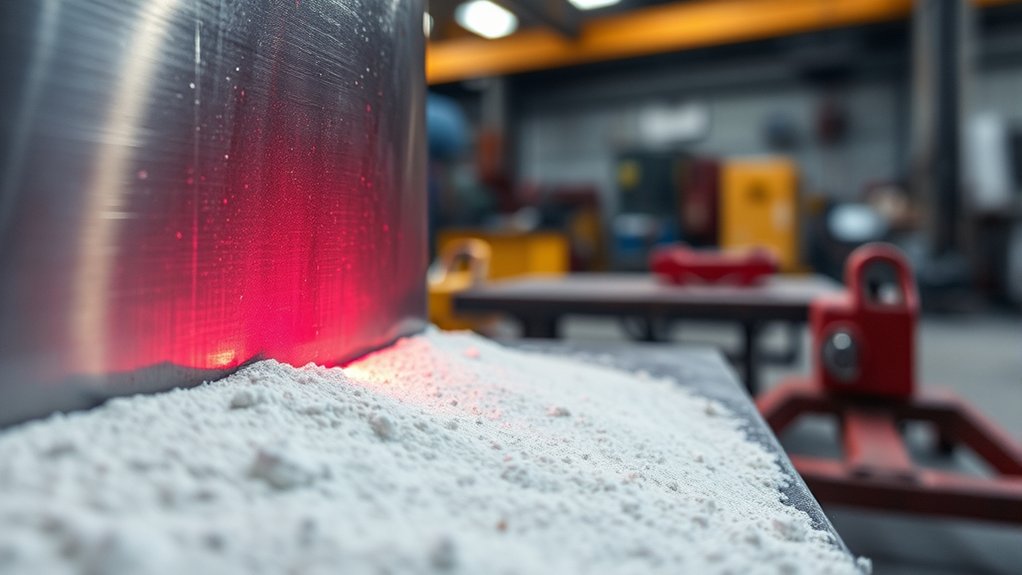
The developer makes indications visible by drawing penetrant back out of surface openings. A poor developer choice can hide small flaws, create a heavy background, or make interpretation harder.
- Dry powder developer: Often used with fluorescent systems on dry parts. It can work well on rougher surfaces when used correctly.
- Non-aqueous wet developer: Common in aerosol kits. It dries quickly and creates strong contrast for visible dye inspection.
- Water-soluble developer: Forms a solution and can provide uniform coverage when the process allows water-based handling.
- Water-suspendable developer: Uses particles suspended in water and requires proper mixing and application control.
Always match the developer to the penetrant system. Do not assume any developer will work with any penetrant. If you are inspecting galvanized or zinc-coated steel, the coating can interfere with the test. When an approved procedure requires bare metal, coating removal may be needed before inspection. This is one reason welders often need to understand removing zinc coating before welding or testing galvanized parts.
How to Read Your Dye Penetrant Test Results
After development, look for bleed-out patterns on the weld and nearby heat-affected zone. A sharp, straight, or jagged line can suggest a crack. A rounded dot or cluster can suggest porosity. A broad, blurry stain may be excess penetrant, rough surface texture, poor cleaning, or a nonrelevant indication.
Do not judge only by color. Judge by:
- Location on the weld, toe, crater, root area, or base metal
- Shape: linear, rounded, clustered, or diffuse
- Length and width
- Direction compared with weld travel or stress direction
- Whether the indication grows during development time
- Whether it repeats after re-cleaning and retesting
Linear indications usually deserve more concern than small rounded indications because cracks and lack-of-fusion indications can be linear. Still, the final pass/fail decision depends on the acceptance standard. For example, weld size, joint type, service load, and acceptance criteria all matter. When evaluating fillet welds, understanding the intended weld size helps you interpret inspection results in context; this guide to maximum fillet weld size explains why weld dimensions matter.
Dye penetrant testing finds surface indications. It does not decide acceptance by itself. The project code, drawing, customer specification, or approved procedure decides whether an indication is acceptable.
Standards and Acceptance Criteria for Dye Penetrant Testing
For general industry, ASTM E165/E165M-23 is a key reference for liquid penetrant testing practice. It covers penetrant examination procedures and explains that penetrant testing can detect discontinuities open to the surface, including cracks, seams, laps, through leaks, and lack of fusion. It also makes an important point: the practice itself does not define which indications are acceptable.
For pressure equipment and code-controlled work, ASME BPVC Section V is often relevant because it covers nondestructive examination requirements. Other jobs may use AWS, API, ISO, customer specifications, drawing notes, or an internal written practice.
Before you inspect, confirm:
- Which inspection standard applies
- Which penetrant system and sensitivity level are allowed
- Required surface condition and temperature range
- Minimum dwell and development times
- Required lighting conditions
- Inspector qualification requirements
- Acceptance criteria for linear and rounded indications
- Report format and record retention rules
Overcoming Common Challenges in Dye Penetrant Testing
Most DPT problems come from dirty surfaces, rushed dwell time, too much remover, poor developer coverage, or bad lighting. Use the table below to troubleshoot common issues.
| Challenge | Likely Cause | Solution |
|---|---|---|
| Heavy red or fluorescent background | Excess penetrant was not removed well enough. | Clean and retest. Use controlled wiping and avoid flooding the surface. |
| Weak or missing indications | Surface contamination, short dwell time, or over-cleaning after dwell. | Re-clean, dry fully, follow the required dwell time, and remove excess gently. |
| Developer hides the surface | Developer was applied too heavily. | Apply a thin, even coat. A heavy coat can blur or mask small indications. |
| False or nonrelevant indications | Rough weld profile, scratches, spatter, threads, edges, or poor cleaning. | Compare with surface features, clean again, and retest if the procedure allows. |
| Poor fluorescent visibility | Wrong UV-A light, too much ambient light, or dirty viewing conditions. | Use the required UV-A lamp, control ambient light, and follow the inspection procedure. |
Health and Safety Considerations in Dye Penetrant Testing
Dye penetrant testing uses chemicals. Cleaner, remover, penetrant, developer, emulsifier, and aerosol propellants can irritate skin, eyes, and lungs. Some products are flammable. Always read the product Safety Data Sheet before use and follow your shop’s hazard communication program. OSHA’s Hazard Communication Standard requires employers to communicate chemical hazards through labels, safety data sheets, and training.
Use these precautions:
- Work in a well-ventilated area.
- Keep aerosols and solvents away from sparks, flames, hot metal, and welding arcs.
- Wear gloves and safety glasses or goggles.
- Use respiratory protection only when required by the SDS or workplace procedure.
- Do not spray chemicals toward your face or another person.
- Store containers closed when not in use.
- Dispose of used wipes, developer residue, and empty cans according to local rules and workplace procedures.
- Do not weld over penetrant residue. Clean the part before welding, heating, painting, or coating.
Good shop clothing still matters. Chemical splash, grinding dust, hot metal, and nearby welding work can overlap in the same area. Use appropriate protective clothing when inspection is part of a welding workflow. If plasma cutting is also happening nearby, review what safety gear is needed for plasma cutting so inspection chemicals are not handled around sparks or hot work.
Dye Penetrant Testing Applications in Welding
Dye penetrant testing is useful in many welding situations because it works on both ferrous and nonferrous nonporous materials. You can use it for stainless steel welds, aluminum welds, carbon steel welds, nickel alloys, repair welds, machined parts, castings, and some nonmetallic parts when the product and procedure allow it.
Common welding uses include:
- Checking crater cracks after welding stops
- Inspecting weld toes for surface cracks
- Finding surface porosity after grinding or finishing
- Checking repair welds before final acceptance
- Inspecting nonmagnetic materials where magnetic particle testing is not suitable
- Screening parts before painting, coating, or assembly
- Investigating cracking caused by heat, restraint, bending, fatigue, or thermal stress
DPT is also useful when a part has seen heating, cooling, or cutting stresses. For example, cast iron and thick sections can crack from thermal stress if handled poorly. Understanding how heat affects materials, such as in this guide on whether a plasma cutter can cut cast iron, helps you choose where to inspect after cutting or welding.
DPT vs Other Weld Inspection Methods
Dye penetrant testing is not the only weld inspection method. The right method depends on the material, defect type, required sensitivity, access, budget, and code.
- Visual testing: Best first step for weld profile, undercut, overlap, cracks visible to the eye, and workmanship issues.
- Dye penetrant testing: Best for surface-breaking defects on clean, nonporous materials, including nonmagnetic metals.
- Magnetic particle testing: Best for surface and near-surface flaws in ferromagnetic materials such as many carbon steels.
- Ultrasonic testing: Useful for internal flaws and thickness-related inspection when performed by trained technicians.
- Radiographic testing: Useful for internal volumetric defects, but it requires radiation safety controls and qualified personnel.
For many welds, DPT is used after visual inspection. If the weld fails visual inspection, fix the visible issue first before adding penetrant testing. If the concern is internal soundness, DPT alone is not enough.
Documentation and Post-Cleaning
For informal shop checks, a photo and note may be enough. For professional work, document the part number, weld ID, inspection date, inspector name, penetrant system, batch numbers if required, dwell time, developer time, lighting conditions, surface temperature if required, indication location, indication size, acceptance criteria, and final disposition.
After inspection, clean the part. Penetrant and developer residue can interfere with paint, coating, sealants, adhesive bonding, and future welding. If the part will be returned to service, make sure it is free of residue that could attract dirt, cause staining, or contaminate the next process.
Frequently Asked Questions
How do you dye penetrant test a weld?
Clean and dry the weld, apply penetrant, allow the required dwell time, remove excess penetrant, apply developer, wait for development, and inspect under the correct lighting. Record the location, shape, and size of any indications, then compare them with the applicable acceptance criteria.
What are the 4 common types of NDT used after welding?
Four common NDT methods used after welding are visual testing, dye penetrant testing, magnetic particle testing, and ultrasonic testing. Radiographic testing is also common for internal weld inspection, especially where a code or customer specification requires it.
What are the 4 methods of testing after welding?
A practical post-weld inspection plan often includes visual inspection, dye penetrant testing, magnetic particle testing, and ultrasonic testing. The best method depends on the material and whether you need to find surface defects, near-surface defects, or internal defects.
What is a Type 1 and Type 2 penetrant?
Type 1 penetrant is fluorescent and is viewed under UV-A light. Type 2 penetrant is visible dye and is viewed under white light. Fluorescent systems are commonly used where higher sensitivity is needed, while visible dye systems are common for general shop and field checks.
Can dye penetrant testing find internal weld defects?
No. Dye penetrant testing can only find defects that are open to the surface. If you need to find internal porosity, slag inclusions, buried cracks, or internal lack of fusion, you may need ultrasonic testing, radiographic testing, or another method required by the job specification.
Do you need to clean the weld after dye penetrant testing?
Yes. Post-cleaning removes penetrant and developer residue. This is important before painting, coating, adhesive bonding, heat treatment, service use, or additional welding.
Conclusion
Dye penetrant testing is a simple but powerful way to inspect welds for surface-breaking defects. It works best when the weld is clean, dry, nonporous, and tested with a compatible penetrant and developer system. The most important limits are just as clear: DPT does not find hidden internal flaws, and it does not decide acceptance by itself. Use it as part of a complete weld quality process, follow the correct standard or procedure, and rely on qualified inspection when the weld affects safety, code compliance, or customer acceptance.
Sources
- ASNT: Liquid Penetrant Testing — backs the PT process, advantages, limitations, material restrictions, and penetrant types.
- ASTM E165/E165M-23: Standard Practice for Liquid Penetrant Testing for General Industry — backs the scope, surface-open discontinuity limits, and need for separate acceptance criteria.
- ASME BPVC Section V: Nondestructive Examination — backs code-controlled NDE context for pressure equipment and formal inspections.
- OSHA 29 CFR 1910.1200: Hazard Communication — backs SDS, chemical hazard communication, employee training, and protective-measure guidance.