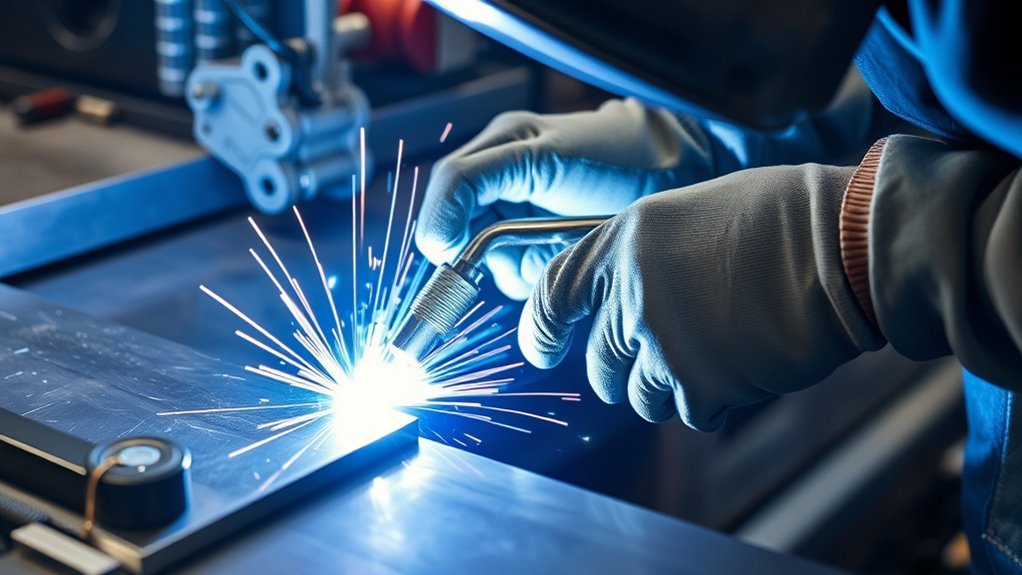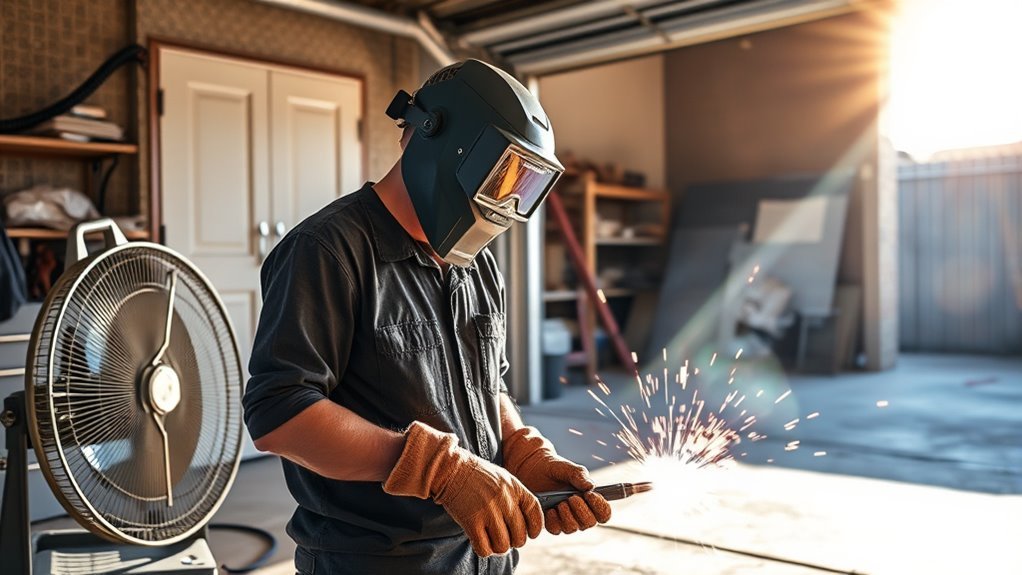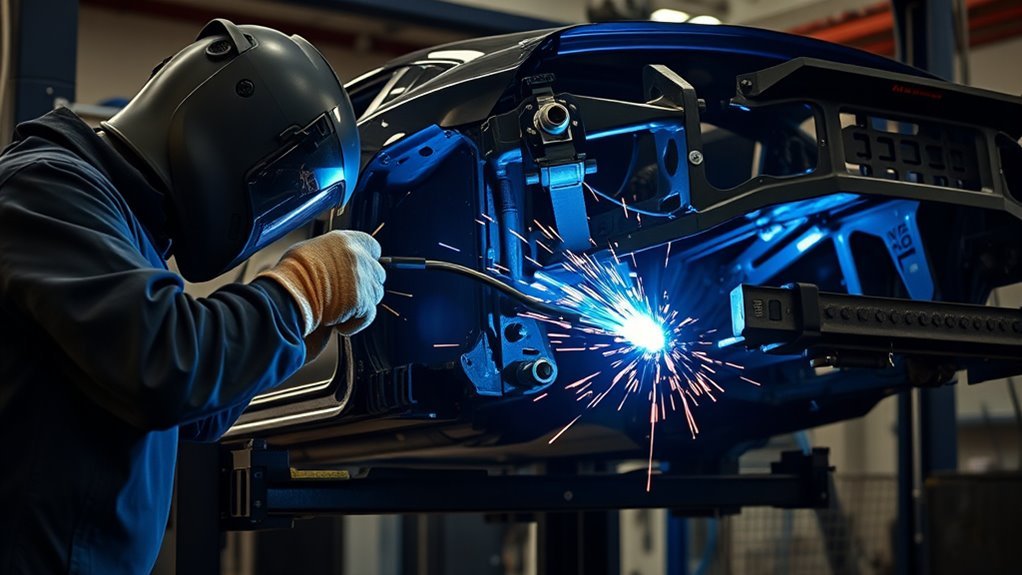
You need the core automotive welding terms that control fit-up, heat, penetration, and repair strength. MIG is fast and common for steel body and fabrication work, TIG gives you precise control on thin or visible welds, and stick or flux-cored welding can help in rougher repair conditions. You also need to understand joints, beads, defects, heat control, safety terms, and shop slang so you can follow repair guidance and spot bad welds before they become a problem.
Quick Answer
The most important automotive welding terms are MIG, TIG, stick, flux-cored, base metal, filler metal, tack weld, butt joint, lap joint, fillet weld, plug weld, heat-affected zone, penetration, porosity, undercut, overlap, cracking, spatter, duty cycle, and PPE.
Key Takeaways
- MIG is usually the easiest automotive welding process to learn for mild steel body panels, brackets, and general repair work.
- TIG gives cleaner control on thin metal, aluminum, stainless, and visible welds, but it takes more skill and time.
- Fit-up, tack welds, heat control, and penetration often matter more than how pretty the bead looks.
- Porosity, undercut, overlap, cracking, lack of fusion, and burn-through are warning signs that the weld needs correction.
- Safety terms like PPE, ventilation, fire watch, arc flash, and hot work matter any time you weld on or near a vehicle.
At a Glance
| Best For | Beginners, DIY auto repair readers, and anyone learning welding terms before body, frame, exhaust, or bracket work. |
| Main Processes | MIG/GMAW, TIG/GTAW, stick/SMAW, flux-cored/FCAW, resistance spot welding. |
| Must-Know Safety Terms | PPE, arc flash, ventilation, respirator, fire watch, hot work, ground clamp, shielding gas, and fume exposure. |
| Most Common Defects | Porosity, undercut, overlap, lack of fusion, incomplete penetration, cracking, spatter, distortion, and burn-through. |
Automotive Welding Basics
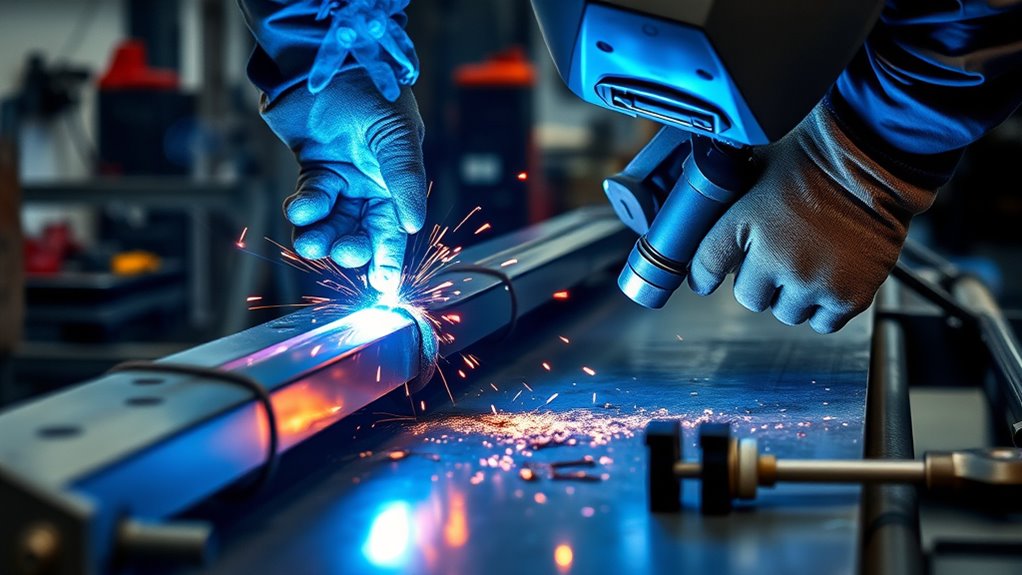
When you start automotive welding, you’ll usually hear about MIG, TIG, stick, and flux-cored welding. MIG is common because it is fast, easy to set up, and useful for many mild steel repair jobs. TIG is slower, but it gives you better control when the metal is thin, the weld is visible, or the material needs careful heat control.
The first terms to learn are base metal and filler metal. Base metal is the vehicle part you are welding. Filler metal is the wire or rod added to the joint. The goal is fusion, which means the weld metal and base metal melt together instead of only sitting on the surface.
For strong repairs, aim for proper penetration. Penetration means the weld fuses deep enough into the joint to carry the load. Too little penetration can leave a weak surface bead. Too much heat can cause burn-through, warping, or damage to thin body panels.
Use the correct shielding gas for the process and material. A 75% argon and 25% CO2 mix is common for short-circuit MIG welding on mild steel, but aluminum, stainless steel, and some transfer modes need different gas choices. Understanding wire speed and voltage settings is also crucial for achieving consistent weld quality.
Warning: Welding on vehicles can ignite paint, seam sealer, undercoating, fuel vapor, interior trim, wiring, and nearby parts. Disconnect the battery when appropriate, keep a fire extinguisher nearby, clean the work area, and follow the vehicle maker’s repair procedure before welding structural panels, aluminum, high-strength steel, or EV components.
Check your machine’s duty cycle before long runs. Duty cycle tells you how long the welder can operate in a 10-minute period before it needs to cool. If you push past it, the machine may overheat, weld quality can suffer, and the repair can become less consistent.
MIG, TIG, Stick, and Flux-Cored Welding Terms
These process names come up constantly in automotive welding. Each process uses a different electrode, shielding method, and level of control.
| Term | Full name | What it means in auto work |
|---|---|---|
| MIG | Gas Metal Arc Welding, or GMAW | A continuously fed solid wire melts into the joint while shielding gas protects the puddle. It is common for mild steel panels, brackets, and fabrication. |
| TIG | Gas Tungsten Arc Welding, or GTAW | A non-consumable tungsten electrode creates the arc. You add filler by hand when needed. TIG is useful for thin metal, stainless, aluminum, and clean visible welds. |
| Stick | Shielded Metal Arc Welding, or SMAW | A flux-coated rod melts into the joint and creates shielding gas and slag. It is rugged, but not usually the first choice for thin automotive sheet metal. |
| Flux-cored | Flux-Cored Arc Welding, or FCAW | A hollow flux-filled wire feeds through the gun. Self-shielded wire can work outdoors better than gas MIG, but it creates slag and more cleanup. |
| Spot welding | Resistance Spot Welding, or RSW | Two overlapping panels are squeezed between electrodes and fused with electrical resistance. It is common in factory body construction. |
With MIG, you feed a solid wire continuously through the gun while shielding gas protects the puddle. With TIG, you use a tungsten electrode and often 100% argon for many steel and automotive jobs. With stick, the flux coating on the rod provides shielding and leaves slag that you must chip away. With flux-cored wire, the flux inside the wire helps protect the weld, which can make the process more forgiving outdoors.
Understanding proper electrode melting is essential for strong welds, especially when you work with stick rods, amperage settings, and different metal thicknesses.
Products Worth Considering

5 IN 1 MULTIFUNCTIONAL: Enjoy the convenience of a 5-in-1 welding machine that masterfully handles Gasless Flux Core MIG/Gas MIG/Spool Gun MIG/Stick/Lift TIG (additional lift TIG torch/spool gun required: B07YP9TQV1/B0B12JLSS9). This unit suits a wide range of welding applications and meets your various welding needs.
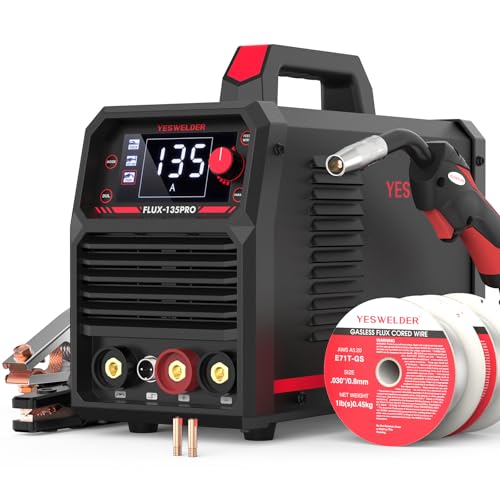
READY OUT OF THE BOX: Start welding immediately! It masterfully handles Gasless Flux Core MIG, Stick, and Lift TIG (Extra Lift TIG torch required). This budget-friendly 3-in-1 machine includes extra E71T-GS .030''&.035'' flux core wires, known for its smooth arc and high feedability. Say goodbye to heavy shielding gas cylinders—perfect for outdoor, windy, or all-position welding.

【UPGRADED 2 IN 1 MULTIPROCESS WELDER】The AWT welding machine 110v offers 2 processes: Flux Core/gasless MIG and MMA/Stick to meet your different requirements. Our MIG welder perfect for DIY projects, home repairs, farm work, automotive applications and construction sites.
Fit-Up and Prep Terms You Need Before Striking an Arc
Good welding starts before the arc. Fit-up means how well the parts line up before you weld them. Poor fit-up makes you fight gaps, distortion, weak fusion, and ugly beads.
- Root gap: The space between two pieces at the joint. Too large a gap can cause burn-through on thin panels.
- Bevel: An angled edge cut into thicker metal so the weld can penetrate deeper.
- Land: The small flat edge left after beveling. It helps control burn-through at the root.
- Tack weld: A small temporary weld used to hold parts in alignment before the final weld.
- Clamp: A holding tool that keeps panels from moving as heat pulls the metal.
- Ground clamp: The electrical return connection. Poor contact can cause unstable arc behavior and weak welds.
- Clean metal: Bare, contaminant-free metal. Paint, rust, oil, seam sealer, zinc coating, and undercoating can cause porosity and fumes.
- Weld-through primer: A coating used between overlapping panels in some repairs. Use it only where the repair procedure allows it, and keep the actual weld zone clean enough for fusion.
Pro Tip: Before welding on the vehicle, make a test weld on scrap metal with the same thickness and similar fit-up. Cut, bend, or break the test piece if possible so you can check penetration before touching the repair area.
Automotive Weld Joints and Beads
Once you’ve matched the welding process to the job, the next step is choosing the right joint and bead for the repair. You need to know weld joint types so you can fit the metal, control access, and keep the structure sound.
Butt joints join two edges end to end and are common in patch panels and seam repairs. Lap joints overlap panels and are common on flanges and reinforcements. T-joints place one part perpendicular to another. Fillet welds fill the corner where two surfaces meet.
Additionally, understanding flux core welding techniques can improve your control when you use flux-filled wire in outdoor or less-than-perfect conditions.
| Joint or bead term | Common automotive use | What to watch |
|---|---|---|
| Butt joint | Patch panels, seams, exhaust sections | Gap control, burn-through, penetration |
| Lap joint | Panel flanges, reinforcements, brackets | Clean overlap, corrosion protection, full tie-in |
| T-joint | Tabs, brackets, frame supports | Equal heat on both pieces |
| Fillet weld | Corners, brackets, T-joints, lap joints | Consistent bead size and toe fusion |
| Plug weld | Replacing factory spot welds on flanges | Hole fill, fusion to lower panel, flat finish |
| Stitch weld | Thin sheet metal and heat-sensitive areas | Short welds spaced apart to reduce heat buildup |
| Seam weld | Continuous seams where the repair procedure allows it | Distortion, warping, and heat input |
Weld bead quality tells you how well you controlled travel speed, torch angle, stickout, and heat. A good bead is even, fused at the edges, and sized for the joint. A pretty bead still fails if it lacks penetration or fusion.
Heat Control and Machine Setting Terms
Automotive welding often deals with thin steel, coated panels, aluminum, or heat-sensitive structures. These terms help you understand why a weld warps, burns through, or fails to fuse.
- Amperage: The current level. More amperage usually means more heat and deeper penetration.
- Voltage: A setting that affects arc length, bead shape, and puddle behavior in MIG welding.
- Wire feed speed: How fast MIG or flux-cored wire feeds into the weld. It affects amperage and bead consistency.
- Travel speed: How fast you move the torch or electrode. Too slow can overheat the panel; too fast can cause poor fusion.
- Stickout: The distance from the contact tip to the wire end before the arc. Too much stickout can make the arc unstable.
- Heat-affected zone, or HAZ: The area beside the weld that got hot enough to change properties but did not melt.
- Burn-through: A hole melted through thin metal because heat was too high, travel was too slow, or the gap was too large.
- Distortion: Warping or pulling caused by heating and cooling. Stitch welds, clamps, and cooling time help control it.
- Duty cycle: The percentage of a 10-minute period that a welder can run at a stated output before cooling.
Note: Modern vehicles may use high-strength steel, ultra-high-strength steel, aluminum, adhesives, rivets, and squeeze-type resistance spot welds in specific locations. Do not guess on structural repairs. Check the OEM procedure before welding, sectioning, heating, or replacing panels.
Products Worth Considering

Time-Saving MIG Welding Helper:Achieve precise spot welding in seconds without cutting or grinding. This kit delivers efficient, clean results, saving time and material costs. Perfect for professionals and DIY enthusiasts.

MIG Welding Accessories - Create a Precise Spot weld Without Cutting Scrap Metal Plugs Ideal For MIG Welding
Common Automotive Weld Defects
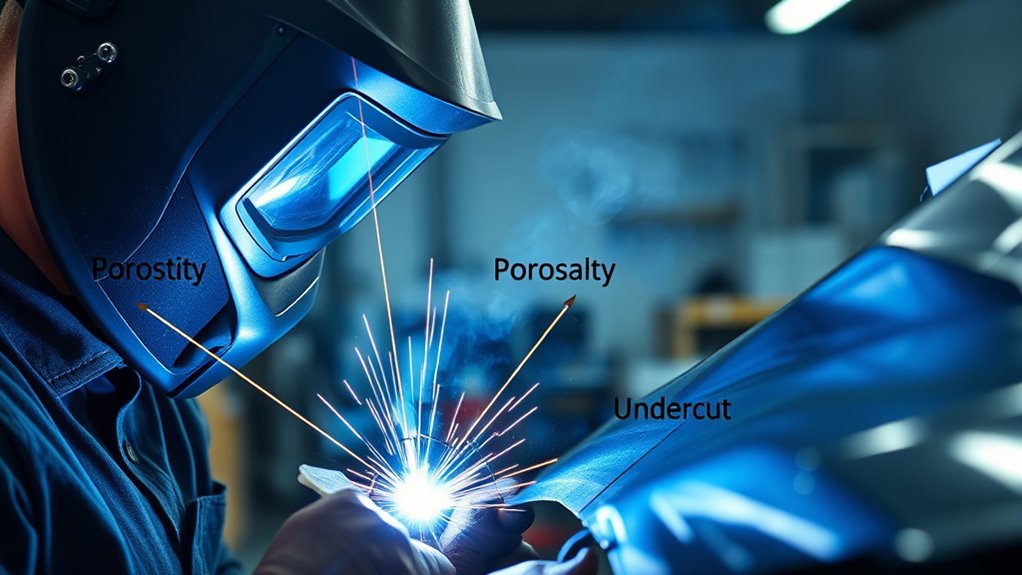
Even a well-fit joint can fail if the weld shows defects, so you need to spot them early and correct the cause. Most defects come from poor prep, wrong settings, bad gas coverage, poor technique, or welding too much heat into the part.
| Defect | What it looks like | Common causes | Fix |
|---|---|---|---|
| Porosity | Pinholes or bubbles in the bead | Dirty metal, moisture, paint, rust, bad gas coverage, drafts | Clean to bare metal, improve gas flow, block wind, check leaks |
| Undercut | Groove along the weld toe | Too much heat, fast travel, wrong angle, not enough filler at the edge | Reduce heat, adjust angle, pause at the toe, improve bead placement |
| Overlap | Weld metal rolls over the base without fusing | Cold settings, slow travel, large puddle, poor torch angle | Increase heat slightly, tighten puddle control, improve angle |
| Lack of fusion | Bead does not bond fully to the base metal or previous pass | Low heat, dirty metal, wrong angle, poor access, moving too fast | Clean better, increase heat within safe limits, improve joint access |
| Incomplete penetration | Weld does not reach the root of the joint | Low heat, tight root, poor bevel, fast travel | Improve fit-up, adjust bevel or gap, raise heat carefully |
| Cracking | Visible crack in weld or heat-affected zone | Stress, contamination, wrong filler, poor procedure, rapid cooling | Stop and correct the procedure; grind out and repair only if allowed |
| Spatter | Small droplets stuck around the weld | Unstable arc, dirty metal, wrong settings, long stickout | Tune voltage and wire feed, clean metal, shorten stickout |
| Burn-through | Hole melted through the panel | Too much heat, slow travel, large gap, thin metal | Lower heat, stitch weld, reduce gap, use backing where appropriate |
When you control these defects, you reduce rework and improve repair strength. Maintaining proper wire feed mechanisms during welding can also reduce inconsistent arcs, spatter, and poor bead shape.
Automotive Welding Safety Terms
Automotive welding is hot work. That means you are using heat, sparks, and an arc that can injure you or ignite nearby materials. Learn these terms before you weld.
- PPE: Personal protective equipment, including a welding helmet, safety glasses, leather gloves, flame-resistant clothing, hearing protection, and proper footwear.
- Arc flash: Eye injury from intense arc radiation. A correct welding lens shade and helmet help protect your eyes.
- Ventilation: Fresh-air movement or local exhaust that reduces welding fume exposure.
- Respirator: A fitted device used when ventilation alone is not enough. Use the right type for the hazard.
- Fire watch: A person who watches for smoldering material during and after hot work.
- Hot work area: The cleared welding zone where sparks, heat, and fumes are controlled.
- Fume exposure: Inhalation of welding fumes. Fumes can include metal particles, and some welding operations may expose you to manganese, hexavalent chromium, zinc oxide, or coating byproducts.
- Electrical shock: A serious hazard from damaged leads, wet conditions, poor grounding, or unsafe handling.
Pay special attention to coated or galvanized metal. Grinding, sanding, or welding through coatings can release harmful fumes and cause weld contamination. Clean the joint correctly and use ventilation that matches the job.
A good automotive weld is not just a smooth bead. It is clean metal, correct fit-up, controlled heat, proper fusion, and a safe work area.
Automotive Welding Slang You’ll Hear
Shop talk matters in automotive welding, and you’ll hear slang that points to specific tools, weld looks, and defects. When you know the terms, you can communicate faster and avoid confusion.
A buzz box means a basic AC stick welder. A third hand is a holding tool that helps position parts during tack welding. Stacking dimes describes a TIG bead with tight, even ripples. Fish eye warns you of contamination in the puddle. Wagon tracks usually means grooves or uneven lines along a weld bead or root pass.
In addition, understanding duty cycles can prevent overheating and improve your machine’s longevity.
- Buzz box: A basic AC stick welder.
- Third hand: A holding or positioning tool.
- Stacking dimes: A neat ripple pattern, often used to describe a controlled TIG bead.
- Fish eye: A defect linked to contamination or gas problems.
- Tack it: Add small welds to hold parts before final welding.
- Blow-through: Burn a hole through thin metal.
- Cold lap: Weld metal sitting on the base without proper fusion.
- Toe: The edge where the weld face meets the base metal.
- Crater: The depression at the end of a weld bead, which can crack if not filled correctly.
Use these terms to diagnose faster, communicate clearly, and protect your work. Pair them with clean metal, steady clamps, proper PPE, and sound settings so your welds stay strong and your process stays under control.
Frequently Asked Questions
Can you make $100,000 a year welding?
Yes, but it is not typical for every welding job. Higher earnings usually come from specialized certifications, union work, travel jobs, pipeline or industrial work, heavy overtime, underwater welding, inspection roles, or owning a welding business. General welder pay is much lower on average, so treat $100,000 as a possible career target rather than a standard beginner wage.
What welding terms should beginners learn first?
Start with MIG, TIG, stick, flux-cored, base metal, filler metal, shielding gas, tack weld, butt joint, lap joint, fillet weld, penetration, fusion, porosity, undercut, spatter, burn-through, HAZ, and PPE. These terms cover the process, setup, weld quality, heat control, and safety basics.
Is MIG or TIG better for automotive welding?
MIG is usually better for beginners and many mild steel automotive repairs because it is faster and easier to learn. TIG is better when you need precise heat control, cleaner appearance, or careful work on thin metal, stainless steel, or aluminum. The best choice depends on the material, repair location, and OEM procedure.
What does porosity mean in a weld?
Porosity means gas pockets are trapped in the weld metal. It often looks like pinholes or small pits. Common causes include dirty metal, moisture, paint, rust, oil, poor shielding gas coverage, wind, or a gas leak. Fix the cause before welding over the area again.
What is a plug weld in auto body repair?
A plug weld joins overlapping panels by filling a hole in the top panel and fusing it to the lower panel. It is often used to replace factory spot welds during panel replacement when the repair procedure allows MIG plug welding.
What does HAZ mean in welding?
HAZ means heat-affected zone. It is the area beside the weld that did not melt but got hot enough for its properties to change. On vehicles, controlling the HAZ matters because too much heat can weaken thin panels, damage coatings, distort parts, or affect advanced steels.
Conclusion
You’ve learned the core automotive welding terms that help you read repair instructions, choose a process, set up clean joints, spot defects, and talk clearly in the shop. Focus on the basics first: clean metal, good fit-up, tack welds, correct settings, steady travel speed, safe PPE, and enough penetration without overheating the panel. When the repair is structural, high-strength steel, aluminum, near safety systems, or near EV components, follow the OEM procedure instead of guessing. The right terms help you ask better questions, avoid common mistakes, and build stronger repairs.
Sources
- OSHA Welding, Cutting, and Brazing Hazards and Solutions — backs up welding hazard categories, PPE, fume, UV, burn, electrical, and fire safety cautions.
- OSHA Welding, Cutting, and Brazing Standards — backs up the need to treat welding as a regulated safety topic with applicable standards.
- NIOSH Welding Fumes and Manganese — backs up welding fume and manganese exposure concerns.
- Miller Flux-Cored Welding Basics — backs up flux-cored wire, self-shielded FCAW, outdoor use, slag, and setup guidance.
- Miller Duty Cycle Guide — backs up the duty cycle definition and overheating cautions.
- U.S. Bureau of Labor Statistics: Welders, Cutters, Solderers, and Brazers — backs up current wage context for the welding salary FAQ.