A weld can look sound at first and still fail later if cracking starts in the wrong place. Hot cracking forms while the weld is still very hot, while cold cracking can appear hours or days after the job looks finished. This guide explains how each crack type forms, where to look for it, and how you can reduce the risk before the weld goes into service.
Quick Answer
Hot cracking happens during welding or soon after solidification, usually in the weld metal. Cold cracking happens after the weld cools, often in the heat-affected zone or base metal. You reduce hot cracking by controlling weld chemistry and bead shape. You reduce cold cracking by limiting hydrogen, slowing cooling, and lowering residual stress.
Key Takeaways
- Hot cracking usually forms while the weld metal solidifies.
- Cold cracking often appears later because hydrogen, hardness, and stress work together.
- High-strength steels need extra care because they can harden in the heat-affected zone.
- Clean base metal, low-hydrogen consumables, and proper heat control reduce cracking risk.
- Visual checks can catch some cracks, but non-destructive testing finds hidden defects.
What Is Hot Cracking and When Does It Occur?
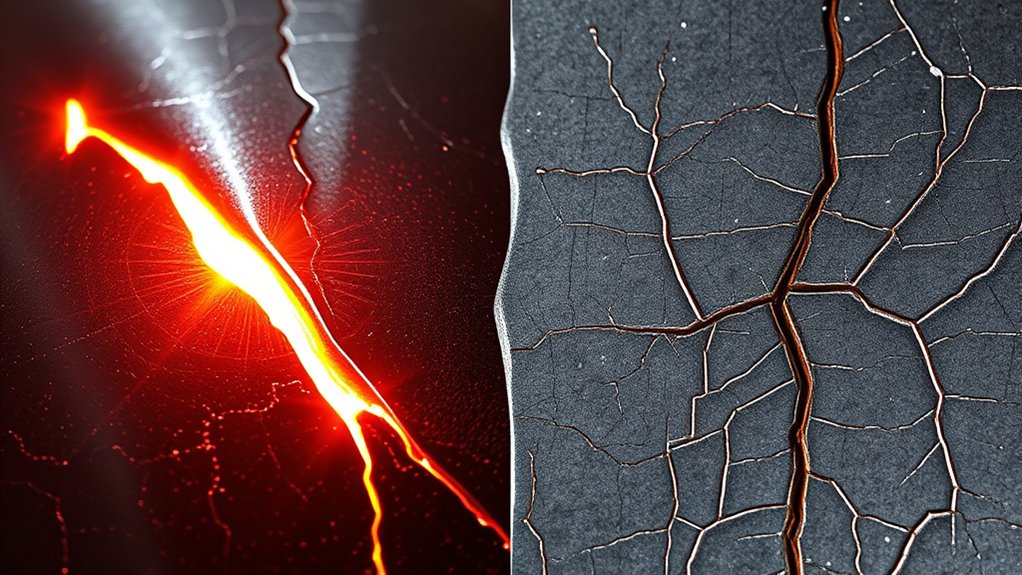
Hot cracking, also called solidification cracking, occurs during welding or shortly after the weld metal starts to solidify. It usually develops at high temperatures in the weld metal, often near the centerline or crater.
Low-melting elements such as sulfur and phosphorus can collect in the last liquid metal to freeze. When the weld shrinks under stress, that weak liquid film can tear and form a crack.
Your risk rises when the weld bead has poor shape, deep penetration, or a narrow centerline that traps these low-melting compounds. Crater cracks, a type of hot crack, can form when you end the arc too quickly and leave a shallow depression at the weld end.
You can reduce hot cracking by controlling weld bead shape, using clean base materials, choosing the right filler metal, and filling the crater before you stop the arc. Understanding key welding parameters also helps you control heat input and weld shape.
What Causes Cold Cracking and When Does It Happen?
Cold cracking, also called hydrogen-induced cracking, can appear after the weld cools. It may show up hours later, and some cracks can take days to become visible.
Three conditions usually work together: hydrogen in the weld area, a hard or brittle microstructure, and tensile stress. High-strength steels and higher-carbon steels can harden in the heat-affected zone, which makes them more vulnerable.
Rapid cooling increases the risk because it can form hard martensite in the heat-affected zone. Residual stress from welding then pulls on the brittle area while hydrogen weakens the metal.
You can lower the risk by preheating the base metal, using low-hydrogen filler metals, keeping consumables dry, and applying post-weld heat treatment when the procedure calls for it. Good fit-up and clean metal preparation also help, especially when you use flux-core welding tips for beginners on repair or fabrication work.
Warning: Cold cracks can hide below the surface, so don’t rely on appearance alone for critical welds.
Key Differences Between Hot and Cold Cracking
Hot and cold cracking both weaken welds, but they form for different reasons. Timing, location, and root cause tell you which defect you need to prevent or repair.
Hot cracking mainly relates to weld metal solidification. Cold cracking mainly relates to hydrogen, hardness, and stress after cooling. Knowing the difference helps you choose the right inspection method and prevention plan. Learning how to spot porosity and cracks can also help you identify the defect type faster.
Key Characteristics
Hot cracking usually appears in the weld metal as centerline cracks, crater cracks, or short tears near the weld end. It forms while the weld metal still has weak liquid films along grain boundaries.
Cold cracking usually starts in the heat-affected zone or base metal. It can extend into the weld metal if stress and hydrogen remain high.
The prevention approach changes with the crack type. For hot cracking, you control chemistry, bead shape, joint restraint, and crater fill. For cold cracking, you control hydrogen, preheat, cooling rate, and post-weld stress.
Timing of Occurrence
Hot cracks form during welding or soon after the weld starts to solidify. You may see them during visual inspection right after the pass cools enough to examine.
Cold cracks form after the weld cools, often below about 600°F. They may appear after the part sits under stress, so delayed inspection matters on critical work.
Causes and Prevention
Hot cracking comes from solidification stress, poor weld bead geometry, high restraint, and low-melting impurities in the weld pool. Cleaner materials and a balanced weld bead profile reduce this risk.
Cold cracking comes from hydrogen, hard microstructures, and residual or applied stress. Preheating, low-hydrogen consumables, dry storage, and post-weld heat treatment reduce this risk.
| Crack Type | When It Forms | Common Location | Main Cause | Best Prevention Focus |
|---|---|---|---|---|
| Hot cracking | During welding or solidification | Weld metal or crater | Solidification stress and weak grain-boundary films | Bead shape, filler choice, and crater fill |
| Cold cracking | After cooling | Heat-affected zone or base metal | Hydrogen, hardness, and tensile stress | Preheat, low hydrogen, and stress relief |
Materials Prone to Weld Cracking
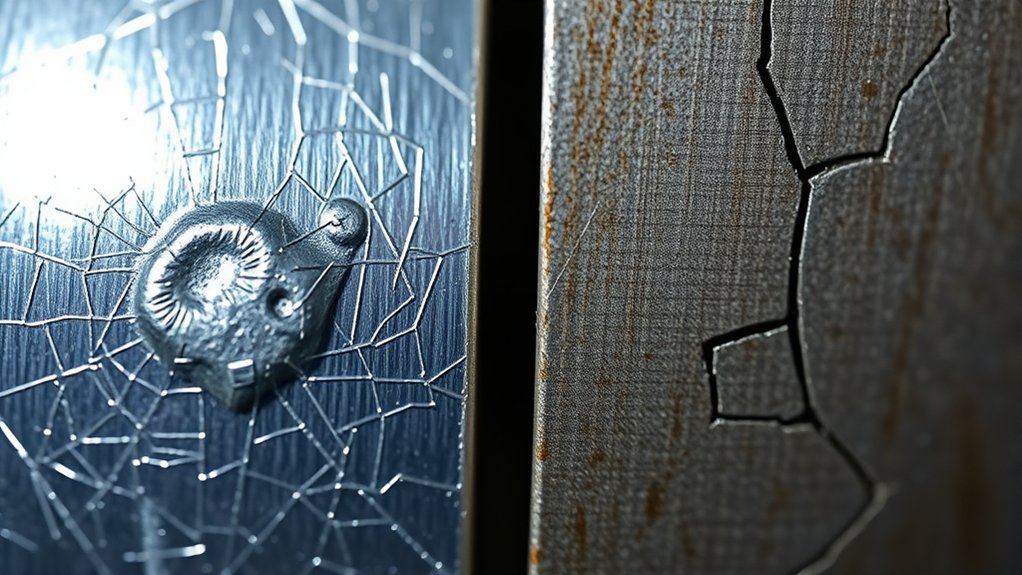
Some metals crack more easily because of their chemistry, strength, or cooling behavior. You should treat these materials with extra care before you choose a welding procedure.
- Aluminum and some magnesium alloys can suffer hot cracking because of their solidification range and alloy chemistry.
- High-strength steels can suffer cold cracking when hydrogen and high residual stress remain in the weld area.
- Higher-carbon steels can form hard martensite in the heat-affected zone after rapid cooling.
- Materials with sulfur, phosphorus, oil, paint, rust, or moisture contamination can raise cracking risk.
Low-hydrogen filler metals can help reduce cold cracking in susceptible steels. Common hydrogen designations, such as H4 or H8, indicate a maximum diffusible hydrogen level under standard test conditions. Understanding welding rod specifications can help you choose consumables that match the base metal and service conditions.
Products Worth Considering

NO SOLDER POWDER NEEDED: These aluminum rods are flux cored welding rods, no need solder powder, no other materials are required, and it is easy to use.

PRODUCT: E7018 is a high quality carbon steel electrode with a low hydrogen potassium iron powder type flux. It can be used for AC and DC, and can be used for all-position welding.

E7018 Welding Rod: Diameter: 3/32''; Length: 14"; Weight: 5 lb.
How Does Bead Shape Affect Weld Cracking Risk?
The weld bead shape affects how stress and chemistry concentrate during cooling. A bead that is too deep, too narrow, or sharply concave can raise cracking risk.
For many welds, a balanced bead width-to-depth ratio helps the weld solidify with fewer centerline stress points. Very deep and narrow beads can trap low-melting compounds near the centerline and increase hot cracking risk.
Concave beads can also reduce throat size and concentrate stress. Crater defects from poor arc termination create similar stress points, so you should fill the crater before you break the arc.
Pro tip: Keep weld beads smooth and uniform so shrinkage stress spreads across the joint instead of one weak point.
Proper bead shape becomes even more important when you design fillet welds for strength. Reviewing maximum fillet weld size can help you avoid oversized or poorly shaped welds.
Products Worth Considering

Set includes four bead sizes: 3mm, 6mm, 8mm, 10mm; Blades made M2 High Speed Steel; Hardwood handles with brass ferrules; Arrives in wood storage case.

Dual Safety Assurance Structure:Features stainless steel dual-bolt fastening, enhancing structural stability during high-temperature welding operations.
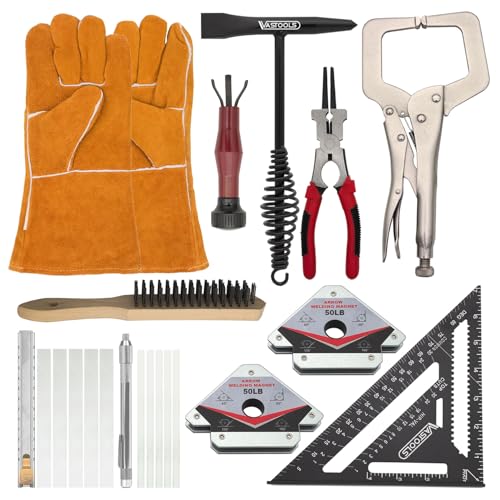
●High carbon steel chipping hammer,heat treated,10-1/2-Inch overall length.1-1/16" width chisel to remove welding slag faster,with 11"Heavy duty wire brush
The Role of Hydrogen in Cold Cracking
Hydrogen plays a major role in cold cracking because it can move into the weld metal and heat-affected zone. Under stress, hydrogen can weaken the metal and help small cracks grow.
You control hydrogen by keeping base metal clean and dry, storing electrodes correctly, and using low-hydrogen consumables when the weld procedure requires them. Understanding cracking types also helps you choose the right prevention method.
Hydrogen Diffusion Mechanism
Hydrogen enters the weld from moisture, coatings, flux, oil, paint, rust, or damp consumables. As the weld cools, hydrogen can move through the metal and collect at stressed areas.
Rapid cooling traps hydrogen and can form hard microstructures in steel. That combination makes cracks more likely in the heat-affected zone.
Material Properties That Increase Cold Cracking Risk
Base metal chemistry affects cold cracking risk. Higher carbon content and alloy content can increase hardenability, which means the heat-affected zone can become harder and less ductile after welding.
- High strength: Stronger steels often tolerate less hydrogen before cracking starts.
- High carbon content: More carbon can increase martensite formation after rapid cooling.
- High restraint: Rigid joints hold shrinkage stress in the weld area.
- Poor cleanliness: Moisture, oil, rust, and paint can add hydrogen to the weld.
Prevention Strategies and Techniques
Preheating slows the cooling rate and gives hydrogen more time to escape. It also reduces temperature differences that create stress around the weld.
Low-hydrogen filler metals, such as H2, H4, or H8 classifications, can reduce hydrogen input. You still need dry storage and clean handling, because damp consumables can defeat the benefit.
Post-weld heat treatment can lower residual stress and help drive hydrogen out of the weld area. Use it only when the welding procedure, code, or material specification calls for it.
Prevention Techniques for Hot and Cold Cracking
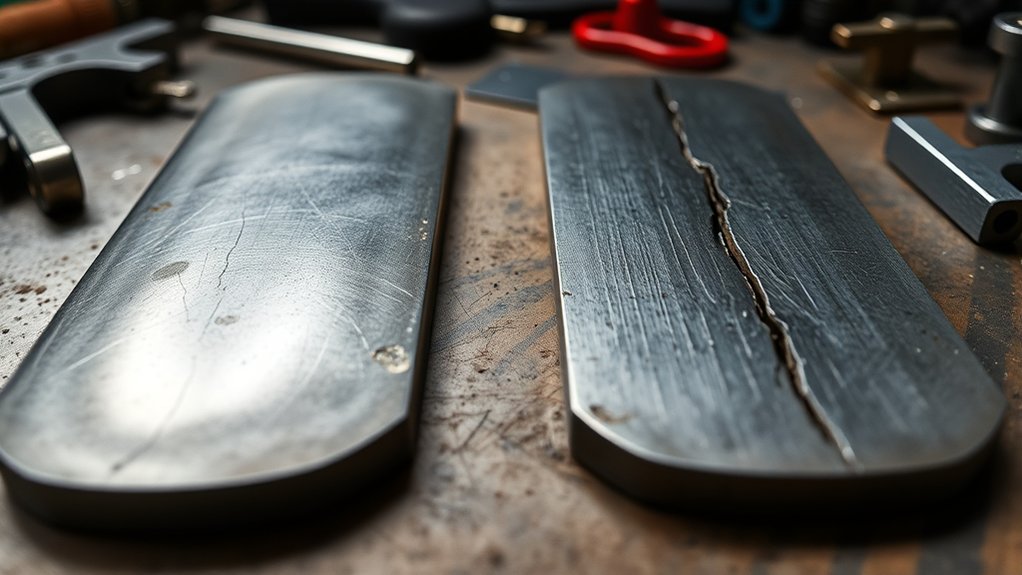
You prevent weld cracking by matching the procedure to the metal, joint design, filler metal, and service load. One prevention step rarely solves every cracking risk.
- Clean the base metal before welding to remove rust, oil, paint, and moisture.
- Choose filler metal that matches the base metal and welding procedure.
- Control heat input so the bead shape stays smooth and the cooling rate stays suitable.
- Use preheat when the procedure or material thickness requires slower cooling.
- Store low-hydrogen electrodes and flux according to manufacturer instructions.
- Fill craters before stopping the arc to reduce crater cracking.
- Use post-weld heat treatment when the code, procedure, or material requires stress relief.
Correct amperage also helps you avoid poor bead shape and lack of fusion. A stick welding amperage chart can give you a starting range, but you should still follow the electrode and procedure requirements.
Inspection Methods to Detect Weld Cracking Early
Early inspection helps you catch cracking before the part enters service. Visual inspection can find open surface cracks, crater cracks, and obvious centerline defects.
Cold cracks can hide under the surface, so critical welds may need non-destructive testing (NDT). Common methods include ultrasonic testing, magnetic particle inspection, liquid penetrant testing, and radiographic testing.
Regular equipment inspections also support weld quality because faulty equipment can create unstable arcs, poor shielding, or inconsistent heat input.
| Inspection Method | Application |
|---|---|
| Visual Inspection | Finds visible surface cracks, crater defects, and bead problems |
| Ultrasonic Testing | Finds internal flaws and cracks in thicker weldments |
| Magnetic Particle Inspection | Finds surface and near-surface cracks in ferromagnetic metals |
| Liquid Penetrant Testing | Finds surface-breaking cracks in nonporous materials |
| Radiographic Testing | Finds internal flaws by using imaging through the weld |
Frequently Asked Questions
How Can I Identify Hot Cracking in Welds Visually?
You can often identify hot cracking by looking for centerline cracks, crater cracks, or fine surface fissures in the weld metal. Check the crater at the end of each bead because poor arc termination often leaves star-shaped cracks.
Are Certain Welding Techniques More Prone to Hot Cracking?
Any welding process can produce hot cracking if the bead shape, filler metal, base metal chemistry, or heat input creates the right conditions. Processes that create deep, narrow welds or high dilution may need closer control.
Can Preheating Prevent Cold Cracking in All Materials?
Preheating can reduce cold cracking risk, but it doesn’t prevent every case. You still need low-hydrogen consumables, clean base metal, proper joint design, and the right welding procedure.
What Role Does Cooling Rate Play in Weld Cracking?
Cooling rate affects hardness, stress, and hydrogen movement in the weld area. Fast cooling can increase cold cracking risk in hardenable steels because it can create brittle microstructures.
How Does Joint Design Influence Cracking Susceptibility?
Joint design affects stress, restraint, penetration, and bead shape. Good fit-up, proper root opening, and suitable weld size help reduce stress concentrations that can start cracks.
Conclusion
Hot cracking starts while the weld solidifies, while cold cracking starts later when hydrogen, hardness, and stress combine. Your best defense starts before welding with clean materials, correct filler metal, proper heat control, and a qualified procedure. Inspect critical welds after cooling, not just right after the arc stops. When you control both weld shape and hydrogen, you give the joint a much better chance to perform safely.
References
- Solidification Cracking in Welds — TWI Global
- Hydrogen Cracking: Causes and Prevention — TWI Global
- Welding Standards and Technical Guidance — American Welding Society