Dirty metal can hide the cause of a weak, porous, or inconsistent weld. Before you strike an arc, remove oil, grease, rust, mill scale, paint, coatings, dirt, and moisture from the joint area. The right cleaning method depends on the base metal, the contaminant, and the welding procedure you need to follow.
Quick Answer
Clean metal before welding by identifying the metal and coating, degreasing with a compatible nonchlorinated cleaner, removing rust, paint, scale, or oxide mechanically, and wiping away residue. Let all solvent vapors clear, keep the joint dry, and inspect it before welding. Use dedicated tools for aluminum and stainless steel.
Last updated: July 19, 2026
Key Takeaways
- Identify the base metal and any coating before you grind, sand, use chemicals, or weld.
- Degrease oily metal before mechanical cleaning so you do not smear contamination into the surface.
- Never use chlorinated brake cleaner or chlorinated degreaser near welding, heat, or an arc.
- Use tools dedicated to aluminum or stainless steel to avoid cross-contamination.
- Remove zinc, paint, and other coatings from the heated area, then control fumes with effective ventilation.
- Finish with a clean, dry joint and avoid touching it with bare hands.
At a Glance
| Time Required | Varies by part size and contamination; light cleaning may take minutes, while heavy rust or coatings can take much longer |
| Difficulty | Beginner to intermediate, depending on the coating and tool used |
| Tools Needed | Lint-free cloths, compatible degreaser or acetone, wire brush, abrasive pad, sanding disc or grinder, and suitable PPE |
| Cost | Usually low for basic consumables; higher when coating identification, extraction, or specialized PPE is required |
What’s in This Article
- Why Cleaning Metal Is Crucial for Welding
- Identify the Metal and Coating First
- Key Contaminants That Compromise Weld Quality
- Choose the Right Cleaning Method
- Effective Rust Removal Techniques for Welding Prep
- How to Remove Paint Before Welding
- Safe Techniques for Removing Galvanized Coatings
- Essential Tools for Effective Metal Cleaning
- How to Clean Different Metals Before Welding
- Best Practices for Pre-Weld Surface Cleaning
- Common Metal-Cleaning Mistakes
- How to Spot Incomplete Cleaning and Its Impact on Your Welds
- Final Touches: Inspecting Metal Before Welding
- Frequently Asked Questions
Warning: Never use chlorinated brake cleaner, trichloroethylene, perchloroethylene, or another chlorinated degreaser on or near metal that will be welded or heated. Heat and ultraviolet radiation from welding can break down chlorinated residues or vapors into highly toxic gases, including phosgene. Use only a compatible nonchlorinated product, follow its safety data sheet, and clear all vapors before welding.
Why Cleaning Metal Is Crucial for Welding
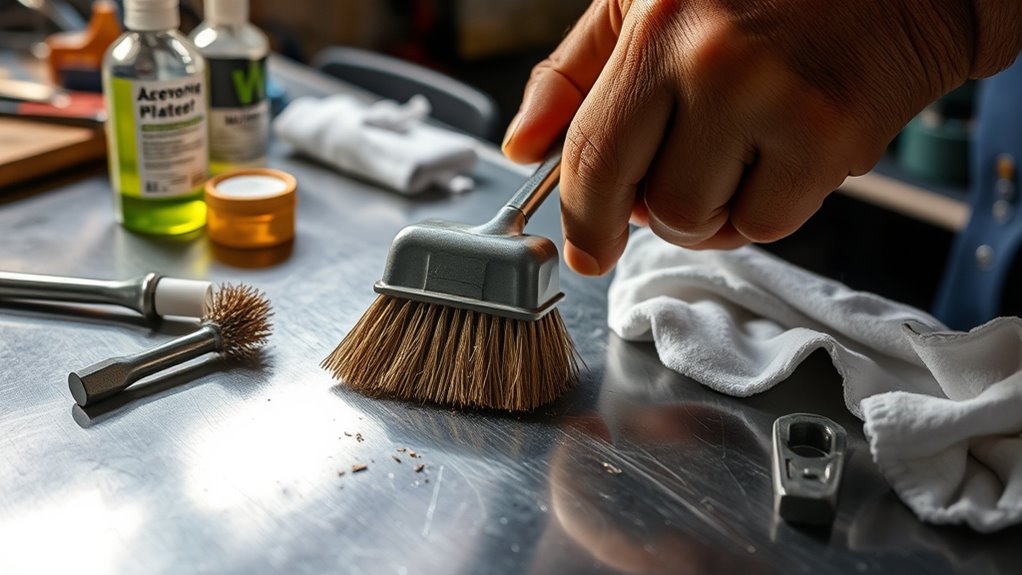
Cleaning metal before welding is more than a cosmetic step. A clean joint gives the arc and weld pool direct contact with the base metal and lowers the chance that oil, oxides, paint, or moisture will become trapped in the weld.
Contamination can contribute to porosity, lack of fusion, inclusions, unstable arc behavior, extra smoke, and excess spatter. It can also create hazardous fumes. OSHA advises cleaning welding surfaces of coatings that may create toxic exposure, including paint and solvent residue. Review its guidance on controlling welding fumes and gases before working on coated or unfamiliar metal.
Clean metal does not replace correct amperage, travel speed, joint fit-up, or shielding. It removes one major source of preventable weld defects.
Contaminants can also produce harmful welding fumes and leave more post-weld cleanup. Good preparation supports consistent weld quality, but you still need to follow the approved welding procedure, equipment manual, and project requirements.
Identify the Metal and Coating First
Before you reach for a grinder or solvent, identify what you are cleaning. The safest method for bare mild steel may be wrong for aluminum, stainless steel, galvanized steel, plated parts, or painted structural metal.
- Confirm the base metal: Mild steel, stainless steel, aluminum, cast iron, and specialty alloys need different abrasives and cleaning tools.
- Identify coatings: Look for paint, primer, zinc galvanizing, plating, powder coating, sealant, adhesive, oil, or corrosion protection.
- Check labels and records: Review the safety data sheet, material certification, repair manual, welding procedure specification, or coating documentation when available.
- Treat unknown coatings as hazardous: Older paint or industrial coatings may contain lead, cadmium, chromium compounds, or other toxic ingredients. Do not grind, burn, or weld them until the hazard and required controls are known.
Note: A general-purpose dust mask does not protect against every welding fume, metal, gas, or solvent vapor. In a workplace, respirator selection, medical evaluation, fit testing, training, and cartridge or filter choice must match the hazard under an appropriate respiratory-protection program. See OSHA’s respiratory-protection standard.
Key Contaminants That Compromise Weld Quality
Oil, grease, rust, oxidation, mill scale, paint, dirt, cutting fluids, marker ink, adhesives, and moisture can interfere with the joint. Good metal-prep habits for flux-core welding also apply to many other arc-welding processes.
Oil and Grease Residue
Oil and grease form a film between the arc and the base metal. When heated, that film can create smoke, gas, porosity, and unstable welding conditions.
Remove heavy oil with a compatible cleaner and a disposable or clean lint-free cloth. Use a fresh section of cloth for each pass so you lift contamination away instead of spreading it. Degrease before grinding or brushing whenever possible.
Rust and Oxidation
Light surface rust may interfere with arc stability and fusion. Heavy corrosion and pitting can also reduce the usable metal thickness, so cleaning alone may not make a damaged part safe to weld.
Remove loose rust, heavy oxide, and scale from the joint faces and the area that will be heated. Aluminum oxide needs special attention because it remains on the surface even when the aluminum looks clean.
| Contaminant | Possible Effect | Typical First Choice |
|---|---|---|
| Oil or grease | Smoke, porosity, unstable arc, poor fusion | Compatible nonchlorinated degreaser and lint-free cloth |
| Light rust | Arc instability, inclusions, poor appearance | Wire brush, abrasive pad, or sandpaper |
| Heavy rust or mill scale | Lack of fusion, trapped material, inconsistent bead | Grinding or sanding disc suited to the metal |
| Paint or coating | Toxic fumes, residue, porosity, fire risk | Identify coating, then use an approved mechanical or chemical method |
| Moisture | Hydrogen-related porosity or cracking risk in susceptible metals | Dry storage, clean heat when permitted, or time in a dry area |
Dirt and Debris
Dirt, grinding dust, metal chips, and loose debris can become trapped in the joint. Vacuum or brush away loose material before the solvent wipe. Avoid oily compressed air, which can put moisture or compressor oil back onto the cleaned surface.
Moisture on the Metal Surface
Moisture can add hydrogen and other contamination to the weld area. Dry cold metal that has formed condensation, and keep filler metal, electrodes, and the joint protected from rain or damp storage.
Choose the Right Cleaning Method
Match the method to the contamination. Start with the least aggressive method that will expose sound, clean metal without thinning or gouging the part.
- Loose dirt: Vacuum, sweep, or wipe it away.
- Oil and grease: Use a compatible nonchlorinated cleaner and lint-free cloth.
- Light rust or oxide: Use a hand brush, abrasive pad, file, or sandpaper.
- Heavy rust, mill scale, or thick coating: Use a suitable grinder, sanding disc, flap disc, needle scaler, or other approved mechanical tool.
- Complex or hazardous coating: Follow the coating manufacturer’s removal instructions, workplace controls, and safety data sheet. Bring in a qualified professional when the coating is unknown or toxic.
Pro Tip: Keep separate, clearly labeled brushes and abrasives for carbon steel, stainless steel, and aluminum. A tool that touched carbon steel can embed iron particles in stainless or aluminum and contaminate the surface.
Effective Rust Removal Techniques for Welding Prep
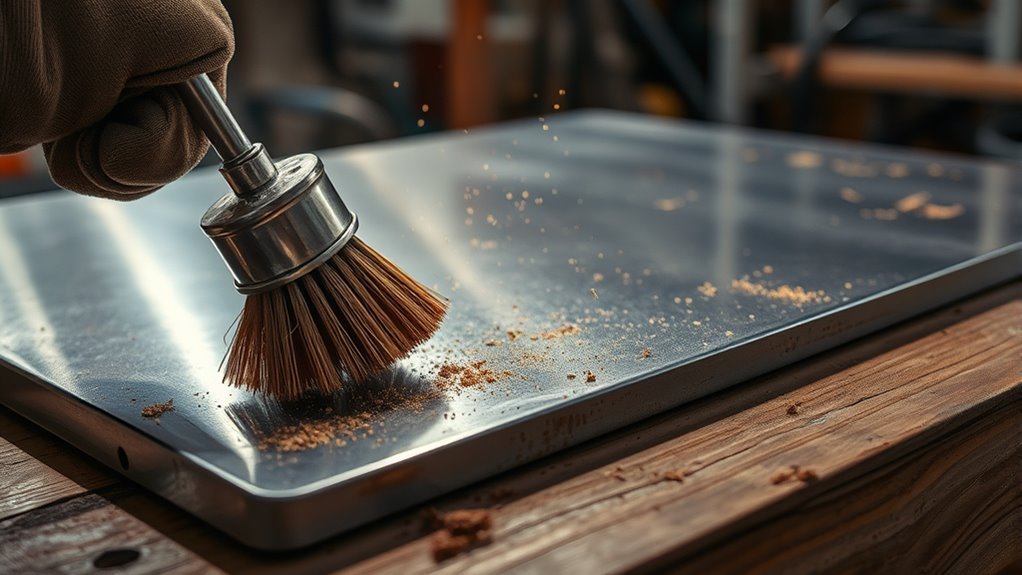
For light surface rust, use a wire brush, abrasive pad, or sandpaper. Work until the joint faces show sound metal and no loose oxide remains. The guide on removing light-to-medium surface rust can help with non-urgent household cleanup, but chemical soaking is not always the best choice immediately before welding.
For heavy rust, use a grinder or power sander with an abrasive suited to the metal. Keep the tool moving and use only enough pressure to remove contamination. Deep pitting, laminations, or section loss may require repair design changes or replacement rather than more grinding.
Wear suitable gloves, hearing protection, face and eye protection. Control dust at the source. A respirator may be needed after a proper hazard assessment; review this guide to respirator use for angle-grinder dust as a starting point, then follow workplace and manufacturer requirements.
If you use a chemical rust remover, confirm that it is compatible with the alloy and welding procedure. Rinse or neutralize it exactly as the label requires, remove all residue, and dry the metal completely.
Products Worth Considering

Stainless-steel wire bristles: can clean almost any surface and quickly removes stubborn residue

PRACTICAL: Wire brushes are ideal for removing paint stains, rust, welding slag,solder,scale, Great for remove corrosion and more from parts, equipment, machinery and other surfaces. Also great for cleaning threads, grills or tile.

3pcs Wire Brush Set: Wire brush set includes stainless steel brush, nylon bristles and brass brush. These will be good for tackling most light duty jobs at hand particularly those requiring reaching small spaces
How to Remove Paint Before Welding
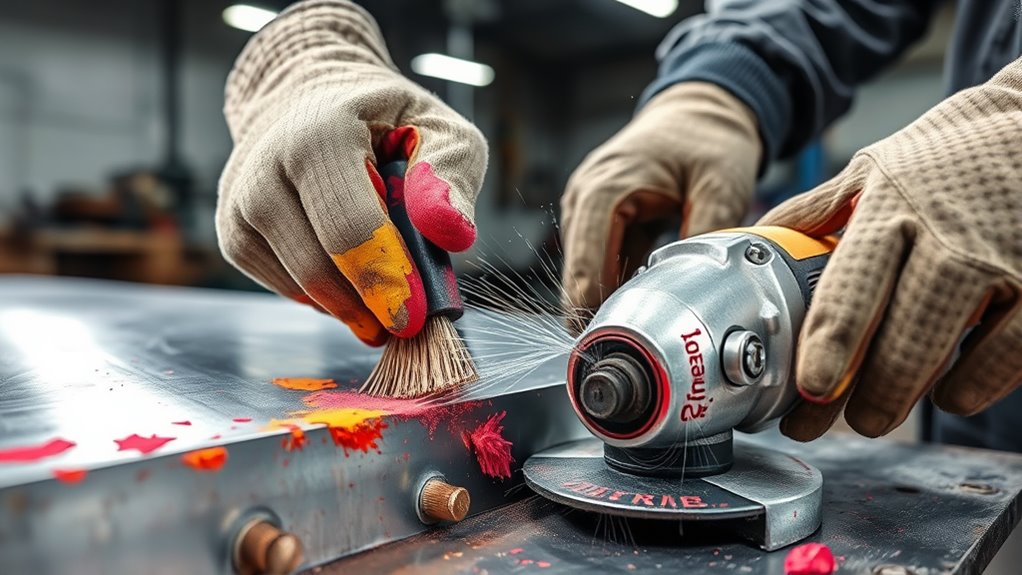
Remove paint from the area that will be heated. Paint can block fusion, burn into residue, create smoke, and release hazardous decomposition products.
Do not assume old or industrial paint is harmless. Identify the coating before sanding, grinding, or welding. OSHA notes that welding fumes can contain metals such as lead, cadmium, chromium, and zinc depending on the base metal, filler, and coating.
Effective Paint Removal Methods
- Wire brush or scraper: Use it for loose paint and small areas.
- Sanding or grinding: Use a suitable abrasive for larger areas, while controlling dust and avoiding unnecessary base-metal removal.
- Approved chemical stripper: Use it only when you know the coating and can follow the product label, ventilation requirements, disposal rules, and safety data sheet.
After the paint is gone, clean the exposed metal again. Remove dust, softened coating, chemical residue, and any surface oil on galvanized or coated metal.
Safety Precautions Required
| Precaution | What to Do | Why It Matters |
|---|---|---|
| Identify the coating | Check records, labels, test results, or the safety data sheet | Unknown paint may contain toxic metals or additives |
| Control dust and fumes | Use local exhaust or another effective control suited to the task | Open doors or outdoor work alone may not provide enough protection |
| Use correct PPE | Wear eye, face, hand, hearing, skin, and respiratory protection selected for the hazard | Dust, chips, fumes, and chemicals create different hazards |
| Remove residue | Wipe, rinse, neutralize, or dry as the product instructions require | Leftover stripper or solvent can contaminate the weld or ignite |
Safe Techniques for Removing Galvanized Coatings
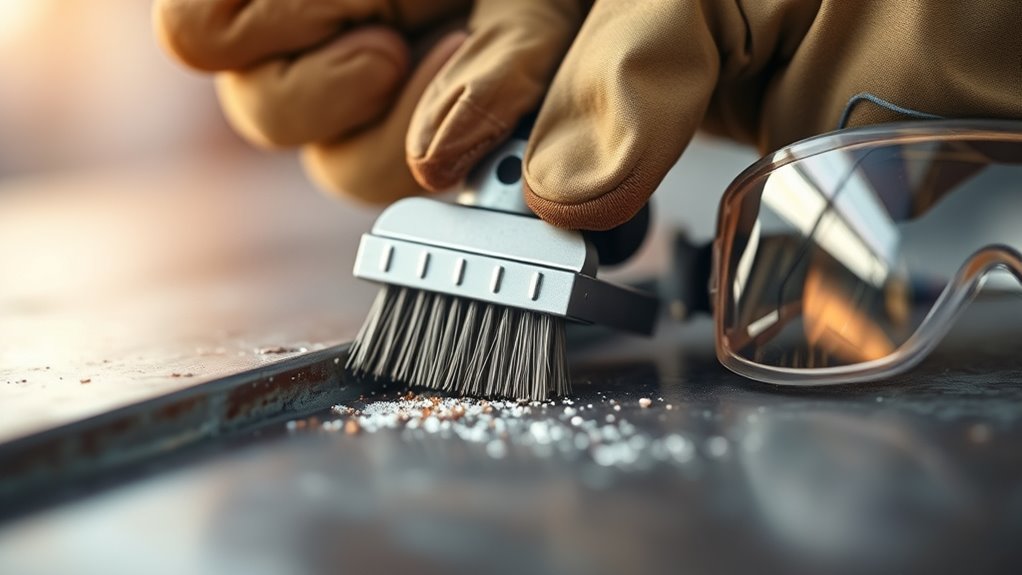
Galvanized steel is coated with zinc. When zinc is heated, it can form zinc oxide fume associated with metal fume fever. The risk increases in enclosed or poorly ventilated areas. See the CDC’s overview of metal fume fever from zinc oxide fume.
Warning: Do not weld galvanized metal in a closed or poorly ventilated space. Removing visible zinc from the front of the joint does not make the job fume-free because coating may remain nearby, on the back side, or inside a tube. Use effective local exhaust, keep your head out of the plume, and follow the required respiratory and hot-work controls.
Use these methods to prepare galvanized steel:
- Confirm the coating: Make sure the part is zinc-galvanized rather than cadmium-plated or coated with another metal.
- Remove zinc mechanically: Use a dedicated abrasive, sanding disc, or grinder to expose bare steel around the joint without thinning the base metal.
- Clean both accessible sides: Remove loose dust and residue from the joint and nearby heated area.
- Ventilate and position correctly: Capture fumes near the source and keep your breathing zone out of the plume.
- Restore corrosion protection after welding: Once the weld has cooled and passed inspection, use the coating-repair method required by the project or manufacturer.
Avoid casual use of muriatic acid for welding preparation. Acid stripping can create corrosive fumes, damage the metal, leave chloride residue, and create disposal problems. Use chemical removal only under an approved industrial procedure with the product instructions and safety data sheet.
For more detail on the mechanical process, see how to remove zinc coating from galvanized steel, review the site guide on cleaning mild steel before welding, and read OSHA’s page on chemicals and decomposition products in welding.
Essential Tools for Effective Metal Cleaning
Choose tools that remove contamination without gouging the joint or mixing particles from another alloy.
| Tool | Best Use | Important Limit |
|---|---|---|
| Lint-free cloth | Degreasing and final wipe | Change cloth sections often; do not reuse oily rags |
| Wire brush | Loose rust, oxide, dirt, and light coating | Use the correct material and dedicate it to one alloy |
| Abrasive pad or sandpaper | Light oxidation and smoothing | Avoid products that leave wax, adhesive, or embedded grit |
| Angle grinder | Heavy rust, mill scale, paint, and zinc | Can remove base metal quickly; control sparks and dust |
| File or carbide burr | Edges, grooves, and localized oxide | Use a clean, alloy-compatible tool |
| Compatible solvent | Oil, grease, and residue | Must be nonchlorinated, compatible, and fully evaporated before hot work |
Using wire wheels safely can speed up large jobs, but inspect the wheel, use the guard and side handle, and wear face protection because wires can break free.
Products Worth Considering
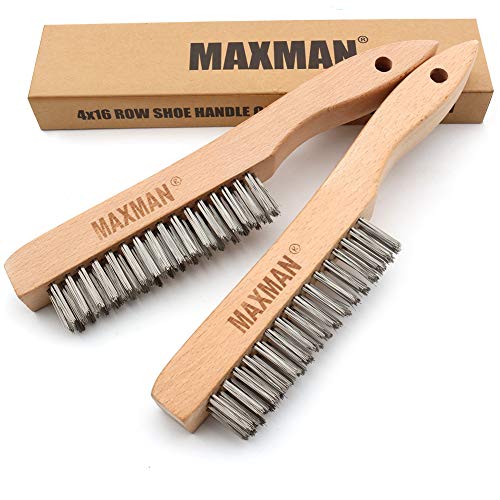
MULTI-FUNCTION: Stainless steel wire brush for heavy duty jobs, Remove rust and paint quickly with this welding brush, Wire brushes are ideal for removing paint stains, rust, welding slag,solder,scale, Great for remove corrosion and more from parts, equipment, machinery and other surfaces, steel brush also great for cleaning aluminum or stainless and other hard surfaces threads, grills or tile.
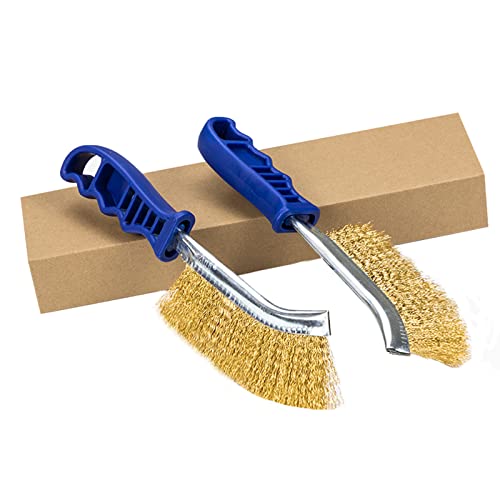
【Practical】:Carbon steel&stainless steel bristles for heavy duty jobs,remove rust and paint quickly with this wire welding brush set, wire brushes are ideal for removing paint stains, welding slag,solder,scale,rust, great for remove corrosion and more from parts, equipment, machinery and other surfaces. Also great for cleaning threads, grills or tile(Different from other similar products, this product has more bristles and thicker bristles)
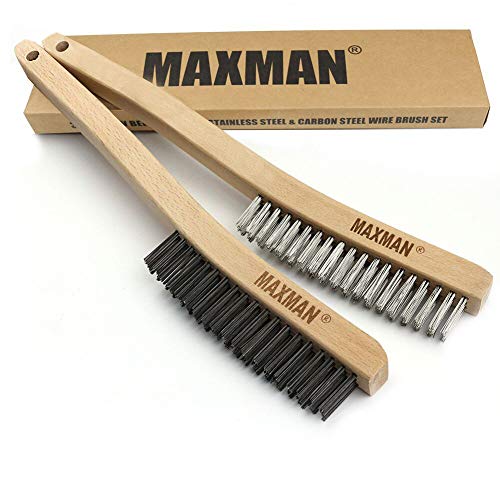
PRACTICAL: Remove rust and paint quickly with this wire welding brush set, Wire brushes are ideal for removing paint stains, rust, welding slag,solder,scale, Great for remove corrosion and more from parts, equipment, machinery and other surfaces. Also great for cleaning threads, grills or tile.
How to Clean Different Metals Before Welding
Mild Steel
Remove oil first, then brush or grind away rust, loose mill scale, paint, and cutting dross. For a critical joint, follow the welding procedure specification rather than assuming every process can weld through mill scale.
Stainless Steel
Use a stainless-steel brush and abrasives dedicated only to stainless. Carbon-steel particles can become embedded in the surface and later create rust spots. Remove oil, marker residue, paint, adhesive, and heat-tint contamination as required by the procedure.
Aluminum
Degrease aluminum first with a compatible cleaner such as acetone, then remove the oxide layer with a clean stainless-steel brush or noncontaminating abrasive dedicated to aluminum. Weld soon after cleaning and handle the joint with clean gloves. ESAB’s weld-joint preparation guidance also recommends dedicated tools for aluminum and stainless steel.
Galvanized or Plated Steel
Identify the plating before removal. Zinc, cadmium, chromium-bearing coatings, and other surface treatments do not present the same hazard. Use the required coating-removal, ventilation, and respiratory controls for the specific material.
Best Practices for Pre-Weld Surface Cleaning
Use the same basic sequence each time so hidden contamination is less likely to reach the weld pool.
- Review the job requirements: Confirm the alloy, coating, joint design, welding procedure, and safety controls.
- Remove loose contamination: Vacuum or wipe away dirt, chips, and debris.
- Degrease first: Use a compatible nonchlorinated cleaner on oil, grease, coolant, or fingerprints.
- Remove rust, paint, scale, zinc, or oxide: Brush, sand, file, or grind until the required area shows sound metal.
- Clean the joint faces and nearby heated area: Include the root face, bevels, edges, and accessible back side.
- Wipe away residue: Use a clean lint-free cloth and a compatible solvent when needed.
- Let vapors clear: Acetone is highly flammable, with an OSHA-listed flash point of 0°F. Close the container, remove solvent-soaked rags, and do not weld until the surface is dry and the area is free of flammable vapor. See OSHA’s acetone chemical data.
- Inspect and protect the cleaned metal: Do not touch the joint with bare hands, set it on a dirty bench, or leave it exposed longer than necessary.
Good cleaning supports consistent fusion and bead shape, but it does not set the correct fillet weld size. Joint dimensions, design requirements, heat input, and the approved procedure still control the finished weld.
Common Metal-Cleaning Mistakes
- Grinding oily metal first: This can smear oil and carry it deeper into scratches.
- Using the same brush on every alloy: It can cross-contaminate stainless steel or aluminum.
- Using chlorinated brake cleaner: Residue or vapor near an arc can form extremely toxic decomposition products.
- Assuming outdoor work needs no extraction: Wind direction can change, and open air does not guarantee safe exposure.
- Welding as soon as the surface looks dry: Flammable solvent vapor may remain around the part, in a tube, or in a low area.
- Cleaning only the top surface: Contamination on bevels, root faces, the back side, or inside tubing can still reach the heated zone.
- Overgrinding: Removing too much base metal can change fit-up, edge thickness, and joint strength.
- Ignoring deep corrosion: A shiny surface does not restore metal lost to pitting or section loss.
How to Spot Incomplete Cleaning and Its Impact on Your Welds
Before welding, look for oily streaks, glossy patches, rust stains, gray oxide, paint edges, grinding dust, marker residue, moisture, or fingerprints.
During welding, contamination may show up as popping, excess smoke, unstable arc behavior, black soot, worm tracks, porosity, unusual spatter, or poor wetting at the toes. These symptoms can also come from shielding-gas leaks, bad technique, damp consumables, or incorrect settings, so do not assume cleaning is the only cause.
Stop and inspect if the weld behaves differently from a clean test coupon. Remove the defect using the approved repair method, correct the source, and re-clean before welding again. A clean, dry surface gives you a better starting point, but final acceptance should follow the applicable inspection criteria.
Final Touches: Inspecting Metal Before Welding
Complete this final check before you strike the arc:
- Surface: No visible oil, paint, loose rust, heavy scale, zinc, dust, or chemical residue remains in the required area.
- Dryness: The joint, backing, filler metal, and nearby surfaces are dry.
- Vapor control: Solvent containers are closed, used rags are removed to an approved container, and flammable vapors have cleared.
- Fit-up: Root opening, bevel, alignment, tack welds, and joint dimensions match the procedure.
- Condition: No unaddressed cracks, laminations, deep pits, sharp gouges, or excessive metal loss remains.
- Handling: The cleaned area has not been touched with bare hands or placed on a contaminated surface.
Frequently Asked Questions
What’s best to clean metal before welding?
Use a method matched to the contaminant and metal. Degrease oil with a compatible nonchlorinated cleaner. Remove rust, paint, scale, and oxide with a brush, abrasive, file, or grinder. Use dedicated stainless-steel tools for aluminum and stainless steel, then keep the joint clean and dry.
Should you use acetone before welding?
Acetone can remove oil and residue when it is compatible with the metal and procedure. Use it with ventilation, keep it away from sparks and flame, close the container, remove soaked rags, and wait until the surface is dry and all vapor has cleared before welding.
Can you use brake cleaner before welding?
Do not use chlorinated brake cleaner or chlorinated degreaser near welding. Heat and welding ultraviolet radiation can create highly toxic decomposition products. A product marked nonchlorinated can still be flammable or otherwise hazardous, so use only a compatible cleaner approved for the task and follow its safety data sheet.
Can you weld over rust or paint?
Some welding processes tolerate limited surface contamination better than others, but rust and paint can still cause defects and hazardous fumes. Remove them from the joint and heated area unless an approved welding procedure specifically allows the existing surface condition.
Should you remove mill scale before welding?
Remove loose or heavy mill scale and follow the welding procedure for the process and joint. Some electrodes and processes tolerate thin mill scale, while critical joints or lower-energy processes may require bright, clean metal for consistent fusion.
How far from the joint should you clean?
Clean the joint faces, bevels, root area, and enough surrounding metal to keep coating, dirt, and residue out of the heated zone. The exact width depends on the process, joint, coating, and governing procedure. Toxic coatings may require a specified strip-back distance and additional controls.
What is the golden rule in welding preparation?
There is no single official golden rule for every welding process. A useful principle is to start with correctly identified, sound, clean, dry, well-fitted metal and then follow the approved procedure and safety controls.
What do welders use to clean metal?
Common tools include lint-free cloths, compatible degreasers, acetone, hand brushes, dedicated stainless-steel brushes, abrasive pads, sandpaper, files, flap discs, grinding wheels, and vacuums. The correct choice depends on the alloy, coating, contamination, and weld requirements.
Sources
- OSHA: Controlling Hazardous Fume and Gases During Welding — coating, fume, ventilation, and exposure guidance
- OSHA: Welding, Cutting, and Brazing Chemicals — hazardous decomposition products from coatings and solvent residue
- OSHA: Acetone Chemical Data — flammability and physical-property information
- OSHA: Respiratory Protection, 29 CFR 1910.134 — respirator selection, fit, training, and program requirements
- CDC/NIOSH: Metal Fume Fever — zinc oxide fume and galvanized-steel exposure
- ESAB: Weld Joint Prep Do’s and Don’ts — cleaning methods and dedicated tools for aluminum and stainless steel
Safety Disclaimer: This article is for informational purposes only and does not replace professional welding safety training, a welding procedure specification, a hazard assessment, or site-specific controls. Always follow your equipment manual, workplace rules, safety data sheets, hot-work permit requirements, and applicable laws before welding or using solvents, grinders, acids, chemical strippers, or respiratory protection.
Conclusion
Clean metal gives you a better starting point for a strong, consistent weld. Identify the metal and coating, remove oil before grinding, clear rust, paint, scale, zinc, and oxide from the joint, then wipe away residue and let the area dry completely.
Do not treat surface cleaning as a substitute for ventilation, correct PPE, sound fit-up, or the approved welding procedure. When the coating is unknown, the part is badly corroded, or the job involves confined spaces or toxic metals, stop and get qualified guidance before you weld.
Make surface preparation the first controlled step of every welding job. Better preparation reduces avoidable defects, rework, and exposure.