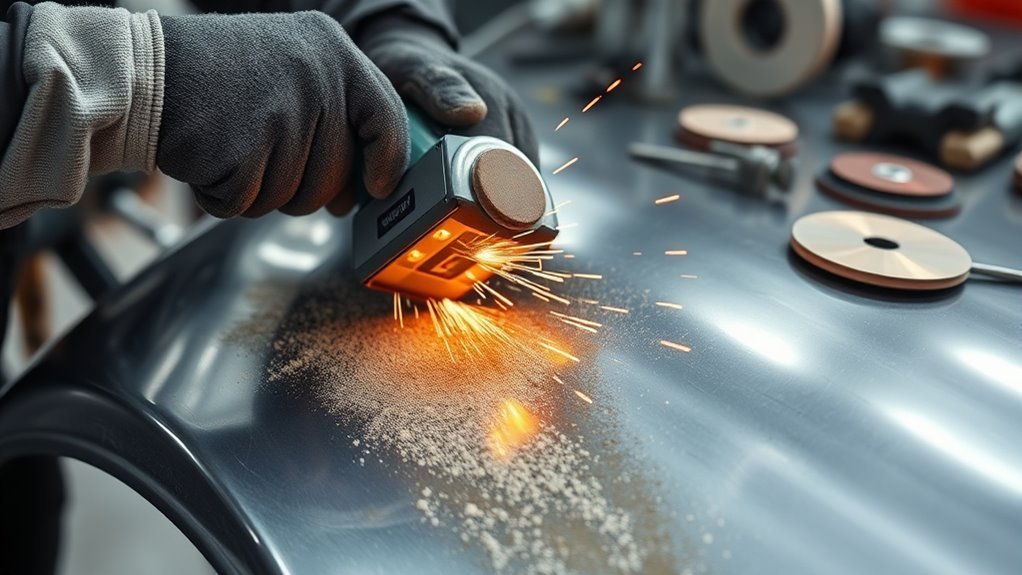
Clean welds on auto body panels by removing grease, dust, oxidation, and loose spatter before you grind. Start with a degreaser, wire brush, or light abrasive, then use a grinding disc only for high weld crowns. Switch to a flap disc or sanding block to blend the metal without thinning the panel. Keep pressure light, control heat, clean the surface again, and protect the bare metal with the right primer, seam sealer, and cavity wax so the repair stays flat, strong, and rust-resistant.
Quick Answer
To clean welds on auto body panels, degrease the area first, remove spatter with a wire brush or light abrasive, grind only the high weld bead, then blend with a flap disc or sanding block. Finish by wiping the metal clean, priming exposed steel, sealing seams, and applying cavity wax inside hidden sections.
Key Takeaways
- Clean before grinding so grease, dust, and oxidation do not get pushed into the repair area.
- Use a grinding disc only for heavy high spots, then switch to a flap disc or sanding block for control.
- Thin auto body sheet metal warps easily, so use light pressure, short passes, and cooling breaks.
- Prime, seal, and wax the repair after cleanup so bare metal and hidden seams do not rust later.
At a Glance
| Time Required | 20 to 60 minutes per repair area, depending on bead size and access |
| Difficulty | Moderate; the main challenge is avoiding heat distortion and metal thinning |
| Tools Needed | PPE, degreaser, clean rags, wire brush, angle grinder with guard, grinding disc, flap disc, sanding block, optional belt sander, primer, seam sealer, cavity wax |
| Cost | About $25 to $90 for common abrasives, cleaner, primer, and seam protection if you already own the grinder |
Warning: Welding and grinding throw sparks, hot slag, sharp particles, and fine dust. Wear eye and face protection, gloves, hearing protection, and flame-resistant clothing. Clear combustibles from the work area, keep a fire extinguisher nearby, and follow OSHA welding and cutting fire-prevention guidance when doing hot work.
Clean Welds Before You Grind
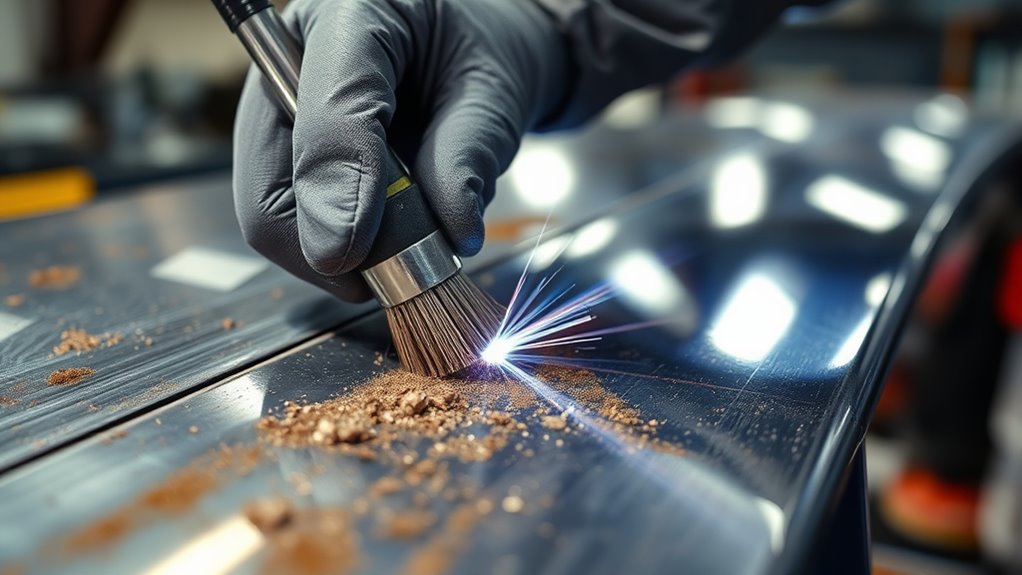
Before you grind, clean the weld area so you are not driving dirt, grease, or oxidation into the sheet metal. Wipe the panel with a wax-and-grease remover or approved degreaser, then let the cleaner flash off fully before sparks or heat return to the area.
Use a wire brush, scraper, or light flap disc to remove loose scale, soot, and surface contamination from the bead and the surrounding panel. If you welded with shielding gas, knock off any spatter now so it does not drag across the panel during cleanup.
If the joint still carries factory grease, oil, seam sealer residue, or undercoating, stop and clean it again. Contamination can load your abrasive disc, hide pinholes, and create poor primer adhesion later.
Wear goggles or safety glasses with side shields under a face shield when grinding. For welding-related cleanup, eye protection must match the hazard, including flying particles, hot slag, sparks, and light radiation. The CCOHS welding PPE guide explains why welders and helpers need eye, face, skin, lung, hearing, hand, and foot protection.
Remember to always inspect your accessories and ensure they are grinder-rated accessories before you begin. Never use a saw blade, wood-cutting blade, damaged wheel, or unknown abrasive on an angle grinder.
Inspect the Weld Before Cleanup
Do a quick inspection before removing metal. A clean-looking bead can still hide pinholes, cold lap, undercut, or low spots that should be repaired before final finishing.
- Proud weld bead: The bead sits high and can be reduced carefully in stages.
- Pinholes: Small dark dots need rewelding or proper repair before primer hides them.
- Undercut: A groove beside the bead means the edge may need more weld, not more grinding.
- Low seam: If the welded area is already below the surrounding panel, stop grinding and reassess.
- Warped metal: Oil-canning or ripples mean the panel needs heat-control correction, not aggressive sanding.
Note: If the weld is structural, part of a frame repair, or tied to a safety component, follow the vehicle maker’s repair procedure. Cosmetic cleanup should never remove metal needed for joint strength.
Choose the Best Weld Cleanup Tools
For light weld cleanup, an angle grinder with a flap disc gives the best balance of control and finish. It smooths the bead while reducing the chance of chewing up the surrounding panel.
Use a grinding disc only when the weld stands proud and heavy. Make short passes, then switch to finer abrasives as soon as the bead gets close to flush. For thin sheet metal, a flap disc, small belt sander, or sanding block often gives better control than staying on a hard grinding wheel too long.
Start with the least aggressive tool that will remove the high spot. You can always take off more metal, but you cannot put thinned sheet metal back with a grinder.
If the weld stands tall across a long seam, a small belt sander can level excess material quickly while keeping the cut narrow. Keep the belt flat, use light pressure, and stop often to feel the panel temperature with a gloved hand near the work area.
- A flap disc skimming a bright weld bead
- A grinding disc knocking down only the highest spots
- A belt sander leveling a heavy pass in controlled strokes
Your tool choice should match weld thickness, panel condition, access, and the finish you need. Also make sure your work area is free from flammable materials before sparks start.
Check every disc before use. The OSHA abrasive wheel standard says wheels should be inspected before mounting and machine speed should not exceed the maximum operating speed marked on the wheel.
Products Worth Considering

Aluminium Oxide abrasive is preferred for DIY use as it is the most cost effective product for most DIY applications.

Aluminium Oxide flap disc is preferred for DIY use as it is the most cost effective product for most DIY applications.

【Quality Materials】 The purple diamond material of strip disc is a high-strength, high-wearing honeycomb soft abrasive tool formed by with premium purple nylon webbing and grains. Using fiber mesh as a carrier, using resin elastomer, The sharp abrasive adheres firmly to the fiber web.
Flatten Welds on Auto Body Panels
Start flattening only after the weld is clean and inspected. Fit the angle grinder with the correct guard and a disc rated for the tool speed. Hold the grinder stable, keep it moving, and work across the high part of the weld rather than digging into one spot.
For heavy weld crowns, use a grinding disc briefly to lower the bead. Then switch to a flap disc to smooth the surface on the auto body panel. A 60-grit flap disc works well for initial blending, while 80-grit or finer abrasives help reduce deep scratches before primer.
Use light grinder pressure so you do not gouge the metal or cut through the panel. Work the weld down in stages and check the weld profile after every few passes. Thin automotive steel gives you very little margin for error.
If the bead is heavy, a belt sander can remove bulk faster while staying narrow. Start with a coarser grit only where needed, then move to finer grits for a cleaner finish. Let the tool do the work and keep heat low.
Maintain panel thickness awareness at every pass. Verify the wheel speed rating to avoid wheel failure during the grinding process. Once the weld sits flush, clean the area with degreaser before primer or paint so the coating bonds properly.
Pro Tip: Use a guide coat or a quick marker line across the weld before final sanding. High spots lose the mark first, while low spots keep it. This helps you stop before you thin the panel.
Products Worth Considering

Aluminium Oxide abrasive is preferred for DIY use as it is the most cost effective product for most DIY applications.

Aluminium Oxide abrasive is preferred for DIY use as it is the most cost effective product for most DIY applications.

★Original manufacturer of premium abrasive materials, the quick change sanding discs are designed and processed according to high industrial standard.Safe and More Efficient.
Remove Spatter and Heat Marks
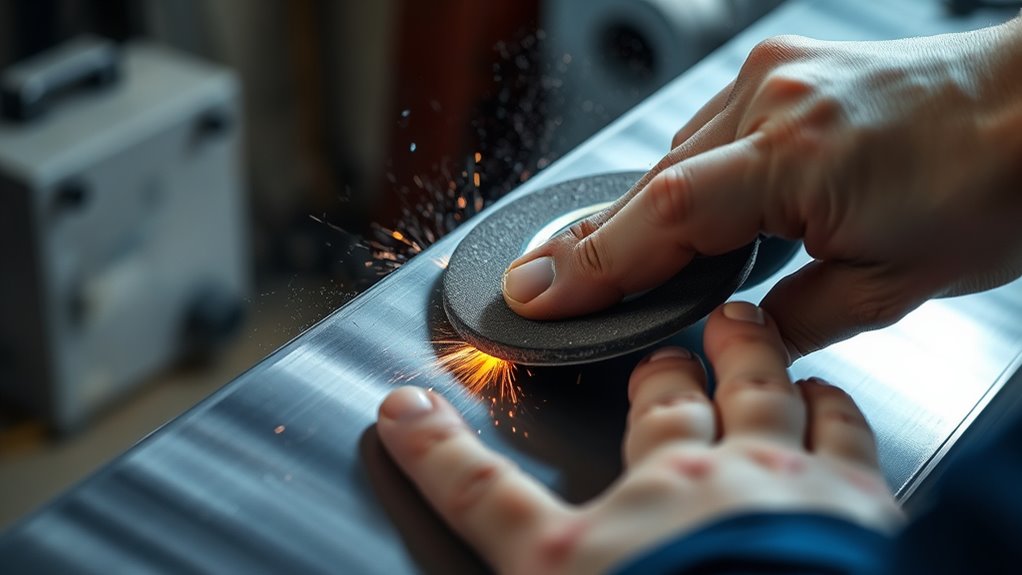
To remove spatter, start with the least aggressive method that works. A wire brush, scraper, or light flap disc often removes loose spatter without cutting into the panel. Use a grinding disc only for stubborn high spots that sit proud of the surface.
Then switch to a 60-grit flap wheel or flap disc for cleaner control. Work carefully so you do not cut into the panel or leave new gouges, and choose tools sized for the metal thickness.
Once the weld area is clean, wipe the bare metal and protect it with the primer system recommended by your paint or coating maker. Weld-through primer is useful in approved weld zones and overlapping flanges, but accessible finished metal usually needs the proper post-weld primer, seam sealer, and topcoat sequence. Also ensure the metal is clean and free of contaminants before welding or finishing.
Spatter Cleanup
Knock down weld spatter with controlled passes instead of heavy pressure. A flap disc on an angle grinder removes material quickly while reducing damage to the surrounding panel.
Use careful grinding methods to shave high spots without gouging the sheet metal. For stubborn beads or residue, a wire brush attachment can lift oxidation while preserving more of the panel surface.
If the weld is thick, switch to a belt sander for heavier cleanup, then finish with a flap disc or hand sanding block to blend the edges.
- Spark trails fading off fresh metal
- A smooth weld line under bright shop light
- Fine dust clearing from a sanded panel
Finish with proper surface prep: wipe the area with a compatible degreaser so primer or paint bonds to a clean surface. Do not touch the bare metal with oily fingers after the final wipe.
Heat Mark Removal
Remove light heat marks with a flap disc or sanding block, keeping the tool moving so you do not cut into the panel. Use controlled passes and check the bead often to stay flat and precise.
Heat discoloration usually comes from weld temperature, travel speed, and cooling rate. Do not chase color with pressure alone. If you keep grinding in one place, you can thin the steel and create distortion.
After the rough work, move to a finer flap disc or hand sanding to refine the metal without gouging it. Inspect the area from different angles, then use chemical rust remover or metal prep only if it is compatible with your primer and fully cleaned or neutralized according to the label.
That final prep clears residue, supports paint adhesion, and helps corrosion protection do its job.
Step-by-Step Weld Cleanup Process
- Cool the weld naturally. Do not rush cooling with water unless the repair procedure specifically allows it.
- Degrease the area. Remove oil, wax, dust, and undercoating residue before abrasive work.
- Inspect the bead. Look for pinholes, undercut, low spots, and warping before you remove metal.
- Remove loose spatter. Use a wire brush, scraper, or light abrasive first.
- Lower high spots. Use a grinding disc briefly only where the weld stands too high.
- Blend with a flap disc. Move from coarse to finer grit while keeping the grinder moving.
- Finish by hand where needed. A sanding block helps preserve panel shape around body lines and edges.
- Clean again. Blow off dust safely, wipe with compatible cleaner, and let the surface dry.
- Protect the metal. Apply primer, seam sealer, and cavity wax according to the repair area and product instructions.
For dust and fumes, work with fresh air and capture dust where practical. The CCOHS welding ventilation guide lists natural dilution, mechanical dilution, and local exhaust ventilation, with local exhaust ventilation described as the preferred method for removing fumes and gases before they mix with room air.
Prep Welded Panels for Primer
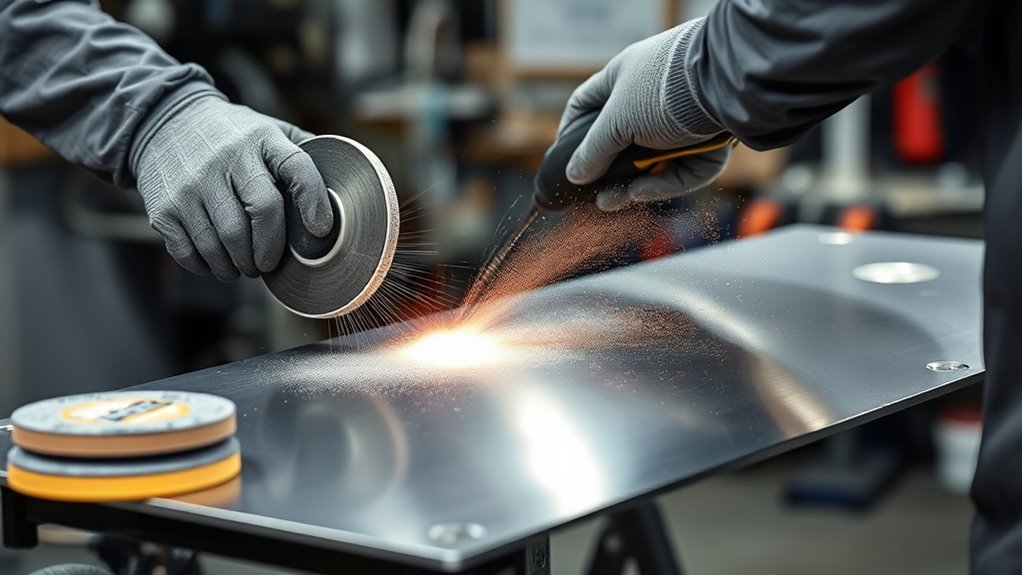
Once the welds are cleaned up, protect bare metal promptly so humidity does not start surface rust. Choose the primer system that matches the paint job. Many repairs use epoxy primer, etch primer, or another approved bare-metal coating, depending on the paint manufacturer’s instructions.
If you are welding overlapping flanges or a closed joint, use zinc-rich weld-through primer only where the repair procedure and product label call for it. Do not treat weld-through primer as a universal final coating on every exposed surface.
Strip any remaining non-compatible factory primer from replacement panels where welding or coating adhesion requires bare metal. Use paint stripper or sanding until clean metal shows, then remove all factory grease with a quality degreaser and let the panel dry fully.
- A flap disc skims off proud weld metal fast.
- A belt sander leaves a narrow bead smooth and even.
- Cavity wax spray reaches tight voids that primer cannot fully cover.
After primer, move to seam sealer and final coatings with confidence. Every step you take now protects your work, keeps corrosion out, and helps the panel stay solid for the long haul. If your repair starts with cut edges, maintain consumables like electrodes so the cut is cleaner before welding begins.
Seal Hidden Seams and Edges
Seal hidden welds by cleaning the seams thoroughly, priming the bare metal as required, and applying seam sealer where moisture could enter. Then spray cavity wax into hard-to-reach areas to block moisture and slow rust inside boxed sections, rocker areas, flanges, and overlaps.
If the joint needs extra protection before welding, apply a zinc-rich weld-through primer only where the product label and repair procedure allow it. Finish by smoothing sharp edges and sealing exposed seams for better long-term corrosion resistance. For rusted areas, it is also crucial to assess load-bearing significance before deciding whether cleanup is enough or metal replacement is needed.
Cavity Wax Protection
After the welds are clean, primed, sealed, and dry, apply cavity wax to hidden seams, edges, and boxed sections to stop moisture from reaching bare metal.
You get key cavity wax benefits: it creeps into blind spots, blocks moisture, and adds long-term protection without heavy buildup when applied correctly.
Use a spray wand or flexible nozzle for precise application, and tilt the panel when possible so wax can flow into joints. Work from the inside out, then inspect for coverage.
- Fine mist coats a narrow seam like a shield
- Wax creeps into a dark rocker cavity
- A wet sheen marks sealed edges
Let the coating cure according to the label, then check it during service intervals. Reapply if you see thinning, damage, or exposed metal.
Seal Hidden Welds
With the welds clean and dry, seal hidden seams and edges to keep moisture out and prevent rust in hard-to-reach areas. Start with degreaser cleanup, then apply the primer specified by your paint system for adhesion and corrosion protection.
For exposed lap joints, seam sealer blocks water entry after primer has cured as directed. In cavities, spray cavity wax to reach boxed sections and overlap points. These protective coating options help extend service life.
| Area | Action |
|---|---|
| Hidden seams | Prime, seal, then apply cavity wax where accessible |
| Edges | Coat after prep, drying, and final sanding |
| Access points | Reinspect and touch up when coating is damaged |
Inspect the sealed zones regularly and touch up damage fast. That keeps the panel resilient and ready for the road.
Edge Rust Prevention
To keep edge rust from starting in hidden seams and overlaps, clean the welded area thoroughly with a degreaser, then apply the correct primer for the coating system.
Next, choose rust prevention techniques that fit the joint:
- Mist cavity wax spray into tight flanges and boxed sections.
- Brush or spray approved primer over exposed edges for full coverage.
- Use creeping rust inhibitors only when the product maker and paint system allow them.
These protective coating options block moisture, slow corrosion, and help you finish the panel without trapping contamination. Avoid old shortcuts such as improvised fish oil unless a coating maker specifically approves the product for automotive refinishing.
Let coatings cure before sanding or topcoating. For long-term control, inspect seams after washes, touch up chips fast, and keep drains open. Clean metal, sealed edges, and timely follow-up give you a body panel that stays solid and rust-resistant.
Troubleshooting Weld Cleanup Problems
| Problem | Likely Cause | Fix |
|---|---|---|
| Gouges beside the weld | Too much pressure or too hard a wheel | Switch to a flap disc or sanding block and blend gently |
| Panel starts to warp | Heat buildup from long passes | Stop, let the panel cool, then use shorter passes |
| Pinholes appear after grinding | Porosity or missed weld spots | Clean and repair the weld before primer |
| Primer fisheyes or lifts | Oil, wax, silicone, or dust contamination | Reclean with compatible solvent and follow the coating label |
Avoid Common Weld Cleanup Mistakes
Avoid aggressive grinding because it can distort the panel and remove too much metal too fast. For weld distortion prevention, follow a controlled cleanup timeline: clean first, inspect the weld, lower only the high bead, blend with a flap disc, then finish by hand where shape matters. Also consider proper surface preparation to improve weld strength and durability.
| Tool | Best Use |
|---|---|
| Grinding disc | Remove heavy excess weld material only |
| Belt sander | Level narrow, heavy welds with control |
| Flap disc | Blend the final surface without harsh gouging |
Do not chase perfection in one pass. Gradual material removal protects the panel shape and reduces rework. Avoid dwelling in one spot, since heat buildup can warp thin sheet metal. After cleanup, wipe the panel with degreaser before primer. Clean metal gives the coating a solid bond and extends finish life. Measure, inspect, and stop when the weld sits flush.
Frequently Asked Questions
What is the best thing to clean welds with?
Start with a compatible degreaser and clean rags to remove oil and wax. Use a wire brush or light abrasive for soot and loose spatter. For smoothing, use a flap disc after any heavy grinding. The best result comes from cleaning first, grinding only what is high, then blending in stages.
What should you spray on metal after welding?
Spray or brush on the primer recommended for your paint system after the weld is clean, dry, and properly sanded. Use seam sealer on joints after primer if the product instructions call for it, then apply cavity wax inside hidden seams. Use weld-through primer mainly where welding will happen or where the repair procedure approves it.
Why can welding damage eyesight?
Welding can damage eyes through intense light radiation, hot slag, sparks, and flying metal debris. Poor protection can cause arc eye, burns, irritation, or more serious injury. Use the correct welding helmet or shield, proper filter shade, safety glasses with side shields, and a face shield when grinding.
How do you clean up metal after welding?
Let the weld cool, degrease the area, inspect the bead, remove loose spatter, grind only heavy high spots, blend with a flap disc, then finish with finer sanding. Wipe away dust and protect the bare metal with the correct primer, seam sealer, and cavity wax for the repair area.
Can you use a flap disc instead of a grinding disc?
Yes. On thin auto body panels, a flap disc is often safer for blending because it cuts less aggressively than a hard grinding disc. Use a grinding disc only when the weld bead is too high, then switch to a flap disc as soon as possible.
How do you avoid warping a panel while grinding welds?
Use light pressure, short passes, and a moving grinder. Do not hold the abrasive in one spot. Let the metal cool between passes, and switch to hand sanding near edges, crowns, and body lines. If the panel gets too hot to comfortably touch near the repair with a gloved hand, stop and let it cool.
Conclusion
When you finish welding, treat the panel like a surface that needs both shape and protection. First clear the contamination, then level the weld slowly, blend the surface, and clean away every trace of dust and grease. Once the metal is smooth, protect it with the right primer, seam sealer, and cavity wax. If you skip cleaning, overgrind the bead, or leave hidden seams bare, the repair can show waves, pinholes, poor paint adhesion, or rust later. Take your time, use the right tools, and the panel will stay flatter, cleaner, and stronger.
Sources
- OSHA 1910.252, Welding, Cutting, and Brazing General Requirements — fire prevention, hot work, and welding eye-protection requirements.
- OSHA 1910.215, Abrasive Wheel Machinery — abrasive wheel inspection, mounting, guards, and speed-rating safety.
- OSHA 1910.133, Eye and Face Protection — eye and face protection for flying particles, molten metal, and injurious light radiation.
- OSHA 1910.94, Ventilation — exhaust ventilation guidance for grinding, polishing, buffing, and dust removal.
- CDC/NIOSH Eye Safety for Workers — eye injury prevention and protective eyewear guidance.
- CCOHS Welding Ventilation — ventilation strategies for removing welding fumes and contaminants from the breathing zone.