Using a flap disc for grinding automotive welds is about removing the weld crown without thinning the surrounding panel. Start with the least aggressive grit that will do the job, keep the grinder moving, use light pressure, and check your progress often so the repair stays smooth, strong, and easy to finish.
Quick Answer
To grind automotive welds with a flap disc, secure the part, match the disc RPM rating to the grinder, and use a 40 or 60 grit disc for heavy weld crowns. On thin body panels, move to 80 grit sooner, hold a low angle, use light pressure, and stop before you thin the base metal.
Key Takeaways
- Use 40 grit only for high, heavy welds. For thin sheet metal, 60 or 80 grit gives better control.
- Check the flap disc for cracks, frayed flaps, arbor fit, and RPM rating before it touches the work.
- Keep the grinder moving with light pressure so you do not heat, gouge, or thin the panel.
- Wear eye protection with side protection, a face shield, gloves, hearing protection, and the right respirator for dust or coatings.
- Protect glass, trim, wiring, fuel lines, seam sealer, and paint from sparks before grinding on a vehicle.
At a Glance
| Time Required | 10 to 30 minutes for a small weld repair; longer for multiple seams or panel sections |
| Difficulty | Moderate, because thin automotive sheet metal can overheat or thin quickly |
| Tools Needed | Angle grinder with guard and side handle, flap discs, clamps or vice, marker, straightedge, vacuum or brush, PPE |
| Cost | Usually $5 to $20 for a few flap discs, not including grinder or safety gear |
Understanding Flap Discs and Their Benefits
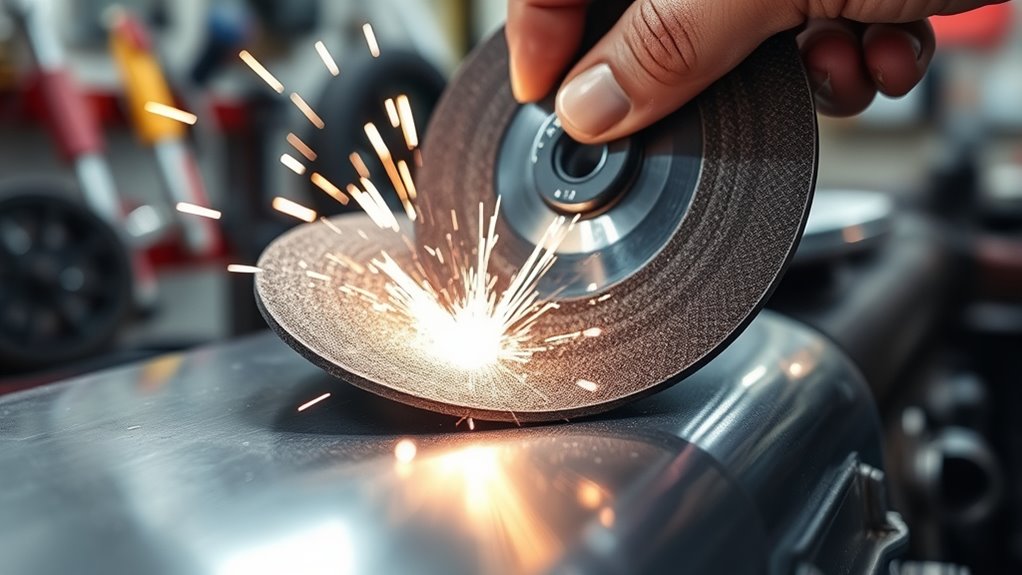
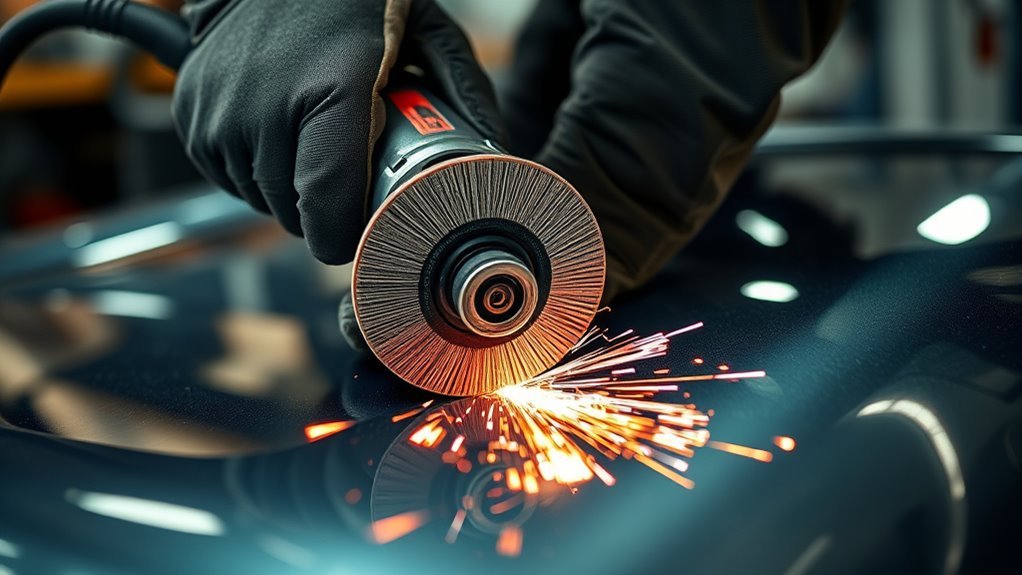
Flap discs are coated abrasive discs made with overlapping abrasive flaps. As the outside edge wears, fresh abrasive is exposed, so the disc can grind and blend at the same time. That makes it useful for grinding welds, smoothing patch panels, and feathering small high spots before primer.
Compared with a hard grinding wheel, a flap disc gives you more control and usually leaves a cleaner scratch pattern. It can also be less aggressive on thin body panels when you use the right grit, a low angle, and light pressure.
Common abrasive grains include aluminum oxide, zirconia alumina, and ceramic blends. Aluminum oxide works for general mild steel. Zirconia and ceramic discs last longer and cut faster, which helps on harder steel or stainless, but they can also remove metal quickly if you press too hard.
A flap disc is not just a faster sanding disc. On automotive sheet metal, treat it like a cutting tool and check the panel often.
Selecting the appropriate grit size for your flap disc is crucial for achieving the desired finish and efficiency in your work.
Choosing the Right Grit Size for Automotive Welding
Choosing the right grit size is essential for clean weld blending. The goal is to remove the weld crown, not the surrounding parent metal. On thick brackets or frame patches, you can start more aggressively. On outer body panels, start finer and work slowly.
| Grit | Best Use | Caution |
|---|---|---|
| 36 to 40 grit | Knocking down tall weld crowns on thicker metal | Can gouge thin panels fast |
| 60 grit | General weld blending on mild steel auto repairs | Still needs light pressure near sheet metal edges |
| 80 grit | Thin sheet metal, final leveling, and reducing 40 or 60 grit scratches | Slower, but safer for panels |
| 120 grit | Light finishing before sanding, primer prep, or filler work | Not ideal for heavy weld removal |
For thin sheet metal, begin with an 80-grit flap disc if the weld is already low and even. If the weld is proud, use 60 grit for the first few passes, then switch to 80 grit before the weld is flush.
When working with stainless steel components, use a clean disc that has not touched carbon steel. This helps reduce cross-contamination and surface rust staining later. For aluminum, use a disc rated for non-ferrous metal so the disc does not load up as quickly.
Remember, the grit size you choose directly affects the surface finish. Lower grit numbers remove metal faster, while higher numbers leave a finer scratch pattern. Proper technique ensures effective shaping and preparation for welding.
Products Worth Considering

PREMIUM QUALITY: These angled flap discs, also known as cut off wheels 4 1/2 inch, are constructed with industrial grade premium zirconia abrasive for strength, durability, and extended disc life as it holds up to high temperatures and pressure.

【Grinding Specialist】10 pieces 80 grit high density grinding disc. Constructed of industrial grade premium zirconia aluminium coating to provide more grinding material than standard flap discs and exceed by packing 25 to 50% more abrasive on each snippet

👍【80 Grit Fast Grinding】:The type 27 and 80 grain zirconium corundum particles adhere firmly to the flap disc surface, allowing you to quickly polish a variety of materials, improving efficiency and saving time.
Type 27 vs Type 29 Flap Discs
Flap discs come in different shapes. For automotive weld blending, the two common choices are Type 27 and Type 29.
- Type 27 flap discs are flatter. They are better for blending welds on flat panels, patch seams, and broad surfaces where you want a smoother finish.
- Type 29 flap discs have an angled face. They remove material faster and work well on heavier welds, corners, brackets, and thicker metal.
Note: If you are grinding an outer body panel, a Type 27 disc is usually easier to control. Save Type 29 discs for heavier welds where fast stock removal matters more than surface control.
Products Worth Considering

Multi-functional use: JobPal flip grinding disc 4.5" x 7/8" performs excellently in a variety of tasks, used for stainless steel grinding, deburring, edge chamfering rust removal, fine machining, ensuring efficient and precise results. Also includes a grinder nut

PREMIUM QUALITY: These flat flap discs, also known as cut off wheels 4 1/2 inch, are constructed with industrial grade premium zirconia abrasive for strength, durability, and extended disc life as it holds up to high temperatures and pressure.

✨【Meets All Your Needs】Our 4-1/2-inch flap disc set comes with 40/60/80/120 grits, totaling 12 packs. This comprehensive set includes 4 pieces each of 40 grit and 60 grit, along with 2 pieces each of 80 grit and 120 grit, providing a versatile selection for grinding various metals. It perfectly caters to all your grinding needs.
Preparing Your Workspace for Safe Grinding
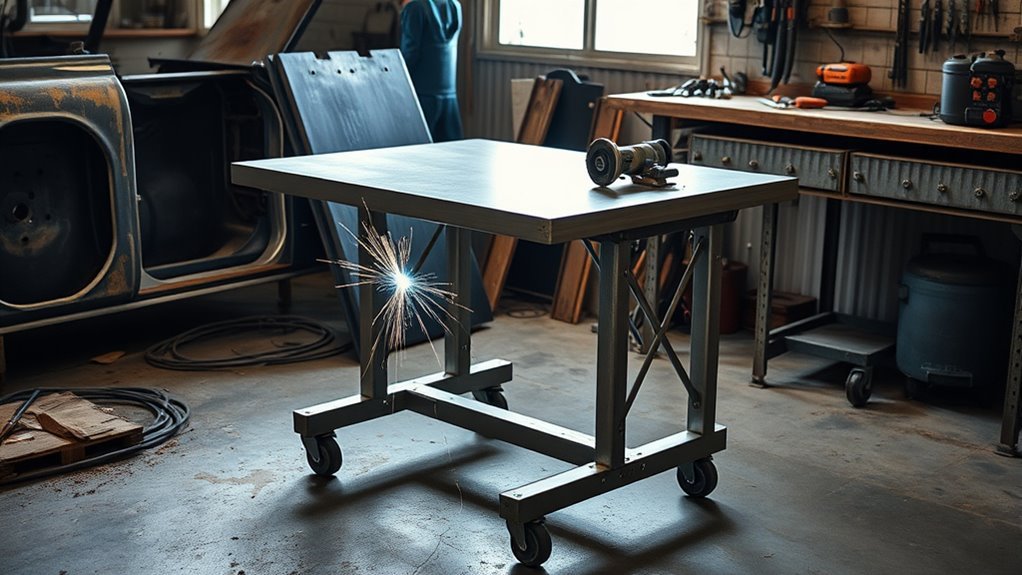
Before you start grinding, clear your workspace of flammable materials and clutter. Sparks can travel farther than you expect, especially when they bounce off the floor, frame rails, or a lift arm.
Secure your workpiece with clamps or a vice to prevent movement during the process. If you are grinding on the vehicle, support loose panels and keep wiring, hoses, interior trim, and weatherstripping away from the grinding area.
Don’t forget to gather your safety gear, including gloves, goggles, a face shield, hearing protection, and the right respirator for the dust or coating you are disturbing. Good proper ventilation helps reduce dust and fume exposure, but it does not replace respiratory protection when harmful dust or fumes are present.
Warning: Do not grind near exposed fuel lines, fuel vapors, brake cleaner residue, undercoating, seam sealer, upholstery, glass, or wiring without shielding and cleaning the area first. Sparks can start fires and damage nearby parts.
Clear Work Area
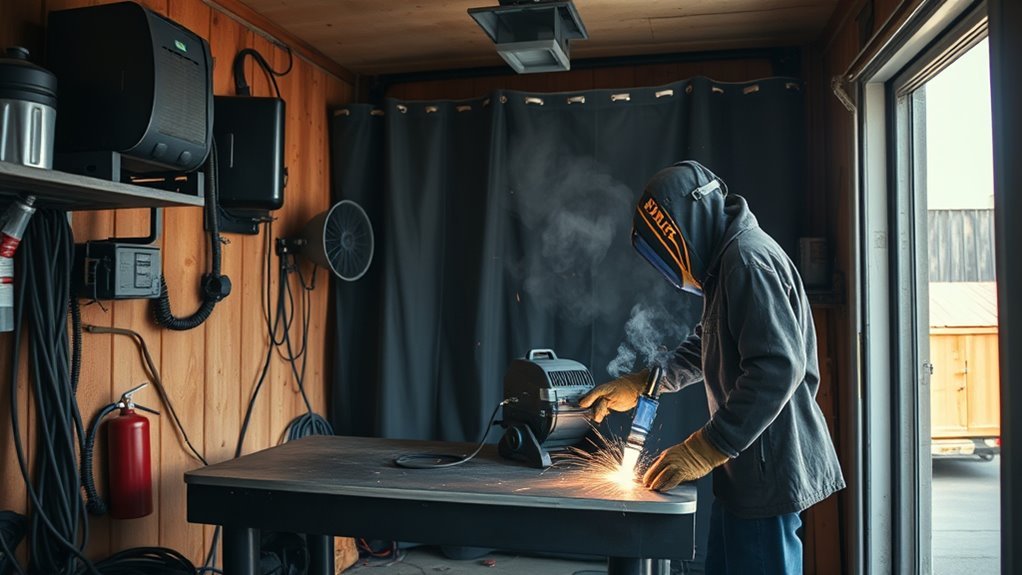
A clean and organized workspace is essential for safe grinding operations. Start by confirming your work area is well ventilated to reduce dust and fumes produced while using the angle grinder.
Remove flammable materials, loose tools, paper towels, solvent containers, and debris to reduce fire hazards. Inspect the floor for obstacles that could cause slips or trips, and keep a fire extinguisher nearby.
Cover glass, painted panels, rubber seals, and interior surfaces with a welding blanket or spark-resistant cover. Hot sparks can pit glass and melt trim in seconds.
Secure Workpiece Properly
Once your workspace is clear, secure the workpiece properly. Use clamps or vices to hold the part firmly so it cannot chatter, lift, or twist during grinding. Movement causes uneven surfaces and increases the chance of the grinder catching an edge.
Position the workpiece at a comfortable height. You should be able to hold the angle grinder with two hands while keeping your wrists straight and your body out of the spark path.
| Task | Tools Needed | Safety Tips |
|---|---|---|
| Secure workpiece | Clamps, vice, panel stand | Check for movement before starting the grinder |
| Set working height | Adjustable stand or bench | Keep two hands on the grinder |
| Inspect hazards | Light, mirror, visual inspection | Look behind the panel for wiring, fuel lines, and insulation |
| Check flap disc | Disc label and grinder label | Confirm the disc RPM rating is higher than the grinder speed |
Gather Safety Gear
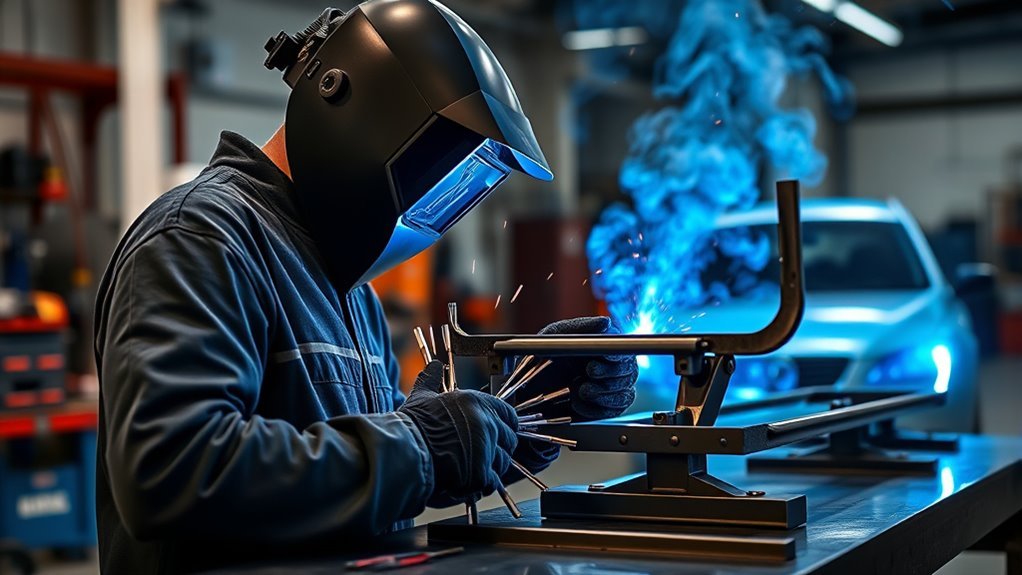
Gathering the right safety gear is essential for a safe grinding experience. Equip yourself before the grinder is plugged in or the battery is installed.
- Eye protection: Wear safety glasses or goggles with side protection. Add a face shield for extra protection from sparks and debris.
- Respiratory protection: Use a NIOSH-approved respirator suited to the dust, coating, or metal you are grinding. Disposable nuisance masks are not enough for hazardous dust or fumes.
- Hand and body protection: Wear heavy gloves, hearing protection, fitted clothing, and sturdy shoes. Avoid loose sleeves, jewelry, and drawstrings.
Prioritizing safety gear helps you work confidently and reduces the chance of preventable injury.
Essential Safety Gear for Flap Disc Grinding
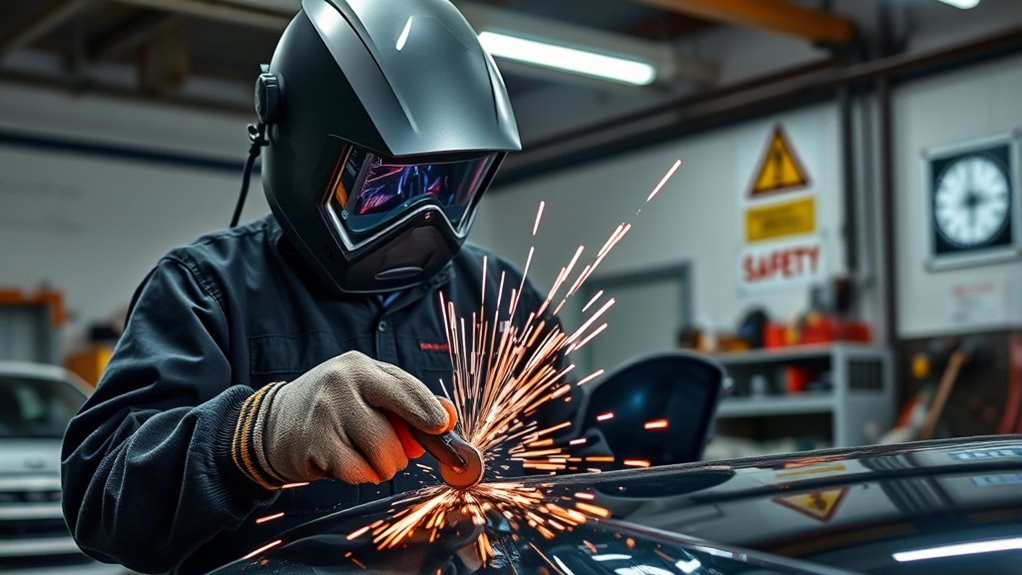
Before you start flap disc grinding, make sure you have the right safety gear. Grinding throws sparks, grit, and hot metal. It can also create dust from paint, primer, filler, seam sealer, rust, stainless steel, aluminum, or galvanized coatings.
Always wear eye protection with side protection. OSHA requires appropriate eye or face protection when workers are exposed to hazards such as flying particles, molten metal, and potentially injurious light radiation. You can review OSHA’s eye and face protection standard here: OSHA 1910.133 Eye and Face Protection.
For airborne dust, use ventilation and the correct respirator. OSHA’s respiratory protection standard says respirators must be selected based on the hazard and workplace factors when respiratory protection is needed. It also requires NIOSH-certified respirators in covered workplace situations. See OSHA 1910.134 Respiratory Protection for the full standard.
Don’t forget heavy-duty gloves and ear protection. Angle grinders are loud enough that hearing protection is a smart habit, especially during long grinding sessions. Also wear flame-retardant clothing or fitted cotton work clothing that will not melt or catch loose sparks easily.
Essential Safety Gear Checklist
- Safety glasses or goggles with side protection: Protect your eyes from sparks and flying grit.
- Face shield: Adds protection for your face, but it does not replace safety glasses.
- Respirator: Choose the right NIOSH-approved respirator for the dust or fume hazard.
- Heavy gloves: Protect your hands from sharp metal and heat.
- Hearing protection: Use earplugs or earmuffs when grinding.
- Fitted work clothing: Avoid loose clothing that can catch on the grinder.
Proper Eye Protection Needed
While grinding with a flap disc, proper eye protection is vital. Use safety goggles or safety glasses with side shields to reduce the risk from flying debris and sparks.
A face shield gives extra coverage against larger particles, but wear it over safety glasses. Do not use a face shield by itself.
Respiratory Protection Importance
Respiratory protection matters during flap disc grinding because fine particles and coating dust can be harmful. Ventilation helps, but it may not be enough when you grind old paint, rust, galvanized coatings, stainless steel, aluminum, filler, seam sealer, or unknown coatings.
- Choose the right respirator: A NIOSH-approved respirator with the correct filters is safer than a loose paper dust mask.
- Improve ventilation: Use local dust collection or airflow that moves dust away from your breathing zone.
- Stop when the coating is unknown: Old paint or undercoating can contain hazardous materials. Strip and identify coatings before aggressive grinding.
Pre-Use Check Before Mounting the Flap Disc
Before mounting a flap disc, check the grinder and disc together. OSHA guidance for abrasive wheel machinery includes checking that the machine spindle speed does not exceed the maximum operating speed marked on the wheel. You can review the abrasive wheel machinery standard here: OSHA 1910.215 Abrasive Wheel Machinery.
- Check the RPM rating: The disc’s rated RPM must be equal to or higher than the grinder’s no-load RPM.
- Check the arbor size: The disc must fit the grinder arbor correctly without forcing it.
- Inspect the disc: Do not use a flap disc with cracks, missing flaps, heavy fraying, water damage, or a damaged hub.
- Use the guard: Keep the grinder guard installed and positioned between you and the disc as much as the work allows.
- Use the side handle: Hold the grinder with two hands for control.
- Test run safely: Let the grinder run briefly away from your body before touching the weld.
Warning: Never use a flap disc with a lower RPM rating than your grinder. Do not remove the guard to reach a tight spot. Use a smaller tool instead.
Step-by-Step Guide for Grinding Welds
Start by selecting a coarser grit flap disc, such as 40 or 60 grit, only when the weld is tall enough to need it. For thin automotive sheet metal, 60 or 80 grit is often safer because it gives you more control. Always use the flap disc at the appropriate grit size for the best results.
- Clean the area: Remove loose paint, rust, seam sealer, and dirt near the weld so the disc does not clog or hide defects.
- Mark the weld crown: Run a marker over the weld. The ink helps you see where the high spots remain.
- Secure the part: Clamp the automotive part or support the panel so it does not flex.
- Set your angle: Hold the flap disc at a low angle, usually about 5 to 15 degrees for flat blending.
- Use light pressure: Let the disc cut. Pressing harder adds heat and can dig into the panel.
- Move in short strokes: Work across the weld, not in one fixed spot.
- Check often: Stop every few passes and inspect the surface with your hand, eyes, and a straightedge.
- Switch finer: Move to 80 or 120 grit before the weld is fully flush to reduce deep scratches.
| Step | Action | Why It Matters |
|---|---|---|
| 1 | Choose 40, 60, or 80 grit | Matches cut speed to panel thickness |
| 2 | Clamp or support the part | Prevents chatter and uneven grinding |
| 3 | Keep a low working angle | Blends the weld without gouging |
| 4 | Check with a straightedge | Stops you from creating low spots |
How to Grind Automotive Welds Without Thinning the Panel
The biggest mistake on automotive body panels is chasing a perfectly flat weld until the surrounding panel becomes thin. A weld can be slightly proud before filler or primer work, especially if grinding it perfectly flush would weaken the repair.
Use these techniques to protect the panel:
- Grind the weld, not the panel: Keep the disc centered on the weld crown and avoid sweeping wide across good metal.
- Use short passes: Grind for a few seconds, then stop and inspect.
- Control heat: If the metal gets too hot to touch after a short cooling pause, slow down and use less pressure.
- Switch grit early: Move from 40 or 60 grit to 80 grit before the weld is fully level.
- Use a straightedge: Check for low spots before they become permanent.
- Leave strength where needed: On structural or load-bearing repairs, follow the repair procedure instead of grinding welds flat for appearance only.
Pro Tip: Color the weld with a marker before each pass. When the ink disappears from the high spots but remains beside the weld, you know the disc is hitting the weld instead of the surrounding panel.
Material-Specific Tips for Auto Welds
Different automotive metals respond differently to flap disc grinding. Match the disc, grit, and pressure to the material.
Mild Steel Panels
Mild steel is the most forgiving material for flap disc grinding. Use 60 grit for general weld blending and move to 80 or 120 grit for final smoothing. Avoid staying in one spot, especially near panel edges and body lines.
Stainless Steel Parts
Use a clean zirconia or ceramic flap disc that has not touched carbon steel. Cross-contamination can leave rust-colored staining on stainless parts. Keep the disc moving because stainless can discolor from heat.
Aluminum Panels
Aluminum loads abrasive discs quickly. Use a flap disc rated for aluminum or non-ferrous metals, apply light pressure, and stop if the disc starts smearing instead of cutting. Do not use a disc clogged with aluminum on steel.
Coated, Galvanized, or Painted Metal
Remove coatings safely before grinding. Galvanized coatings, paint, primer, filler, and seam sealer can create harmful dust or fumes. Use ventilation, the correct respirator, and local repair guidance before grinding coated panels.
Grinding Near Glass, Paint, Trim, and Fuel Lines
When grinding on a vehicle, the weld is only one part of the job. The area around the weld may contain parts that sparks can damage or ignite.
- Glass: Cover nearby glass. Hot sparks can pit it permanently.
- Paint: Mask or cover painted panels outside the repair area.
- Trim and weatherstripping: Remove or shield rubber and plastic parts.
- Wiring: Check behind the panel before grinding.
- Fuel and brake lines: Do not grind until nearby lines are identified and protected.
- Interior materials: Move carpet, insulation, and upholstery away from the spark path.
If you cannot see what is behind the panel, stop and inspect it first. A few minutes of checking can prevent a fire or a damaged harness.
Achieve a Smooth Finish With These Techniques
Achieving a smooth finish after grinding welds requires careful attention to detail and the right techniques. The goal is a level repair with a scratch pattern that is easy to finish, not a shiny low spot.
- Start with a coarse grit only if needed. A 40 or 60 grit flap disc quickly removes excess material, but it also creates deeper scratches.
- Maintain a low, consistent angle while grinding. This helps blend the weld with the surrounding metal without digging into the panel.
- Use smooth, even strokes. Do not hold the grinder still over one spot.
- Move to higher grit flap discs, such as 80 or 120 grit, for final finishing.
- Clean the surface and inspect for pinholes, undercut, cracks, or welds that need more work before primer or filler.
Using flap discs can reduce heavy scratch marks compared with a hard grinding wheel, and it can help minimize discoloration on stainless steel when you keep heat under control.
Remember to clean your work area frequently to remove metal shavings and debris. This keeps the work safer and makes surface defects easier to see.
Common Mistakes in Flap Disc Grinding to Avoid
When using a flap disc for grinding, avoiding common mistakes can greatly improve your results and safety.
First, be careful with grit size. Starting too coarse can remove too much material and damage the base metal. Use 40 grit only for heavy weld crowns, 60 grit for general blending, and 80 grit when working close to thin sheet metal.
Next, maintain a proper angle. A steep angle can create gouges and wear the disc unevenly. A low angle gives you better blending control on flat panels.
Also, don’t over-pressurize the disc. Applying too much pressure can overheat the panel, clog the disc, and remove more metal than planned. Let the disc do the work with light, even pressure.
Always prioritize safety precautions. Wear eye protection, gloves, a face shield, hearing protection, and the correct respirator. Keep the guard installed and position sparks away from your body and fire hazards.
Finally, inspect for wear before each use. Check for fraying, missing flaps, cracks, or a damaged hub. Using the appropriate grit size is crucial for achieving desired results and reducing time spent fixing scratches.
Troubleshooting Flap Disc Problems
| Problem | Likely Cause | Fix |
|---|---|---|
| Deep gouges | Grit too coarse, angle too steep, or too much pressure | Switch to 80 grit, lower the angle, and use lighter pressure |
| Blue or discolored metal | Too much heat | Use shorter passes, lighter pressure, and cooling pauses |
| Disc loads or smears | Wrong disc for aluminum, paint, filler, or soft coating | Strip coatings first or use a disc rated for the material |
| Panel becomes wavy | Heat buildup or over-grinding | Stop grinding, let the panel cool, and reassess the repair |
| Weld still shows high spots | Uneven weld crown or not enough controlled passes | Mark the weld with a marker and grind only the high areas |
Maintenance Tips for Flap Discs and Tools
To keep your flap discs and tools in top shape, regular maintenance is essential. Neglecting this can lead to poor results and safety hazards.
- Inspection: Regularly check your flap discs for signs of wear, cracks, missing flaps, damaged hubs, or heavy fraying. Replace questionable discs.
- Cleaning: After each use, clean the work area and remove metal shavings. If the disc is loaded with soft metal or coating, replace it instead of forcing it to cut.
- Installation: Always verify proper installation of flap discs on the grinder, following manufacturer guidelines. This prevents accidents and tool damage.
- Storage: Store flap discs in a dry, cool area away from moisture, oil, and impact damage.
- Grinder care: Check the guard, side handle, switch, cord or battery, flange, and spindle before use.
Regularly checking the RPM rating of your flap discs helps ensure safe usage and compliance with safety standards.
Frequently Asked Questions
What grit flap disc should I use for grinding automotive welds?
Use 40 grit for heavy weld crowns on thicker metal, 60 grit for general weld blending, and 80 grit for thin sheet metal or final leveling. Move to 120 grit only for light finishing and scratch reduction.
Can you grind with a flap disc?
Yes. A flap disc can grind, blend, and finish metal. It removes weld material more gently than many hard grinding wheels, but it can still cut fast enough to damage thin panels if you use too much pressure or too coarse a grit.
What RPM is safe for a flap disc?
The safe RPM is the maximum speed printed on the flap disc label, as long as it is equal to or higher than your grinder’s no-load RPM. Never use a disc rated below the grinder speed, and do not use a damaged or unlabeled disc.
Which way should a flap disc face?
The abrasive flap side must face the workpiece. The safer point is not to face the disc away from the weld, but to position the grinder guard and your body so sparks and debris move away from you and nearby hazards.
Is a flap disc better than a grinding wheel for auto body welds?
For many auto body welds, yes. A flap disc is easier to control and leaves a smoother finish. A hard grinding wheel removes metal faster, but it can gouge and overheat thin sheet metal more easily.
Should I grind every weld perfectly flush?
No. On cosmetic outer panels, you may blend the weld close to flush before finishing. On structural areas, follow the repair procedure and avoid removing weld strength just for appearance.
Conclusion
A flap disc is one of the best tools for turning rough automotive welds into clean, workable seams. The key is control. Choose the right grit, check the disc and grinder before use, protect yourself from sparks and dust, and grind with light, steady passes.
For thin body panels, stop often and inspect the surface before you remove too much metal. With the right disc, safe setup, and patient technique, you can smooth rough welds while protecting the strength and shape of the repair.
Sources
- OSHA 1910.133 Eye and Face Protection — supports eye and face protection guidance for flying particles and related hazards.
- OSHA 1910.215 Abrasive Wheel Machinery — supports wheel inspection, guarding, and maximum operating speed checks.
- OSHA 1910.134 Respiratory Protection — supports respirator selection, NIOSH-certified respirator language, and ventilation hierarchy.
- CDC/NIOSH Personal Protective Equipment — supports PPE and respirator resource guidance.