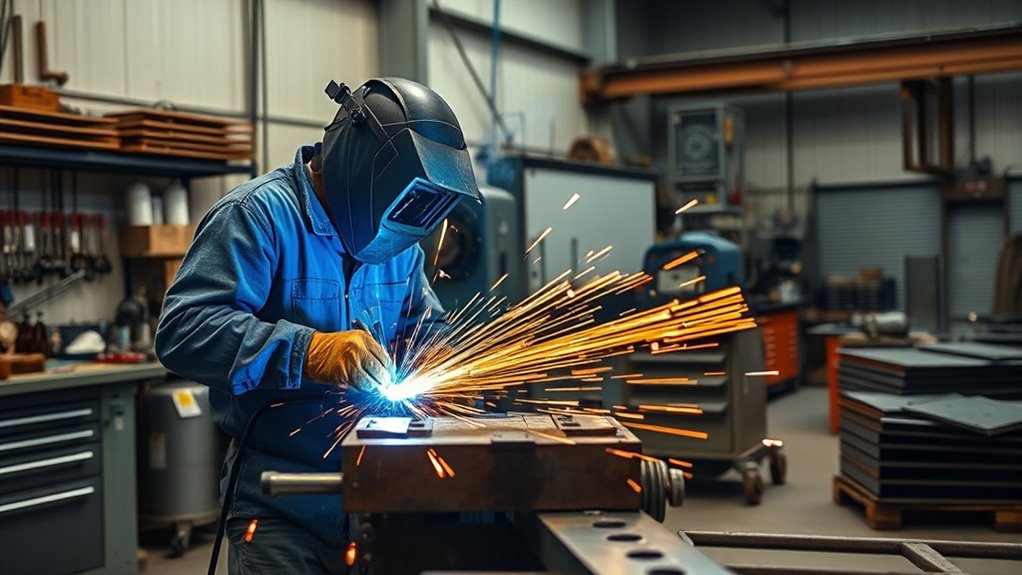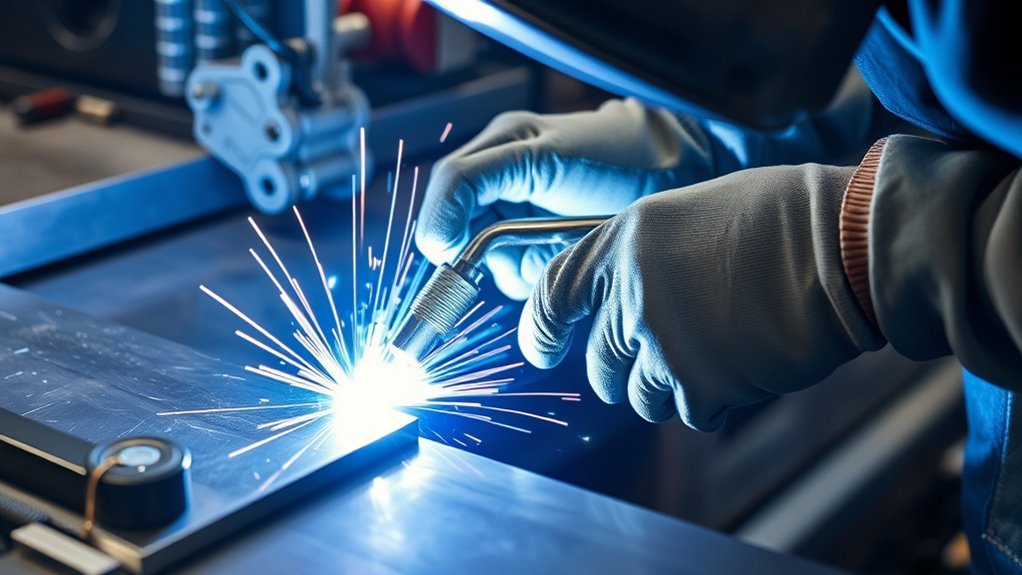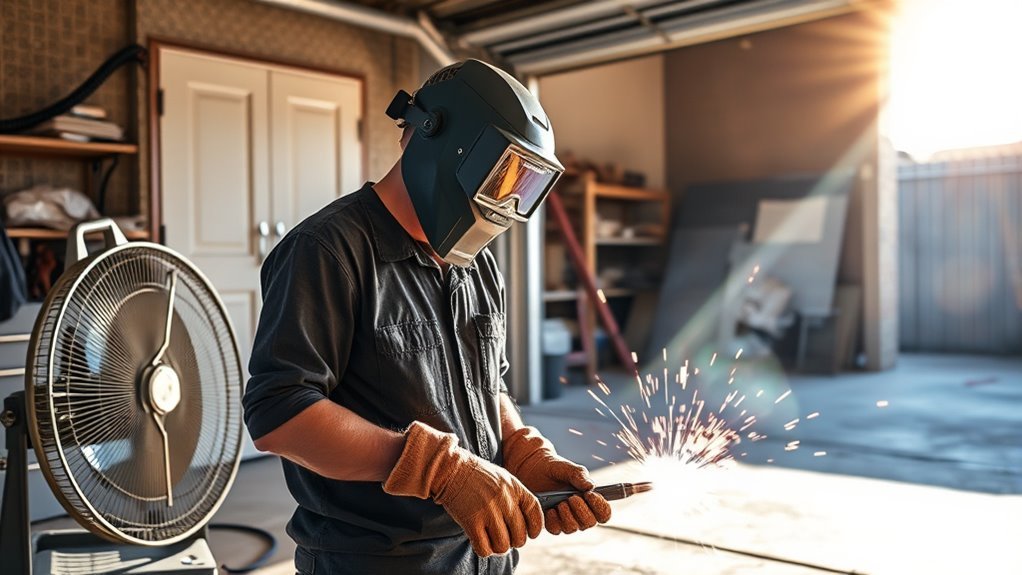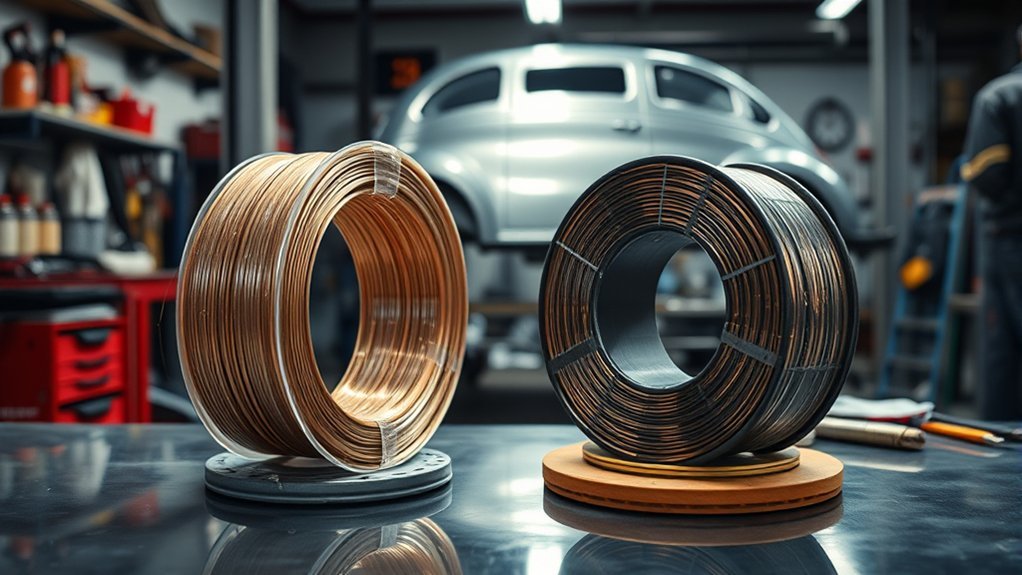
Choosing between solid wire and flux core wire for auto body work comes down to panel thickness, work location, surface condition, and the finish you want. For most thin body panels, solid MIG wire with shielding gas is the cleaner and easier-to-control choice. Flux core wire is better for outdoor repairs, rusty brackets, thicker patches, and jobs where carrying a gas bottle is not practical.
Quick Answer
For auto body panels, choose solid MIG wire when you can work indoors on clean thin sheet metal. Use flux core wire mainly for outdoor repairs, older rusty steel, brackets, frames, or thicker patch work. Solid wire gives cleaner welds, while self-shielded flux core handles wind better but runs hotter and leaves slag.
Key Takeaways
- Solid wire is usually best for thin auto body panels because it gives a clean bead, low spatter, and easier heat control.
- Self-shielded flux core is useful outdoors because it does not rely on a gas bottle or gas coverage that wind can blow away.
- Flux core runs hotter, so it can burn through 22 to 24 gauge sheet metal if your settings or tack-weld pattern are wrong.
- Clean metal still matters, even when flux core can tolerate more rust, mill scale, or light contamination than solid wire.
- Safety is part of the wire choice because welding fumes, sparks, paint, undercoating, and nearby combustibles can create serious hazards.
At a Glance
| Time Required | 5 to 15 minutes to choose wire and settings; longer for surface prep and test welds. |
| Difficulty | Beginner to intermediate. Thin sheet metal takes more practice than thicker brackets. |
| Tools Needed | MIG welder, correct wire, shielding gas if using solid wire, clamps, grinder, wire brush, PPE, fire extinguisher, and scrap test metal. |
| Cost | Solid wire costs less per spool but needs shielding gas. Flux core wire costs more but can avoid gas-bottle setup. |
Warning: Auto body welding can ignite paint, seam sealer, undercoating, insulation, fuel vapors, and nearby trim. Disconnect the battery, remove or shield combustibles, keep a suitable fire extinguisher nearby, and do not weld near fuel lines or tanks unless the area has been made safe by a qualified person.
Solid Wire vs Flux Core Wire: The Short Decision
If you are welding clean 20 to 24 gauge body panels indoors, start with solid MIG wire. It gives you better bead visibility, less slag cleanup, and a smoother surface that is easier to grind, prime, and paint. A common mild-steel setup is small-diameter solid wire with a shielding gas such as 75% argon and 25% carbon dioxide, adjusted to your welder and test panel.
If you are welding outside, repairing a thicker patch, fixing rusty older steel, or working where wind makes shielding gas unreliable, self-shielded flux core wire may be the better choice. It does not need a gas bottle because the wire creates its own shielding as it burns. The tradeoff is more smoke, slag, spatter, and heat, so it is less forgiving on very thin sheet metal.
| Wire Type | Best Use | Main Tradeoff |
| Solid MIG wire | Clean indoor body panels, patch panels, quarter panels, doors, and visible seams. | Needs shielding gas and clean metal. |
| Self-shielded flux core | Outdoor work, thicker patches, brackets, older steel, and quick repairs away from the shop. | Runs hotter and leaves slag. |
| Gas-shielded flux core | Thicker steel, out-of-position work, and higher-deposition shop welding. | Needs gas and is usually not the first choice for thin body skins. |
Products Worth Considering

ER70S-6 MIG WIRE: It's the most common wire of the copper-coated mild steel GMAW (MIG) wires for single or multiple pass welding.

High Quality & Reliable Welds: VEVOR 0.035" 10 lbs ER70S-6 solid MIG welding wire contains higher levels of manganese and silicon deoxidizers, delivering strong, consistent welds on mild carbon steel—even when working with oily or lightly rusted steel

✅【ER70S-6 PROFESSIONAL PERFORMANCE】- Highest manganese-silicon deoxidizers eliminate pre-cleaning! Weld rusty/oily plates smoothly with 100% CO2 gas. Perfect for sheet metal - zero burn-through at high amps (AWS A5.18 Certified).
Understanding Solid Wire and Its Benefits
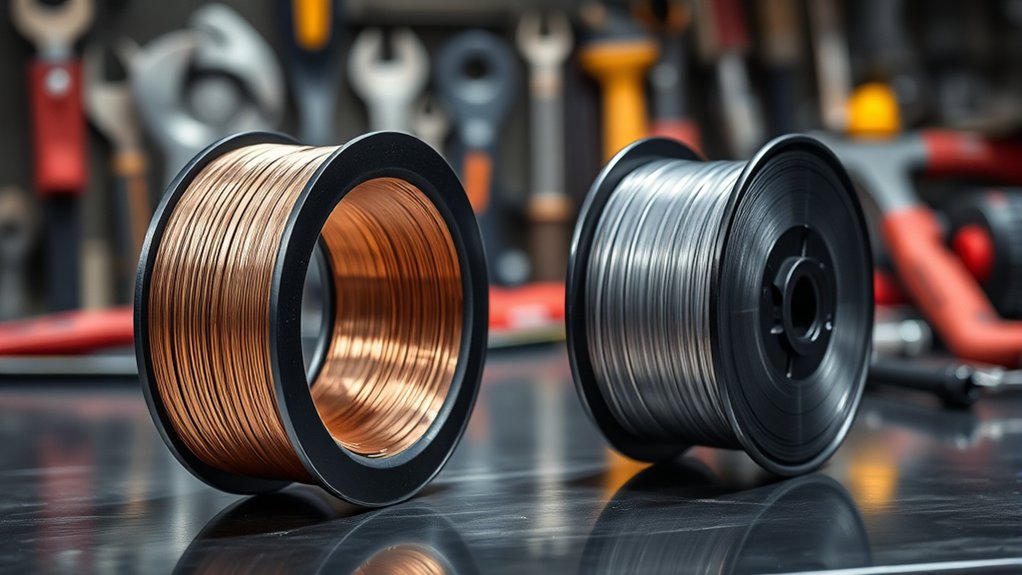
When you choose solid wire for auto body welding, you are choosing a cleaner and more controlled setup for thin sheet metal. Solid MIG wire uses a continuous wire electrode and an external shielding gas to protect the molten weld pool from air. That shielding helps reduce porosity, spatter, and messy cleanup when the metal is clean and the gas coverage is steady.
Solid wire is especially useful on visible body repairs because it does not leave flux slag on top of the bead. That makes it easier to see each tack, grind the weld smooth, and prepare the area for filler, primer, and paint. On thin panels, the goal is not maximum penetration. The goal is enough fusion without burning holes or warping the panel.
For mild-steel auto body work, many welders use small-diameter solid wire, often .023 inch or .030 inch, with short-circuit MIG settings. Always follow the wire maker’s chart, then test on scrap metal that matches the car panel before touching the vehicle. If you are welding thicker brackets or structural joints, also check proper maximum fillet weld size so the weld size matches the material.
Advantages of Using Flux Core Wire
Flux core wire has a tubular design filled with flux. With self-shielded flux core, that flux creates shielding gas and slag as it burns, so you do not need a separate gas bottle. This is why flux core is useful for outdoor jobs where wind can blow away MIG shielding gas.
- No gas bottle needed with self-shielded wire: Useful for field repairs, driveway work, and mobile repairs.
- Better wind tolerance: A self-shielded wire is less sensitive to light wind than solid wire with external gas.
- More penetration on thicker steel: Helpful for brackets, reinforcements, and heavier patch areas.
- More forgiving on imperfect surfaces: Flux core can handle light rust or mill scale better than solid wire, though clean metal is still best.
- Higher deposition: Flux core can lay down weld metal faster on suitable material.
- Useful for rugged repairs: Single-pass penetration can help on quick repairs where the wire and base metal are a good match.
The tradeoff is cleanup and heat. Flux core creates slag that must be chipped or brushed away before grinding, painting, or adding another pass. It also creates more smoke and can run hot on thin body skins, so practice on scrap before using it on 22 to 24 gauge panels.
Comparing Solid Wire and Flux Core Wire: Key Differences
Solid wire and flux-cored wire can both make strong welds when used correctly, but they solve different problems. The best choice depends on the jobsite, panel thickness, surface condition, and finish requirements.
- Shielding: Solid wire needs external shielding gas. Self-shielded flux core does not. Gas-shielded flux core does need gas.
- Work location: Solid wire works best indoors or behind wind blocks. Self-shielded flux core works better outdoors.
- Panel thickness: Solid wire is usually easier on thin body panels. Flux core is more useful as the metal gets thicker.
- Surface condition: Solid wire wants bright, clean metal. Flux core can tolerate dirtier steel, but cleaning still improves weld quality.
- Finish work: Solid wire leaves less cleanup before grinding and paint. Flux core leaves slag and more spatter.
- Fume and smoke: Flux core often creates more smoke, so ventilation and respiratory protection matter even more.
For thin auto body skins, clean fit-up and heat control usually matter more than raw penetration.
Products Worth Considering

【LOW SPATTER & EASY CLEANUP】Minimal Spatter, Flawless Beads: Experience exceptionally low spatter and minimal post-weld cleanup. This ER70S-6 solid wire allows you to achieve smooth, visually appealing beads with ease, saving both time and grinding effort on your metal fabrication.

ER70S-6 MIG WIRE: It's the most common wire of the copper-coated mild steel GMAW (MIG) wires for single or multiple pass welding.

ER70S-6 MIG WIRE: It's the most common wire of the copper-coated mild steel GMAW (MIG) wires for single or multiple pass welding.
Choosing Solid Wire for Auto Body Work
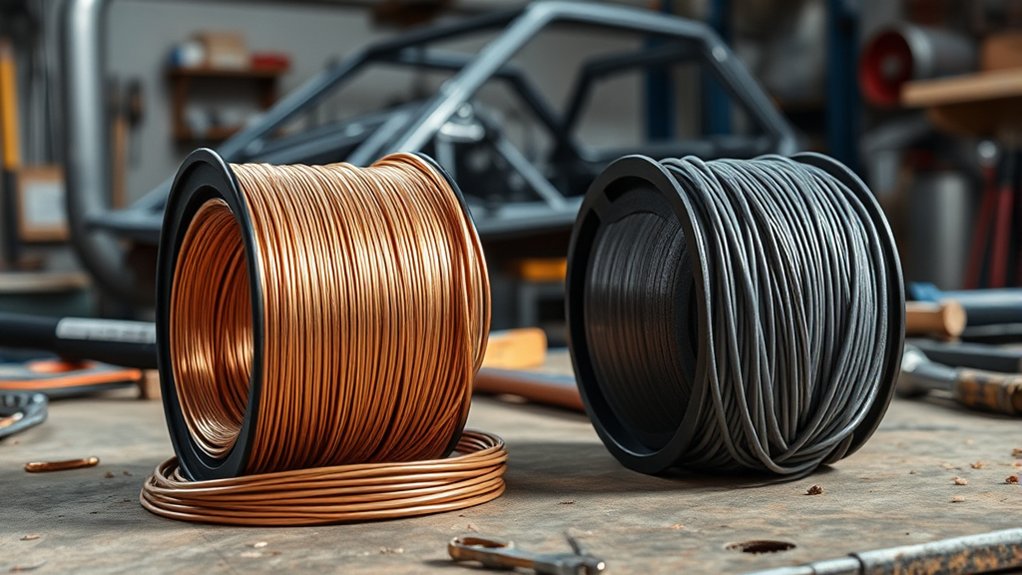
Choose solid wire when you are welding clean sheet metal indoors and you want a smooth repair with less finishing work. It is the better starting point for door skins, quarter-panel patches, floor patches, rocker patches, and other visible areas where a clean bead matters.
A good auto body solid-wire setup usually includes:
- Small wire diameter: .023 inch is common for very thin sheet metal; .030 inch can work for slightly thicker patches.
- Shielding gas: C25 gas, which is 75% argon and 25% carbon dioxide, is a common mild-steel MIG choice.
- Clean metal: Remove paint, rust, seam sealer, undercoating, oil, and zinc coating from the weld zone.
- Tack-weld sequence: Use short tacks spaced apart, then let the panel cool before adding more.
- Test pieces: Match the scrap thickness to the vehicle panel and tune voltage and wire speed first.
Solid wire also works well when weld appearance is important. Since it does not produce slag, you can inspect each tack as you go. If you move into stainless repair work, do not use mild-steel settings by habit. Follow stainless filler and gas guidance, such as the process used to MIG weld 304 stainless steel.
Pro Tip: If the panel blows through during test welds, do not just move faster. Lower heat input, use smaller tacks, improve fit-up, and let the metal cool between welds.
When to Use Flux Core Wire for Auto Repairs
Use flux core wire when the repair conditions make solid-wire MIG less practical. It is useful outdoors, on thicker steel, and on rougher repairs where a perfect cosmetic bead is not the top priority.
Flux core can make sense for:
- Older vehicles with thicker repair areas or heavier replacement patches.
- Brackets, mounts, reinforcements, trailer parts, and non-cosmetic steel repairs.
- Driveway or mobile work where wind affects shielding gas.
- Repairs where carrying a gas cylinder is not practical.
- Steel with light rust or mill scale after you clean the weld zone as well as possible.
Use caution on thin 22 to 24 gauge auto body panels. Flux core runs hotter and can cause burn-through, distortion, pinholes, and a rougher finish if you try to run a continuous bead. If you must use flux core on thinner material, use small tack welds, keep the arc time short, clean slag between tacks, and practice first.
Do not confuse self-shielded flux core with gas-shielded flux core. Self-shielded wire does not need external gas. Gas-shielded flux-cored wire does need gas and is usually used for thicker or higher-production welding rather than delicate body skins.
What to Think About: Material Thickness and Welding Conditions
Before loading a spool, look at the metal and the repair conditions. Auto body welding is not just a wire choice. It is a balance between heat, fit-up, access, surface prep, and the final finish.
- Thin outer panels: Solid wire is usually the better choice because it is cleaner and easier to control.
- Floor pans and patch panels: Solid wire is still common, but flux core can work if the material is thicker and cosmetics are less important.
- Brackets and reinforcements: Flux core may be useful when you need more penetration on heavier steel.
- Outdoor wind: Self-shielded flux core is more practical than solid wire unless you can block the wind well.
- Rust and coatings: Remove rust, paint, sealer, oil, and galvanizing from the weld zone. Dirty metal can cause porosity and weak welds.
- Aluminum repairs: Do not assume mild-steel flux core wire is suitable. Aluminum usually needs a different process, wire, and shielding gas. Review the limits before trying to weld aluminum with flux core.
Step-by-Step Wire Selection for Auto Body Repairs
- Identify the metal thickness. Thin sheet metal favors solid wire. Heavier brackets and reinforcements may favor flux core.
- Check the repair location. Indoors and out of wind, solid wire works well. Outdoors, self-shielded flux core may be easier.
- Decide how visible the repair will be. Use solid wire when the repair must grind smooth and look clean under paint.
- Inspect the surface condition. If the steel is rusty, coated, or dirty, clean it first. Do not depend on flux to solve poor preparation.
- Match wire to the machine. Check polarity, drive-roll type, contact tip size, and the manufacturer’s wire chart.
- Run test welds. Use scrap metal of the same thickness and adjust settings before welding the vehicle.
- Break the weld into tacks. On panels, never run one long bead. Stitch the repair slowly to control heat.
Surface Preparation, Heat Control, and Fit-Up
Good wire cannot make up for poor prep. Clean both sides of the weld area when possible. Grind to bright metal, remove paint and undercoating, and keep the joint gap tight. Large gaps make burn-through more likely because the arc has no metal bridge to tie into.
For patch panels, use clamps or magnets to hold the panel flush. Start with spaced tack welds. Then move around the panel instead of welding in one place. Let the metal cool between tacks. A copper backing spoon or thick backing bar can help absorb heat and support small gaps, but it does not replace good fit-up.
Note: If the panel starts to oil-can, buckle, or pull out of alignment, stop welding and let it cool. More weld heat will make distortion worse.
Solutions to Common Challenges in Auto Body Welding
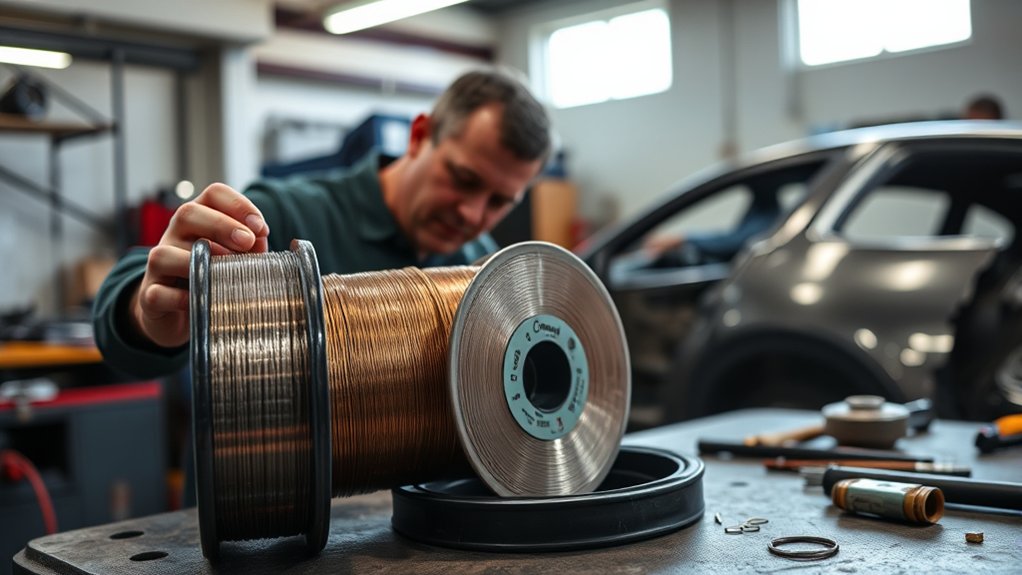
Most auto body welding problems come from excess heat, poor fit-up, dirty metal, weak gas coverage, or the wrong wire for the job. Use the table below to spot the likely cause and fix it before the repair gets worse.
| Problem | Likely Cause | Fix |
| Burn-through | Too much heat, large panel gap, or flux core on very thin metal. | Use shorter tacks, lower heat, tighter fit-up, smaller wire, or copper backing. |
| Porosity | Poor gas coverage, dirty metal, wind, paint, oil, or moisture. | Clean the joint, check gas flow, block wind, and inspect nozzle and hose leaks. |
| Warping | Too much heat in one area. | Spread out tack welds, pause often, and avoid long beads on sheet metal. |
| Slag inclusions | Flux-core slag trapped between passes or tacks. | Chip and wire-brush every weld before adding more weld metal. |
| Lack of fusion | Settings too cold, travel too fast, or poor joint prep. | Tune settings on scrap, clean the joint, and make sure the tack ties into both edges. |
If you keep seeing defects, review common MIG welding problems and solutions before continuing on the car. Fixing a test weld is cheaper than cutting out a failed patch later.
Safety Checks Before Welding on a Vehicle
Vehicle welding adds hazards that bench welding does not have. Cars contain wiring, sound deadener, seam sealer, paint, undercoating, plastic clips, carpet, fuel lines, brake lines, and boxed sections that can trap heat or fumes.
- Disconnect the battery and protect sensitive electrical parts when required by the vehicle maker’s service information.
- Remove trim, carpet, insulation, and seam sealer near the weld zone when possible.
- Keep combustibles away and shield anything that cannot be moved.
- Have fire protection ready, including a suitable extinguisher and a fire watch after welding.
- Control fumes with ventilation, local exhaust, and respiratory protection when needed.
- Wear proper PPE, including a welding helmet, gloves, flame-resistant clothing, eye protection, and hearing protection when grinding.
- Do not weld on closed containers, fuel tanks, or unsafe fuel-system areas unless they have been properly cleaned, vented, and made safe by a qualified person.
OSHA’s welding guidance explains that welding can create harmful metal fumes and gases, and its fire-prevention standard requires fire hazards to be moved, guarded, or protected before welding. See the safety sources at the end of this article for more detail.
Final Thoughts on Choosing the Right Welding Wire
The right welding wire is the one that fits the repair, not the one that sounds strongest on paper. For most clean, thin auto body panels, solid MIG wire is the better choice because it is easier to control and easier to finish. For outdoor repairs, thicker steel, and rougher work, flux core wire can be more practical.
Use this simple rule:
- Choose solid wire for thin, clean, visible body panels in a garage or shop.
- Choose self-shielded flux core for outdoor welding, thicker patches, and repairs where gas coverage is not practical.
- Choose gas-shielded flux core only when the wire, metal thickness, machine, and repair type call for it.
Whichever wire you choose, clean the joint, test on matching scrap, use short tacks, and control heat. That matters more than chasing one universal wire for every auto body repair.
Frequently Asked Questions
What is the best wire for welding a car body?
For most car body panels, solid MIG wire is the best starting choice. It works well on clean thin sheet metal, produces less slag, and is easier to grind smooth for paint. Flux core is better for outdoor work, thicker steel, and non-cosmetic repairs.
Is solid wire better than flux core for auto body work?
Solid wire is usually better for thin auto body panels because it gives cleaner welds, less spatter, and no slag to remove. Flux core is not worse overall, but it is hotter and messier, so it is less forgiving on thin visible panels.
Is flux core good for auto body repairs?
Flux core can be good for some auto repairs, especially outdoor work, thicker patches, brackets, and older steel. It is not ideal for very thin outer panels unless you have practiced the settings and use short, spaced tack welds to avoid burn-through.
What welding process is best for auto body panels?
MIG welding with solid wire is the most common choice for DIY and garage auto body panel repair. TIG can give excellent control, but it is slower and takes more skill. Flux core can work when conditions call for it, but it needs careful heat control on thin panels.
Can I use flux core without gas on car panels?
Yes, if you use self-shielded flux core wire, but it is not the cleanest choice for thin car panels. It creates slag, more smoke, and more heat. Use it only after practicing on matching scrap, and avoid long beads.
Do I need to clean metal before flux core welding?
Yes. Flux core can tolerate light contamination better than solid wire, but clean metal still gives a stronger and cleaner weld. Remove paint, rust, oil, undercoating, seam sealer, and zinc coating from the weld area whenever possible.
Conclusion
For auto body welding, solid wire is usually the best choice for clean, thin panels because it gives you a smoother weld, less cleanup, and better control over heat. Flux core wire earns its place when you are working outdoors, repairing thicker steel, or dealing with rougher conditions where gas-shielded MIG is less practical. Match the wire to the panel, clean the metal, test your settings, and weld slowly with short tacks. That approach gives you a stronger repair and a cleaner finish.
Sources
- MillerWelds: Solid Wire Versus Flux-Cored Wire — supports wire selection by material thickness, work location, surface condition, and weld appearance.
- MillerWelds: What Type of Gas Is Best for MIG Welding — supports C25 shielding gas guidance and gas-coverage troubleshooting.
- OSHA Fact Sheet: Controlling Hazardous Fume and Gases during Welding — supports welding fume, ventilation, and respiratory-protection guidance.
- OSHA 29 CFR 1910.252: Welding, Cutting, and Brazing General Requirements — supports fire prevention, guards, extinguishers, and fire-watch guidance.
- NIOSH: Welding Fumes and Manganese — supports welding-fume exposure and manganese health-risk context.