Classic car welding can preserve original metal, but the wrong process, poor fit-up, or too much heat can ruin a panel and weaken the repair. The safest approach is to identify the vehicle and metal first, separate cosmetic work from structural work, test every setting on matching scrap, and restore corrosion protection after the weld is complete.
Quick Answer
Gas-shielded short-circuit MIG is the best starting method for most mild-steel classic-car body panels. TIG suits precise, tightly fitted visible seams, while resistance spot welding or approved MIG plug welds suit factory-style flanges. Structural repairs require vehicle-specific procedures, sound metal, careful bracing, tested settings, and qualified inspection.
Key Takeaways
- Use gas-shielded MIG for most clean, light-gauge mild-steel patches, but do not treat it as a universal process for frames or structural sections.
- Use TIG when you need precise arc and filler control and can maintain a tight, clean joint without dwelling too long in one area.
- Never weld over rust, paint, oil, undercoating, seam sealer, or unknown plating.
- Control heat with matching test coupons, small wire, tight fit-up, spaced tacks, skip welding, and a copper or aluminum backing bar.
- Protect the finished repair with the coating system required for the location, including primer, seam sealer, exterior coatings, and cavity wax where needed.
At a Glance
| Time Required | Allow time to identify the vehicle, expose both sides, make test coupons, fit the patch, weld in stages, inspect the repair, and restore coatings. A small patch may take most of a day; major rust or structural work can take several days. |
| Difficulty | Intermediate for small nonstructural patches; advanced or professional for rockers, pillars, floors near mounts, suspension points, frames, and unknown previous repairs. |
| Tools Needed | Suitable welder, matching wire or filler, shielding gas, helmet, safety glasses, gloves, welding jacket, hearing protection, local fume extraction, extinguisher, grinder, cutting tools, sheet-metal gauge, clamps, magnets, copper or aluminum backing bar, measuring tools, and body bracing when required. |
| Cost | Varies widely. Consumables may be a small part of the job, while replacement panels, extraction equipment, vehicle bracing, paint materials, and professional structural work can control the total. |
What’s in This Article
- Best Welding Method for Classic Cars
- Verify the Vehicle, Metal, and Repair Plan
- Set Up a Safe Welding Workspace
- Prep Rusted Metal Before Welding
- Choose MIG, TIG, Stick, or Gas
- Prevent Burn-Through on Thin Sheet Metal
- Repair Floor Pans, Rockers, and Patches
- Weld Thin Panels Without Warping
- Match Factory Spot Welds
- Inspect and Test the Repair
- Protect Welds From Rust
- Avoid Common Classic Car Welding Mistakes
- Frequently Asked Questions
- Conclusion
- Sources
Best Welding Method for Classic Cars
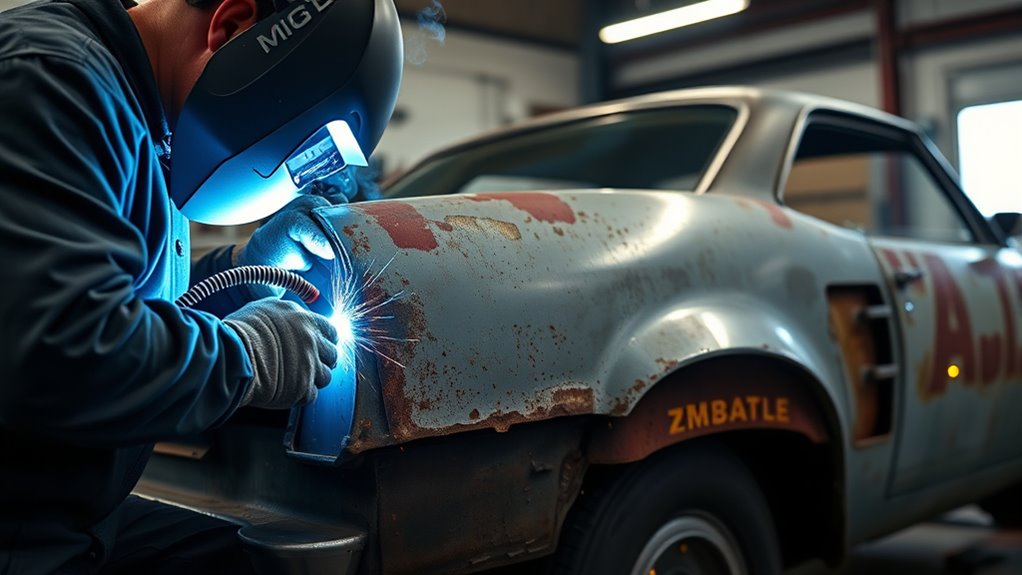
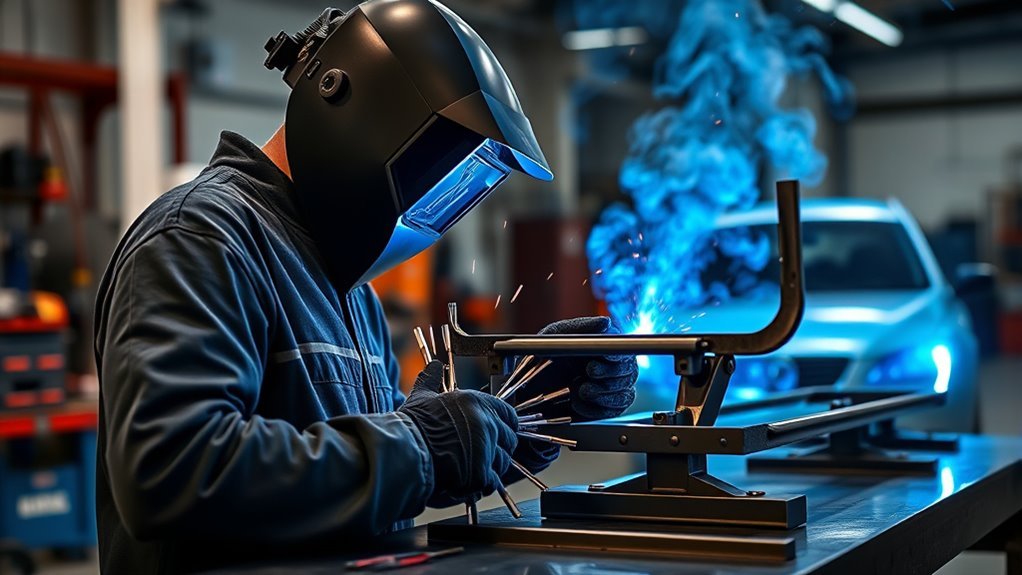
The best welding method depends on the panel, metal, joint design, access, and whether the area is cosmetic or structural. For most clean, light-gauge mild-steel body panels, gas-shielded short-circuit MIG welding is the best starting point because it is fast, widely available, and easier to learn than TIG.
MIG wire feeds continuously, which helps you make short tacks and fill a seam in stages. It can produce strong repairs with limited grinding when the wire, gas, polarity, settings, and joint fit are correct.
TIG welding gives you separate control of the arc and filler rod. It works well on tightly fitted visible seams, thin steel, stainless steel, and aluminum when the operator has enough skill to avoid keeping the arc in one place too long.
Squeeze-type resistance spot welding is the closest match for many factory overlapping flanges when both sides are accessible and the machine can deliver the required current, time, and electrode force. Where the approved repair allows it, a MIG plug weld may replace an inaccessible factory spot weld, but the two processes are not identical.
Oxy-acetylene welding remains useful for heating, shrinking, stretching, brazing, and traditional metal shaping. It can make a workable fusion weld without electric power, but its broad heat-affected zone makes thin flat panels easier to distort.
Stick welding belongs mainly on clean, heavier steel when appearance and sheet-metal heat control matter less. It is not a good first choice for body skins or metal weakened by corrosion.
| Repair | Best Starting Process | Why | Main Limitation |
|---|---|---|---|
| Mild-steel body patch | Gas-shielded short-circuit MIG | Fast tacking and good control with small wire | Gaps and excessive heat cause burn-through |
| Visible, tightly fitted seam | TIG | Precise arc and filler placement | Slow travel can add heat and distortion |
| Factory overlapping flange | Resistance spot weld or approved MIG plug weld | Recreates a spaced flange-joint pattern | Requires correct access, preparation, spacing, and testing |
| Heavy bracket or clean thick steel | MIG or stick, as the procedure permits | Greater deposition and penetration capability | Not a substitute for a structural repair plan |
| Traditional shaping or heating | Oxy-acetylene | Cuts, heats, shapes, and welds with one setup | Broad heat input raises fire and warping risk |
| Rocker, pillar, frame, mount, or suspension area | Vehicle-specific documented process | Joint design and material affect crash and load performance | Professional repair may be required |
Flux-core welding can be useful on clean, heavier outdoor work where wind would disturb shielding gas. However, gasless flux-core wire is normally a poor choice for thin body panels because it adds heat, spatter, and cleanup.
The best process is the one approved for the vehicle, metal, joint, and repair—not simply the process already in your shop.
Products Worth Considering
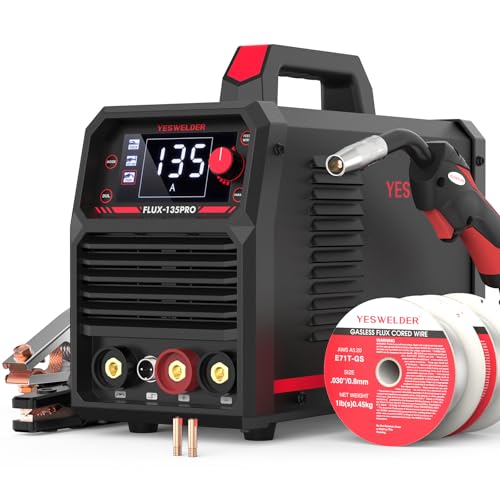
READY OUT OF THE BOX: Start welding immediately! It masterfully handles Gasless Flux Core MIG, Stick, and Lift TIG (Extra Lift TIG torch required). This budget-friendly 3-in-1 machine includes extra E71T-GS .030''&.035'' flux core wires, known for its smooth arc and high feedability. Say goodbye to heavy shielding gas cylinders—perfect for outdoor, windy, or all-position welding.

Compatible Welder Models: this compatible with KP1939-1 replacement kit is designed for use with 170A flux core welders; Before ordering, please confirm your welder uses the KP1939-1 nozzle interface by checking your welder manual or comparing the nozzle size with our product images

【LOW SPATTER & EASY CLEANUP】Minimal Spatter, Flawless Beads: Experience exceptionally low spatter and minimal post-weld cleanup. This ER70S-6 solid wire allows you to achieve smooth, visually appealing beads with ease, saving both time and grinding effort on your metal fabrication.
Verify the Vehicle, Metal, and Repair Plan
Before cutting or welding, confirm the exact year, model, body style, and construction. For a 1981-or-newer vehicle, the NHTSA VIN Decoder can help confirm manufacturer-reported information. Earlier classics may use shorter serial numbers, body tags, engine numbers, build sheets, or manufacturer-specific identification systems.
Find a factory service manual, body manual, parts illustration, restoration manual, or documented repair procedure for the exact vehicle whenever possible. Confirm whether the car is body-on-frame, unit-body, or built with a mixed structure.
Do not assume a panel is cosmetic because it is thin. Rockers, floors, pillars, cowls, torque boxes, wheelhouses, trunk floors, crossmembers, and body mounts may carry suspension, seat-belt, body, or collision loads.
- Record the VIN or serial number, body tag, model year, and body style.
- Photograph door, hood, deck-lid, glass, and trim gaps before disassembly.
- Measure the opening diagonally and record reference dimensions.
- Identify prior patches, brazing, filler, lead work, and hidden rust.
- Confirm the base metal and approximate thickness with service information and a sheet-metal gauge.
- Brace door openings or other load-bearing openings before removing a rocker, pillar, floor edge, or major structural section.
Warning: Stop and use a qualified restoration or collision-repair professional if the repair affects suspension pickups, steering mounts, seat-belt anchors, pillars, frame rails, body mounts, or badly distorted structure, or if no reliable repair procedure can be found.
Set Up a Safe Welding Workspace
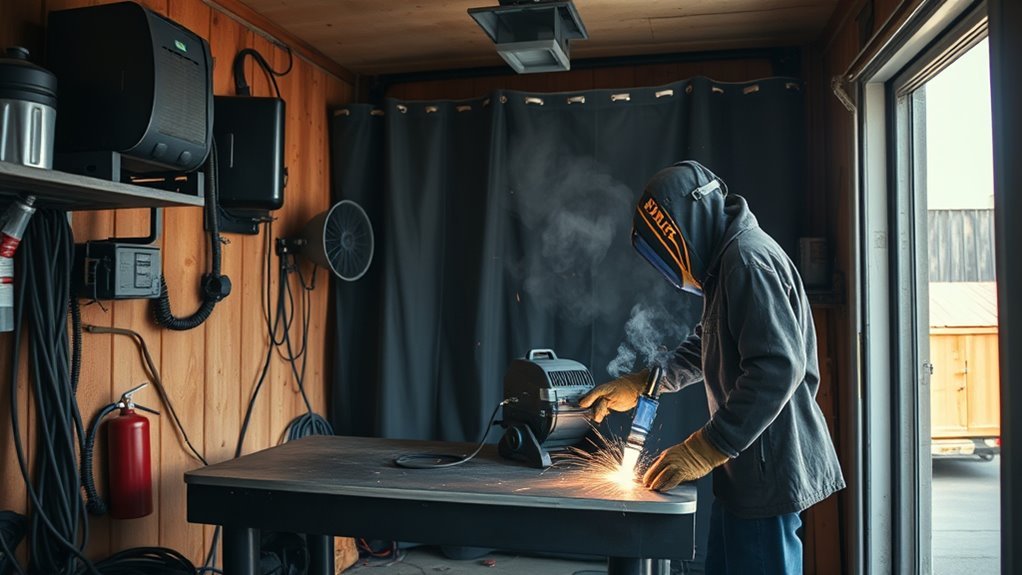
Before you strike an arc, create a controlled hot-work area. Remove gasoline, aerosol cans, paint materials, cardboard, oily rags, batteries being charged, and other combustibles. Use a real welding blanket or metal shield rather than a general-purpose plastic tarp.
Inspect both sides of the work. Sparks and conducted heat can ignite carpet, seats, insulation, headliners, wiring looms, seam sealer, sound deadener, undercoating, wood, and debris hidden inside a rocker or quarter panel.
Keep a suitable fire extinguisher ready for instant use. Know the PASS method: pull the pin, aim at the base, squeeze the handle, and sweep from side to side. Have another person watch the opposite side and nearby cavities when hidden ignition is possible.
OSHA hot-work guidance calls for moving or shielding combustibles and maintaining a fire watch when conditions require it. Continue checking the vehicle and work area for at least 30 minutes after the last weld because trim, seam sealer, or debris can smolder without an immediate flame.
Control Welding Fumes and Coating Hazards
Open doors alone do not guarantee safe air. Use local fume extraction with the hood or nozzle close enough to capture the plume without pulling away the shielding gas. Keep your head out of the plume and arrange airflow so fumes do not pass through your breathing zone.
Remove paint, solvent residue, grease, undercoating, seam sealer, plating, and unknown coatings from the heat-affected area on both sides. Older auto-body coatings and sanding dust may contain lead or chromium, while galvanized steel can create zinc-oxide fumes.
If you suspect lead body solder, lead-bearing paint, cadmium plating, chromate coatings, or another hazardous material, stop and identify it before grinding or heating. Use the controls, hygiene, and respiratory protection required for that material. A loose disposable dust mask is not a substitute for properly selected and fitted respiratory protection.
OSHA’s welding-fume guidance explains why source capture, clean surfaces, positioning, and hazard-specific controls matter.
Protect the Vehicle Electrical System
Follow the vehicle or conversion manufacturer’s instructions before welding. Turn off the ignition and accessories. Many manufacturers instruct technicians to disconnect the negative battery cable before electric welding, but some vehicles require additional steps to preserve memory, protect modules, or isolate aftermarket equipment.
Place the work clamp on clean bare metal as close to the repair as practical. Do not force welding current to travel through bearings, hinges, steering parts, electrical grounds, braided straps, control modules, or sensitive accessories.
Warning: If the classic has a hybrid or electric conversion, orange high-voltage cables, a traction battery, or an unknown high-voltage system, do not begin welding. Disconnecting the 12-volt battery does not prove the high-voltage system is safe. Have a qualified high-voltage technician de-energize and verify the system under the conversion manufacturer’s procedure.
Secure Cylinders and Welding Equipment
Keep compressed-gas cylinders upright and secured with a chain or approved restraint. Protect them from sparks, hot metal, impact, traffic, and electrical contact. Close the cylinder valve when work is finished and move cylinders with the valve cap installed when required.
Position the welder, leads, hoses, and extraction equipment outside normal walkways. Check the gun liner, ground lead, regulator, hoses, torch, and power cable before use.
Wear suitable protective clothing, including a welding helmet with the correct lens shade, safety glasses under the helmet, welding gloves, flame-resistant clothing, closed footwear, and hearing protection when grinding or cutting.
Control Fuel and Hidden Fire Hazards
Do not weld near leaking fuel, an open fuel system, a fuel tank containing vapor, or a line that can be heated by sparks or conducted heat. Relocate, drain, isolate, or remove fuel-system components only under a safe documented procedure.
Never weld, braze, or cut a fuel tank or container that has held a flammable substance unless it has been professionally prepared and verified safe for hot work. Vapor can remain after the visible liquid is gone.
Prep Rusted Metal Before Welding
Start by exposing enough of the panel to see the full rust boundary on both sides. Use a scraper, wire brush, abrasive disc, pick, or grinder carefully so thin metal is not mistaken for sound steel.
Remove rust, paint, grease, scale, filler, seam sealer, and undercoating until the weld area is clean bare metal. Clean metal supports proper penetration and bonding and reduces porosity and unstable arc behavior.
If corrosion has reduced the metal to flakes, pinholes, deep pits, or a paper-thin edge, cut farther back until the remaining panel has dependable thickness. Do not bridge a large rust hole with weld metal.
- Map the rust from both sides.
- Make the smallest practical opening with simple, controllable edges.
- Match the replacement panel’s material and thickness as closely as possible.
- Form the patch before enlarging the opening for final fit.
- Leave a tight, even joint with the gap required by the chosen welding method.
- Clamp the patch so it cannot rise, sink, or shift during tacking.
Use weld-through primer only where the panel design, repair procedure, and product instructions call for it—usually between inaccessible mating flanges. Keep the actual fusion area clean enough for a stable weld. Weld-through primer does not replace post-weld epoxy primer, seam sealer, coatings, or cavity wax.
Note: If rust continues into a reinforcement, brace, mount, inner rocker, frame section, or closed cavity, a visible outer patch will not complete the repair. Open and inspect the full assembly or refer the job to a structural-restoration shop.
Choose MIG, TIG, Stick, or Gas
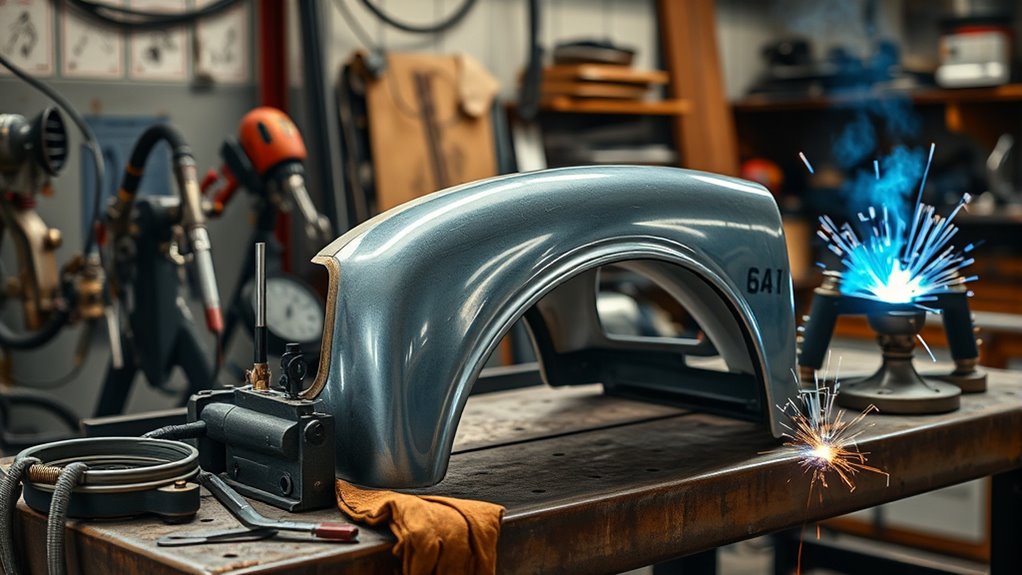
Choose the process after confirming the joint, metal, thickness, access, and required strength. Test it on scrap cut from the removed panel or on new material of the same type and gauge.
Products Worth Considering

High-quality:Tooliom's .030" ER70S-6 MIG Welding Wire (10lb spool) meets all industry standards for consistent strength and performance. Enjoy smooth feeding, stable arcs, optimal penetration, and high deposition rates—everything you need for exceptional welds

High-quality: ARCCAPTAIN's ER70S-6 mig welding wire .030" meets industry standards(Net Weight: 10lbs), ensuring consistent performance, superior strength. With its smooth feeding and stable welding parameters, you can achieve optimal penetration, high deposition rates, and exceptional overall welding performance.

E71T-GS FLUX CORE WIRE: This self-shielding, AWS E71T-GS flux-cored wire excels due to its advanced core design, delivering exceptional arc stabilization and high feedability for effortless welding. The core also incorporates powerful deoxidizing agents, ensuring clean, reliable welds even when welding through light rust or mill scale.
MIG for Body Panels
Gas-shielded short-circuit MIG is usually the best choice for classic-car mild-steel body panels. It lets you place many small tacks, join them gradually, and stop quickly when the panel begins to hold heat.
For light-gauge mild steel, a common starting setup is:
- Wire: 0.023- or 0.024-inch ER70S-6 solid wire
- Shielding gas: An approved argon/carbon-dioxide blend, commonly 75% argon and 25% carbon dioxide
- Polarity: Direct-current electrode positive for solid-wire MIG, unless the machine or consumable instructions state otherwise
- Transfer mode: Short-circuit transfer
- Settings: Start with the welder’s chart, then tune on matching scrap
Do not use pure argon as the default mild-steel MIG gas. Do not assume gasless flux-core wire will make body-panel work easier. Flux-core can add more heat, spatter, slag, and cleanup than thin automotive sheet can tolerate.
Set voltage and wire speed together. A harsh, stubbing wire can indicate too much wire speed for the voltage, while a long erratic arc can indicate too much voltage or too little wire. Check gas flow, polarity, contact-tip condition, work-clamp contact, and wire feed before blaming the panel. The internal guide to MIG welding problems and solutions can help with machine-side troubleshooting.
Short-circuit transfer reduces heat compared with spray transfer and is the normal MIG approach for thin steel. Related setup principles also appear in this guide to short-circuit MIG transfer, although stainless steel requires different wire and gas than mild-steel body panels.
TIG for Precision Work
TIG is useful when the seam is clean, visible, and fitted closely enough to control filler placement. It uses a nonconsumable tungsten electrode and a separate filler rod, so the operator can add only the metal needed.
| Benefit | Why It Helps | Best Use |
|---|---|---|
| Focused arc | Places heat and filler accurately | Tightly fitted fenders and visible patches |
| Separate filler rod | Adds only the filler needed | Small gaps and detailed repairs |
| Clean shielding | Produces a neat weld on properly cleaned metal | Visible steel, stainless, or aluminum work |
| Small electrode options | Supports stable low-current starts | Thin sheet and small features |
TIG is not automatically cooler than MIG. Slow travel, repeated reheating, or an oversized tungsten or filler rod can distort the panel. Use a small suitable tungsten, a filler rod no thicker than necessary, the fastest travel speed that maintains fusion, and short separated welds.
Stick and Gas Options
Stick welding provides useful penetration on clean, heavier steel, but it creates slag and more spatter and is difficult to control on thin sheet. Do not use stick welding to avoid removing rust. The metal still needs to be sound and clean.
If a documented structural repair requires low-hydrogen electrodes, follow the electrode manufacturer’s storage and exposure limits. The internal guide to a controlled electrode-storage environment explains why moisture control matters.
Oxy-acetylene welding remains valuable for traditional restoration, heating, cutting, and metal shaping. It does not require electric power at the torch, but its flame heats a larger area than a focused arc. Remove far more trim and combustible material than the visible weld line suggests, and practice on scrap before touching a large flat panel.
Resistance Spot and MIG Plug Welds
A resistance spot welder clamps overlapping sheets between copper electrodes and creates a weld nugget with current, time, and pressure. It normally requires access to both sides and clean, tightly clamped mating surfaces.
A MIG plug weld fills a hole in the outer panel and fuses it to the panel underneath. It is often used where a squeeze-type spot welder cannot reach, but only when the repair design permits it.
- Mark the original weld locations before drilling or separating panels.
- Duplicate the documented weld count and spacing rather than guessing from appearance.
- Prepare mating surfaces according to the primer and welding procedure.
- Test the spot-welder schedule or plug-weld settings on matching coupons.
- Perform a peel or destructive test on the coupon before welding the vehicle.
Prevent Burn-Through on Thin Sheet Metal
Burn-through occurs when the arc melts an unsupported edge faster than the joint can absorb and spread the heat. Thin, rust-thinned, poorly fitted, or contaminated steel fails first.
Use low controlled settings, a small wire, tight fit-up, quick tacks, and a backing bar. The stitch-welding techniques in the related guide can help you manage heat, but always tune the machine on the same material before welding the car.
Low Heat Settings
The lowest dial setting is not always the correct setting. Too little heat can leave a cold weld sitting on the surface, while too much heat can open a hole. The correct setting melts both edges quickly and forms a small, consistent weld without excessive collapse.
- Prepare two or more coupons of the same material and thickness.
- Start with the welder manufacturer’s recommended voltage and wire speed.
- Make a tack and inspect both the front and back.
- Adjust until the tack fuses both pieces without a large heat mark or blowout.
- Bend, peel, or break a test coupon to confirm that the joint—not just the top bead—has fused.
Short Stitch Welds
Use short tacks or stitches instead of running one continuous bead across a thin panel. Place the first tacks far apart, then fill the spaces gradually while moving around the panel.
Pause before returning to an area that is still carrying heat. The goal is not to race around the seam; it is to keep any one zone from becoming much hotter than the rest.
Do not repeatedly strike the arc at the same weak edge. Start on the thicker or better-supported side and move the puddle toward the thinner edge when the joint allows it.
Clean, Tight Fit
A clean, tight fit is one of the best defenses against burn-through. A large gap removes the heat path that the adjacent metal should provide.
- Trim the patch in small steps instead of cutting the opening oversized.
- Remove burrs and square the edges without thinning them.
- Clamp the pieces on the same plane.
- Check the full seam for changing gaps before the first tack.
- Recheck alignment after the first few tacks.
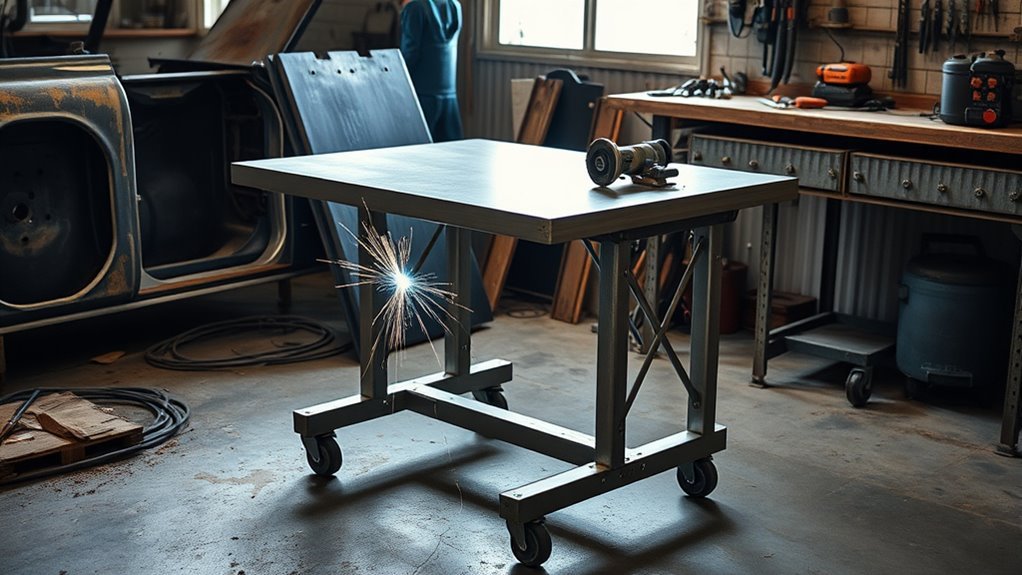
A copper or aluminum backing bar can support the puddle and draw heat away from the joint. Keep the backing surface clean and clamp it firmly against the back of the repair.
Pro Tip: Save a piece of the removed original panel. It gives you the most useful test coupon because it matches the car’s actual thickness, coating history, and condition better than a random scrap offcut.
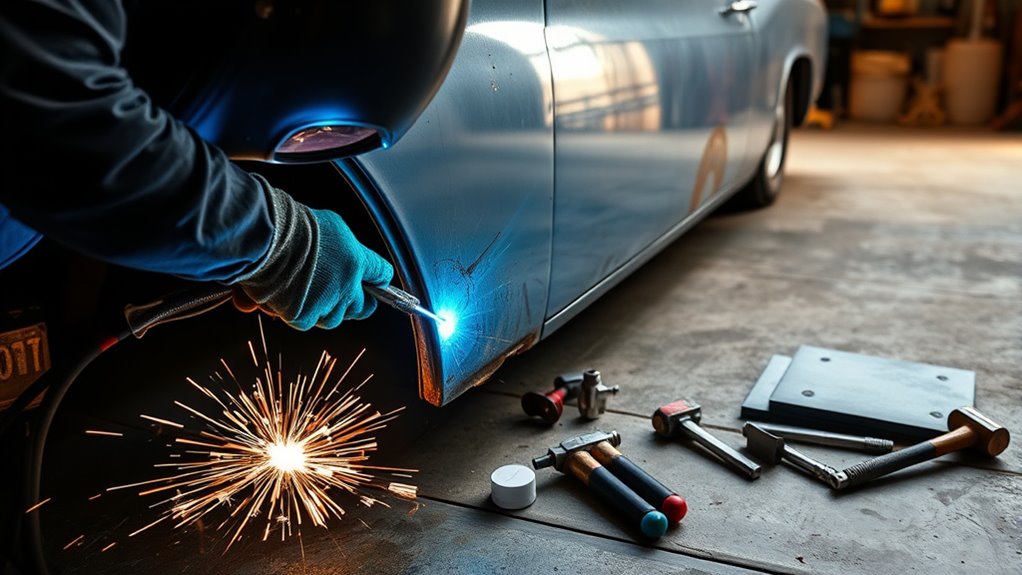
Repair Floor Pans, Rockers, and Patches
Start by deciding whether the rusted area is a simple skin, a flange assembly, or part of the body structure. A floor pan can connect seat mounts, braces, tunnels, rockers, body mounts, and crossmembers. A rocker can control door-opening shape and carry body loads.
Support the car at documented points on a stable, level surface. Check the door gaps and body dimensions before cutting. Brace the opening before removing a structural rocker, pillar base, floor edge, or other section that can let the shell move.
- Remove trim, carpet, wiring, fuel lines, brake lines, and heat-sensitive parts from both sides.
- Cut only enough metal to expose the full damage and reach sound steel.
- Repair hidden inner structures before installing the outer panel.
- Fit the replacement panel and verify door, glass, trim, and neighboring-panel alignment.
- Use butt welds, lap joints, plug welds, or resistance spot welds only where appropriate for the original construction and repair plan.
- Tack and recheck alignment before completing the joint.
For an overlapping floor-pan flange, plug welds may recreate the original spaced attachment when the documented procedure allows them. For a visible exterior patch, a tightly fitted butt joint can reduce the need for filler and avoid trapping moisture in a broad lap.
Apply approved weld-through primer only to inaccessible mating surfaces where required. Do not coat the butt-weld edge with a heavy layer that destabilizes the arc. The related guide to heat control on thin metal reinforces the importance of short welds and test pieces, although gasless flux-core wire is not the preferred process for a thin floor or rocker skin.
Never weld a new panel to rust-thinned steel simply because the bead appears to hold. If the surrounding metal tears during a coupon-style test or collapses under light probing, cut back farther.
Weld Thin Panels Without Warping
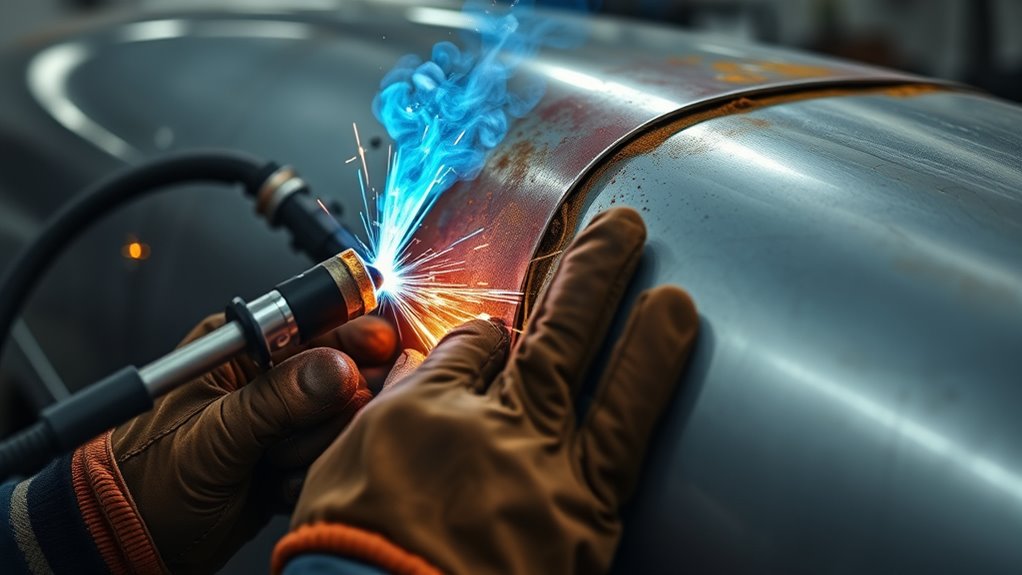
Thin sheet metal expands when heated and contracts as the weld cools. Uneven expansion and shrinkage pull the panel out of shape, especially on broad, low-crown areas such as doors, roofs, quarters, and deck lids.
- Fit and clamp the panel before welding.
- Place a few widely spaced tacks and confirm alignment.
- Add new tacks midway between existing tacks rather than joining one area first.
- Move to a distant part of the seam after each short weld.
- Use a copper or aluminum backing bar where access permits.
- Let the panel shed heat before returning to the same zone.
- Join the tacks gradually until the seam is complete.
TIG can provide precise control on a clean, tightly fitted seam, but a slow torch can still warp the panel. MIG can also distort the panel if you hold the trigger too long or connect the seam in one continuous pass.
Do not quench a hot panel with water unless a documented metal-shaping procedure specifically calls for controlled shrinking. Sudden cooling can create additional shrinkage and make the panel harder to correct.
Planishing can restore some stretch lost to weld shrinkage, but it requires access to both sides and good hammer-and-dolly control. Practice on scrap before planishing a visible original panel.
Pro Tip: Move around the panel instead of completing one end first. Keep checking the reflection, body line, crown, and neighboring panel gap so you catch movement before the entire seam is locked in.
Match Factory Spot Welds
Factory spot-weld locations show how overlapping panels were attached, but appearance alone does not confirm strength. Record the original weld pattern before drilling the panel apart.
True resistance spot welding requires suitable access, electrode tips, clamping force, current, and weld time. The machine schedule must match the total material stack and coatings. Test the setup on matching coupons before welding the car.
When squeeze-type access is not possible, an approved MIG plug weld may be used. Drill or punch a clean hole of the size required by the repair procedure, clamp the panels tightly, begin the arc on the lower panel, and fill outward until the hole is fused to both layers.
Proper surface preparation on galvanized steel is especially important because zinc can affect arc stability and create hazardous fumes.
| Step | Action |
|---|---|
| Mark | Record original weld points, panel overlaps, and flange edges before separation. |
| Prepare | Clean mating surfaces and apply only the primer or sealer approved for the process. |
| Clamp | Bring both layers into firm contact with no hidden gap. |
| Test | Make trial welds on a matching stack and perform a peel or destructive test. |
| Weld | Follow the documented count and spacing while monitoring heat and panel contact. |
| Inspect | Confirm fusion, panel fit, and backside condition before coating the joint. |
Inspect and Test the Repair
Inspect the weld before grinding it smooth. Grinding can hide porosity, incomplete fusion, cracks, pinholes, and missed sections.
- Look for a consistent weld profile with fusion into both sides of the joint.
- Inspect the back when accessible for evidence that the weld joined the full stack.
- Check for pinholes with a bright light behind the seam where practical.
- Look for undercut, excessive buildup, burn-through, porosity, and cracks.
- Confirm that doors, hood, trunk, glass openings, and trim gaps remain aligned.
- Repeat the coupon test if settings, panel stack, position, access, or contamination changes.
For a plug-weld or spot-weld setup, make a duplicate coupon and peel the layers apart. A sound test should tear or pull a nugget from the surrounding sheet rather than separating cleanly at the interface.
Do not grind a structural weld flush merely for appearance unless the repair procedure permits it. Excessive grinding can thin the base metal and remove the strongest part of the weld.
Note: A neat bead is not proof of a safe structural repair. Have critical frame, suspension, seat-belt, body-mount, and pillar repairs inspected by a qualified professional before the vehicle returns to service.
Protect Welds From Rust
Welding burns away paint, primer, factory e-coat, seam sealer, and cavity protection. The repair is not finished until every exposed surface is protected again.
- Remove loose spatter and grind only the material required for fit and finish.
- Clean the area according to the coating manufacturer’s instructions.
- Apply an approved epoxy or two-part primer to exposed steel where the coating system requires it.
- Apply automotive seam sealer over the prepared surface in the locations and sequence specified by its manufacturer.
- Restore undercoating, chip protection, color, and topcoat as needed.
- Apply cavity wax inside rockers, pillars, rails, doors, quarters, and other closed sections after welding and finishing.
- Keep factory drain holes and water paths open.
The 3M corrosion-protection guide treats cavity wax, seam sealers, coatings, and paint systems as separate parts of a complete repair.
Inspect welded areas periodically, especially inside wheelhouses, floors, rockers, lower quarters, and cars exposed to rain or road salt. Repair chipped coatings before moisture reaches bare steel.
Avoid Common Classic Car Welding Mistakes
Classic-car welding usually fails because one of the preparation or control steps was skipped. Avoid these common mistakes:
- Using one welding process for every panel and structure
- Welding over rust, paint, grease, undercoating, sealer, or unknown plating
- Using pure argon or the wrong polarity for mild-steel solid-wire MIG
- Using gasless flux-core wire on thin body skins
- Skipping same-gauge test coupons
- Leaving large or changing gaps around a patch
- Running a continuous bead across a large thin panel
- Cutting a structural rocker or floor edge without measurements and bracing
- Copying the appearance of spot welds without testing weld strength
- Failing to inspect the hidden side for fire
- Grinding until the parent metal becomes thin
- Applying filler or paint before checking for pinholes
- Using weld-through primer as the entire corrosion treatment
- Failing to restore seam sealer and cavity protection
Clean and maintain the welder as well. A worn contact tip, dirty liner, slipping drive roll, poor ground, kinked lead, or contaminated wire can create an erratic arc. Regularly inspect the wire-feeding mechanism so the wire moves smoothly.
Frequently Asked Questions
What is the best type of welding for car restoration?
Gas-shielded short-circuit MIG is the best general starting process for clean mild-steel body panels. TIG is useful for precise visible seams, while resistance spot welding or approved MIG plug welds suit many factory-style flanges. Structural work must follow the vehicle, metal, and joint requirements.
What are common car restoration welding mistakes?
Common mistakes include incomplete rust removal, poor panel alignment, no test coupons, excessive heat, wrong gas or polarity, missing structural bracing, overgrinding, weak plug welds, and failing to restore primer, seam sealer, and cavity protection.
What is the golden rule in welding?
Start with sound, clean metal and prove the setup on matching scrap. Good preparation, correct settings, tight fit-up, and controlled heat matter more than trying to repair contamination or poor alignment with extra weld metal.
Is TIG or MIG better for car restoration?
MIG is better for most mild-steel body restoration because it is faster and easier to use for spaced tacks. TIG gives finer arc and filler control on tightly fitted visible seams, but its slower travel can add heat if the operator pauses too long.
Can you weld over rust on a classic car?
No. Rust reduces the remaining metal thickness, contaminates the weld area, and can continue behind the repair. Cut back to sound steel and remove paint, oil, undercoating, scale, and other contamination from the heat-affected area.
How do you stop classic-car panels from warping?
Use tight fit-up, low controlled settings, small wire, widely spaced tacks, skip welding, a backing bar, and cooling time between nearby welds. Keep checking the panel crown, body lines, and gaps as the seam closes.
Can you use flux-core wire on classic-car body panels?
Gasless flux-core wire is normally a poor choice for thin body skins because it places more heat into the panel and creates slag and spatter. It can be useful on clean, heavier outdoor steel when the repair and consumable specifications allow it.
What wire and gas should you use for mild-steel car panels?
A common starting setup is 0.023- or 0.024-inch ER70S-6 solid wire with an approved argon/carbon-dioxide blend, often 75% argon and 25% carbon dioxide. Use electrode-positive polarity and confirm the exact setup in the welder and wire instructions.
Should you disconnect the battery before welding a classic car?
Follow the vehicle or conversion manufacturer’s instructions. Many manufacturers instruct technicians to disconnect the negative battery cable, but electronic modules, aftermarket systems, and high-voltage conversions may require additional isolation. Keep the work clamp close to the repair.
Are floor pans and rocker panels structural?
They can be. Their role depends on the vehicle’s construction and the exact location. Floors may connect braces and mounts, while rockers can support door openings and body loads. Measure, brace, and follow reliable repair information before cutting them.
Is a MIG plug weld the same as a factory spot weld?
No. A resistance spot welder creates a nugget between clamped sheets using current, time, and electrode force. A MIG plug weld fills a hole in the outer sheet and fuses it to the lower sheet. Use a plug weld only where the repair procedure permits it.
Conclusion
The best welding method for a classic car is usually gas-shielded MIG for clean mild-steel body patches, TIG for precise visible seams, and resistance spot or approved plug welding for overlapping flanges. That choice changes when the repair involves aluminum, heavy brackets, frames, suspension points, body mounts, pillars, or other structural areas.
Identify the vehicle and metal, expose both sides, remove contamination, protect the fuel and electrical systems, make matching test coupons, and control heat with short separated welds. Inspect the repair before grinding, then restore primer, seam sealer, coatings, and cavity wax. Careful preparation keeps the car straighter, safer, and better protected from rust.
Sources
- OSHA 29 CFR 1910.252: General Welding Requirements — fire prevention, combustibles, fire watches, and hot-work safeguards
- OSHA: Controlling Hazardous Fume and Gases During Welding — coating removal, ventilation, source capture, and respiratory hazards
- Miller: Successfully Welding Sheet Metal with MIG and TIG — small wire, shielding gas, fit-up, skip welding, and backing bars
- NHTSA VIN Decoder — manufacturer-reported vehicle identification information
- 3M: Core Four Corrosion Protection Guide — cavity wax, seam sealer, coatings, and paint systems
- Ford Owner Manual: Electric Welding Precautions — battery disconnection and protection of electrical components