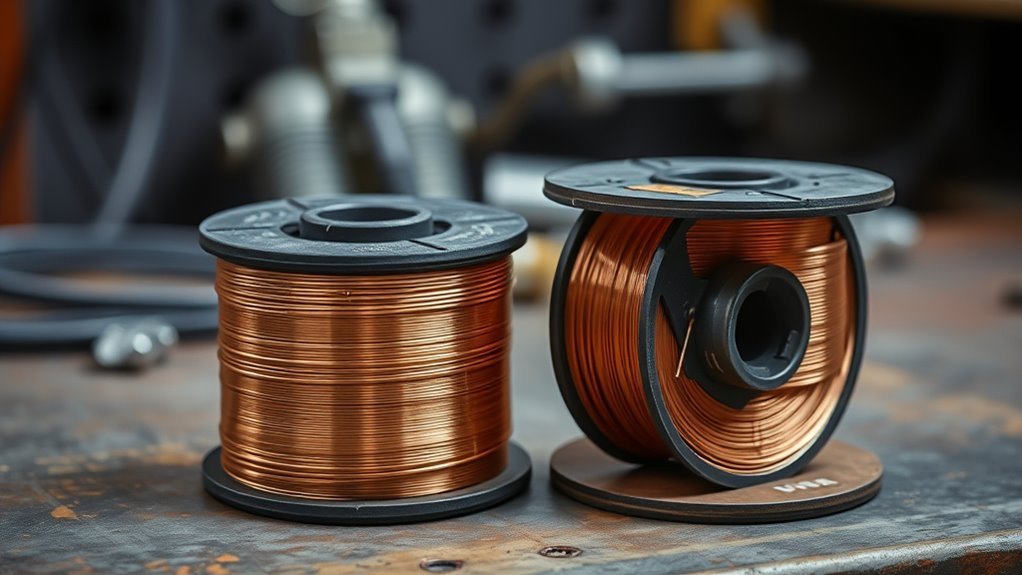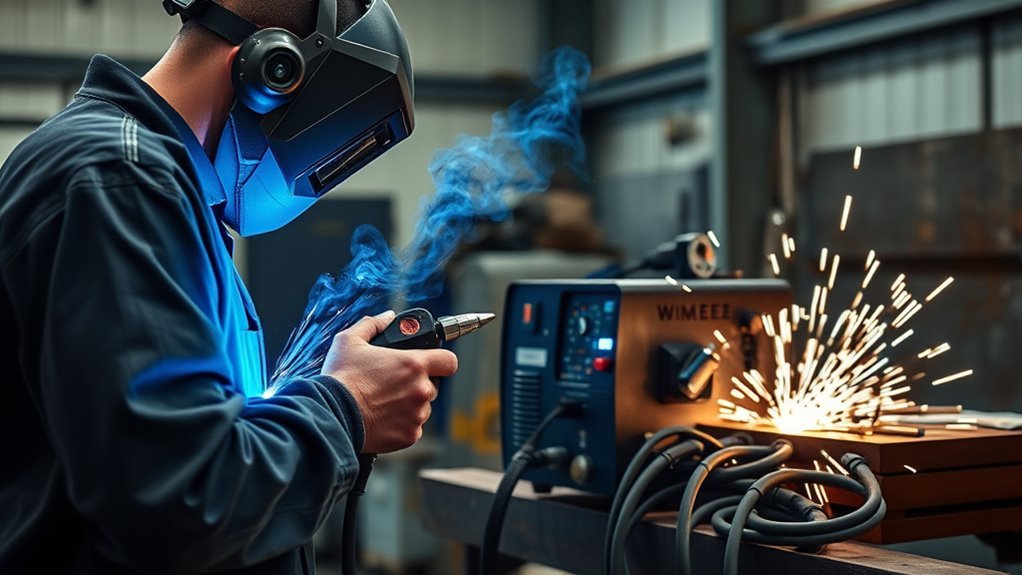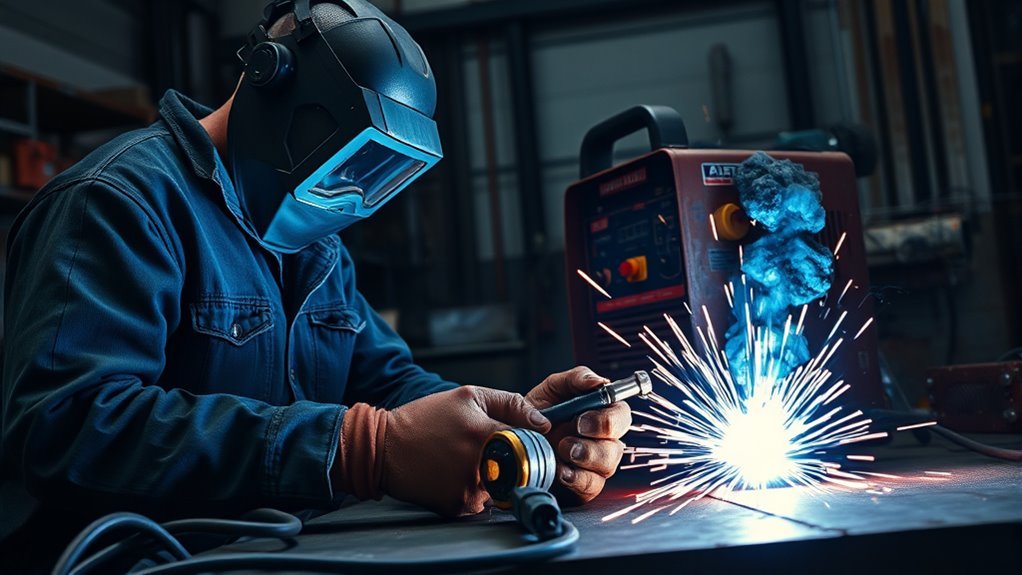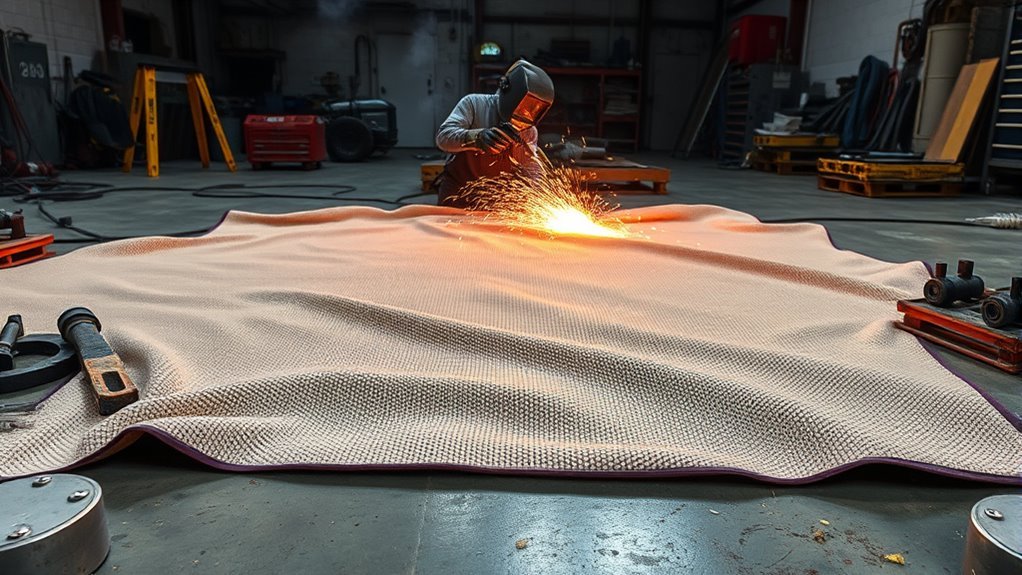
A welding blanket creates a heat-resistant barrier between hot work and the surfaces around it. It can catch sparks and spatter, shield floors and equipment, and reduce the chance that hot debris reaches combustible material. The blanket still has to match the hazard, temperature rating, and approved horizontal or vertical application.
Quick Answer
A welding blanket is a flame-resistant cover used to shield nearby surfaces from sparks, spatter, slag, and radiant heat. Use one when hot work could reach floors, walls, vehicles, tools, stored materials, or openings. Choose a product rated for the hazard, temperature, and horizontal or vertical position you need.
Key Takeaways
- Remove combustible material before relying on a welding blanket. In covered workplaces, OSHA uses a 35-foot combustible-area check for many hot-work precautions.
- Check whether the blanket is approved for horizontal use, vertical use, or both. Do not assume that any blanket can be hung as a curtain.
- Compare the working temperature, melt temperature, spark or slag rating, coating, and application—not just a “heavy-duty” label.
- Inspect the blanket before and after each job. Retire it if holes, failed seams, deep burns, contamination, or brittle areas could let heat or sparks pass through.
- A welding blanket does not replace PPE, ventilation, an arc screen, a fire extinguisher, a permit, or a trained fire watch.
At a Glance
| Time Required | About 5–15 minutes for inspection and setup, plus the welding time and required post-work fire watch. |
| Difficulty | Basic placement is simple, but selecting the rating and evaluating hidden fire hazards require trained judgment. |
| Tools Needed | Properly rated welding blanket, noncombustible supports or clamps when needed, welding PPE, and suitable fire-extinguishing equipment. A permit and fire watch may also be required. |
| Cost | Varies by size, fabric, coating, approval, and duty. The correct hazard rating matters more than the lowest purchase price. |
What’s in This Article
- What Is a Welding Blanket and Its Purpose?
- How Welding Blankets Differ From Fire Blankets
- Blankets, Pads, Curtains, and Screens
- Types of Welding Blankets
- How to Select a Welding Blanket
- When to Use a Welding Blanket
- How to Use a Welding Blanket Safely
- Fire Watch and the 35-Foot Check
- How to Care for a Welding Blanket
- Common Welding Hazards
- How Blankets Improve Worksite Safety
- Thermal-Safety Benefits and Limits
- Frequently Asked Questions
- Conclusion
- Sources
What Is a Welding Blanket and Its Purpose?
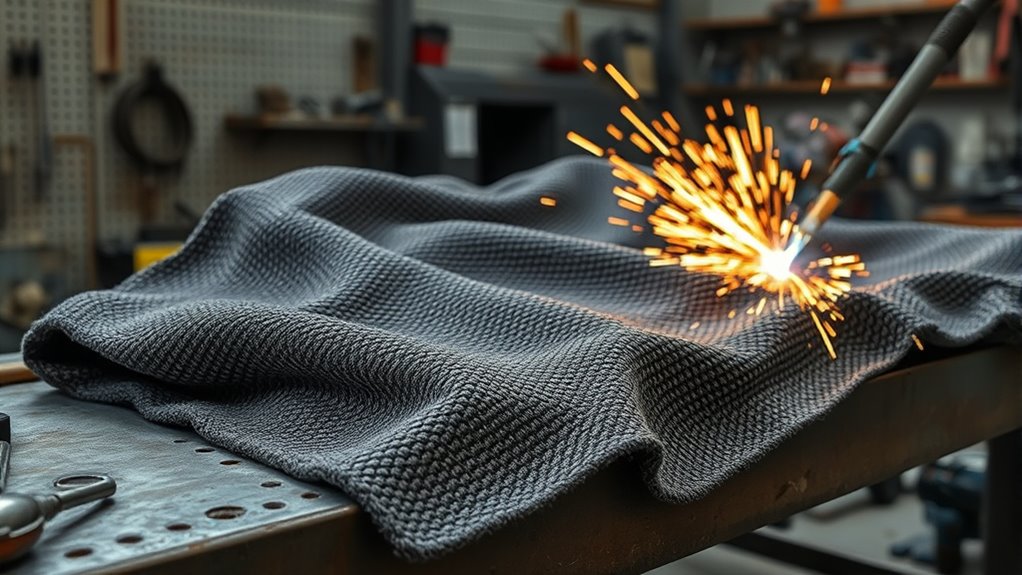
A welding blanket is a reusable safety barrier made to withstand specified levels of welding sparks, spatter, slag, and heat. Its main purpose is to keep hot particles from landing directly on nearby floors, walls, tools, equipment, finished surfaces, and combustible material.
Common materials include fiberglass, coated fiberglass, silica fabric, carbonized fiber, leather, and treated high-temperature fabrics. The safe exposure level depends on the complete product—not only the base fiber. Fabric weight, weave, coating, seams, grommets, test method, exposure time, and position can all affect performance.
A blanket is only one part of a hot-work setup. Use it with a welding helmet, eye protection, gloves, suitable footwear, and flame-resistant welding clothing. Workplace welding must also follow applicable fire-prevention, ventilation, training, and authorization rules. The OSHA welding, cutting, and brazing standard requires combustibles to be removed or protected and suitable fire-control equipment to be ready for use.
You can place an approved blanket beneath work, drape it over a surface, or secure it as a vertical barrier if its label allows that position. Inspect it before each use because a pinhole, failed seam, burned fold, or missing grommet can create a path for sparks and molten particles.
Note: “Flame-resistant” does not mean fireproof or indestructible. A blanket can be damaged by direct flame, concentrated molten metal, sharp edges, excessive temperature, or exposure beyond its rated time.
How Welding Blankets Differ From Fire Blankets
Welding blankets and fire blankets serve different stages of fire safety. A welding blanket is placed before hot work starts to prevent sparks and hot debris from reaching something vulnerable. A fire blanket is an emergency product intended to help smother a small, contained fire when used according to its own instructions.
| Feature | Welding Blanket | Fire Blanket |
|---|---|---|
| Primary role | Preventive surface and combustible protection during hot work | Emergency suppression of a small fire, subject to product instructions |
| Typical exposure | Repeated sparks, spatter, slag, and radiant heat within its rating | Short emergency contact intended to cut off oxygen to a small fire |
| When deployed | Before welding, cutting, brazing, or grinding begins | After a suitable small fire has started |
| Selection basis | Hazard, temperature terminology, fabric, coating, duty, size, and orientation | Fire type, product certification, size, and emergency instructions |
Do not substitute a household fire blanket for a welding blanket unless the manufacturer specifically rates it for welding sparks, spatter, and the intended position. A product designed only to smother a small fire may not withstand repeated molten particles.
Temperature figures also need context. A product may advertise a number such as the 1,022°F rating in this example, but that number applies to a particular product. Compare whether the label states a working temperature, short-term temperature, melt temperature, or another test value.
Welding Blankets, Pads, Curtains, and Arc Screens
The terms are sometimes used loosely, but they should not be treated as interchangeable:
- Welding blanket: A flexible barrier used to cover or shield surfaces. The approved position may be horizontal, vertical, or both.
- Welding pad: A product intended for horizontal protection beneath hot work, often where heavier sparks, slag, or molten metal may fall.
- Welding curtain: A vertically mounted barrier designed to contain sparks and spatter within its tested application.
- Arc screen or welding screen: A screen or shield intended to protect nearby people from arc rays and glare. A heat blanket is not automatically an approved arc screen.
The current ANSI/FM 4950-2024 standard covers welding pads, welding blankets, and welding curtains used during hot-work operations. For workplace purchasing, an FM Approved product for the required application provides more useful evidence than an unsupported “fireproof” marketing claim.
OSHA also requires adjacent workers to be protected from arc-welding rays by suitable noncombustible or flameproof screens or shields, or by appropriate eye protection. Do not assume that an opaque blanket has been tested to provide that protection.
Types of Welding Blankets: Which One Do You Need?
The right welding blanket depends on the welding or cutting process, the amount and size of hot material, exposure time, abrasion, and whether the barrier lies flat or hangs vertically.
| Material | Common Strengths | Points to Check |
|---|---|---|
| Uncoated fiberglass | General spark and spatter protection; widely available | Fiber shedding, abrasion, exact temperature term, and whether it is approved for the required position |
| Coated fiberglass | Improved abrasion, oil, moisture, or spark resistance depending on the coating | The coating may limit flexibility or direct-contact use; follow the product label and safety data |
| Silica fabric | High-temperature work and heavier sparks or molten material when specifically rated | Higher cost, abrasion resistance, working versus melt temperature, and approved orientation |
| Carbonized fiber | Soft, flexible, lightweight protection for rated sparks, spatter, and light slag | May be approved only for horizontal use and may not suit stress-relief applications |
| Leather | Good abrasion resistance and useful protection around irregular surfaces | Weight, seams, moisture, oil contamination, and the manufacturer’s heat and spatter rating |
| Vermiculite-treated fiberglass | Heavy sparks, spatter, and slag when the product is rated for them | Horizontal and vertical performance may differ, even on the same product |
Light-duty blankets may suit small amounts of sparks and spatter from short jobs. Medium-duty blankets generally add fabric weight, coating, or improved resistance. Heavy-duty blankets may handle heavier spatter, slag, or higher exposure—but those labels are not enough by themselves.
Manufacturer specifications show why the full label matters. One official fiberglass product lists a 1,000°F temperature rating and vertical-plane protection, while an official silica product lists a 1,650°F working temperature, a 2,700°F melt temperature, and both vertical and horizontal protection. A carbonized-fiber product lists a 1,800°F temperature rating but horizontal approval. See the specifications for the Tillman 584 fiberglass material, Tillman 594B silica blanket, and Steiner Velvet Shield carbonized-fiber blanket.
A high temperature number does not prove that a blanket can handle direct molten metal, long exposure, or both horizontal and vertical use.
Products Worth Considering

【Fiberglass Welding Blanket】 : Made of 24.7 oz/yd² fiberglass fabric, the welding blanket provides excellent thermal protection and withstands up to 1,022℉ (550℃) working temperatures. Effectively protecting welders and property from heat, embers, sparks and spatter. NOTE: There are fiberglass on the surface of the welding blanket, please wear gloves when you check it.

🔥FIRE RETARDANT BLANKET : Made of heat resistant carbon fiber with a low thermal conductivity of 0.13 W/(m-K), the fireproof welding blanket can withstand temperatures up to 1800°F (982°C), provides maximum thermal protection for most welding jobs.

Upgraded Reinforced Design – Unlike standard welding blankets with plain grommets, this fiberglass welding blanket comes reinforced metal grommets that resist loosening, making it more durable and stable. Each grommet is fitted with a double-sided thick black plastic washer for added strength, ensuring stronger support, more secure hanging, and flexible installation for maximum durability and safety during welding, cutting, and fire protection
Key Factors for Selecting the Ideal Welding Blanket
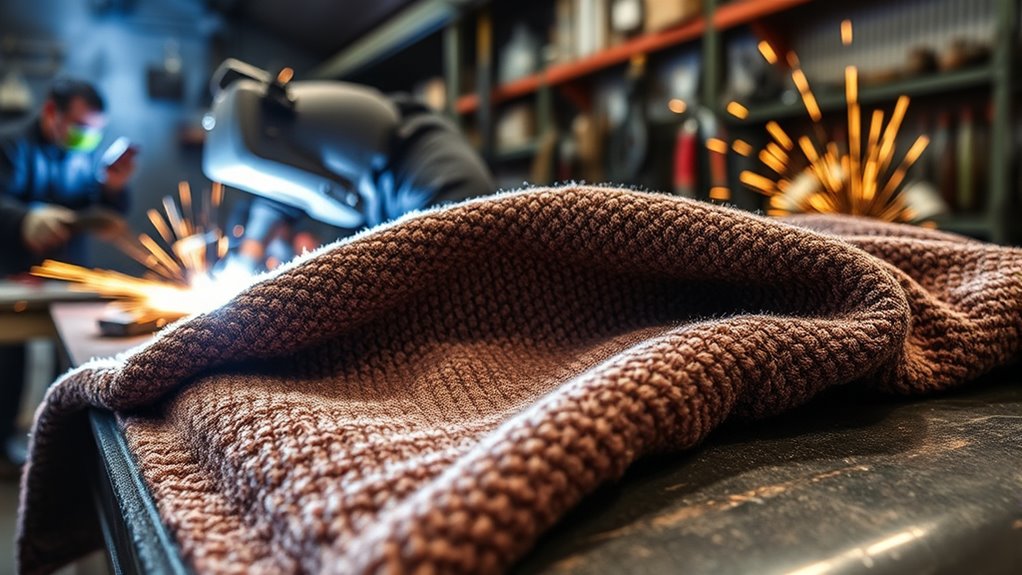
Start with the hazard, not the blanket’s color or marketing category. Identify whether the work creates fine sparks, heavy spatter, hot slag, molten metal, long radiant-heat exposure, abrasion, or direct contact with a hot part.
| Factor | What to Check | Why It Matters |
|---|---|---|
| Hazard rating | Sparks, spatter, light slag, heavy slag, or molten metal | A temperature figure alone does not describe impact from hot particles |
| Temperature term | Working, continuous, intermittent, temperature rating, or melt temperature | These terms are not interchangeable |
| Orientation | Horizontal, vertical, or both | A horizontal product may fail or shed hot debris when hung |
| Material and coating | Fiberglass, silica, carbonized fiber, leather, silicone, acrylic, or vermiculite treatment | Affects flexibility, wear, contamination resistance, and heat behavior |
| Size and overlap | Coverage beyond the expected spark path, including openings and edges | Small gaps can let hot particles reach the surface below |
| Attachment points | Reinforced edges, grommets, clamps, frames, and support spacing | A vertical barrier must not sag, fold, or fall into the work |
| Approval and instructions | ANSI/FM 4950 application, FM Approval, manufacturer data, and care instructions | Provides clearer evidence than an unsupported “fireproof” label |
Make the blanket large enough to cover the full spark path, not only the area directly under the weld. Include floor cracks, doorways, windows, wall penetrations, vehicle openings, and any route through which sparks could travel.
Reviews that discuss heat insulation and blanket durability can help compare convenience, but the manufacturer’s rating and approval should control the safety decision. Complete the blanket setup alongside a proper PPE and hot-work setup.
Pro Tip: Photograph or record the blanket’s label when it is new. If the sewn label becomes unreadable later, you will still have the model, rating, orientation, and care instructions available for inspection.
Products Worth Considering

Extreme Heat Resistance (3000°F+) – Carbon Fiber Welding Blanket Made of high-density carbon felt welding blanket, our fireproof welding blanket certified to ASTM D6413 and UL94-V0, withstands extreme temperatures over 3000°F — Outperforms standard fiberglass welding blankets (1000°F limit)Much more effective at stopping spatter than fiberglass offerings, and doesn't shed glass fibers!
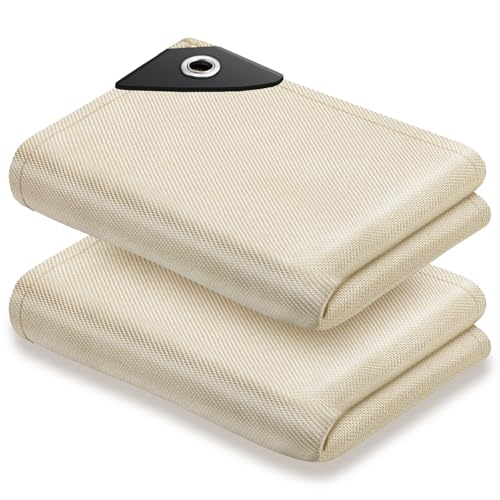
Upgraded Reinforced Design – Unlike standard welding blankets with plain grommets, this fiberglass welding blanket comes reinforced metal grommets that resist loosening, making it more durable and stable. Each grommet is fitted with a double-sided thick black plastic washer for added strength, ensuring stronger support, more secure hanging, and flexible installation for maximum durability and safety during welding, cutting, and fire protection
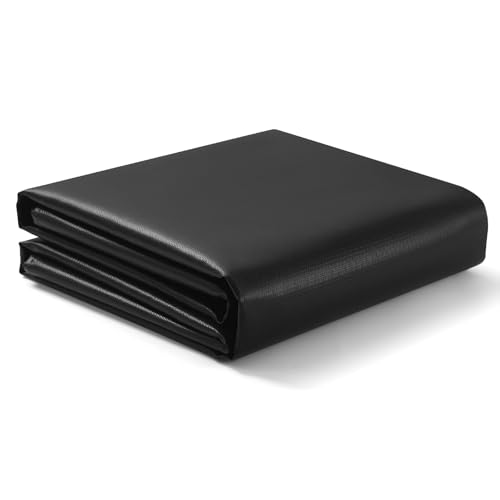
Highly Durable: Made from silicone coated fiberglass fabric with up to 1,022℉ (550°C) working temperature for excellent thermal protection in any light to heavy-duty general welding applications
When Should You Use a Welding Blanket for Better Safety?
Use a welding blanket whenever sparks, spatter, slag, or radiant heat could reach a surface that cannot be removed from the hot-work area. Set it up before striking an arc or lighting a torch.
- Near combustible material: Protect immovable wood, paper, insulation, plastics, packaging, textiles, or other material after removing everything that can reasonably be moved.
- Near finished surfaces: Shield painted panels, glass, flooring, vehicle interiors, trim, tools, and machinery from spatter and heat marks.
- Over openings: Cover or guard cracks, floor holes, doorways, windows, ducts, and penetrations that could carry sparks into another area.
- Near a wall, floor, roof, or partition: Check the opposite side for material that could ignite through direct spark penetration, conducted heat, or radiation.
- In shared work zones: Use a correctly rated vertical barrier for sparks and debris. Use a suitable welding screen when nearby people also need protection from arc rays.
- During high-spatter or high-heat work: Select a blanket or pad specifically rated for the process, exposure, and position.
For workplaces covered by OSHA’s general-industry welding rules, combustible material should be moved at least 35 feet from the work where practical. When it cannot be moved, it must be properly protected. Similar housekeeping principles also apply when preparing a safe area for other spark-producing tools, such as an angle grinder.
Warning: A blanket cannot make an explosive atmosphere safe. Do not weld where flammable gases, vapors, active flammable coatings, or dangerous combustible-dust concentrations create a hazard. Never weld on a used tank, drum, pipe, or container until it has been properly cleaned, isolated, vented, tested, and authorized for hot work.
How to Use Your Welding Blanket Safely
- Read the product label. Confirm the hazard rating, material, temperature terminology, approved orientation, cleaning limits, and whether direct contact with the hot workpiece is allowed.
- Inspect the blanket. Look for holes, thin areas, brittle fibers, deep burns, failed seams, loose coatings, damaged grommets, oil, solvent, moisture, and trapped combustible debris.
- Prepare the area. Move combustible items away. Check floors, walls, ceilings, ducts, windows, cracks, concealed spaces, and the opposite side of any metal surface being heated.
- Position the blanket. Cover the full spark and spatter path. Keep it smooth enough that folds do not funnel hot particles toward an opening or sensitive surface.
- Secure it correctly. Use noncombustible supports, a suitable frame, or the attachment method allowed by the manufacturer. Overlap multiple blankets generously so movement cannot open a gap.
- Keep critical equipment clear. Do not block ventilation openings or wrap cylinders, regulators, hoses, electrical connections, or energized equipment. Keep the blanket away from the electrode, torch flame, and weld pool unless the product specifically permits that exposure.
- Set the remaining controls. Wear proper PPE, arrange ventilation, place suitable extinguishing equipment within immediate reach, obtain any required hot-work authorization, and assign a trained fire watch when required.
- Monitor during and after work. Stop if the blanket slips, smokes heavily, glows, tears, or allows hot particles through. After welding, check the blanket, the protected surface, openings, and adjacent areas for hidden or smoldering material.
Do not wrap a welding blanket around your body as a substitute for personal protective equipment. Use suitable welding clothing, gloves, eye protection, and a helmet instead.
Allow the blanket and trapped debris to cool before moving them. A quick lift can scatter glowing particles onto an unprotected area. Keep cooled blankets away from sharp or damaged accessories that could cut the fabric during storage.
Hot-Work Fire Watch and the 35-Foot Check
A welding blanket works best as part of a complete hot-work plan. OSHA’s general-industry rule requires a fire watch when more than a minor fire could develop or when certain hazards are present, including:
- Appreciable combustible material within 35 feet of the operation.
- Combustibles farther away that sparks could still ignite.
- Floor or wall openings within 35 feet that expose material in another or concealed area.
- Combustible material on the opposite side of a metal wall, floor, ceiling, roof, or partition that heat could ignite.
The fire watcher must have suitable extinguishing equipment ready, understand how to sound the alarm, watch all exposed areas, and attempt extinguishment only when the fire is clearly within the capacity of the available equipment. Under OSHA’s general-industry rule, the watch continues for at least 30 minutes after welding or cutting ends. Employer procedures, a hot-work permit, the fire code, an insurer, or the current NFPA 51B hot-work standard may require longer monitoring.
FM guidance recommends using FM Approved welding pads, blankets, and curtains as applicable to the hot-work activity. It also calls for a permit, removal or approved protection of combustibles, suitable extinguishing equipment, and a fire watch. See the FM Safeguards During Construction data sheet.
How to Care for Your Welding Blanket
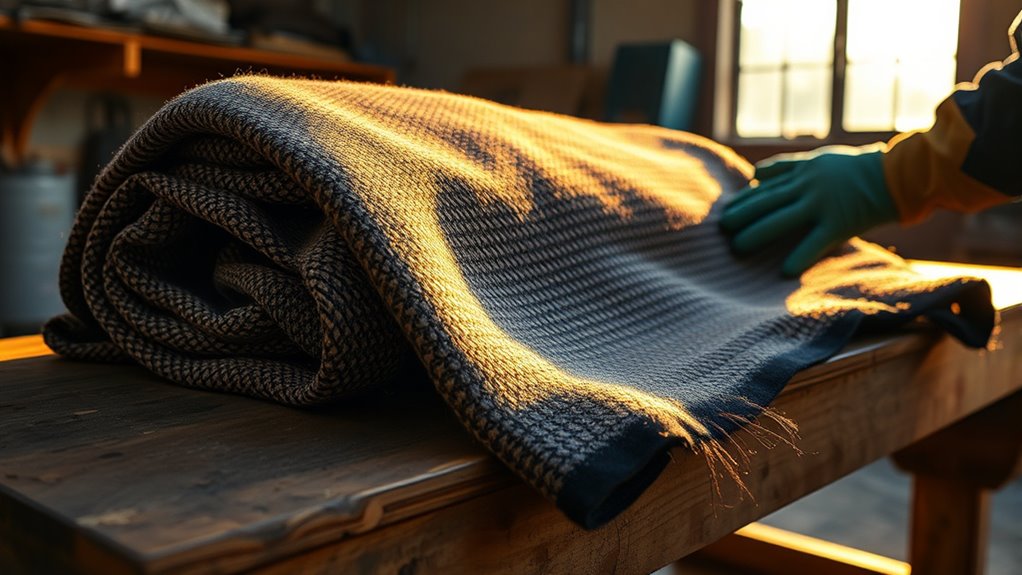
Regular maintenance helps a welding blanket retain its protective value and makes damage easier to find before the next job.
- Let it cool: Do not fold, roll, or store a blanket while it or the debris on it remains hot.
- Remove loose debris: Brush or vacuum away cooled slag, metal particles, and dust if the manufacturer’s instructions allow it.
- Inspect both sides: Check for pinholes, cuts, burned channels, thinning, stiffened areas, coating loss, failed stitching, and damaged attachment points.
- Check for contamination: Oil, grease, solvent, paint, and combustible dust can change how a blanket behaves near heat. Follow the manufacturer’s cleaning or retirement instructions.
- Follow the washing instructions: Do not machine-wash, soak, or use detergent unless the product label specifically permits it. Water and cleaners may damage coatings or leave contamination behind.
- Store it correctly: Keep it clean and dry, away from chemicals, sunlight, sharp tools, pests, and traffic. Store it flat or loosely rolled when recommended.
Retire the blanket when damage could allow sparks, slag, or heat through. Holes, deep burns, cracked coatings, failed seams, severe fiber loss, or contamination that cannot be removed are stronger retirement signs than harmless color change alone.
Choose a blanket made and rated for welding rather than relying only on a generic claim that it uses flame-resistant material.
Common Welding Hazards and How Blankets Help
Welding can expose a work area to sparks, spatter, slag, conducted heat, radiant heat, arc rays, electric shock, fumes, gases, and fire. A welding blanket controls only part of that hazard list.
Common Welding Risks
- Sparks and spatter: A suitable blanket can intercept hot particles before they land on a floor, vehicle, tool, or combustible surface.
- Slag and molten material: Only a product specifically rated for the expected exposure should be used. Light spark protection is not the same as molten-metal protection.
- Conducted and radiant heat: Metal walls, panels, pipes, and floors can carry heat to hidden material on the opposite side. A blanket on the visible side does not remove that risk.
- Arc radiation: Nearby people still need an approved welding screen, shield, or suitable eye protection.
- Fumes and gases: Blankets do not capture toxic emissions. Welding may require local exhaust, general ventilation, process controls, and respiratory protection.
- Electric shock and trips: A poorly placed blanket can hide cables, create a trip edge, retain moisture, or interfere with safe footing.
The type of metal and coating matters. Welding fumes can contain hazardous metals and gases, particularly in enclosed or poorly ventilated spaces. Review the OSHA ventilation requirements for welding and cutting and the specific safety data for the base metal, coating, consumable, and process. Additional background is available in this guide to hot-work and plasma-cutting hazards.
Fire Prevention Strategies
Begin by moving the work to a designated hot-work area when practical. If the work cannot move, remove nearby combustible material. Use a correctly rated blanket or other guard only for hazards that cannot reasonably be removed.
Inspect openings, ducts, conveyors, windows, wall cavities, and the opposite side of metal surfaces. Sparks can travel beyond the area that is easy to see, while conducted heat can ignite material without direct spark contact.
Keep suitable fire-extinguishing equipment ready for immediate use. Use a trained fire watcher when the hazard assessment or applicable rule requires one, and continue monitoring for the required period after work ends.
Heat Protection Benefits
A correctly selected blanket can reduce direct heat and spatter damage to floors, walls, vehicle panels, benches, and tools. It can also create a controlled landing area for cooled debris, making inspection and cleanup easier.
Do not use the blanket to trap heat against paint, plastic, upholstery, wiring, glass, batteries, fuel components, or other temperature-sensitive parts. Follow the product instructions and use a noncombustible stand-off or air gap when the setup requires one.
What a Welding Blanket Cannot Do
- It cannot make an explosive or oxygen-enriched atmosphere safe.
- It cannot replace ventilation or respiratory protection.
- It cannot replace welding PPE.
- It cannot guarantee arc-ray protection for bystanders.
- It cannot stop heat conducted through metal to a hidden surface.
- It cannot replace an extinguisher, permit, trained fire watch, alarm, or emergency plan.
- It cannot compensate for a rating, position, or exposure that exceeds the manufacturer’s instructions.
How Welding Blankets Improve Worksite Safety
Welding blankets improve worksite control by defining where sparks and hot debris should land. This is especially useful during repair work near fixed equipment, building finishes, vehicles, and other items that cannot be removed.
A properly supported vertical blanket may help separate spark zones between operators, while a horizontal blanket or pad may protect a floor or level below. The exact product must be approved for that position. For arc radiation, use a suitable welding screen rather than assuming the blanket provides eye protection.
Blankets can also make post-work inspection more focused. However, collected slag and debris may remain hot, so cleanup must wait until the material is cool and the area has been checked for smoldering hazards.
Combining the blanket with suitable welding head and eye protection, flame-resistant clothing, ventilation, housekeeping, an extinguisher, and fire-watch procedures creates a stronger system than any single control.
| Safety Function | What the Blanket Can Do | What Is Still Needed |
|---|---|---|
| Fire prevention | Shield an immovable combustible or surface within its rating | Combustible removal, extinguisher, permit, inspection, and fire watch |
| Surface protection | Intercept sparks, spatter, and rated hot debris | Correct size, position, overlap, air gap, and underside inspection |
| Worker separation | Limit spark and debris travel when approved for vertical use | Arc screen, eye protection, PPE, ventilation, and safe access routes |
| Cleanup control | Collect cooled slag and debris in a defined area | Cooling time, fire watch, safe handling, and inspection for hidden hot spots |
Benefits of Welding Blankets for Thermal Safety
A properly rated welding blanket adds a useful layer of thermal protection between hot work and nearby property. Its value is greatest when the blanket is chosen for the exact exposure and placed without gaps.
- Lower ignition risk: The blanket can prevent rated sparks and hot particles from landing directly on an immovable combustible surface.
- Reduced surface damage: It can shield equipment, finished panels, floors, glass, benches, and tools from spatter and heat marks.
- Better control of the hot-work zone: A correctly approved blanket, pad, or curtain helps direct debris into an area that can be watched and inspected.
When welding galvanized steel, a blanket may control hot particles but it does not remove zinc-containing welding-fume exposure. Use the required ventilation and respiratory controls for the metal, coating, location, and process.
Note: A welding blanket protects only the area it covers and only within its rating. Training, authorization, ventilation, PPE, screens, housekeeping, fire protection, and post-work monitoring remain separate controls.
Frequently Asked Questions
When should you use a welding blanket?
Use one before welding, cutting, brazing, or other spark-producing hot work when rated heat or debris could reach a floor, wall, vehicle, tool, opening, fixed equipment, or combustible material that cannot be removed. The blanket must match the hazard and intended position.
Can a welding blanket stop a fire?
Its primary role is prevention, not emergency suppression. It may keep rated sparks from reaching combustible material, but it does not replace a suitable extinguisher, alarm, trained fire watch, or emergency plan. Use an emergency fire blanket only for the fire types and procedure listed by its manufacturer.
How many times can you use a welding blanket?
A reusable blanket may last through many jobs when exposure stays within its rating and the material remains clean and sound. Inspect it before and after every use. Retire it when holes, deep burns, failed seams, coating loss, severe fiber damage, or contamination could reduce protection.
Can a welding blanket be used as a heat shield?
Yes, when the product is rated for the temperature, exposure time, and position involved. Do not assume that a spark blanket can withstand direct flame, a hot workpiece, stress-relief heating, or concentrated molten metal.
What size welding blanket do you need?
Choose a size that extends beyond the likely spark and spatter path and covers edges, gaps, openings, and the area below. When several blankets are needed, overlap and secure them so movement cannot create an exposed seam.
Which side of a welding blanket should face the weld?
Follow the product label. Some coated blankets specify an exposure side, while others can be used either way. Do not guess based only on color, texture, or which side looks smoother.
Can you hang any welding blanket vertically?
No. Check whether the manufacturer approves the product for vertical use. Some blankets are horizontal only, while others are approved for vertical or both vertical and horizontal protection.
Can you wash a welding blanket?
Only when the manufacturer’s care instructions allow it. Water, detergent, agitation, or solvents may damage a coating, weaken fibers, or leave contamination. Brush or vacuum cooled debris when permitted and retire contaminated material that cannot be restored safely.
Safety Disclaimer: This article provides general information and does not replace professional safety training, a site-specific hazard assessment, workplace procedures, fire-code requirements, a hot-work permit, or the manufacturer’s instructions. Follow the rules that apply to your location, employer, equipment, material, and welding process.
Conclusion
A welding blanket helps contain rated sparks, spatter, slag, and heat before they damage a surface or ignite material nearby. The safest choice is not simply the thickest or highest-temperature blanket. It is the product approved for the actual hazard, exposure, size, and horizontal or vertical position.
Before each weld, remove combustible material, inspect openings and opposite-side hazards, check the blanket, secure it without gaps, arrange ventilation, and keep suitable fire-extinguishing equipment ready. Use a permit and trained fire watch whenever required.
After the work ends, keep monitoring the area, allow the blanket and debris to cool, and inspect both the barrier and the protected surface. A careful setup turns the blanket into a useful part of a complete hot-work safety system rather than a false sense of security.
Sources
- OSHA 29 CFR 1910.252 — General welding, cutting, and brazing requirements — combustible control, fire watch, authorization, PPE, screens, and ventilation.
- OSHA 29 CFR 1926.352 — Fire prevention — hot-work fire hazards, extinguishing equipment, opposite-side precautions, and post-work monitoring.
- OSHA 29 CFR 1926.353 — Ventilation and protection — mechanical ventilation, local exhaust, confined spaces, and coated metals.
- NFPA 51B, 2024 edition — current fire-prevention standard for welding, cutting, and other hot work.
- ANSI Standards Action, April 12, 2024 — final action for ANSI/FM 4950-2024 covering welding pads, blankets, and curtains.
- FM Safeguards During Construction, Data Sheet 1-0 — FM Approved hot-work barriers, combustible control, permits, extinguishers, and fire watches.