SMAW is the abbreviation the American Welding Society (AWS) uses for Shielded Metal Arc Welding. Most welders simply call it stick welding, and older manuals call it manual metal arc welding (MMA). Whatever the name, it is the same thing: a coated metal rod, an electric arc, and a puddle of molten steel that you move by hand. If you have ever seen someone welding a fence post or a trailer hitch with a buzz box and a bucket of rods, you have seen SMAW.
Quick Answer
SMAW stands for Shielded Metal Arc Welding, the formal AWS name for stick welding. An electric arc between a flux-coated consumable electrode and the workpiece melts both; the burning flux creates a shielding gas and a slag layer that protect the molten weld from the air. It is the simplest and most portable arc welding process and works outdoors, on rusty or dirty steel, and with a basic AC or DC machine.
Key Takeaways
- SMAW = stick welding. Same process, two names. “Arc welding” in everyday shop talk usually means SMAW too.
- The flux coating on the rod does the shielding, so no external gas cylinder is needed.
- Best for thicker steel, outdoor and field repair, cast iron, and dirty or rusted metal. Weak on thin sheet metal and aluminum.
- Rod numbers such as E6010, E6013 and E7018 tell you tensile strength, position and coating type.
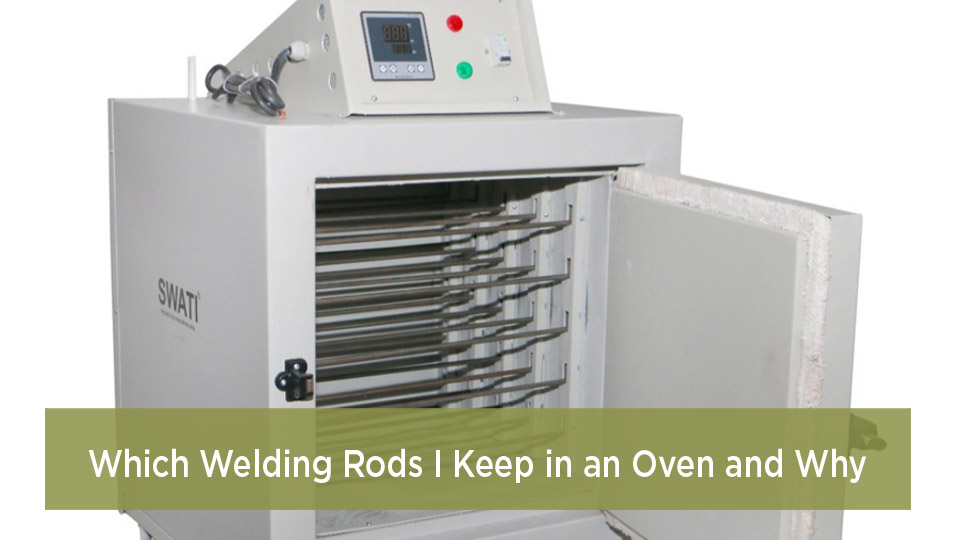
- Slag must be chipped off after every pass, and rods must be stored dry, especially low-hydrogen E7018.
What Does SMAW Stand For?
Each word in the acronym describes part of the process:
- Shielded: the molten metal is protected from oxygen and nitrogen in the air by gas and slag produced from the electrode coating.
- Metal: the electrode itself is metal and melts into the joint as filler.
- Arc: an electric arc between the rod tip and the workpiece supplies the heat, roughly 6,000 °F (3,300 °C) at the arc.
- Welding: the base metals and filler fuse into one continuous piece.
The AWS assigns a letter code to every major welding process so that drawings, procedures and certifications say exactly which one is meant. SMAW sits alongside GMAW (MIG), GTAW (TIG) and FCAW (flux-core). We compare all four in our welding process acronyms guide.
How SMAW Welding Works
A stick welder is a constant-current power source. One lead clamps to the work; the other goes to an electrode holder that grips a consumable rod. When you touch the rod to the metal and pull back slightly, current jumps the gap and an arc forms. Three things then happen at once:
- The core wire melts and transfers across the arc as droplets of filler metal.
- The flux coating burns, releasing a cloud of carbon dioxide and other gases that push air away from the puddle.
- Flux residue floats to the surface as slag, which keeps shielding the bead while it cools and shapes its surface.
The rod gets shorter as you weld, so you continuously feed it toward the work while dragging it along the joint. Once the rod is down to a two-inch stub, you stop, chip the slag, brush the bead, and start the next rod. That stop-and-restart cycle is the main reason SMAW is slower than wire-feed processes.
Polarity in SMAW
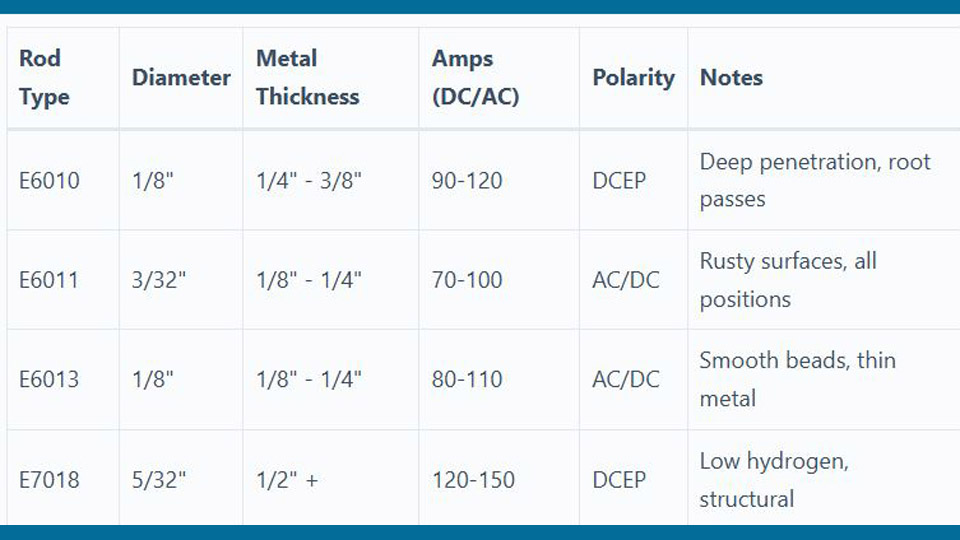
Stick welders run on AC, DCEP (electrode positive) or DCEN (electrode negative). DCEP is the most common setting and gives the deepest penetration with most rods. E6011 and E6013 are designed to run on AC too, which is why cheap transformer buzz boxes can still use them. Our welding polarity guide covers the rules rod by rod.
SMAW Equipment and Consumables
The appeal of stick welding is how little you need:
- A constant-current power source (transformer, inverter or engine-driven)
- Electrode holder (“stinger”) and work clamp with leads
- Welding rods sized to the metal thickness, usually 3/32″, 1/8″ or 5/32″
- Chipping hammer and wire brush
- Helmet, gloves, leather jacket and a dry place to store rods
No shielding gas, no regulator, no wire feeder, no drive rolls. An inverter stick machine the size of a lunch box can run 1/8″ rods off a 240 V outlet or a generator.
Understanding SMAW Electrode Numbers
Every rod is marked with an AWS classification such as E7018. The code is easy to decode once you know the pattern:
- E means electrode.
- 70 is the minimum tensile strength of the deposited weld in thousands of psi (70,000 psi). E60xx rods give 60,000 psi.
- 1 (the third digit) means all-position: flat, horizontal, vertical and overhead. A 2 here means flat and horizontal only.
- 8 (the last digit) identifies the coating and current type. Low-hydrogen iron-powder coating that runs on AC or DCEP in the case of E7018.
| Rod | Coating | Current | Typical use |
|---|---|---|---|
| E6010 | High cellulose sodium | DCEP only | Deep penetration, pipe root passes, dirty steel |
| E6011 | High cellulose potassium | AC or DCEP | Same as 6010 but AC-capable, farm repair |
| E6013 | High titania potassium | AC or DC | Easy arc, thin material, beginners |
| E7018 | Low hydrogen iron powder | AC or DCEP | Structural, high-strength, crack-sensitive steel |
| E7024 | Iron powder titania | AC or DC | Fast fill on flat and horizontal fillets |
Read more in our electrode types guide, and set your machine with the stick welding amperage chart.
Advantages of SMAW
- Portable and cheap. No gas, no feeder, and the machine can be small.
- Works outdoors. Wind that would blow away MIG shielding gas has no effect on flux shielding.
- Tolerates dirt, rust, paint and mill scale better than any other arc process, especially with E6010 and E6011.
- Welds thick material in any position with the right rod.
- Wide material range. Carbon steel, low-alloy steel, stainless, cast iron (nickel rods) and hardfacing all have dedicated electrodes.
Limitations of SMAW
- Slow. Rod changes and slag removal cut the arc-on time to roughly 20 to 40 percent of the shift.
- Poor on thin sheet. Below about 1/8″ (3 mm) it is easy to blow through; MIG or TIG are better choices.
- Not practical for aluminum. Aluminum stick rods exist but are rarely used; GTAW or GMAW are standard.
- Skill-dependent. Arc length, travel speed and angle are all controlled by hand, and a sticking rod is the classic beginner problem.
- Spatter and slag inclusions if the previous pass is not cleaned properly.
What SMAW Is Used For
Stick welding dominates wherever portability and tolerance for less-than-perfect conditions matter: structural steel erection, pipelines, shipyards, bridge repair, farm and ranch equipment, heavy equipment maintenance, and home garage projects on 1/8″ and thicker steel. It is also the first process taught in most welding programs because it builds puddle control that transfers to every other method. For auto body panels it is the wrong tool; see MIG vs TIG for thin-metal options.
SMAW vs Other Welding Processes
| SMAW (stick) | GMAW (MIG) | FCAW (flux-core) | GTAW (TIG) | |
|---|---|---|---|---|
| Shielding | Flux coating | External gas | Flux in wire (+ gas for dual-shield) | Argon gas |
| Outdoor use | Excellent | Poor | Good (self-shielded) | Poor |
| Thin sheet metal | Poor | Excellent | Fair | Excellent |
| Learning curve | Moderate | Easy | Easy | Hard |
| Cleanup | Slag every pass | Minimal | Slag every pass | None |
Common SMAW Problems and Fixes
- Rod sticks to the work: amperage too low or arc started too slowly. Twist the holder to break free, raise the current 5 to 10 A, and strike like a match.
- Porosity: damp rods, long arc, or dirty base metal. Dry low-hydrogen rods in a rod oven, shorten the arc.
- Undercut: too much current or travel too fast; reduce amperage and slow down.
- Slag inclusions: chip and brush thoroughly between passes and keep the rod angle so slag flows behind the puddle.
- Excess spatter: arc too long or wrong polarity. See why your weld spatter is so bad.
Frequently Asked Questions
Is SMAW the same as stick welding?
Yes. SMAW is the AWS designation; stick welding is the shop name. They describe exactly the same process.
Is SMAW the same as arc welding?
All of SMAW, GMAW, FCAW and GTAW are arc welding processes, but when someone says “arc welder” without qualification they almost always mean a stick machine.
Does SMAW need shielding gas?
No. The gas comes from the burning flux coating, which is why stick welding works in wind and rain where MIG does not.
What can you weld with SMAW?
Carbon and low-alloy steel, stainless steel, cast iron and some nickel alloys, from about 1/8″ up to any thickness using multiple passes. Aluminum and very thin sheet are better left to other processes.
Is SMAW hard to learn?
It takes more practice than MIG because you control arc length by hand, but the equipment is simple and most people lay acceptable beads within a few hours of practice on flat plate.
Conclusion
SMAW, or stick welding, remains the most versatile and portable arc welding process a century after it was introduced. It is slower and less forgiving on thin metal than MIG, but nothing beats it for field repair, thick steel and dirty material. Learn the rod numbering system, keep your rods dry, and chip every pass, and a stick welder will handle most of what comes through a home garage. For the full picture of how it compares to the other processes, read our SMAW vs GMAW vs FCAW vs GTAW guide.
Sources
- AWS A5.1/A5.1M, Specification for Carbon Steel Electrodes for Shielded Metal Arc Welding
- AWS A3.0M/A3.0, Standard Welding Terms and Definitions
- Lincoln Electric, Stick Welding Guide
- OSHA 29 CFR 1910.252, Welding, Cutting and Brazing