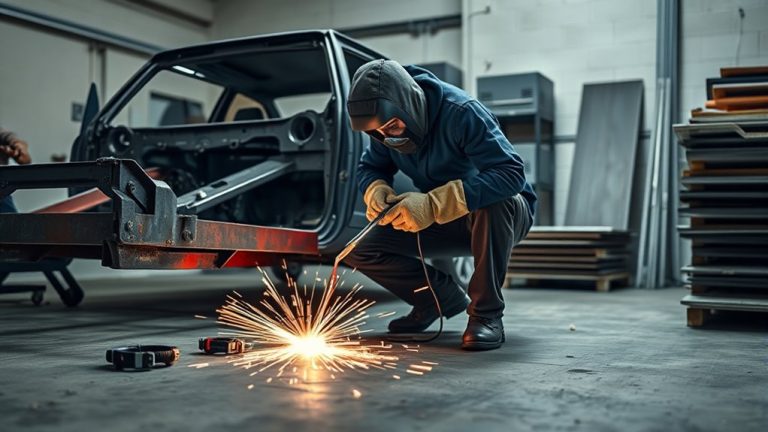
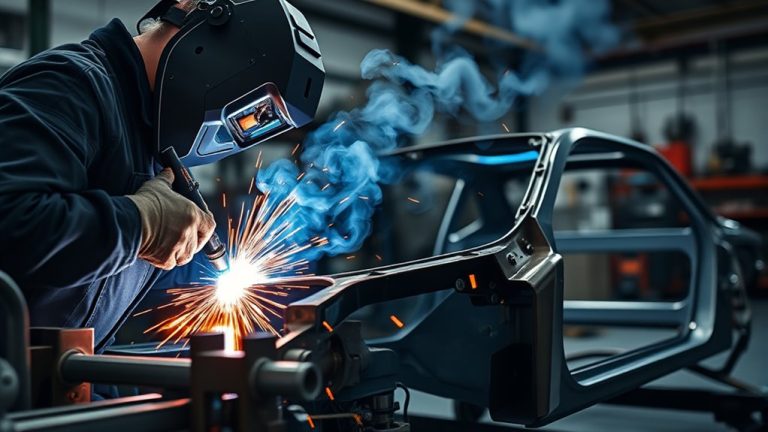
TIG welding, or gas tungsten arc welding, uses a non-consumable tungsten electrode and inert gas shielding to create a focused arc. You get precise heat control, clean welds, and no slag, which is why mechanics rely on it for thin panels, aluminum, stainless steel, and corrosion-resistant repairs. It’s ideal when distortion must stay low and joint quality must stay high. If you keep going, you’ll see how to choose rods and tune the process.
What Is TIG Welding?
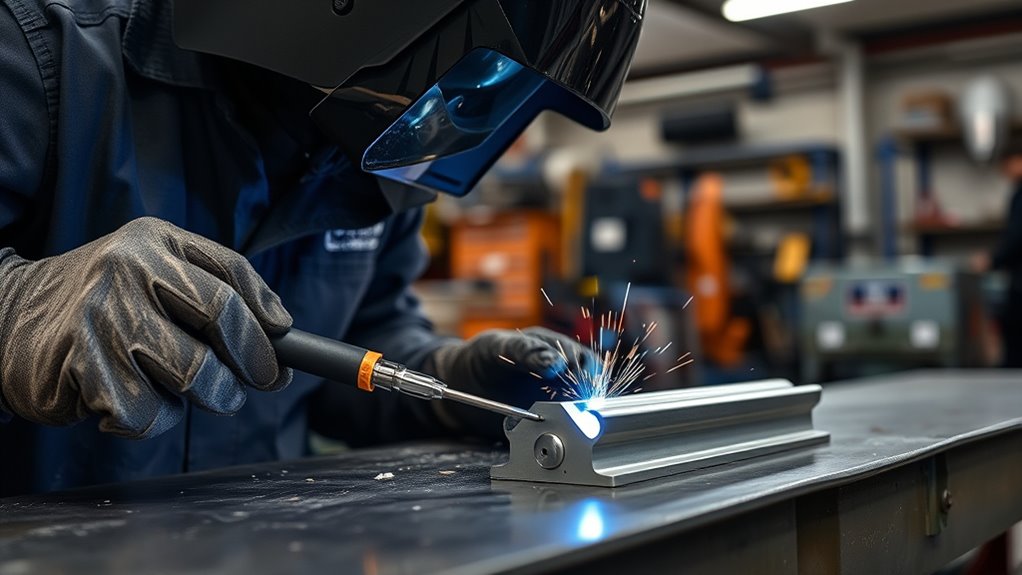
TIG welding, or gas tungsten arc welding (GTAW), is a precision arc-welding process that uses a non-consumable tungsten electrode to generate heat and fuse the base metal with filler material as needed.
You shield the weld pool with inert gas, usually argon, so contamination stays out and the joint stays clean. In practice, you get tight control over heat and amperage, which lets you produce smooth, spatter-free welds with high structural integrity. That’s why you’ll see it used on thin sections and nonferrous metals such as aluminum and stainless steel in aerospace and automotive work.
The TIG advantages include accuracy, cleanliness, and excellent finish quality. The TIG disadvantages are slower travel speed, higher operator skill demands, and sensitivity to gas flow, electrode selection, and position. Additionally, precise control over arc and heat input allows for superior weld quality, especially with sensitive materials like stainless steel.
TIG welding offers accuracy, cleanliness, and an excellent finish for high-quality, precise welds.
You gain control, but you also accept complexity.
How TIG Welding Works
You strike an arc between the tungsten electrode and the base metal, and that arc generates the heat that melts the joint area into a weld pool.
The tungsten electrode doesn’t melt into the weld; it maintains a stable arc while inert shielding gas, usually argon, protects both the electrode and molten metal from atmospheric contamination.
If needed, you can feed filler material into the pool and adjust amperage to control heat input, penetration, and distortion. This process requires precise current control to ensure a stable and high-quality weld, particularly on thin materials.
Arc And Shielding Gas
When the tungsten electrode strikes an arc, it generates intense heat—often exceeding 19,000 K—that melts the base metal and, if used, filler material to form the weld.
You then rely on inert shielding gas, usually argon, to isolate the molten pool from oxygen, nitrogen, and moisture. This protection prevents oxidation, reduces porosity, and preserves a clean joint.
The nozzle directs gas around the arc, and that controlled envelope improves arc stability while supporting consistent heat transfer.
By tuning gas flow, you can match coverage to the metal, joint geometry, and position, which helps you minimize defects and keep control.
For aluminum, stainless steel, and other high-melting alloys, this precision gives you the technical freedom to weld with confidence.
Tungsten Electrode Function
With the arc and shielding gas established, the tungsten electrode takes over as the arc source and control point in TIG welding. You don’t consume it; it stays solid, concentrates current, and lets you regulate heat with precision.
The arc forms between the tungsten and base metal, melting the joint into a controlled pool where you can add filler as needed. You choose from tungsten types—pure, thoriated, ceriated—based on alloy response and electrical behavior.
Keep electrode maintenance strict: clean the tip, sharpen it correctly, and prevent contamination so the arc stays stable. Set amperage to match the electrode and material.
That’s how you secure penetration and bead shape on aluminum, stainless steel, or other demanding metals without surrendering control.
Why Mechanics Choose TIG Welding
Mechanics choose TIG welding because it delivers clean, high-quality welds with no slag, which is critical for precise automotive repairs and fabrication.
You get TIG advantages that support precision welding: exact heat control, adjustable amperage, and a focused arc that lets you work without distorting thin panels or delicate brackets. This control frees you to repair high-value components with confidence instead of brute force.
TIG also handles aluminum and stainless steel well, so you can join common nonferrous parts used in modern vehicles.
Its flexibility across different thicknesses and shapes helps you tackle exhaust pieces, body structures, and custom modifications with consistent results.
Because you manually feed filler, you control puddle size and deposition rate, which improves consistency and lets you choose the right filler for the job. Additionally, using 100% argon ensures optimal shielding for clean welds, enhancing the overall quality of your work.
Manual filler control lets you shape the puddle, improve consistency, and choose the right filler for each repair.
For mechanics, TIG isn’t just precise; it’s a method that maximizes control, quality, and repair integrity.
Choosing TIG Rods and Base Metals
You need to match the TIG rod to the base metal’s composition and melting range to produce a stable, cohesive weld.
You’ll also identify the base metal first—whether it’s aluminum, stainless steel, or a nickel alloy—because each one requires specific filler and electrode choices.
For strength, corrosion resistance, and appearance, you’ll select a filler alloy and rod diameter that suit the joint and the material thickness. Additionally, clean surfaces are essential to avoid defects and ensure a strong bond in the welding process.
Matching Rod To Metal
Matching the rod to the base metal is a critical part of TIG welding, because filler choice directly affects weld strength, corrosion resistance, and overall fusion quality. You need exact filler compatibility to control dilution and avoid brittle joints.
For aluminum, 4043 rods suit general work, while 5356 rods perform better on anodized surfaces.
On stainless steel, ER308L gives strong corrosion resistance and matches AISI 304 and 316 well.
For carbon steel, ER70S-6 provides the strength and ductility you need.
Nickel alloys call for ERNiCrMo-3 in hot, corrosive service.
Also check melting point: choose a filler whose melting point matches or sits below the base metal’s range, so you free the weld pool to flow cleanly and fuse completely.
Common Base Metal Types
Common base metals set the starting point for every TIG setup, because the alloy you’re welding determines both rod choice and weld behavior. You’ll usually work with aluminum alloys, stainless steel, carbon steel, or nickel alloys, and each metal demands a compatible filler to keep the arc stable and the joint clean.
Aluminum often pairs with 4043 or 5356, while stainless steel typically uses ER308 or ER316, depending on grade. Carbon steel responds well to ER70S-2 or ER70S-6.
- Precision frees you from guesswork.
- Correct matching reduces rework and distortion.
- A disciplined selection process gives you control.
When you match properties carefully, you’re not chasing the weld—you’re directing it with intent.
Filler Choices For Strength
When strength matters, choose a TIG filler that’s chemically and mechanically compatible with the base metal, because the rod directly shapes weld integrity and crack resistance.
You should match filler materials to the alloy family, using 4043 or 5356 for aluminum, and ER308L for many stainless grades.
Check tensile strength: the filler rod should ideally exceed the base metal so the joint survives load without yielding.
Rod diameter also matters, since it controls heat input and filler volume; select it by thickness and welding position.
If you ignore compatibility charts, you risk weak joints, porosity, or cracking.
When you choose correctly, you weld with precision and protect the structure you’re building, keeping your work durable, autonomous, and technically sound.
TIG Welding Safety and Heat Control
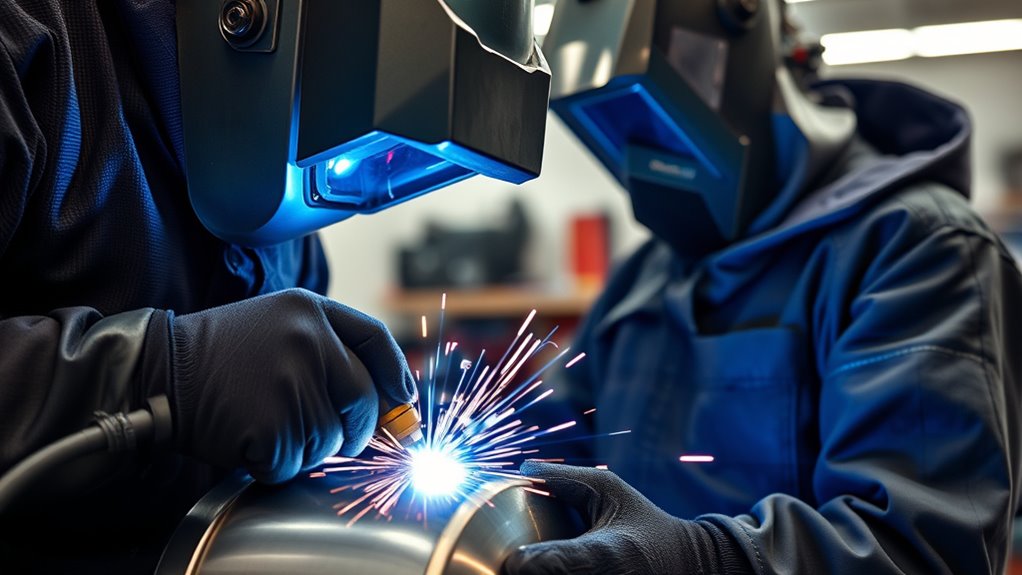
TIG welding demands strict heat control because the arc can exceed 19,000 Kelvin, exposing you to extreme radiant energy and severe burn risk.
You need disciplined heat management and safety protocols to stay in command of the process. Use an auto-darkening helmet and flame-resistant clothing to shield your eyes, skin, and hands from intense light and heat.
With argon shielding gas, you protect the tungsten and weld pool from contamination, preserving arc stability and material integrity.
Argon shielding keeps the tungsten and weld pool clean, preserving arc stability and material integrity.
Foot-operated amperage control lets you tune output in real time, so you can prevent thermal shock on thin or sensitive parts.
Keep gas flowing after the arc stops to cool the joint gradually and reduce defect risk. Additionally, ensure proper ventilation and fume control to mitigate risks from harmful fumes produced during welding.
- You’re safer when every adjustment is intentional.
- You gain control instead of fearing the heat.
- You weld with precision, not hesitation.
Tips for Cleaner TIG Welds
Clean TIG welds start with disciplined preparation and controlled technique. You should strip oil, rust, and moisture from the workpiece before you arc up; contaminants destabilize the puddle and degrade weld appearance. Select the correct tungsten electrode size and type for the base metal—2% lanthanated tungsten works well on aluminum and stainless steel. Keep your travel speed and torch angle steady so heat spreads evenly and you avoid buildup or undercutting. Set shielding gas near 15–20 CFH; that range protects the pool without creating turbulence that can pull in impurities. Feed filler rod into the leading edge of the weld pool, not the arc center, to maintain a tight bead and consistent fusion. Technique practice matters because precision gives you control and control gives you freedom. Remember to clean joints to bright metal before welding to ensure optimal results.
| Variable | Target |
|---|---|
| Surface condition | Clean |
| Tungsten selection | Matched |
| Travel motion | Steady |
| Gas flow | 15–20 CFH |
| Filler placement | Leading edge |
Common TIG Welding Applications
Across industries, TIG welding gets chosen where weld quality, control, and appearance matter most.
In aerospace applications, you use it to join aluminum and titanium with spatter-free precision, helping aircraft and spacecraft meet strict structural demands.
In automotive manufacturing, you rely on TIG for fenders and frames when clean, corrosion-resistant seams protect longevity.
In artistic sculptures, you gain exact heat control, so you can shape thin metal without distortion and keep your creative intent intact.
- You feel confident when a weld stays invisible yet strong.
- You work with greater freedom when thin materials don’t warp.
- You trust the process when hygiene and corrosion resistance can’t fail.
In food processing, TIG supports stainless steel and aluminum repairs where sanitary surfaces matter.
In bicycle fabrication, it creates lightweight, high-strength joints that let performance bikes stay responsive and durable. Additionally, using nitrogen as plasma gas can enhance the quality of aluminum welds in specific applications.
Frequently Asked Questions
What Are the Downsides of TIG Welding?
TIG welding’s downsides are slower speed, higher setup costs, and a steep skill curve; you’ll also need strong eye protection and precise shielding gas, or contamination can ruin TIG welding advantages and TIG welding applications.
What Is TIG Welding in Simple Words?
TIG welding is like a surgeon’s steady hand with fire: you use a tungsten electrode to melt metal precisely. In this TIG process overview, you see clean, controlled joins; TIG applications include thin, delicate, nonferrous work.
What’s the Hardest Metal to TIG Weld?
Titanium’s usually the hardest metal you’ll TIG weld because you need flawless shielding and contamination control. You’ll also struggle with stainless steel, aluminum alloys, and nickel superalloys, since they demand exact heat control and technique.
Conclusion
In short, TIG welding gives you unmatched control, clean welds, and the precision mechanics need for thin metals and critical repairs. You can fine-tune heat, filler, and arc stability, which helps you reduce distortion and improve joint quality. When you choose the right rod and base metal, you’ll get stronger results with less rework. It’s the modern craftsman’s scalpel—only with an arc. If you follow proper safety and technique, you’ll weld with confidence and consistency.