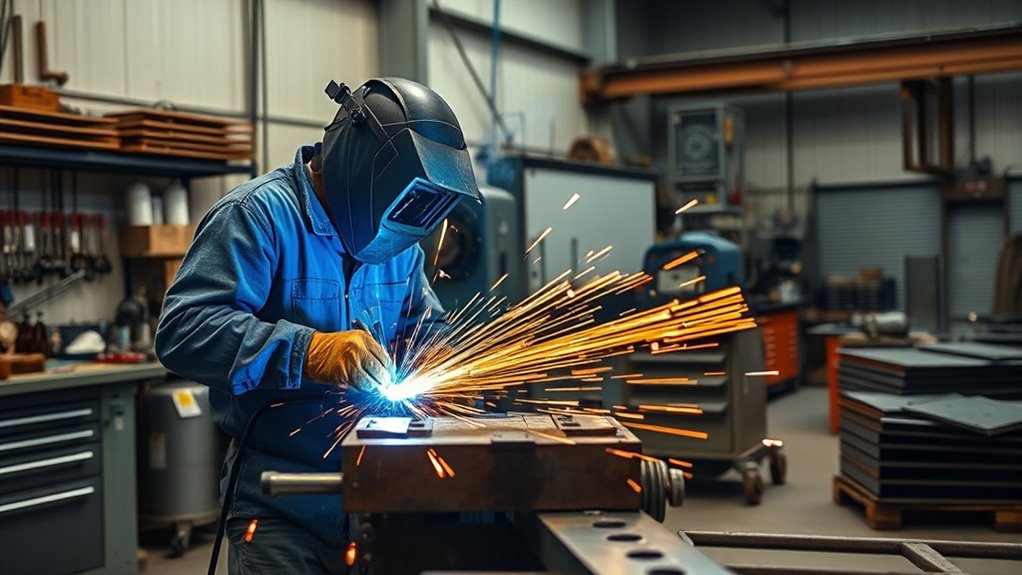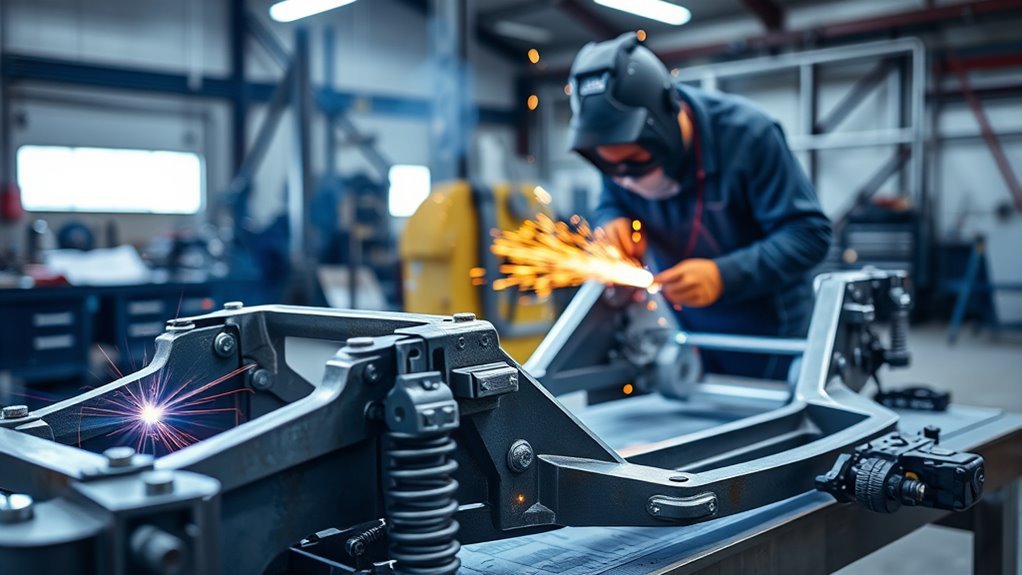
Car-frame welding is not governed by one universal code. For most passenger vehicles, the first authority is the vehicle maker’s repair procedure because it tells you where welding is allowed, which process to use, and which materials can safely take heat. AWS, ASME, ISO, CSA, and API standards can still matter, but only when their scope matches the frame material, job type, contract, or jurisdiction.
Quick Answer
For most passenger cars, the first “code” is the OEM repair procedure, not AWS D1.1. Use AWS D1.1 for engineered steel structural fabrication, AWS D1.2 or AWS D8 standards when the material and contract call for them, and ASME, ISO, CSA, or API only when their scope fits.
Key Takeaways
- For collision repair, start with the OEM repair manual, service information, and approved sectioning locations.
- AWS D1.1 is a structural steel code. It is useful for engineered steel weldments, but it is not automatically the rule for every car frame.
- AWS D1.2, AWS D8.8, and AWS D8.14 may fit aluminum or automotive arc welding work when specified.
- ASME Section IX, ISO 3834, ISO 15607, and ISO 15614 are mainly qualification and quality-control tools, not vehicle-specific repair manuals.
- Never weld high-strength steel, boron steel, aluminum castings, or crush-zone parts unless the OEM procedure or a qualified engineer approves the repair.
Warning: Structural vehicle welding can affect crash performance, suspension alignment, corrosion protection, airbags, sensors, and roadworthiness. If the job involves a crash-damaged frame, unibody rail, suspension mount, tow point, or safety cage, use the OEM procedure and a qualified welding professional. Do not treat a general welding code as permission to weld any vehicle structure.
What Welding Codes Apply to Car Frames?
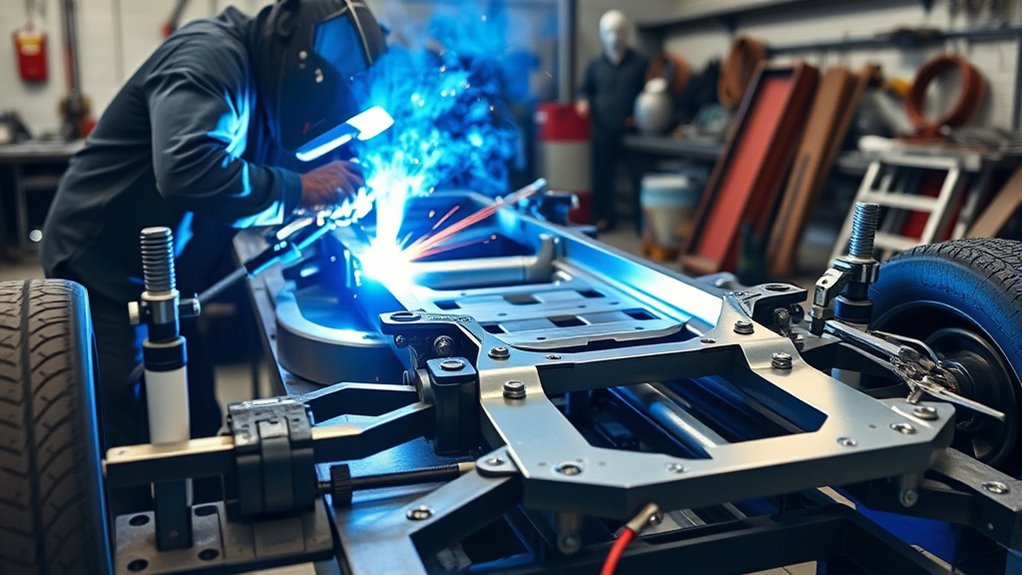
The welding code that applies to a car frame depends on what kind of work you are doing. A collision repair on a modern unibody vehicle is different from building a custom ladder frame, repairing a trailer, fabricating a roll cage, or welding a pressure-related bracket on industrial equipment.
For a normal passenger vehicle repair, begin with the vehicle maker’s repair information. OEM procedures can specify whether a part must be replaced, whether sectioning is allowed, whether squeeze-type resistance spot welding is required, whether MIG plug welds are allowed, and whether adhesives, rivets, or weld bonding are part of the joint. The I-CAR Repairability Technical Support database is a useful starting point for repair-procedure research, but the actual OEM repair document controls the job.
For engineered structural steel work, American Welding Society standards may apply. AWS D1.1 covers structural steel weldments when the design, contract, or engineer specifies it. AWS D1.2 covers structural aluminum. AWS D8.8 and AWS D8.14 are closer to automotive arc welding applications for steel and aluminum when those standards are specified.
| Work Type | Start With | Likely Supporting Standards |
| Modern collision repair | OEM repair procedure | I-CAR guidance, shop qualification programs, OEM welding tests |
| Custom steel frame fabrication | Engineer’s design and contract | AWS D1.1, AWS B2.1, AWS inspection standards |
| Aluminum frame or substructure | OEM or engineering specification | AWS D1.2, AWS D8.14, ISO procedure standards |
| Canadian structural steel work | Project specification and authority having jurisdiction | CSA W59, CSA W47.1 company certification |
| Pressure equipment or piping attached to a vehicle | ASME or jurisdictional code | ASME BPVC Section IX, ASME B31, API 1104 for pipelines only |
AWS D1.1 for Steel Car Frames
AWS D1.1, the Structural Welding Code for Steel, is often mentioned in frame discussions because many traditional frames and custom chassis parts are steel. It can be a strong fit when you are building or repairing an engineered steel structure and the drawings, contract, or engineer call for AWS D1.1.
That does not mean every steel car frame automatically falls under D1.1. Many vehicle structures are thin-gauge, high-strength, heat-sensitive, or part of a crash-energy system. In those cases, the OEM procedure controls the repair method.
Scope for Steel Frames
Use AWS D1.1 when the frame work is truly structural steel fabrication and the base metal, thickness, joint type, loading, and inspection method fit the code. It can help you control joint geometry, filler metal, preheat, distortion, inspection, and acceptance criteria.
For a custom ladder frame, off-road bracket, heavy repair fixture, or non-OEM structural assembly, D1.1 may be a sound code basis if an engineer signs off on the design. For a late-model unibody rail, rocker reinforcement, or crash box, do not assume D1.1 is enough. Check the OEM procedure first.
Qualified Weld Procedures
A qualified or prequalified Welding Procedure Specification, often called a WPS, tells the welder exactly how to make the weld. It should define the base metal, thickness range, joint design, welding process, filler metal, shielding gas, position, preheat, interpass temperature, electrical settings, travel speed, and cleaning steps.
For related process basics, reviewing the five parameters of welding can help, but a shop chart or beginner guide is not a substitute for a qualified WPS on a structural frame repair.
- Use a WPS that matches the frame material and thickness.
- Confirm filler metal compatibility before welding.
- Control heat input to reduce distortion and softening.
- Use qualified welders for structural work.
- Inspect test coupons when the OEM or code requires them.
Inspection and Acceptance
Inspection starts before welding. Check part fit-up, gap, alignment, cleanliness, backing, clamp pressure, and access. After welding, check bead profile, undercut, porosity, cracks, incomplete fusion, burn-through, distortion, and corrosion-protection restoration.
AWS D1.1 has acceptance criteria for structural steel work, but OEM vehicle procedures may set different requirements, such as plug-weld size, number of welds, squeeze-type resistance spot weld locations, adhesive use, or destructive peel tests on sample coupons.
Car Frame Materials and Code Requirements
Material identification is the step that decides whether welding is allowed at all. Older body-on-frame vehicles may use mild steel or HSLA steel. Modern vehicles may use advanced high-strength steel, ultra-high-strength steel, boron steel, aluminum extrusions, cast aluminum nodes, magnesium parts, or bonded mixed-material joints.
Each material reacts differently to heat. Mild steel is forgiving. HSLA needs controlled heat. Boron and other ultra-high-strength steels can lose crash performance if heated in the wrong area. Heat-treated aluminum can soften in the weld and heat-affected zone. Castings can crack or lose strength if welded outside the approved repair method.
Note: If the OEM procedure says to replace a part instead of sectioning or welding it, follow that instruction. A clean-looking weld can still weaken a crash-load path if the material was not designed for heat repair.
For steel structural fabrication, AWS D1.1 may be the governing code. For aluminum structural fabrication, AWS D1.2 may apply. For automotive arc welding, AWS D8.8 for steel and AWS D8.14 for aluminum may be more relevant when specified. For thin sheet steel, AWS D1.3 may appear in some engineered work, but OEM collision procedures still come first for production vehicles.
- Identify the base metal before choosing a process.
- Do not weld boron steel or UHSS unless the OEM procedure allows it.
- Match filler metal to the base metal and design requirement.
- Control heat input and cooling rate.
- Restore coatings, seam sealer, cavity wax, and corrosion protection after welding.
- Follow safe cutting and grounding practices, including the basics covered in plasma cutter safety rules when cutting damaged frame sections.
Welding Procedures for Car Frames
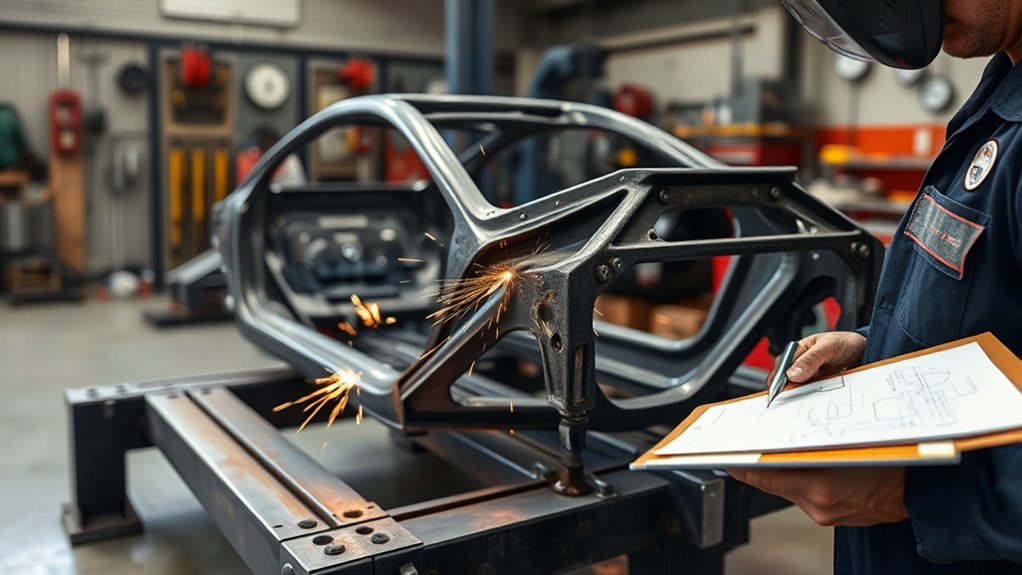
A safe car-frame weld starts with a written procedure. In a collision shop, that procedure is usually the OEM repair method plus any required shop welding test. In engineered fabrication, it may be a WPS supported by a Procedure Qualification Record, often called a PQR or WPQR.
The procedure should remove guesswork. It should tell you how to prepare the joint, which weld type to use, how much heat to apply, how to inspect the result, and what records to keep.
A frame weld is only as good as the approved procedure behind it. The question is not “Can I make it stick?” The question is “Is this weld allowed, qualified, inspected, and documented?”
Products Worth Considering

Lincoln ED030584 .035", NR-211, LB Spool, Inner Shield Flux-Core Welding Wire

ER5356 .030" .035" 047" 1-LB 16-LB Aluminum Welding MIG Wire
ER5356 .030" .035" 047" 1-LB 16-LB Aluminum Welding MIG Wire
What a Frame WPS Should Include
A structural WPS for frame work should include:
- Base metal grade, thickness range, and condition.
- Welding process, such as GMAW, GTAW, FCAW, resistance spot welding, or MIG brazing.
- Filler metal classification and wire diameter.
- Shielding gas type and flow rate.
- Joint design, gap, weld size, and weld sequence.
- Preheat and interpass temperature limits.
- Voltage, amperage, wire-feed speed, travel speed, and polarity.
- Cleaning, grinding, and coating limits.
- Inspection method and acceptance criteria.
- Repair steps if a weld fails inspection.
Flux-cored welding can be useful in some heavy steel work, but it must match the WPS. If the procedure allows it, review the right flux-cored welding wire types and use sound flux core welding techniques. Do not switch from MIG, spot welding, weld bonding, or MIG brazing to flux core just because the equipment is available.
Prequalified vs. Qualified Procedures
A prequalified procedure is allowed only when all code conditions are met. If the joint, material, thickness, process, filler metal, or position falls outside the prequalified range, the shop must qualify the procedure with testing before using it in production.
For ISO-controlled work, ISO 15607 gives general rules for welding procedure qualification, while ISO 15614 covers welding procedure tests. ISO 3834 is a quality-management framework for fusion welding. These standards help control repeatability, but they do not replace an OEM car repair manual.
Pro Tip: Before welding the vehicle, make a test weld on matching scrap or a required coupon. Cut, bend, peel, or inspect it as the OEM or code requires. A passing test coupon can reveal setup problems before they become a structural defect.
Welder Qualifications for Car Frame Work
Qualified procedures are not enough if the welder is not qualified for the process, position, and material. A welder who can run a good bead on mild steel plate may not be qualified for plug welds on thin automotive steel, aluminum MIG welding, TIG repair, or squeeze-type resistance spot welding.
For code work, welder qualification is documented through a performance test. Under AWS D1.1, ASME Section IX, ISO 9606, or CSA requirements, the qualification record defines the process, position, material group, thickness range, backing, and limits of approval.
For OEM collision work, many vehicle makers require specific shop equipment, training, test welds, squeeze-type resistance spot welding capability, and documented repair procedures. That can matter more than a general welding certificate.
- Check the welder’s qualification range before work starts.
- Match the welder’s test to the process and position used on the frame.
- Retest when the qualification expires or the welder has not used the process for the required period.
- Keep WPS, PQR/WPQR, WPQ/WQTR, test coupon, and inspection records together.
- Do not rely on settings for unrelated work, such as TIG welder settings for stainless steel, when the frame procedure calls for different material, process, or heat limits.
When ASME and ISO Apply to Car Frames
ASME and ISO can support frame-related welding programs, but they usually do not act as the main vehicle repair code. Their main value is qualification, quality control, inspection planning, and documentation.
ASME Car Frame Rules
ASME rules matter when the project involves pressure equipment, pressure piping, jurisdictional fabrication, or a contract that requires ASME qualification. ASME codes and standards are widely used for engineered equipment, and ASME BPVC Section IX is a common qualification standard for welding, brazing, and fusing procedures and personnel.
ASME BPVC Section I is for power boilers. It is not a normal car-frame repair code. If someone cites ASME for a vehicle frame, ask exactly which ASME section applies and why.
- Use ASME Section IX for qualification only when the job requires it.
- Use the construction code, contract, or engineer’s specification for acceptance criteria.
- Do not use ASME pressure rules as a shortcut for vehicle crash-structure repair.
ISO Procedure Qualification
ISO standards are common in multinational production and audited quality systems. ISO standards such as ISO 3834, ISO 15607, ISO 15614, and ISO 9606 can help define welding quality requirements, procedure qualification, and welder qualification.
For a frame program, ISO can help you prove that the same weld can be repeated across shifts, shops, or plants. It is especially useful when customers, fleet owners, manufacturers, or regulators require a documented quality system.
CSA W59 and W47.1 for Canadian Work
In Canada, CSA W59 and CSA W47.1 are often discussed together, but they do different jobs. CSA W59 is a welded steel construction standard. CSA W47.1 covers certification of companies for fusion welding of steel. In simple terms, W59 tells you how the steel welding work is controlled, while W47.1 helps prove the company has the qualified personnel, procedures, and supervision to do that work.
For car frames, these standards may matter on engineered steel structures, custom fabrication, trailers, specialty vehicles, or contract work. They do not replace OEM repair procedures for modern passenger-vehicle collision repairs.
API 1104 and Car Frames
API 1104 is for welding pipelines and related facilities. It is not normally used for car frames, unibody rails, suspension mounts, or collision repairs. If API 1104 appears in a vehicle-frame job, it is probably because the project includes pipeline equipment, pressure-related fabrication, or a special contract requirement.
Inspecting and Testing Car Frame Welds
Inspecting car-frame welds means checking both the weld and the vehicle structure around it. A bead can look clean while the part is misaligned, overheated, undercut, poorly fused, or missing corrosion protection.
Start with fit-up and alignment. Confirm that rails, crossmembers, brackets, and mounting points are within the measurement system tolerance. Then inspect the welds against the OEM procedure, WPS, or code acceptance criteria.
- Use visual inspection for cracks, undercut, porosity, overlap, burn-through, and incomplete fusion.
- Use dimensional checks to confirm frame alignment and mounting-point location.
- Use destructive test coupons when the OEM or code requires peel, bend, nick-break, or macroetch checks.
- Use ultrasonic, radiographic, magnetic-particle, or dye-penetrant testing only when the procedure calls for it and the geometry allows it.
- Document weld settings, inspection results, and corrective actions.
Do not rely on appearance alone. Internal defects can remain under a smooth bead. Heat damage can also happen beside the weld in the heat-affected zone. Equipment limits matter too, so confirm the welder has enough output and duty cycle for the frame thickness and weld sequence.
Products Worth Considering

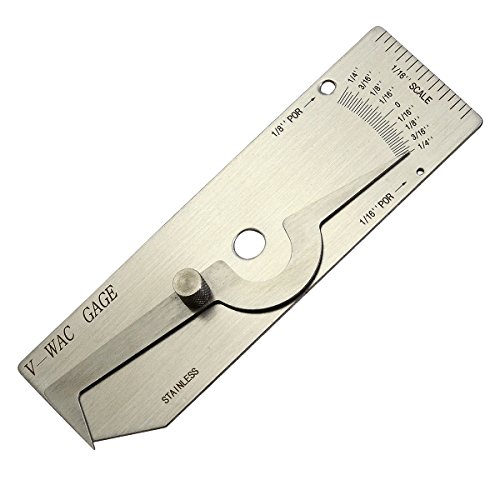
7piece Fillet Weld Set Gage Rl Gauge

Package Includes: you will receive 3 piece welding measuring tools, including 1 piece single fillet weld depth gauge measured 4.72 x 1.26 inches/ 12 x 3.2 cm in length and width, 0.04 inches/ 1 mm in thickness, 1 piece 7 piece fillet weld gauge set measured 4.33 x 1.26 inches/ 11 x 3.2 cm in length and width, 0.31 inches/ 8 mm in thickness, and 1 piece bridge cam welding gauge measured 3.94 x 2.76 inches/ 10 x 7 cm in length and width, and 0.51 inches/ 1.3 cm in thickness
V-WAC Single Weld Gage
Car Frame Welding Repairs and Modifications
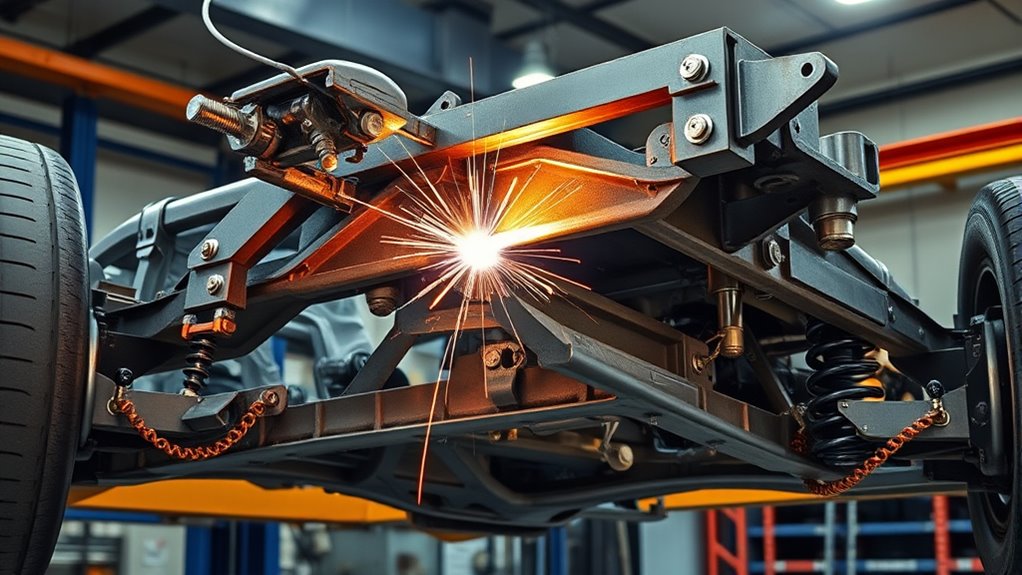
Car-frame repairs and modifications need more control than ordinary shop welding. A repair may change the way crash loads move through the body. A modification may affect suspension geometry, towing loads, steering response, or the way safety systems perform in a collision.
Before welding, answer these questions:
- Does the OEM allow this part to be welded, sectioned, or repaired?
- Is the part mild steel, HSLA, AHSS, UHSS, boron steel, aluminum, or cast material?
- Is the weld in a crush zone, suspension mount, seat-belt anchor area, or airbag sensor path?
- Does the job require MIG, TIG, resistance spot welding, MIG brazing, weld bonding, rivet bonding, or replacement only?
- What inspection and corrosion-protection steps are required after welding?
For custom work, the same discipline applies. Have the frame designed or approved by a qualified engineer, write or qualify the WPS, use compatible filler metal, inspect the welds, and keep records. General knowledge of common types of welding helps you choose a process, but the final choice must come from the procedure, not habit.
Documentation Checklist for Code-Compliant Frame Work
Good documentation protects the shop, the welder, and the vehicle owner. It also proves that the work was done to a controlled method instead of guesswork.
- Vehicle year, make, model, VIN, and repair area.
- OEM repair procedure name, section, and revision date.
- Material identification and part numbers.
- Approved welding process and equipment used.
- WPS, PQR/WPQR, and welder qualification record when code work applies.
- Test coupon results, photos, or inspection reports.
- Alignment measurements before and after repair.
- Corrosion-protection steps, seam sealer, cavity wax, and coatings used.
- Final quality-control signoff.
This record trail is especially important for fleet vehicles, custom chassis builds, insurance repairs, racing work, and any job that may be inspected later.
Frequently Asked Questions
What type of welding is used on car frames?
MIG welding is common on many steel frame repairs and custom steel frames, but the right process depends on the vehicle and procedure. Modern repairs may require squeeze-type resistance spot welding, MIG plug welding, MIG brazing, TIG welding, rivet bonding, weld bonding, or part replacement. Always follow the OEM repair procedure or qualified WPS.
Does AWS D1.1 cover car-frame welding?
AWS D1.1 can cover engineered steel structural weldments when the job, material, thickness, design, and contract fit the code. It does not automatically govern every passenger-car frame repair. For collision work, start with the OEM repair procedure and use AWS standards only when they are specified or clearly fit the scope.
What is the difference between W59 and W47.1?
CSA W59 is a welded steel construction standard. CSA W47.1 is a company certification standard for fusion welding of steel. W59 focuses on the work requirements, while W47.1 focuses on proving the company has qualified procedures, personnel, and supervision. They may matter for Canadian structural steel work, but they do not replace OEM vehicle repair procedures.
What code covers structural welding?
For steel structural welding in the United States, AWS D1.1 is the common structural steel code. For aluminum structural welding, AWS D1.2 may apply. For automotive arc welding, AWS D8.8 and AWS D8.14 may be relevant when specified. The correct standard depends on the material, design, contract, and authority having jurisdiction.
Is API 1104 a code or standard?
API 1104 is an American Petroleum Institute standard for welding pipelines and related facilities. People may informally call it a code, but its normal scope is pipeline welding, not vehicle frame repair. Do not use API 1104 for a car frame unless a specific contract or engineered project requires it.
Can I weld a cracked car frame at home?
You should not weld a cracked structural frame at home unless you have the correct OEM procedure, material identification, equipment, qualification, and inspection method. A frame crack can involve crash loads, suspension geometry, and safety systems. In most cases, a qualified collision repair shop or fabrication engineer should evaluate it first.
What records should I keep after frame welding?
Keep the OEM procedure or WPS, welder qualification records, test coupon results, photos, alignment measurements, inspection reports, material information, and corrosion-protection details. Good records prove that the repair or fabrication followed a controlled process.
Conclusion
The right welding code for a car frame starts with the job scope. For most production vehicle repairs, the OEM procedure is the controlling document. For custom or engineered steel work, AWS D1.1 may apply. For aluminum, AWS D1.2 or AWS D8.14 may fit. ASME, ISO, CSA, and API standards can support qualification and quality control, but only when their scope matches the work. When you identify the material, follow the approved procedure, qualify the welder, inspect the weld, and document the repair, you move from guesswork to a safer, code-aware frame job.
Sources
- American Welding Society Standards — AWS welding-code families, including structural and automotive welding standards.
- ASME Codes and Standards — ASME standards and qualification context for pressure-related and engineered work.
- International Organization for Standardization — ISO standards catalogue for ISO 3834, ISO 15607, ISO 15614, and ISO 9606 references.
- eCFR Title 49 Part 571 — Federal Motor Vehicle Safety Standards reference for U.S. vehicle safety context.
- I-CAR Repairability Technical Support — OEM collision repair procedure research and repairability information.
- OSHA Welding, Cutting, and Brazing — workplace safety requirements and guidance for welding operations.