Welding on your car does not automatically void the warranty, but it can put related coverage at risk. The central question is whether the weld, heat, cutting, drilling, added part, or repair method caused or contributed to the problem you want covered. Structural, steering, suspension, emissions, electrical, restraint-system, and high-voltage areas create the greatest risk.
Quick Answer
Welding on a car does not automatically void the entire factory warranty. Coverage may be denied for a failed part when the manufacturer or dealer can connect the failure to the weld, heat, cutting, drilling, or poor installation. Structural, emissions, electrical, and high-voltage work creates the greatest risk.
Key Takeaways
- A weld should not erase coverage for an unrelated factory defect merely because the vehicle was modified.
- Frame, unibody, suspension, steering, restraint-system, emissions, battery, and crash-structure welding creates the strongest warranty and safety concerns.
- Factory warranties, emissions warranties, service contracts, corrosion coverage, and safety recalls follow different rules.
- OEM repair procedures, written dealer communication, photos, invoices, material records, and post-repair inspections provide the strongest protection.
At a Glance
| Lower Risk | Minor non-structural panel repairs, small accessory brackets, or exhaust sections away from emissions hardware, provided the OEM permits the work. |
| Highest Risk | Frame rails, unibody rails, suspension or steering mounts, seatbelt and airbag areas, crash zones, battery enclosures, and drivetrain supports. |
| Before Welding | Verify the VIN and model year, read the warranty booklet, obtain the exact OEM repair procedure, ask the dealer in writing, and choose a qualified repair facility. |
| Best Protection | Use an OEM-approved method, protect electrical and fuel systems, control heat, restore coatings, complete required scans or calibrations, and save all records. |
Note: This article provides general information, not legal advice. Warranty terms, state laws, service contracts, lease agreements, insurance policies, and OEM repair rules vary. Get written guidance from the manufacturer, dealer, or a qualified collision-repair professional before any structural, restraint-system, fuel-system, hybrid, or EV welding.
Does Welding on a Car Void the Warranty?
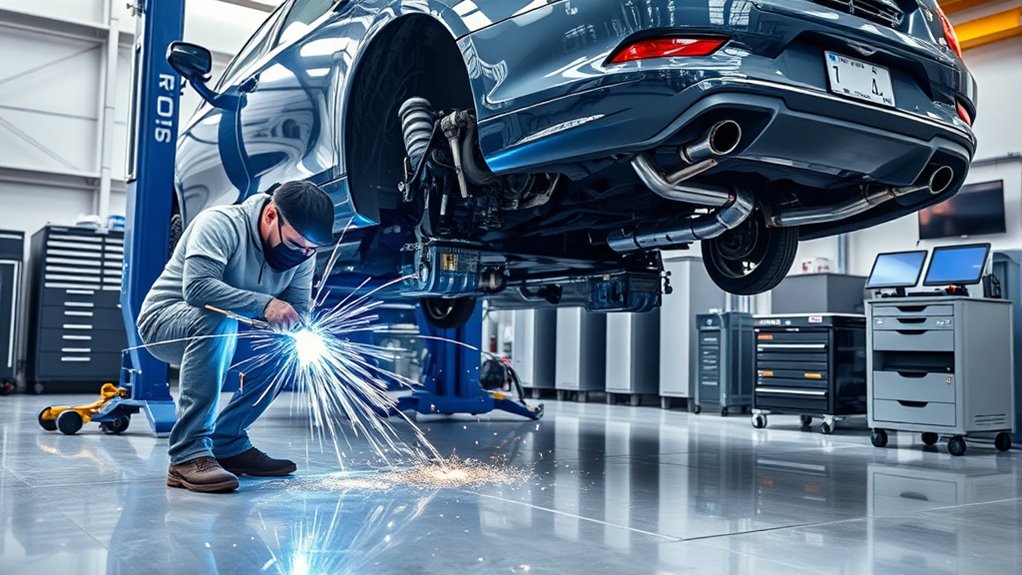
Welding can affect warranty coverage when the welded area or repair method is connected to the failure. It does not automatically cancel every remaining warranty obligation on the vehicle.
The practical rule is causation. A manufacturer or dealer may deny coverage for damage caused by a defective aftermarket part, incorrect installation, or unauthorized repair method. However, an unrelated factory defect should not lose coverage solely because other work was performed on the vehicle.
The Federal Trade Commission’s auto-warranty guidance says consumers generally do not have to use the dealer for routine maintenance or repairs just to keep a warranty in effect. The FTC also states that a manufacturer or dealer must prove an aftermarket or recycled part caused the damage before denying coverage for the damaged part.
Under 15 U.S.C. § 2302(c) and 16 CFR § 700.10, a warrantor generally cannot condition warranty coverage on the use of a branded article or service unless it is provided without charge or the FTC grants a waiver. A warrantor may still exclude defects or damage caused by an unauthorized part or service.
A weld does not automatically erase the entire warranty. The important question is whether the weld caused, contributed to, or interfered with diagnosing the specific failure being claimed.
This is a general consumer-warranty principle, not a guarantee that every dispute will be resolved the same way. The written warranty, the evidence, the type of coverage, and applicable state law can affect the result.
Dealers may inspect for weld marks, heat distortion, cut seams, drilled holes, damaged coatings, missing seam sealer, poor bead quality, non-factory brackets, and missing corrosion protection. Those signs can trigger closer review when the work touches the frame, unibody, suspension, steering, crash structure, battery area, emissions equipment, wiring, or restraint systems.
You reduce risk by reading the warranty booklet, getting the exact OEM repair information, documenting the work, and choosing a bolt-on or replacement solution when it solves the problem without permanent cutting or heat.
Cutting or drilling structural metal often creates greater warranty risk because it may change a load path, create a stress concentration, remove corrosion protection, or interfere with a manufacturer-approved repair. Poor welding can also create hard or brittle areas. For general background on brittle weld behavior, see this guide to hard, brittle zones, but do not use a general welding guide in place of the vehicle manufacturer’s repair procedure.
Which Type of Coverage Applies?
“Warranty” can refer to several different forms of coverage. Before discussing whether a weld affects a claim, identify which agreement or legal program applies.
| Manufacturer Warranty | Included with the vehicle and governed by its written terms, federal warranty law, and applicable state law. Damage caused by welding may be excluded without automatically canceling unrelated coverage. |
| Service Contract | Often marketed as an extended warranty but purchased separately. Coverage, exclusions, approved facilities, claim procedures, and modification clauses depend heavily on the contract. |
| Emissions Warranty | Federal coverage applies to qualifying emissions defects and specified major components. Welding that damages a converter, sensor, ECU, OBD system, or exhaust path can create a direct coverage dispute. |
| Corrosion Coverage | May cover perforation or specific corrosion defects. Grinding, heat, missing primer, damaged galvanizing, or unsealed seams can affect a claim involving the repaired area. |
| Safety Recall | A recall is a separate safety remedy, not an ordinary warranty claim. Check the VIN and contact an authorized dealer about any open recall, even if the vehicle has been modified. |
The FTC explains that a separately purchased service contract is not the same as the manufacturer’s included warranty under federal law. Read its modification, maintenance, preauthorization, and repair-facility clauses before welding.
Federal emissions coverage also follows separate rules. According to the U.S. Environmental Protection Agency, many emissions-related parts receive federal design-and-defect coverage for 2 years or 24,000 miles, while specified major components—the catalytic converter, emissions ECU, and OBD device or computer—receive 8 years or 80,000 miles, subject to the program’s conditions and the vehicle’s warranty booklet.
Safety recalls are different again. Use the NHTSA recall lookup to check the VIN. Manufacturers are generally required to provide a safe, free recall remedy. Tell the dealer about relevant modifications so it can determine whether they affect access to or completion of the recall repair.
What Welding Jobs Trigger Warranty Denials?
The jobs most likely to trigger a warranty denial are those that alter the vehicle’s frame, unibody, suspension mounts, steering points, drivetrain supports, battery enclosure, emissions hardware, restraint-system mounts, or other safety-critical components. These areas affect crash behavior, alignment, handling, electrical routing, corrosion protection, and load paths.
Dealers may inspect for cut lines, heat marks, missing factory seams, uneven weld beads, burned paint, altered fasteners, damaged coatings, and undocumented repairs. If the weld is close to a covered failure, expect a closer technical review and a request for records.
- Frame or unibody repairs: These may change geometry, material properties, crash-energy paths, and factory corrosion protection.
- Suspension or steering mounts: These may affect handling, tire wear, alignment, fastener loading, and safety margins.
- Drivetrain or crossmember welding: These may transmit stress into engine, transmission, differential, and mount systems.
- Exhaust welding near emissions parts: This may damage catalytic converters, oxygen sensors, wiring, or other emissions components.
- Battery tray or EV/hybrid structure welding: This can involve high-voltage isolation, battery-fire risk, restricted parts, and strict OEM procedures.
- Seatbelt, airbag, or occupant-cell welding: This may alter restraint mounting strength or the structure designed to protect occupants.
- ADAS sensor-area fabrication: Added brackets, heat, distortion, or changed panel geometry may affect radar, camera, ultrasonic-sensor, or calibration performance.
Warning: Do not weld near airbags, seatbelt anchors, fuel lines, fuel tanks, refrigerant lines, high-voltage battery components, pyrotechnic devices, or electronic modules unless the exact OEM procedure identifies the required isolation and protection steps. Structural and EV/hybrid repairs should be performed by trained professionals using approved procedures, equipment, and protective gear.
If you want the best chance of preserving coverage, document every modification and request written guidance before striking an arc. Proper weld design still matters, so review sound weld-sizing principles such as maximum fillet weld size when working with general brackets or plates. That information does not override a vehicle-specific prohibition, material limit, or approved joint design.
What Does the Magnuson-Moss Warranty Act Protect?
The Magnuson-Moss Warranty Act and the FTC’s warranty rules restrict certain “use our parts or lose your warranty” conditions. A company generally cannot require branded parts or a specified paid service provider merely to keep unrelated warranty coverage valid.
The rule has important limits. It does not make every modification safe, guarantee approval of every claim, or force a manufacturer to pay for damage caused by welding, fabrication, an aftermarket part, or incorrect installation.
The clearest way to apply the rule is:
- The mere presence of a modification does not automatically eliminate all warranty obligations.
- A defect unrelated to unauthorized parts or service generally should not be excluded solely because unauthorized work occurred elsewhere.
- Damage caused by the weld, part, or repair method may be excluded.
- The written warranty, service contract, evidence, and applicable law still control the individual claim.
Warranty Causation and Evidence
The FTC states that a manufacturer or dealer must prove an aftermarket or recycled part caused the damage before denying warranty coverage for the damaged part. The FTC’s regulations also permit a warrantor to deny liability when it can demonstrate that an unauthorized article or service caused the defect or damage.
For a welding dispute, ask the dealer to identify the technical connection between the weld and the failed component. Do not assume, however, that every dispute follows one universal courtroom burden-of-proof rule. State law, contract language, and the type of claim can affect the process.
- Ask which component failed and how it was tested.
- Ask what evidence connects the weld, heat, drilling, or added load to that failure.
- Provide photos, invoices, OEM procedures, material records, and maintenance history.
- Consider an independent inspection when the technical explanation is disputed.
Records do not guarantee coverage, but they can rebut an unsupported assumption that every problem on a welded vehicle came from the modification.
What to Request After a Denial
When a dealer denies a warranty claim because the car was welded or modified, request a written explanation that identifies the failed part, the relevant warranty exclusion, the inspection findings, and the reason the repair caused or contributed to the failure.
Use direct questions:
- Which written warranty term or exclusion applies?
- Which part failed?
- What test or inspection confirmed the failure?
- How did the weld, heat, hole, material, or accessory cause it?
- Can I receive the technician’s notes, diagnostic codes, measurements, and photos?
- Can the manufacturer or regional representative review the decision?
If the evidence does not connect the weld to the failure, you have a stronger basis for escalation. If the evidence does show a connection, ask whether only the affected repair is excluded or whether other coverage remains available.
What Modification Rights Do Not Guarantee
You can generally choose non-OEM parts and independent service without automatically losing all factory-warranty coverage. That right does not allow a modification to damage covered components without consequences.
You keep the strongest position when you:
- Match parts and materials to the exact year, make, model, trim, body configuration, and powertrain.
- Verify the vehicle by VIN before choosing a repair procedure.
- Follow OEM service and collision-repair information where available.
- Avoid cutting, heating, sectioning, or drilling safety-critical structure unless the manufacturer expressly permits it.
- Keep proof that the work, inspections, scans, coatings, and calibrations were completed correctly.
This approach supports your right to choose a repair provider while recognizing that a vehicle warranty remains a written agreement with exclusions, mileage limits, time limits, and maintenance duties.
Related Versus Unrelated Warranty Claims
A dealer should evaluate the failed system and the modified area rather than treating every claim on a welded vehicle as identical. These examples illustrate the difference, although the actual result depends on the evidence and warranty terms.
| Modification and Claim | Likely Warranty Question |
| Welded exhaust hanger followed by an exhaust leak beside the weld | The dealer may have a direct basis to investigate weld penetration, distortion, alignment, or stress near the leak. |
| Welded exhaust hanger followed by a defective window motor | The weld appears unrelated unless the work damaged shared wiring, a module, a ground path, or another electrical component. |
| Welded suspension mount followed by alignment loss or cracking | The repair location, heat input, geometry, material, weld quality, and added load are directly relevant. |
| Body-panel patch followed by corrosion at the repaired seam | Missing primer, seam sealer, cavity wax, galvanic protection, or drainage may affect corrosion coverage for that area. |
| Frame-mounted accessory followed by cooling or sensor problems | Even without welding, the accessory may affect airflow, sensor fields, wiring, weight distribution, or factory mounting points. |
Which Welding Repairs Are Usually Lower Risk?
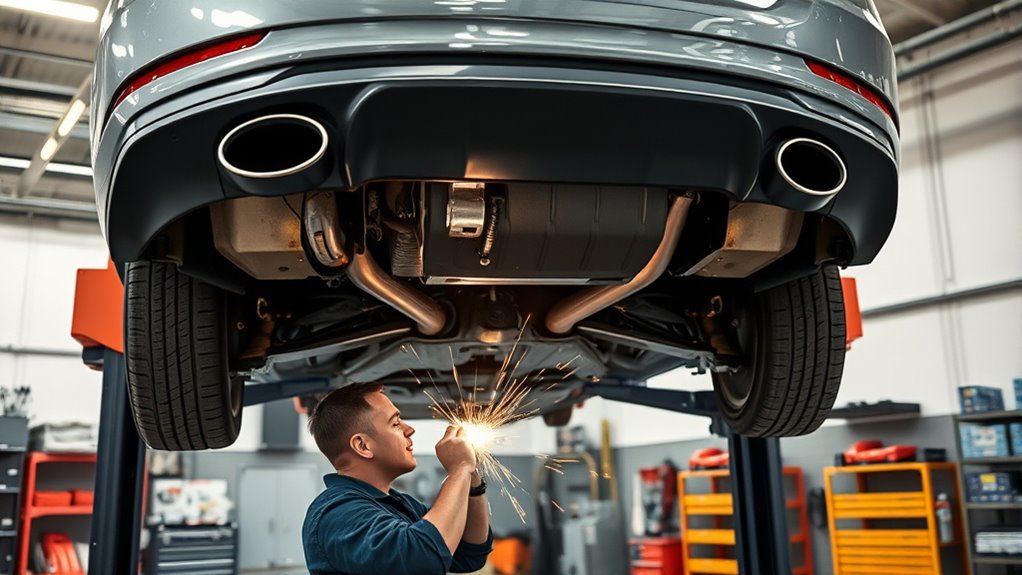
You are usually on safer ground when a weld is limited to a confirmed non-structural part and does not change load paths, alignment, crash behavior, emissions equipment, wiring, corrosion protection, or safety systems. Even then, the repair must follow the vehicle manufacturer’s instructions where applicable.
Potentially lower-risk examples include minor outer-panel patches, small non-load-bearing accessory brackets, and exhaust sections away from catalytic converters, oxygen sensors, wiring, and emissions-control components. These repairs are not universally safe, but they are generally easier to separate from an unrelated warranty claim.
Heat control is important on thin automotive metal. Excessive heat can warp panels, burn coatings, damage adhesives, and weaken or alter nearby material. For general technique basics, see this guide on controlling heat input when welding thin metal.
Lower-Risk Locations Still Require OEM Confirmation
No weld location is universally safe because vehicles use different materials, reinforcements, sensors, adhesives, and load paths. A cosmetic-looking panel on one model may overlap a structural reinforcement, airbag sensor, battery enclosure, wiring harness, or crush zone on another.
As a general screening rule, do not weld frame rails, unibody rails, suspension pickup points, steering brackets, seatbelt anchors, airbag areas, battery enclosures, door-intrusion structures, roof rails, pillars, or crash-energy zones unless the exact OEM procedure allows the operation.
- Weld an exhaust section only when the procedure will not alter a converter, sensor, emissions component, heat shield, or protected wiring route.
- Repair a small bracket only after confirming that it does not support steering, suspension, drivetrain, seats, restraints, battery components, or safety sensors.
- Use an approved bolt-on solution when it avoids permanent heat or cutting and does not overload the mounting points.
Keep the manufacturer’s procedure with the repair records. It can help show why the location, process, and materials were selected.
Lower-Risk Repair Types
Minor work on confirmed non-structural panels, small accessory brackets, and simple exhaust patches away from emissions equipment may create fewer warranty issues than frame or suspension welding.
Workmanship still matters. A rough bead, burn-through, distorted panel, missing seam sealer, damaged wiring, or incomplete corrosion protection gives a warranty provider a stronger technical reason to connect the repair to later damage.
Pro Tip: Take clear photos before disassembly, after the metal is cleaned, after fit-up, after welding, and after primer, seam sealer, paint, cavity wax, or other corrosion protection is restored. Save the original files with the invoice and OEM procedure.
Why Does Frame Welding Raise the Biggest Red Flags?
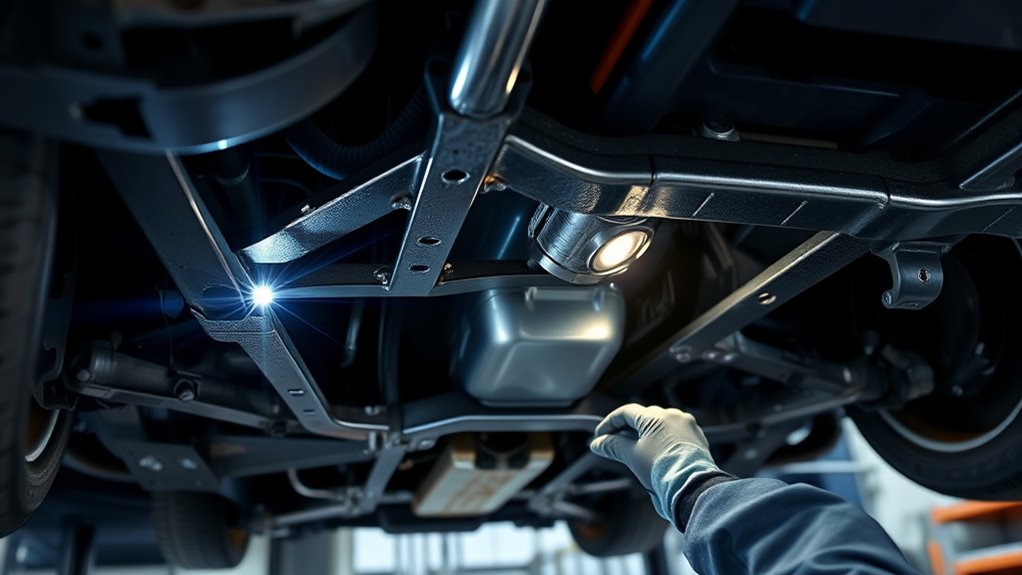
Frame welding raises major concerns because it can affect the vehicle’s structural integrity. A frame rail or unibody rail carries loads, controls alignment, supports other components, and helps manage crash energy.
A structural weld receives more scrutiny because the manufacturer may need proof that the repair restored the vehicle’s intended material properties, dimensions, corrosion protection, and crash performance.
Welding structural metal may change load paths, heat treatment, strength, corrosion resistance, and dimensional alignment. The manufacturer or dealer should still evaluate how the repair relates to the claimed failure, but a structural alteration can require more measurements, photos, engineering review, or manufacturer authorization.
- Welding may hide a crack or prior collision damage.
- Heat and shrinkage may change alignment or introduce residual stress.
- Grinding may reduce material thickness or remove factory coatings.
- An incorrect joint may bypass a designed crush zone or load path.
- An unapproved weld may be incompatible with high-strength, ultra-high-strength, aluminum, cast, or mixed-material structure.
If a structural area must be repaired, use vehicle-specific OEM service information, proper measuring equipment, and a qualified collision-repair facility. Clean metal and joint preparation affect weld quality, as explained in these flux-core welding tips for beginners, but general beginner guidance is not suitable authorization for structural automotive repair.
Why Do OEM Repair Procedures Matter?
Modern vehicles may use mild steel, high-strength steel, ultra-high-strength steel, aluminum, castings, extrusions, structural adhesives, rivets, resistance spot welds, brazing, and gas-metal-arc welds in the same body. The correct repair cannot be selected by appearance alone.
Before choosing a procedure, verify:
- The complete VIN, model year, trim, body style, drivetrain, and battery configuration.
- The material and strength classification of every affected panel or reinforcement.
- Whether repair, straightening, sectioning, or replacement is permitted.
- The approved cut location, joint design, weld process, wire, shielding gas, equipment, and test-weld requirements.
- The required electrical, restraint-system, fuel-system, refrigerant, and high-voltage isolation steps.
- The primers, adhesives, sealers, coatings, cavity waxes, and corrosion-protection steps required after welding.
- Any pre-repair scan, post-repair scan, alignment check, leak test, sensor aiming, or ADAS calibration.
Manufacturer rules can be highly specific. For example, current Tesla body-repair instructions require the vehicle electrical-isolation procedure before welding, restrict structural welding to trained technicians, specify approved welding equipment and wire, and call for a test weld using material of the same type and gauge.
That example does not create a procedure for other brands. It shows why a generic instruction such as “disconnect the battery and weld it” is not enough for a modern vehicle.
Warning: Never guess the steel grade, aluminum alloy, electrical-isolation method, or approved weld location. If the OEM procedure prohibits heat, repair, or sectioning, replace or repair the component only as directed by that procedure.
Do Bolt-On Parts Reduce Warranty Risk?
Yes, bolt-on parts often reduce warranty risk when they use approved mounting points and avoid welding, cutting, drilling, and wiring changes. They are also easier to inspect, service, and return to stock.
That does not make every bolt-on part warranty-safe. A heavy bumper, winch mount, suspension lift, hitch, recovery point, tow accessory, or drivetrain part may overload a bracket, change airflow, alter crash performance, block a sensor, increase leverage, or exceed a vehicle rating.
Welding galvanized or zinc-coated material also creates fume and contamination concerns. If coated metal is involved, understand the health risks discussed in this guide to zinc fumes and follow the applicable ventilation, coating-removal, and PPE requirements.
Products Worth Considering

Easy To USE: By threading a screw or bolt through the 13/32" diameter bolting hole( (that's between 3/8" and 7/16") on the mounting clip and securing to any wood or metal surface such as minivans and SUVs, interior cargo vans, enclosed box trucks, pickup beds and tailgates, Perfect attach to T slot nut Cleats for Toyota Tacoma Bed Rail System, NOTE: if mount on Tacoma Bed, you will first need to slightly enlarge the mounting holes to 1/2” to fit the bed bolts.

✔️ MAXIMUM PROTECTION OF GOODS DURING TRANSPORT: Tie down anchors are used mainly to secure on vehicles such as trucks, trailers, SUV, vans, campers, boats, etc. It helps protect cargo from falling or breaking on impact, reducing noise and vibration. The D rings make your work easier and more convenient.

CONVENIENTLY&QUICKLY- Install with Drilling, No Need for Welding. By threading a screw or bolt through the 1/4" diameter bolting hole on the mounting clip and securing to any wood or metal surface. The trailer d rings tie down is easy and convenient to use once installed. d rings for trailers provides an anchor ship for all cargo tie downs. [Note: The length of the bolt is 3.15"]
Using Factory Holes
Attaching a part through an existing hole usually avoids creating a new heat-affected zone or drilling through coated metal. However, the presence of a factory hole does not prove that the surrounding structure was designed for the accessory’s weight, fastener size, clamp load, or load direction.
- Confirm that the manufacturer or accessory maker approves the mounting location.
- Use the specified fasteners, backing plates, torque values, and corrosion protection.
- Check nearby wiring, brake lines, fuel lines, sensors, and hidden panels before inserting hardware.
A reversible installation may simplify service or restoration to stock. Do not remove or hide a relevant modification merely to influence a warranty inspection. Disclose the work and keep the installation records.
The No-Drill Advantage
A no-drill design avoids new holes that could create corrosion sites, stress concentrations, water entry points, or inspection concerns. It also avoids welding heat and may be easier to reverse.
The advantage is reduced alteration, not automatic warranty protection. The accessory must still fit correctly, stay within rated loads, preserve required clearances, and avoid interference with safety and emissions systems.
Fitment and Load Verification
Match the part to the exact year, make, model, trim, body style, drivetrain, and factory option package. Follow torque specifications and do not exceed axle, towing, payload, roof, recovery-point, or mounting limits.
- Verify compatibility before purchase.
- Read both the vehicle instructions and accessory instructions.
- Document the part number, installation date, torque values, and any required inspections.
- Recheck fasteners and alignment at the intervals specified by the manufacturer.
How Do Dealers Judge Welding Damage?
Dealers typically inspect welded vehicles for evidence that structural, electrical, emissions, corrosion-control, or safety components were altered, drilled, cut, overheated, or poorly repaired.
They may document bead quality, weld location, paint discoloration, missing seam sealer, heat distortion, cracked coatings, corrosion, non-factory brackets, altered fasteners, diagnostic trouble codes, alignment measurements, and the distance between the weld and the failed part.
They may also compare the work with the manufacturer’s repair manual. A technically sound-looking bead can still be unacceptable if welding was prohibited on that material or at that location.
Policies and escalation practices vary. One dealer may approve a claim locally, while another sends the case to a manufacturer representative or warranty administrator. That is why complete records matter.
You protect yourself by keeping maintenance records, welding invoices, photos, material details, diagnostic reports, alignment measurements, and written dealer communication. Documentation does not guarantee approval, but it gives the claim reviewer evidence beyond the visual presence of a weld.
Welding also requires a safe workspace. OSHA’s welding requirements address fire-safe work areas, eye and face protection, combustible materials, ventilation, and coated metals. The NIOSH welding-fume guidance explains that inhaled metal fumes can affect the lungs and nervous system and that confined spaces can increase exposure. This guide to effective ventilation provides additional shop-safety context.
What Should You Ask Before You Weld?
Before striking an arc, ask whether the exact repair method is permitted for the identified vehicle and whether it may affect a specific warranty. Do not ask only, “Will this void my warranty?” Name the part, location, material, and proposed procedure.
Ask for the OEM procedure number, approved joining method, required safety steps, and written warranty guidance. A vague verbal answer provides less protection than a documented technical response.
- Which welding or sectioning operations does the manufacturer allow on this VIN and model year?
- Is the component structural, safety-related, emissions-related, electrical, cosmetic, or part of a battery enclosure?
- Does the repair manual allow welding, or require complete replacement?
- What steel grade, aluminum type, filler wire, shielding gas, adhesive, rivet, or weld process is required?
- What 12-volt, high-voltage, module, sensor, restraint-system, fuel-system, and refrigerant precautions apply?
- Are pre-repair and post-repair scans, alignment checks, leak tests, or ADAS calibrations required?
- How must primer, galvanizing, seam sealer, paint, undercoating, and cavity protection be restored?
- Will the dealer or manufacturer provide written guidance before work begins?
Ask the shop to identify the welding process, filler material, equipment settings, test-weld method, corrosion-protection system, and inspection process. If a non-structural repair involves self-shielded flux-core welding outdoors, wire selection still matters. See this review of a wire’s self-shielded capabilities for general process context.
Note: On EVs and hybrids, disconnecting the 12-volt battery does not necessarily isolate the high-voltage system or remove all stored energy. Follow the vehicle-specific electrical-isolation and verification procedure, use rated protective equipment, and respect all required waiting periods and test points.
Products Worth Considering
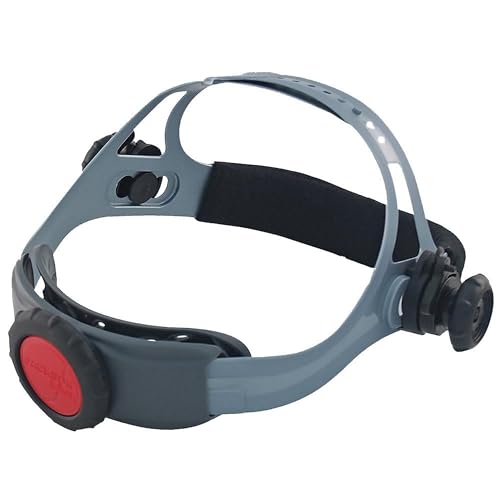
REPLACEMENT WELDING HELMET HEADGEAR - Jackson Safety's Premium 370 Speed Dial Replacement Headgear offers a perfect fit and secure hold for your welding hood

Pre-Weld Warranty Checklist
- Identify the coverage: Factory warranty, service contract, emissions warranty, corrosion warranty, or recall.
- Verify the vehicle: Record the VIN, model year, mileage, trim, drivetrain, and battery type.
- Identify the component: Confirm whether it is structural, safety-related, emissions-related, electrical, or cosmetic.
- Obtain the OEM procedure: Use the exact body or service manual for the vehicle configuration.
- Compare alternatives: Consider replacement, bolting, riveting, bonding, clamping, or an approved section repair.
- Get written guidance: Ask the dealer, manufacturer, and service-contract administrator when applicable.
- Choose a qualified shop: Confirm experience with the vehicle material, repair method, and high-voltage system.
- Document the original condition: Photograph the area, nearby components, mileage, and existing damage.
- Plan safety controls: Address fuel, refrigerant, electrical, restraint, fire, fume, coating, and ventilation hazards.
- Plan post-repair checks: Include alignment, scans, calibrations, corrosion protection, leak testing, and final inspection.
How to Document Welds for Warranty Claims
A solid warranty record starts before the first cut. Take high-resolution photos of the whole vehicle, the exact panel or bracket, nearby components, factory seams, labels, fasteners, wiring, coatings, and the damage that made the repair necessary.
Your documentation should include:
- The date, VIN, mileage, and reason for the repair.
- The exact location and dimensions of the affected area.
- Photos before disassembly, after cleaning, after cutting, during fit-up, after welding, and after coating.
- The OEM procedure title, section, revision, and vehicle application.
- The welding process, filler material, shielding method, approved equipment, and test-weld results when applicable.
- The shop name, invoice, technician qualifications, and relevant repair certifications.
- Diagnostic scans, alignment measurements, calibration records, isolation records, and inspection results.
- Receipts and product records for primer, adhesive, seam sealer, paint, undercoating, and cavity wax.
- Written dealer, manufacturer, or service-contract communication.
Save receipts for parts, consumables, coatings, and labor. They help establish when the work occurred and what materials were used.
Describe every structural area affected and the steps used to restore corrosion protection. A warranty reviewer may ask whether the repair changed alignment, load paths, sensor operation, wiring, factory coatings, or drainage.
Before welding zinc-coated metal, identify the coating, use the required controls, and prevent weld contamination. This guide on weld contamination explains why surface preparation matters.
What Should You Do If a Dealer Denies the Claim?
If a dealer denies a claim after finding welds, stay calm and request the decision in writing. The explanation should identify the failed component, applicable warranty provision, inspection findings, and claimed connection between the repair and the failure.
- Request the denial in writing. A vague statement that the “warranty is void” does not explain which coverage or component is affected.
- Ask for diagnostic evidence. Request photos, technician notes, trouble codes, measurements, test results, and the cited OEM procedure.
- Separate related and unrelated systems. Ask why the repaired area would affect the particular component that failed.
- Provide your records. Submit invoices, photos, OEM procedures, maintenance history, scan reports, and inspection results.
- Escalate politely. Ask for review by the service manager, manufacturer customer-care team, regional representative, or service-contract administrator.
- Consider an independent inspection. A qualified collision-repair specialist, engineer, or diagnostic technician may help evaluate the claimed connection.
- Use consumer-protection channels. Unresolved service-contract problems may be reported to the state attorney general and the FTC.
Do not alter, remove, repaint, hide, or destroy relevant evidence after a dispute begins. Preserve the vehicle’s condition unless a safety repair is immediately necessary, and document any required change before it is made.
This process does not guarantee coverage. It does, however, focus the dispute on the written agreement, technical evidence, and causation rather than the mere appearance of a weld.
When Is Welding Worth the Risk?
Welding is worth the risk only when the repair or modification truly requires it and the possible warranty exposure is understood. If an OEM replacement, approved rivet-and-bond repair, bolt-on part, clamp, or replacement panel can solve the problem without unapproved heat, that option may be easier to defend.
The chance of a warranty and safety dispute rises when welding is close to frame rails, suspension mounts, steering points, seats, restraints, battery structure, fuel components, refrigerant lines, wiring, emissions equipment, or crash sensors.
- Confirm that the part and failure are still within the applicable coverage period.
- Ask whether the proposed repair method is permitted for the exact vehicle.
- Compare welding with approved replacement or mechanical-joining options.
- Use a repairer qualified for the material and safety systems involved.
- Document the condition, procedure, work, coatings, scans, and inspections.
You gain the most control by avoiding unnecessary frame penetration, uncontrolled heat, and undocumented fabrication. If welding is the approved repair, use the specified process and preserve the evidence. For non-structural exhaust-specific context, see this guide to stick welding’s versatility on exhaust pipe.
What Other Rules Can Apply?
Warranty coverage is not the only concern. A welded modification may also affect a lease, insurance claim, collision-repair guarantee, vehicle inspection, emissions test, registration, resale disclosure, or state structural-repair rule.
A lease may prohibit permanent modifications or require the vehicle to be returned in its original condition. An insurer may investigate whether a modification contributed to collision damage. A state inspection program may apply separate rules to structural repairs, emissions equipment, lighting, or safety systems.
Review these obligations before beginning the work. Approval from one party does not automatically satisfy every other contract or legal requirement.
Frequently Asked Questions
What are five common acts that can void or limit vehicle warranty coverage?
Common problems include welding or drilling structural parts, installing engine or transmission software that damages related components, removing emissions equipment, skipping required maintenance, and altering suspension or steering geometry in a way that causes a failure. The effect should be evaluated against the failed part and the written coverage rather than treated as an automatic whole-vehicle cancellation.
Do I need to disconnect the battery before welding on my car?
Follow the exact OEM service procedure for the VIN and model year. The procedure may include disconnecting the 12-volt battery, isolating additional circuits, waiting for stored energy to discharge, protecting modules, or completing a high-voltage disablement and verification process. Disconnecting one battery cable is not a universal procedure for modern vehicles.
What modifications can void or limit a car warranty?
A modification may limit coverage when it causes or contributes to the failure being claimed. High-risk examples include unapproved frame welding, unsafe suspension changes, emissions deletes, damaging powertrain tuning, incorrect electrical wiring, and poor structural repairs. Unrelated coverage should be evaluated separately.
Can welding on a car damage the battery or electronics?
Yes. Welding current, poor ground-clamp placement, voltage transients, heat, sparks, and damaged wiring can harm batteries, modules, sensors, bearings, connectors, or communication networks. Follow the OEM isolation procedure, shield nearby parts, and place the welding return clamp as directed and close to the repair when the procedure permits welding.
Will welding an exhaust pipe void my warranty?
A small approved exhaust weld away from converters, oxygen sensors, wiring, and other emissions components is usually lower risk than frame welding. Coverage may still be denied for a leak, damaged sensor, broken hanger, corrosion problem, or emissions fault caused by the weld. Keep the repair records and do not alter emissions-control equipment.
Can a dealer say my whole warranty is void because it found weld marks?
A dealer may inspect the vehicle closely, but a blanket whole-warranty statement may be too broad when the claimed defect is unrelated to the weld. Ask which coverage and component are affected, request the denial in writing, and ask for the technical evidence connecting the weld to the failure.
Does Magnuson-Moss apply to an extended warranty or service contract?
A separately purchased auto service contract is not the same as the manufacturer’s included written warranty merely because it is marketed as an extended warranty. Its modification exclusions, repair rules, claim process, and remedies depend on the contract and applicable state and federal law.
Can welding affect the corrosion warranty?
Yes. Grinding, welding heat, removed galvanizing, open seams, missing primer, damaged drainage, and incomplete seam sealer or cavity wax can cause corrosion around the repair. A manufacturer may exclude corrosion caused by the repair while leaving unrelated corrosion coverage unchanged, subject to the written terms.
Does welding cancel an open safety recall?
A safety recall is separate from an ordinary warranty claim, and manufacturers generally must provide a free recall remedy. Contact an authorized dealer and disclose relevant modifications. The dealer may need to determine whether the modification affects access, diagnosis, parts installation, or the safe completion of the recall repair.
Conclusion
So, does welding on your car void the warranty? Not automatically. The important issue is whether the weld, added load, heat, cutting, drilling, electrical path, or incomplete repair caused the problem being claimed. A documented repair on a confirmed non-structural panel may create limited warranty exposure, while unapproved frame welding can affect strength, alignment, crash behavior, electronics, and corrosion protection.
Before welding, identify the type of coverage, verify the VIN and model year, read the warranty booklet, obtain the exact OEM repair procedure, ask for written guidance, protect electrical and fuel systems, control fire and fume hazards, and preserve every record. Good documentation cannot make an unsafe repair acceptable, but it can help a fair claim stand on technical evidence rather than assumptions.
Sources
- Federal Trade Commission — Auto Warranties and Auto Service Contracts — supports the warranty, aftermarket-parts, service-contract, maintenance-record, and dispute guidance.
- Electronic Code of Federal Regulations — 16 CFR § 700.10 — supports the prohibited-tying rule and the distinction between unrelated defects and damage caused by unauthorized parts or service.
- U.S. Environmental Protection Agency — Transportation and Emissions Warranty Questions — supports the federal emissions-warranty periods, covered major components, and misuse exclusions.
- Tesla Service — Model Y Body-Repair Welding Procedure — provides a current manufacturer example of electrical isolation, approved equipment, training, and test-weld requirements.
- OSHA 1910.252 — Welding, Cutting, and Brazing General Requirements — supports the fire-prevention, eye-protection, ventilation, and coated-metal safety guidance.
- CDC/NIOSH — Welding Fumes and Manganese — supports the welding-fume, manganese-exposure, and confined-space cautions.