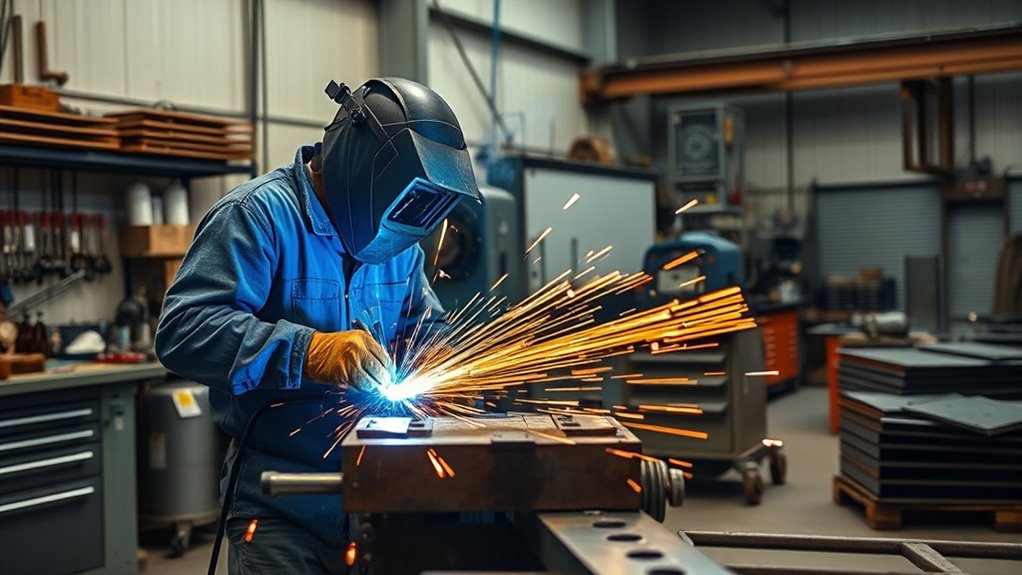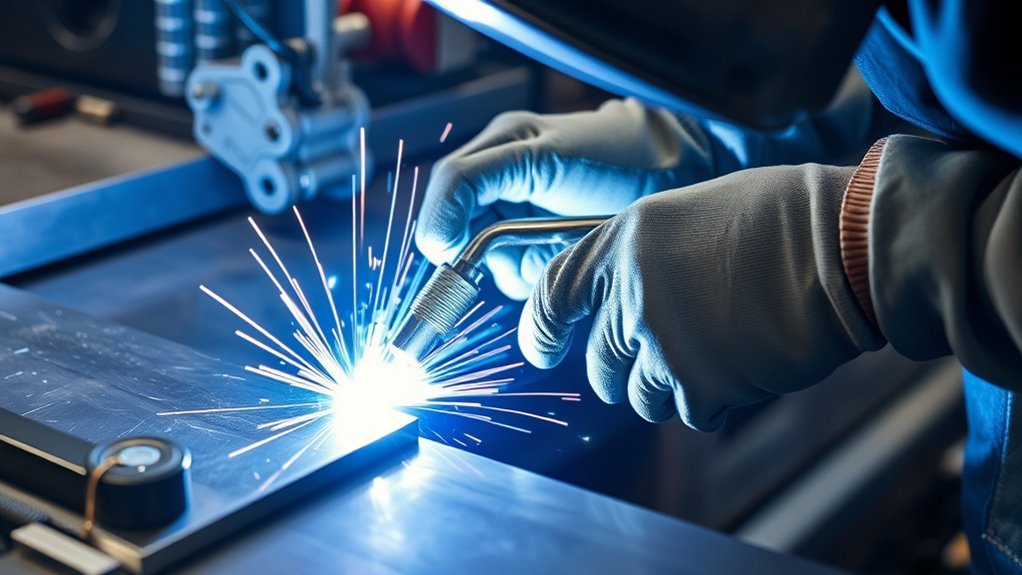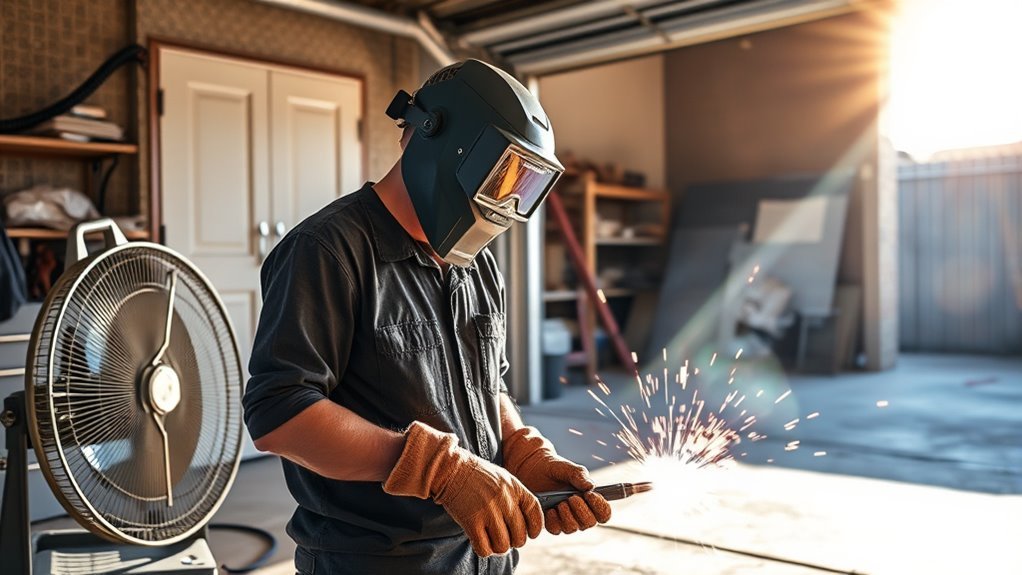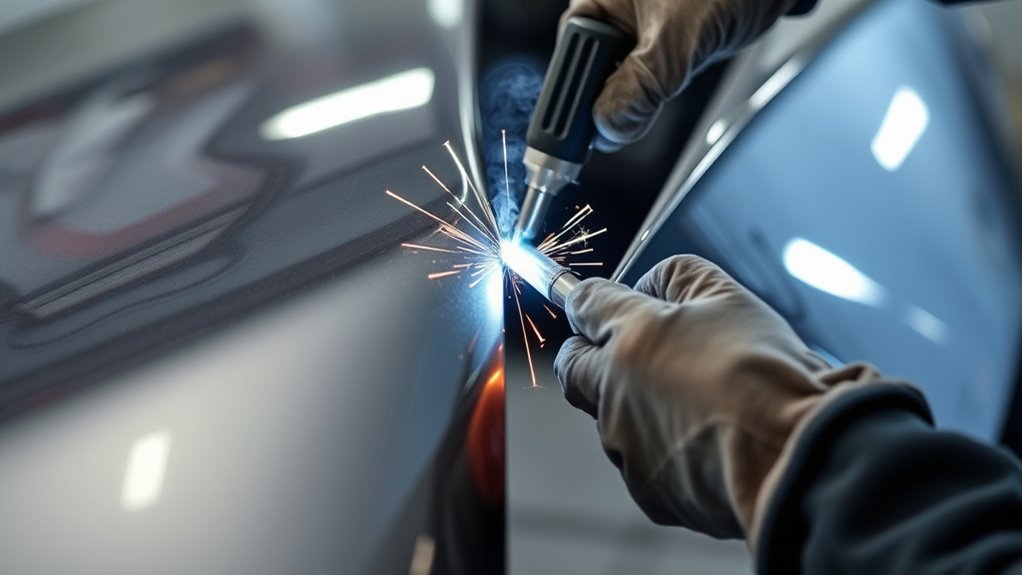
Butt welding an auto body patch can create a clean, flush repair, but thin sheet metal leaves little room for error. A wide gap, excessive heat, poor panel alignment, or missing corrosion protection can cause burn-through, warping, pinholes, and early rust. This guide explains how to confirm the repair is suitable, prepare the vehicle, fit the patch, control heat, finish the weld, and protect both sides of the panel.
Quick Answer
To butt weld a nonstructural steel auto body patch, trim the opening and patch for a tight, flush fit with almost no visible gap. Place tacks no more than about 1 inch apart, then connect them with brief, spaced pulses while moving around the panel. Let the metal cool, grind carefully, shape it, and restore corrosion protection.
Key Takeaways
- Check the OEM body repair procedure before cutting or welding any vehicle panel.
- Use this method only where butt welding is permitted; do not assume structural or high-strength parts can be sectioned.
- Fit light-gauge panel edges tightly and flush instead of leaving a universal 1/16-inch gap.
- Use small, spaced trigger welds and allow natural cooling to limit shrinkage and distortion.
- Grind only the weld, metal-finish the panel, and restore primer, seam sealer, and cavity protection on both sides.
At a Glance
| Time Required | About 3–8 hours for a small cosmetic patch, not including final paint curing |
| Difficulty | Intermediate to advanced; practice on matching scrap before working on the vehicle |
| Tools Needed | MIG or TIG welder, cutting and grinding tools, clamps, measuring tools, hammer and dolly, PPE, local fume extraction, and fire protection |
| Cost | Low to moderate for consumables if the tools are already available; substantially higher if a welder, extraction equipment, or formed replacement panel is needed |
Estimated total time: Plan on several hours for a small patch. Forming a curved panel, removing hidden rust, gaining backside access, correcting distortion, and preparing the area for paint can extend the job.
What’s in This Article
- Confirm the Panel and Repair Method
- Why Butt Welding Works for Some Auto Body Repairs
- Prepare the Vehicle and Workspace
- What You’ll Need Before You Begin
- MIG Welder Setup for Thin Auto Body Steel
- Cut and Fit the Patch Panel
- Tack and Trigger-Weld the Seam
- Control Heat, Shrinkage, and Panel Distortion
- Safety Tips for Welding on a Vehicle
- Troubleshoot Common Butt-Weld Problems
- Grind and Metal-Finish the Weld
- Restore Corrosion Protection
- Common Mistakes to Avoid
- Frequently Asked Questions
- Conclusion
- Sources
Confirm the Panel and Repair Method
Before cutting the vehicle, identify the panel, its material, and the approved repair method. A butt-welded patch is most suitable for a cosmetic, nonstructural mild-steel outer panel when the vehicle manufacturer permits sectioning or patching in that location.
Do not assume the same process is acceptable on a rocker reinforcement, pillar, frame rail, door-intrusion beam, hinge area, striker area, restraint anchor, suspension mounting point, crush zone, battery enclosure, or other safety-critical structure. These parts may use high-strength or ultra-high-strength steel that can lose important properties when heated.
Obtain the vehicle-specific body repair procedure before work begins. Current OEM guidance can specify the allowed cut location, welding process, filler strength, number and placement of welds, adhesive requirements, corrosion products, and components that must be removed.
For example, Acura’s September 2025 welding guidance permits MAG butt welding on specified steels up to 780 MPa but does not approve butt welding on its 980 or 1,500 MPa steel parts. Other manufacturers and models can have different limits.
Warning: Stop and obtain professional collision-repair help when the damage affects a structural panel, an airbag or seat-belt anchor, a hinge or striker area, a high-voltage component, or an OEM-prohibited sectioning location.
Why Butt Welding Works for Some Auto Body Repairs
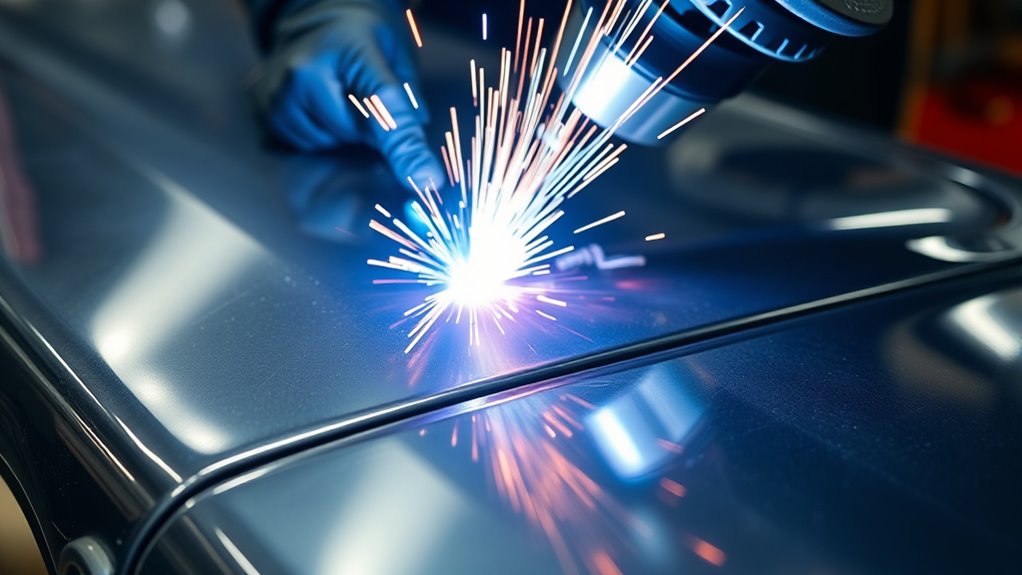
Butt welding places the patch and original panel edges on the same plane. When the repair is permitted and fitted correctly, this creates a flush seam that is easier to metal-finish than an overlapping patch.
A flush auto body repair begins at the panel edges: accurate fit-up controls the weld better than extra filler metal can.
An overlapping repair can leave a hidden pocket between two layers of steel. If that pocket is not protected and sealed, it can trap moisture. A properly protected butt joint removes that overlap, although both sides of the completed repair still need corrosion protection.
Keeping the metal at one thickness also makes hammer-and-dolly work more predictable. It can reduce the amount of plastic body filler needed because the metal work, rather than a thick filler layer, establishes the panel shape.
Miller’s auto body sheet-metal procedure likewise favors tight patch fitment and tack welds no more than about 1 inch apart.
Fillet-weld sizing rules do not apply to a flush sheet-metal butt joint. The objective is complete fusion appropriate to the repair without leaving a tall bead, overheating the surrounding panel, or changing the properties of a restricted high-strength component.
Prepare the Vehicle and Workspace
Use a clean, stable, dry, and well-lit work area. Remove paper, oily rags, solvents, paint supplies, fuel containers, grinding dust, and other combustibles before starting hot work.
Inspect both sides of the panel. Sparks and heat can reach upholstery, carpet, insulation, wiring, adhesive foam, seam sealer, sound deadener, glass, fuel lines, brake lines, refrigerant lines, and hidden body cavities. Remove vulnerable components where the OEM procedure requires it; otherwise, shield them with suitable fire-resistant protection and keep watching the opposite side.
Depower and Protect Vehicle Electronics
Follow the vehicle manufacturer’s battery, restraint-system, and welding instructions. Do not disconnect components by guesswork because some vehicles require a pre-repair scan, stored-code capture, anti-theft preparation, waiting periods, or relearn and calibration procedures after reconnection.
I-CAR’s welding precautions call for isolating both battery cables, removing the negative cable first, keeping the welding current path short, placing the work clamp close to the repair on the same panel, and routing welding cables away from computers, wiring, and sensors.
On a hybrid or electric vehicle, the 12-volt system is not the only concern. Follow the OEM high-voltage disabling procedure, observe the required wait time, and have only a properly trained technician handle the service disconnect or HV components. An HV battery remains dangerous internally even after the vehicle has been depowered.
Note: A welding ground clamp attached far from the repair can allow current to travel through bearings, wiring, modules, or other unintended paths. Attach it to clean metal as close to the weld as the repair procedure allows.
Prepare the Metal and Control Fumes
Remove paint, rust, oil, adhesive, undercoating, seam sealer, and other contamination from the heat-affected area on both sides. Clean to sound bare metal without removing more factory coating than necessary.
Do not weld or grind through an unknown coating. Older repairs may contain lead body solder or lead-bearing paint, while coated steel can release zinc and other hazardous fumes. Use local exhaust extraction positioned close enough to capture fumes without pulling away the shielding gas.
Wear the correct welding PPE, including a properly shaded helmet, safety glasses, flame-resistant clothing, welding gloves, hearing protection, and suitable footwear. Respirator selection requires hazard identification, correct cartridges or supplied air where needed, fit testing, and a complete respiratory-protection program; a disposable dust mask is not a universal welding-fume solution.
What You’ll Need Before You Begin
Gather the equipment before cutting the panel. Stopping halfway through fitment often leads to rushed trimming, poor alignment, or exposed bare steel.
- MIG welder capable of stable low-output short-circuit transfer, or a suitable TIG welder
- Vehicle-specific OEM body repair information
- Patch panel or sheet metal that matches the approved material and thickness
- Appropriate welding wire or TIG filler for the identified base metal
- Shielding gas required by the welding process
- Sheet-metal gauge, caliper, or micrometer
- Body saw, aviation snips, nibbler, or thin cutting disc suited to the cut
- Scriber, ruler, flexible straightedge, contour gauge, and marker
- Butt-weld clamps, panel clamps, magnets, or temporary alignment tabs
- Hammer and dolly set
- Die grinder, abrasive discs, and sanding blocks
- Local fume-extraction equipment
- Degreaser approved for refinishing work and clean lint-free towels
- Welding helmet, safety glasses, gloves, hearing protection, and flame-resistant clothing
- Fire-resistant blankets or shields and an appropriate fire extinguisher
- Approved epoxy primer, seam sealer, and cavity protection required by the repair procedure
Warning: Do not weld near fuel vapor, a leaking fuel system, an uncleared fuel tank, a pressurized refrigerant line, a pyrotechnic restraint device, or an energized high-voltage component.
Products Worth Considering

Value Pack: The package includes 24 packs of butt welding clamps, enough quantity to meet your daily needs and replacements. Each butt welding clamps is individually wrapped in a small bag, convenient to carry and use.

16-Pack Welding Clamps Set: Includes 16 butt welding clamps designed for precise edge-to-edge welding, ideal for body repair, floor patching, door skins, and sheet metal alignment.

Adaptability: Our butt welding clamps are suitable for both straight panels or curved panels. Maintains 0.40" gap between panels for edge-to-edge welding.They will work well in these 2 kinds of p
MIG Welder Setup for Thin Auto Body Steel
A MIG welder is commonly used for thin cosmetic steel panels because short trigger welds are easy to place around a long seam. TIG can offer precise control on clean metal, but it requires more skill and may not match an OEM-specified collision-repair process.
For ordinary light-gauge mild steel, Miller recommends using the smallest practical solid wire. Its current guidance lists 0.023- or 0.024-inch wire for most light-gauge sheet-metal work and a 75% argon/25% carbon-dioxide shielding-gas mixture. It notes that 0.030-inch wire may suit material that is 18 gauge or thicker.
| Setup Item | Common Starting Point for Light Mild Steel | Important Limit |
|---|---|---|
| Process | Short-circuit MIG with solid wire | Use the process required by the OEM procedure |
| Wire | 0.023 or 0.024-inch ER70S-6 for common mild-steel cosmetic panels | High-strength steel may require a higher-strength wire |
| Shielding gas | 75% argon/25% CO₂ | Set flow for the machine, gun, environment, and manufacturer guidance |
| Polarity | DCEP for typical solid MIG wire | Confirm the wire and machine instructions |
| Voltage and wire speed | Begin with the machine chart for the measured panel thickness | Fine-tune on matching scrap; do not copy settings from a different welder |
Flux-cored wire is generally harder to control on very thin cosmetic sheet metal because it puts more heat into the panel and creates slag that must be removed between welds. Use it only when the OEM procedure and the equipment manufacturer support that process for the repair.
Pro Tip: Make several practice joints using scrap from the removed panel or new metal of the same type and thickness. Adjust the machine until the tacks fuse both edges without a tall bead, heavy spatter, undercut, or burn-through.
Products Worth Considering
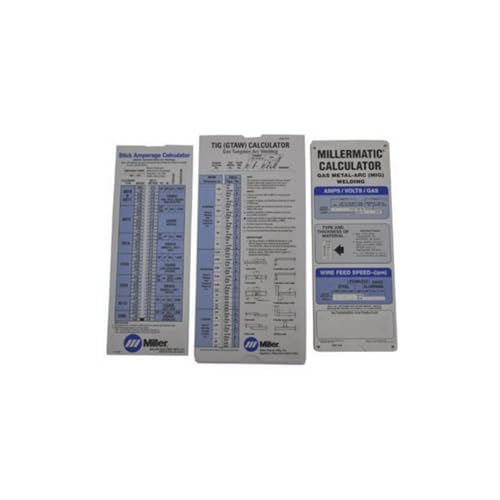
Comprehensive 3‑in‑1 reference pack covers MIG, TIG and Stick welding parameters—ideal for welders who work across multiple processes

Quality Aluminum Welding Plates:you will receive 20 pieces of rectangle aluminum welding plates, measuring about 2 x 4 inches/ 5 x 10 cm, and the thickness is about 1/8 inches/ 3 mm, which is the right size to meet your needs, and you can use them for precision laser cutting, welding TIG & MIG welding practice, training, testing and fabrication projects
Cut and Fit the Patch Panel
A clean weld starts with a clean fit. Remove all weak, cracked, heavily pitted, or perforated metal while preserving as much sound factory panel as the approved repair allows.
Match the Patch Material and Shape
Use approved sheet metal that matches the original panel’s material and thickness. A patch that is substantially thicker requires more heat and is harder to metal-finish. A thinner patch can burn through and may not provide the required strength.
Form the patch to match the original crown, flange, character line, and panel contour before final trimming. Do not expect clamps or weld shrinkage to pull a flat patch into a curved opening without distortion.
Cut the patch slightly oversized. Hold it against the repair area, mark the final edge with a scriber, then trim in small passes. Straight, smooth edges are easier to fit than a jagged cut made in one aggressive pass.
Set a Tight, Consistent Panel Gap
For common 20–24 gauge body steel, do not use 1/16 inch as a default gap. Miller warns that an opening that wide can invite burn-through on light sheet metal. Fit the two edges so they are nearly touching, with only enough consistent clearance to prevent the patch from binding as it is aligned and tacked.
Check the entire seam with a light behind it when possible. Correct every wide area before welding. A gap that changes from closed to wide forces you to change technique and filler deposition along the same seam.
Clamp the patch so its surface sits flush with the original panel. Check it with a straightedge, contour gauge, and your fingertips. Correct a high or low edge now rather than trying to grind or fill it later.
- Confirm the OEM-approved cut location and joining method.
- Clean both sides until the repair area is sound and visible.
- Mark the damaged section with a scriber or fine marker.
- Cut the old panel without damaging hidden reinforcements or components.
- Form the patch to the correct crown and body line.
- Trim the patch in small passes for tight, consistent fit-up.
- Clamp the patch with both panel surfaces flush.
- Recheck the gap, contour, body line, backside clearance, and work-clamp position.
Tack and Trigger-Weld the Seam
Begin with one tack at a stable reference point. Recheck the panel position, then place a tack on the opposite or most distant part of the seam. Continue dividing the open spaces rather than working in one direction.
Space the first round of tacks no more than about 1 inch apart. Keep each tack small and round, but make sure it fuses both panel edges. A tack sitting only on top of one edge will fail during planishing or grinding.
After the first tacks cool, check the contour and alignment again. Correct movement before adding more weld metal. Then place new tacks between the original ones while skipping around the panel.
On very thin outer panels, “stitch welding” usually means a series of brief trigger welds or overlapping tacks—not long one-inch beads. Join the existing tacks gradually until the seam is continuous, allowing each area to cool before returning to it.
Hold the MIG gun close to 90 degrees across the joint and use the travel angle recommended by the welder manufacturer. Keep a short, consistent contact-tip-to-work distance. A long wire stickout makes the arc less stable and can increase spatter.
Pro Tip: Number several widely separated points around the seam with a marker and follow that sequence. A planned skip pattern makes it easier to avoid concentrating heat in one corner.
Control Heat, Shrinkage, and Panel Distortion
Every weld contracts as it cools. On a long, thin panel, many small contractions can pull the seam inward and create a low area, ridge, wave, or oil-can effect.
Limit distortion by keeping each weld brief, moving to a distant section, and pausing before returning. The nearby panel should be cool enough to touch with a bare hand before you place another weld beside the previous one.
Let the metal cool naturally. Do not repeatedly quench a hot seam with water or a wet rag. Sudden, uneven cooling can add distortion, trap moisture, and conflict with material-specific repair instructions.
If both sides are accessible, lightly planish completed tacks with a suitable hammer and dolly after they have lost visible heat. Planishing stretches some of the shrinkage back out and keeps the two panel edges level. Use light, controlled blows; heavy hammering can stretch the surrounding sheet metal and create a larger problem.
A temporary copper spoon can support the puddle while repairing an isolated burn-through on an approved nonstructural steel panel. It does not correct poor fit-up, and it should not be treated as permission to weld an OEM-restricted structural part.
Safety Tips for Welding on a Vehicle
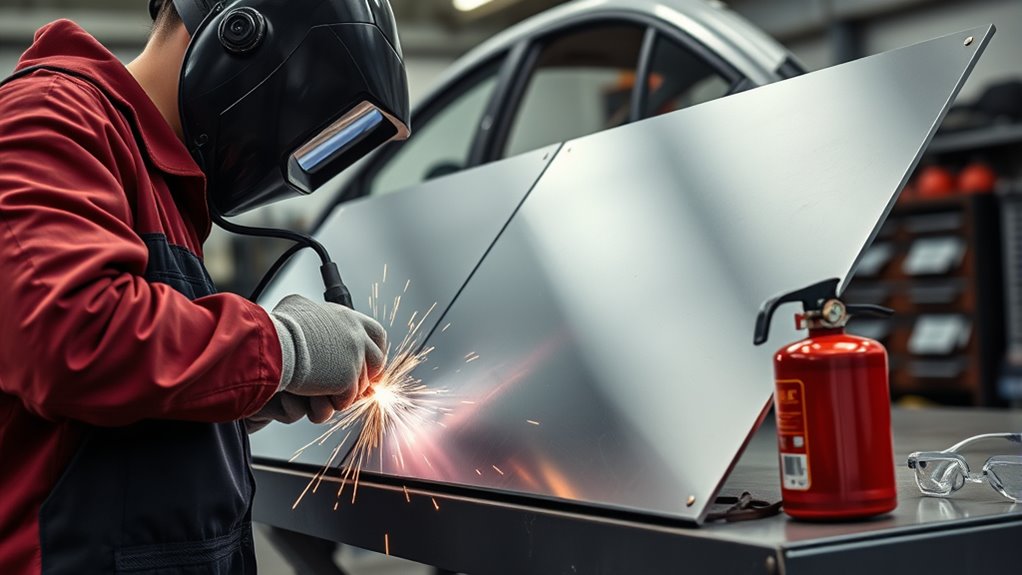
A smooth repair is never worth a fire, fume exposure, eye injury, electrical-system failure, or accidental airbag deployment.
- Wear a welding helmet with the correct shade, safety glasses under the helmet, flame-resistant clothing, welding gloves, hearing protection, and closed leather footwear.
- Use local exhaust ventilation near the arc and keep your head out of the fume plume.
- Remove or shield combustible material on both sides of the panel.
- Do not weld in the presence of fuel, solvent, refrigerant, battery-electrolyte, or other hazardous vapor.
- Protect glass, painted surfaces, wiring, hoses, and interior trim from sparks and grinding debris.
- Keep the work clamp close to the weld and follow OEM electrical and restraint-system procedures.
- Keep suitable fire-extinguishing equipment within immediate reach.
- Have another person watch the opposite side when sparks can enter an enclosed body cavity.
OSHA’s welding and cutting standard requires combustibles to be removed or protected and calls for a fire watch for at least half an hour after hot work where a fire watch is necessary.
Warning: Inspect the repair, its backside, adjacent cavities, the floor, and nearby trim for at least 30 minutes after the final weld or spark-producing grind. Smoldering insulation or seam sealer may not produce visible flames immediately.
NIOSH identifies welding fumes as a respiratory hazard. If the base metal, plating, coating, body solder, or previous repair material is unknown, stop until the hazard has been identified and controlled.
Troubleshoot Common Butt-Weld Problems
| Problem | Likely Causes | Correction |
|---|---|---|
| Burn-through | Gap too wide, excess voltage, slow trigger time, thin edge, or repeated welding in one area | Stop, let the panel cool, correct the fit if possible, reduce heat input, and rebuild the opening with brief tacks from sound edges |
| Porosity or popping | Paint, rust, sealer, oil, poor gas coverage, wind, nozzle blockage, or excessive gun distance | Remove the defective weld, clean both sides, inspect gas delivery, shield the work from drafts, and retest on scrap |
| Tall or rope-like bead | Insufficient fusion, too much wire for the voltage, long stickout, poor torch angle, or a gap filled with excess metal | Correct the fit and machine balance; do not rely on aggressive grinding to hide poor fusion |
| Pinholes after grinding | Incomplete seam, porosity, contaminated metal, or grinding before inspection | Clean each pinhole to sound metal and close it with one brief tack; do not cover it with filler |
| Low seam or warped panel | Heat concentrated in one area, poor initial contour, weld shrinkage, or excessive grinding | Stop welding, assess the panel, planish accessible shrinkage carefully, and avoid adding more heat until the shape is corrected |
| Edge mismatch | Patch moved, clamp released, panel crown is wrong, or early tacks pulled the seam | Correct alignment before completing the seam; cut out and redo a badly offset section rather than burying it in filler |
Grind and Metal-Finish the Weld
Inspect the completed seam before grinding. Check for missed sections, cracks, pinholes, porosity, lack of fusion, and backside problems. Repair defects while the weld bead is still easy to identify.
Reduce only the raised weld. Keep the abrasive moving and stop frequently to check temperature and panel thickness. Grinding the surrounding sheet metal can weaken the repair and create a low trench along the seam.
The correct tool angle depends on the abrasive design. Flat Type 27 flap discs commonly work at a shallow 0–15-degree angle, while conical Type 29 flap discs commonly use approximately 15–25 degrees. Follow the disc manufacturer’s instructions rather than holding every abrasive at 30–45 degrees.
| Stage | Typical Tool or Abrasive | Goal |
|---|---|---|
| Initial weld reduction | Small carbide burr or controlled 36–50-grit abrasive used only on the bead | Lower the proud weld without touching the surrounding panel |
| Blending | 60–80-grit disc or flap disc appropriate to the tool | Bring the remaining weld nearly flush with light pressure |
| Metal finishing | Hammer and dolly, body file, straightedge, and sanding block | Correct minor highs and lows while preserving panel thickness |
| Final preparation | 80–120-grit abrasive or the grit required by the refinishing system | Create the surface profile required for primer or filler |
Use a hammer and dolly to correct small highs and lows after the bead is reduced enough to reveal the panel shape. Do not continue grinding simply because the seam is low; the low area may be weld shrinkage that requires metal finishing.
A thin skim of body filler can refine the final surface after the weld is sound and the panel is shaped. Filler must not be used to conceal pinholes, unfused welds, active rust, sharp misalignment, or a structurally improper repair.
Restore Corrosion Protection
Welding, cutting, and grinding remove factory e-coat, zinc protection, primer, seam sealer, and cavity wax. A repair is not complete until those protections have been restored according to the OEM and refinishing-product instructions.
- Clean the metal and remove grinding dust, residue, and contamination.
- Inspect the seam under strong light for pinholes and missed areas.
- Apply an approved epoxy primer to exposed steel on the front and accessible backside.
- Restore seam sealer only in the original or OEM-specified locations and over the substrate approved by the sealer manufacturer.
- Refinish the visible side with the compatible primer, surfacer, basecoat, and clearcoat system.
- Apply cavity protection to enclosed backside areas after the paint system has cured, where the OEM procedure requires it.
Do not automatically spray weld-through primer into an open butt seam. Some OEMs, including Acura, specifically state that weld-through primer should not be used for MAG butt welding because it can reduce joint quality. Keep the edges clean for welding, then protect exposed metal after the weld is completed.
3M’s collision-repair corrosion guidance covers restoration of primer, seam sealing, and cavity protection after cutting, welding, and grinding remove factory coatings.
Common Mistakes to Avoid
- Do not begin without checking the vehicle-specific OEM repair procedure.
- Do not butt weld a structural, high-strength, or mixed-material panel simply because the replacement patch fits.
- Do not use a 1/16-inch gap as a universal target for light-gauge outer panels.
- Do not force a flat patch into a crowned opening and expect welding to create the correct shape.
- Do not weld over paint, rust, oil, adhesive, seam sealer, undercoating, or weld-through primer unless the approved procedure calls for it.
- Do not use long continuous beads on thin auto body sheet metal.
- Do not weld repeatedly in one area while the panel remains hot.
- Do not quench the panel with water to hurry the job.
- Do not place the work clamp far from the repair or across sensitive electrical components.
- Do not grind deeply into the surrounding base metal.
- Do not hide pinholes, poor fusion, heavy distortion, or remaining rust under body filler.
- Do not leave the backside of the repair unprimed or unprotected.
- Do not leave the vehicle unattended immediately after welding or grinding.
Note: Hidden rust often extends beyond the first visible hole. Continue trimming until the remaining edge is solid enough to clean, fit, weld, grind, and protect.
Frequently Asked Questions
What type of welding machine is best for auto body panels?
A MIG welder with stable low-output short-circuit transfer is often the most practical choice for thin cosmetic steel panels. TIG can provide precise control on clean metal, but the correct process is the one allowed by the vehicle’s OEM repair procedure. Practice on matching scrap before welding the vehicle.
Should auto body panels have a 1/16-inch butt-weld gap?
Not as a universal rule. On common 20–24 gauge steel, a 1/16-inch opening can be large enough to promote burn-through. Fit the edges tightly, flush, and consistently, with little or no visible gap, then verify the fit and welder settings on metal of the same type and thickness.
What welding wire size works for thin auto body steel?
For ordinary light-gauge mild steel, 0.023- or 0.024-inch ER70S-6 solid wire is a common starting point. A 0.030-inch wire may suit 18-gauge or thicker steel. High-strength components can require stronger filler wire, so follow the OEM procedure rather than choosing wire by diameter alone.
How can I prevent rust after welding?
Clean and inspect the completed weld, epoxy-prime exposed metal on both sides, restore seam sealer where required, apply the compatible paint system, and replace cavity protection in enclosed areas. Do not rely on body filler or topcoat alone to seal the backside of the repair.
Can I butt weld aluminum panels the same way as steel?
No. Aluminum requires different cleaning, filler, shielding gas, equipment, heat control, and contamination prevention. Many modern aluminum repairs also use rivets and structural adhesive instead of a welded patch. Follow the vehicle-specific procedure and use an aluminum-qualified repair area and technician.
How do I know if my welds are strong enough?
First verify the repair method, base metal, filler, and weld location against the OEM procedure. Inspect for complete fusion, cracks, porosity, pinholes, undercut, and excessive grinding. Prove the settings on matching scrap before starting. Structural or safety-critical welds require qualified collision-repair inspection rather than appearance alone.
Should I use body filler over a butt weld?
A thin skim coat can refine a sound, properly shaped repair after the weld is ground and the corrosion-protection system permits filler at that stage. Do not use filler to hide unfused metal, pinholes, active rust, a wide unsupported gap, or severe panel distortion.
Can I butt weld a rocker panel, pillar, or frame section?
Only when the vehicle manufacturer’s body repair procedure specifically permits sectioning at that location and specifies the joining method. Rockers, pillars, rails, hinge areas, striker areas, and restraint anchors often contain multiple layers or high-strength steels. An improvised patch can change crash performance.
Safety Disclaimer: This article is for informational purposes only and does not replace hands-on training, OEM repair information, workplace safety requirements, or professional collision-repair advice. Welding can cause burns, fire, eye injury, hazardous fume exposure, electrical damage, accidental restraint deployment, high-voltage shock, and changes to vehicle crash performance.
Conclusion
A clean butt weld starts with the repair plan and panel fit, not the arc. Confirm that the panel and sectioning location can be welded, identify the material, protect the vehicle, shape the patch correctly, and make the edges tight and flush.
Build the seam with widely spaced tacks and brief trigger welds while the panel cools naturally. After welding, inspect before grinding, metal-finish without thinning the panel, and restore corrosion protection on both sides. When the repair affects structure, restraints, high-voltage components, or an OEM-restricted material, hand the work to a qualified collision-repair professional.
Sources
- Miller — Successfully Welding Sheet Metal with MIG and TIG — wire diameter, shielding gas, fit-up, polarity, and thin-sheet heat control
- I-CAR — Battery Disconnect and Welding Precautions — battery isolation, work-clamp placement, electronics, restraints, and high-voltage precautions
- OSHA 29 CFR 1910.252 — welding PPE, combustible protection, hot-work safety, and post-weld fire watch
- NIOSH — Welding Fumes and Manganese — welding-fume health hazards and exposure concerns
- Acura — Body Repair Manual Welding and Sectioning Guideline Revisions — steel-strength limits, approved processes, filler requirements, and primer guidance
- 3M Collision Repair — Corrosion Protection Resources — restoring primer, seam sealer, and cavity protection after welding