After welding an auto body seam, lasting rust prevention depends on more than covering the joint. Repair every weld defect, remove corrosion and contamination, dry the seam, and restore the coating system specified by the vehicle maker. Then seal the overlap, refinish the exposed side, and protect hidden backsides without blocking factory drain paths.
Quick Answer
To prevent rust under seam sealer after welding, repair weld pinholes, remove corrosion and residue, dry the joint, and follow the vehicle maker and product data sheets. Apply the approved primer or direct-to-metal sealer, seal the overlap continuously, topcoat within the stated window, then protect hidden backsides with cavity wax.
Key Takeaways
- Repair cracks, porosity, missed edges, and weld pinholes before applying primer or seam sealer.
- Follow the vehicle-specific body repair manual first; approved primers, sealers, welding methods, and layer order vary by vehicle and product.
- Seam sealer must bond to a clean, dry, approved substrate and form a continuous barrier across the joint.
- Weld-through primer belongs only on approved mating surfaces before welding and may need to be removed from the direct weld zone.
- Paint protects the exposed side, while cavity wax restores protection inside hidden seams and welded panel cavities.
At a Glance
| Time Required | Often 1 to 4 hours of hands-on work for a small accessible seam, plus product-specific primer, sealer, paint, and cavity-wax flash or cure time |
| Difficulty | Moderate; preparation is straightforward, but weld quality, OEM procedures, and coating compatibility are critical |
| Tools Needed | Wire brush, wire wheel or abrasive pad, suitable grinder, scraper, masking tape, clean dry air, approved surface cleaner, lint-free wipes, primer, automotive seam sealer, applicator gun or brush, paint, cavity wax, inspection light, and PPE |
| Cost | Varies by repair size and product system; $30 to $150 in materials is only a rough range for a small accessible repair, not structural panel work |
Warning: Before welding, cutting, or grinding, inspect both sides of the panel for fuel lines, fuel vapors, brake lines, wiring, modules, airbag parts, batteries, high-voltage cables, acoustic foam, old cavity wax, undercoat, and seam sealer. Follow the vehicle maker’s 12-volt disconnect and high-voltage disable procedures, remove or shield combustibles, ventilate the area, wear suitable welding and grinding PPE, keep an appropriate extinguisher nearby, and maintain a fire watch. Follow OSHA hot-work requirements and the vehicle-specific body repair manual.
What Causes Rust Under Seam Sealer?
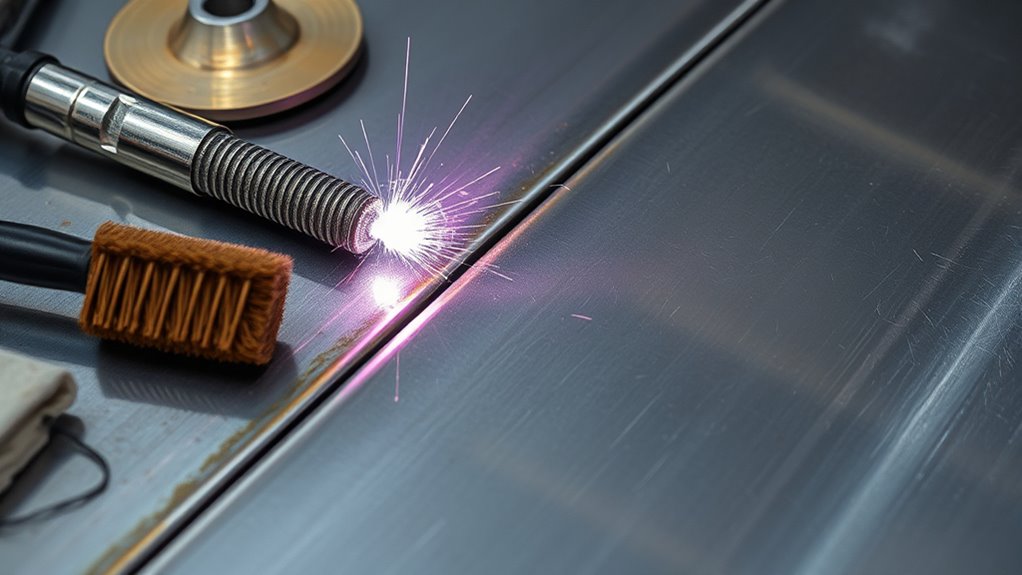
Rust forms under seam sealer when moisture, oxygen, road salt, or other contamination reaches exposed steel and remains trapped at the joint. Seam sealer is a flexible barrier. It does not neutralize active corrosion, strengthen a weak weld, or make damp metal safe to coat.
Seam sealer prevents water intrusion only when it is bonded to a sound, clean, dry, and approved surface.
Corrosion can begin beneath the bead when the surface contains rust, weld scale, soot, oil, wax, grinding dust, cleaning residue, or trapped solvent. The same failure can occur when the sealer is too thin, skips the edge of a lap joint, bridges over a deep scratch, or separates from an incompatible primer.
Rust is porous and mechanically weak. If sealer is applied over corrosion, the bead bonds to the rust instead of stable steel or an approved coating. Moisture can then travel beneath a lifting edge and continue attacking the panel out of sight.
Bare steel can also remain exposed around plug welds, scratches, pinholes, flange edges, and the hidden backside of the repair. These vulnerable areas are common in floors, rocker panels, wheel tubs, trunk seams, doglegs, lower quarter panels, and other locations exposed to condensation or road spray.
Galvanized panels require added care. Remove coatings only where the welding procedure requires it, control heat, and provide effective fume extraction. This guide on removing zinc coating from galvanized steel explains why coating preparation and zinc-fume control matter before welding.
Check the OEM Repair Procedure First
Before choosing a primer or seam sealer, identify the vehicle, panel material, joint design, and approved attachment method. The body repair manual may specify the welding process, flange preparation, approved corrosion products, seam-sealer location, bead shape, backside treatment, and areas where cavity wax or undercoating must be restored.
This step is especially important on structural panels and on high-strength or ultra-high-strength steel. Heat, sectioning, and welding rules can change with the steel grade and vehicle design. If the procedure does not authorize a repair method, do not assume that a general sheet-metal technique is acceptable.
Note: There is no universal rule that every seam sealer goes over bare steel or that every repair uses epoxy primer first. For example, some direct-to-metal products are tested for bare steel, while some vehicle makers require cured epoxy or another specified coating. Follow the vehicle procedure, paint-system instructions, and current seam-sealer technical data sheet as one compatible system.
If the panel is deeply pitted, perforated, stretched, cracked, or structurally weakened, coating it will not restore its strength. Remove and replace weak metal or use the vehicle maker’s approved repair procedure. For nonstructural sheet-metal damage with perforation, review how to repair rusted metal with holes before sealing the seam.
Prep Welded Seams Before Sealing
A seam sealer bead can protect only a joint that is already sound. Inspect, repair, clean, dry, and coat the welded seam in the order required by the approved repair system.
Inspect and Repair Weld Defects
Use a bright inspection light and examine the complete joint, including the backside where access permits. Look for cracks, porosity, missed edges, undercut, incomplete plug welds, sharp projections, burn-through, and pinholes.
Do not fill a weld pinhole with seam sealer. Correct the weld defect using the approved process, allow the panel to cool, dress it only as much as necessary, and inspect it again. Seam sealer is a corrosion and water barrier, not a substitute for sound fusion or adequate weld placement.
Avoid aggressive grinding on thin sheet metal. Level only high spots that interfere with coating or factory appearance. Excessive grinding can thin the panel, remove surrounding e-coat, overheat the steel, or expose new pinholes.
Clean Welds Thoroughly
Remove loose scale, weld soot, slag, adhesive residue, burned coating, dust, oil, wax, and other contamination with a wire brush, wire wheel, abrasive pad, or suitable grinder. Select an abrasive that cleans the joint without gouging or thinning the panel.
Blow debris from the seam with clean, dry air where shop rules permit. Then wipe the area with the cleaner approved by the paint or seam-sealer manufacturer. Use clean lint-free wipes and replace them rather than spreading residue across the repair.
Allow the cleaner to flash completely. A lap joint may feel dry at the surface while holding solvent deeper in the overlap. Give enclosed edges and plug-weld depressions enough time to release vapor before applying primer or sealer.
These same contamination-control principles apply when preparing mild steel for other welding work. See the guide to cleaning mild steel for welding for additional surface-preparation basics.
Remove Rust and Coatings
Remove corrosion to clean, stable metal wherever the repair procedure allows. A wire wheel or abrasive may be enough for light surface rust. Deeper pitting may require controlled blasting, additional metal removal, joint disassembly, or panel replacement.
Work along the entire seam edge, including corners, plug-weld areas, flange transitions, and nearby scratches. Check for old paint, undercoat, body-filler dust, adhesive, and oily residue that could weaken the next layer.
Do not leave a rust converter, phosphoric-acid residue, or metal conditioner under the repair system unless the vehicle maker, paint manufacturer, primer manufacturer, and seam-sealer instructions allow that exact combination. An extra chemical layer can create an untested bonding surface.
Prime Before Seam Sealing
Once the seam is sound, clean, and dry, apply the substrate treatment required by the repair system. This may be a cured two-component epoxy or urethane primer, intact OEM e-coat, scuffed cured paint, or a direct-to-metal seam sealer specifically approved for the exposed metal.
3M’s collision-repair seam-sealer guidance generally favors a quality two-component primer or OEM e-coat, while recognizing that tested direct-to-metal sealers are available. Honda’s corrosion-protection guidance, by contrast, requires approved seam sealers to be applied over specified cured coatings rather than bare metal. This is why the vehicle and product instructions must control the repair.
Note: Do not assume an acid-etch or self-etch primer is compatible with seam sealer. Acidic primer chemistry can interfere with adhesion for some products. Use only the primer and sealer combination approved by the relevant technical data sheets.
| Step 1 | Confirm the OEM welding, corrosion-protection, and refinishing procedure for the exact vehicle and panel. |
| Step 2 | Inspect and repair cracks, porosity, pinholes, incomplete welds, and weak metal. |
| Step 3 | Remove rust, soot, damaged coating, oil, wax, dust, and cleaning residue; then dry the joint fully. |
| Step 4 | Apply the specified primer, restore the approved coating, or use a direct-to-metal sealer only when expressly permitted. |
| Step 5 | Apply and tool a continuous bead, then refinish and add backside cavity protection at the stages specified by the system. |
Remove Rust From Overlapping Joints
Overlapping joints are difficult to protect because water can travel between two panels and remain beyond the reach of surface cleaning. Before assembly, clean and prepare the mating flanges as directed, preserve usable factory e-coat where possible, and apply only the approved pre-weld corrosion material.
After welding, concentrate on exposed flange edges, plug welds, damaged coating, and backside access points. Seam sealer protects the accessible edge of the overlap. Cavity wax or another approved internal coating protects areas hidden inside the joint.
Clean Joints Thoroughly
- Remove loose rust, coating, grease, oil, wax, and adhesive residue from the mating and exposed surfaces.
- Use controlled sanding or localized blasting where access and the repair procedure permit it.
- Clean the edge that the seam sealer must bridge, including corners and plug-weld transitions.
- Repair suspicious welds and replace metal that remains thin, perforated, or unstable.
- Dry the overlap completely before adding primer or sealer.
A rust-inhibiting primer can improve protection only when it is an approved part of the complete coating stack. Do not mix unrelated products based solely on their individual corrosion claims.
Seal After Rust Removal
Apply a continuous bead that covers the exposed edge of the overlap and ties into the surrounding approved coating. Tool the material into corners, flange steps, and plug-weld transitions instead of letting it sit above the joint as a decorative ridge.
Keep factory drain holes and intended water paths open. Seam sealer should stop water from entering a joint, not trap water inside a rocker panel, door, quarter panel, or floor cavity.
Topcoat paintable sealer within the manufacturer’s approved window. After welding and refinishing are complete, apply cavity wax to the hidden side where the OEM procedure requires it. Inspect the repaired seam during service and correct cracking, lifting, rust bleed, or water intrusion before corrosion spreads.
Choose the Right Weld-Through Primer
Weld-through primer is a pre-weld corrosion coating for approved mating surfaces that will become inaccessible after assembly. It is not a universal replacement for epoxy primer, paint, seam sealer, panel adhesive, or cavity wax.
Use only the composition and application method specified by the vehicle maker. Many procedures call for a zinc-rich coating, but requirements differ by OEM, metal type, attachment method, and joint design. Some procedures permit weld-through primer for squeeze-type resistance spot welding while restricting or prohibiting it for MAG plug welding, butt welding, MIG brazing, or weld-bonded flanges.
The 3M Weld Thru II technical data sheet instructs users to prepare a representative test weld and remove the coating from a MIG/MAG plug-weld site before welding. It also states that the material is not a finish primer or paint, so exterior overspray must be removed before the next coating operation.
- Confirm that weld-through primer is authorized for the vehicle, metal, joint, and welding process.
- Clean the mating flanges to the condition required by the repair procedure.
- Apply the specified number of light coats and allow the stated flash and drying time.
- Remove coating from the direct weld area when the OEM or product instructions require it.
- Make and destructively test a representative practice weld when required before welding the vehicle.
- After welding and dressing, remove residue and restore the specified exterior corrosion-protection layers.
Pick the Right Seam Sealer for the Joint
Choose an automotive collision-repair seam sealer that matches the substrate, joint orientation, factory function, refinishing system, and required appearance. Household caulk is not an appropriate substitute because it is not validated for the vehicle’s coating system, vibration, temperature cycling, water exposure, or refinishing requirements.
Common seam-sealer forms include:
- Brushable sealer: Useful for broad, textured factory-style coverage on floors, trunks, aprons, and wheelhouses.
- Controlled-flow or non-sag cartridge sealer: Suitable for shaped beads on vertical joints, flanges, and panel overlaps.
- Self-leveling sealer: Useful on approved horizontal seams but likely to flow or sag on vertical surfaces.
- Direct-to-metal sealer: Acceptable only when the product and vehicle procedure approve the exact metal and preparation method.
- Primed-substrate sealer: Applied over the specified cured primer, OEM e-coat, or prepared paint layer.
Check these items before opening the cartridge:
- Approved substrate: Bare steel, galvanized steel, aluminum, epoxy primer, urethane primer, OEM e-coat, or scuffed paint.
- Working and tooling time: How long the material remains shapeable.
- Bead thickness and joint type: Whether the product can bridge the seam without sagging or cracking.
- Paint window: When refinishing may begin and whether late painting requires scuffing.
- Full cure and water exposure: When the repair can be handled, washed, driven in rain, or exposed to road spray.
- Temperature and humidity limits: The conditions required for correct mixing, curing, and adhesion.
Apply Seam Sealer Correctly
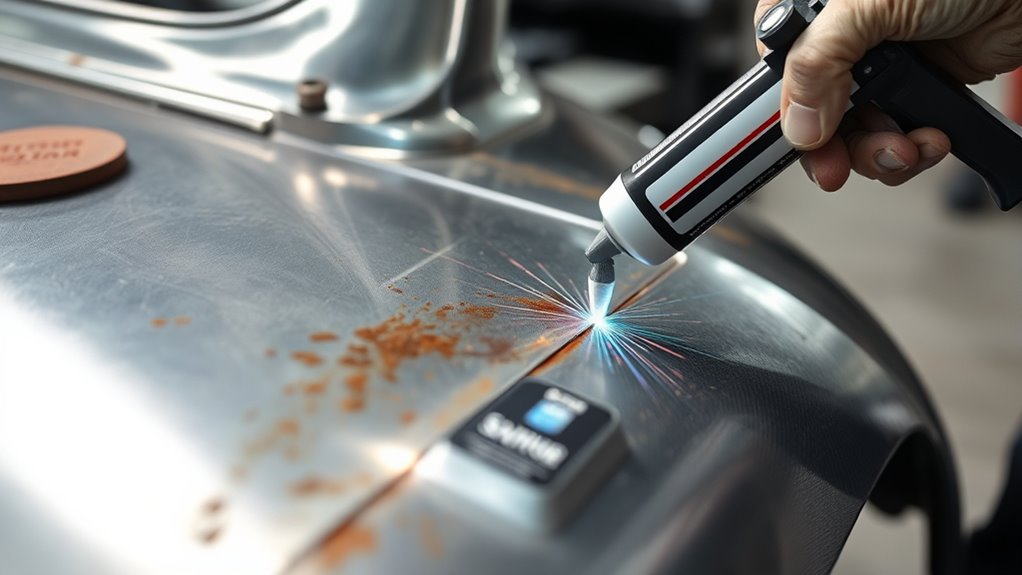
Apply seam sealer only after the weld is cool, sound, clean, dry, and prepared to the substrate condition specified by the product and vehicle maker. Keep wax, silicone, oil, and unapproved tooling solvents away from the bonding area.
- Plan the bead. Compare the repaired area with the factory seam or body repair manual and identify every edge that must be sealed.
- Mask the borders. Place tape around the joint if a clean factory-style edge is required.
- Prepare the cartridge. For two-part products, equalize both components and discard the initial mixed material as directed.
- Apply enough material. Bridge the seam and cover the lap edge without leaving a thin translucent film.
- Tool the bead. Press the sealer into scratches, corners, flange steps, and weld transitions so it contacts the substrate instead of bridging over it.
- Inspect immediately. Correct skips, air pockets, pinholes in the sealer, feathered gaps, and uncovered edges while the product remains workable.
- Remove masking tape. Pull the tape at the stage recommended for the product, usually while the edge can still release cleanly.
- Follow the next-stage window. Refinish, handle, or expose the repair to water only when the relevant technical data sheet permits it.
Pro Tip: Shine an inspection light across the bead at a low angle. Shadows make skipped edges, trapped air, thin spots, and poorly tooled transitions easier to see before the sealer skins over.
Surface cleanliness also affects weld porosity and coating adhesion across many processes. The preparation issues discussed in the article on welding aluminum with flux core concern a different material and process, but they reinforce the need to remove contamination before welding or coating.
Follow Flash, Cure, and Paint Windows
Do not treat “dry,” “paintable,” and “fully cured” as the same condition. A product may have separate specifications for primer flash, sealer working time, tooling time, paint time, sanding time, handling strength, full cure, and water exposure.
Temperature and humidity can change these intervals. Cold panels usually slow curing, while excessive heat may shorten working time. Two-part products also depend on correct mixing and an unobstructed mixing nozzle.
Read the current technical data sheets before starting so the next step is ready when its window opens. If the paint window is missed, the instructions may require cleaning and scuffing before refinishing. Do not guess or copy the timing from another brand or seam-sealer chemistry.
Protect Welds With Paint and Wax
Seam sealer closes the joint, but it is only one part of the corrosion-control system. The exposed repair may also require primer, basecoat, clearcoat, chip guard, undercoat, or another factory-matched finish. Restore each layer in the location and thickness specified by the vehicle and paint maker.
A typical sequence is:
- Complete and inspect the approved weld.
- Remove corrosion, soot, damaged coating, and contamination.
- Apply the specified primer or approved direct-to-metal seam sealer system.
- Apply and tool the seam sealer.
- Refinish the exposed repair within the product’s approved paint window.
- Apply undercoat or chip protection where the OEM procedure calls for it.
- Apply cavity wax inside welded panels and inaccessible backside seams after welding and refinishing are complete.
This is a general framework, not a substitute for the repair manual. Some seam sealers are applied before refinishing, while others may be applied over a prepared finish. Follow the specified product stack from bare substrate to final protection.
The 3M Cavity Wax Plus technical data sheet describes cavity wax as a non-hardening coating for internal body panels and structural members and directs application after welding and paint work. Honda also calls for rust-preventive treatment inside welded panel cavities and on inaccessible repaired backsides.
Use the correct wand to reach rocker panels, lower quarter panels, doglegs, door hems, trunk drops, wheel arches, frame rails, and floor seams. Withdraw the wand slowly to coat the cavity evenly. Do not spray near an ignition source, moving component, exhaust part, sensor, electrical connector, or surface that still needs adhesive, primer, paint, or seam sealer.
Keep drain slots and designed water exits open. Where practical, inspect internal coverage with a light, mirror, or borescope before trim is reinstalled.
Maintain strong ventilation while welding, grinding, priming, painting, and applying cavity coatings. The site’s ventilation equipment information and plasma cutter safety and PPE checklist cover related hot-work protection habits.
Fix Failed Seam Sealer Before Rust Spreads
Inspect repaired seams for cracks, gaps, rust stains, pinholes in the coating, soft areas, bubbles, or lifting edges. A small opening can let water move beneath the bead and into the panel overlap.
When failure appears, remove the affected sealer far enough to reach material that remains firmly bonded. Do not smear fresh sealer over cracked sealer, rust, cavity wax, or contaminated paint.
- Identify where the water is entering; the visible rust stain may be below the actual leak.
- Remove the failed coating and inspect the metal and weld.
- Repair weld defects and replace weak or perforated metal.
- Remove corrosion and clean the joint to the approved condition.
- Restore primer and seam sealer using compatible products.
- Refinish the repair and restore backside cavity protection.
- Check nearby seams, drain paths, and higher leak points before closing the panel.
If rust repeatedly returns at the same location, inspect the hidden side. The joint may contain inaccessible corrosion, missing cavity wax, a blocked drain, or water entering from another seam.
Do not transfer repair practices from thick cast components to thin automotive sheet metal. For example, the heat-control issues in welding cast iron with flux core are different from the low-heat, vehicle-specific welding and corrosion-restoration procedures required for body panels.
Common Mistakes That Let Rust Return
- Covering a weld defect: Seam sealer cannot repair porosity, incomplete fusion, cracks, or pinholes in the metal.
- Ignoring the repair manual: Generic advice may conflict with the vehicle’s steel, welding, primer, or sealer requirements.
- Sealing over contamination: Rust, oil, wax, silicone, dust, soot, and trapped cleaner can weaken adhesion.
- Using an unapproved primer stack: Acid-etch primer, rust converter, or unrelated corrosion products may create an incompatible interface.
- Using weld-through primer everywhere: Some welding processes require it to be omitted or removed from the direct weld zone.
- Applying too little sealer: A thin bead may skip the lap edge or leave a water path.
- Blocking a drain: Sealer or wax can trap water inside a panel if factory drain paths are covered.
- Missing the paint window: Painting too early or too late can cause solvent trapping or poor adhesion.
- Skipping backside protection: A sealed exterior edge can still rust from an unprotected inner flange.
- Over-grinding: Excessive dressing removes protective coating, thins sheet metal, and may expose new defects.
- Using household caulk: It is not a validated substitute for automotive collision-repair seam sealer.
- Ignoring hidden fire hazards: Old wax, foam, undercoat, wiring, or insulation can ignite behind the panel.
Troubleshooting Rust or Lifting Under Seam Sealer
| Problem | Likely Cause and Fix |
| Rust bleeding at the edge | Rust, moisture, or an unsealed backside is beneath the bead. Remove the failed material, inspect the weld, clean to sound metal, restore the coating stack, reseal, and check the hidden side and drain paths. |
| Sealer lifts from the primer | The primer may be glossy, contaminated, under-cured, acidic, or incompatible. Strip the failed area and rebuild it with the approved primer and sealer system. |
| Sealer lifts from bare metal | The product may not be approved for direct-to-metal use, or the steel may contain rust, dust, oil, or deep scratches that were bridged instead of tooled. Remove and repeat the manufacturer’s preparation method. |
| Cracks in the bead | The product may be too rigid, too thin, aged, incorrectly mixed, or unsuitable for the joint movement. Remove it and use the specified flexible automotive seam sealer at the required thickness. |
| Soft or gummy sealer | The material may be under-cured, expired, incorrectly mixed, too cold, or reacting with cleaner or paint solvent. Remove it and reapply fresh material under the specified conditions. |
| Bubbles or blisters after painting | Solvent, moisture, trapped air, excessive film thickness, or an incorrect paint window may be involved. Remove the failed layers and follow the flash, tooling, and refinishing instructions. |
| Rust returns from inside the panel | Backside coating may be missing, the overlap may contain corrosion, or water may be trapped by a blocked drain. Inspect with a mirror or borescope, restore internal protection, and correct the water path. |
Frequently Asked Questions
How do you prevent rust after welding?
Inspect and repair the weld, remove corrosion and residue, dry the joint, restore the vehicle maker’s approved primer or coating, seal the seam continuously, refinish the exposed side, and apply cavity wax or another approved corrosion coating to hidden backsides.
Will seam sealer prevent rust?
Seam sealer helps prevent rust by blocking water and air from a properly prepared joint. It will not stop corrosion already present under the bead, repair a weld defect, or protect an uncoated backside by itself.
Can seam sealer fill weld pinholes?
No. Repair weld pinholes, cracks, porosity, and incomplete welds before coating the joint. Seam sealer is a flexible environmental barrier, not a substitute for sound welded metal.
What anti-rust spray should you use after welding?
Use the corrosion primer, topcoat, and internal cavity coating approved by the vehicle maker and paint system. Weld-through primer is mainly a pre-weld flange treatment and is not a replacement for finish primer, paint, seam sealer, or cavity wax.
Can you weld through seam sealer?
Do not weld through ordinary cured seam sealer. It can burn, create hazardous fumes, contaminate the weld, and contribute to porosity or poor fusion. Only use a weldable material when the OEM procedure and product instructions expressly approve it for that joint and welding process.
Should seam sealer go over bare metal or primer?
It depends on the vehicle and product. Some sealers are tested for properly prepared bare metal, while other systems require cured epoxy primer, urethane primer, OEM e-coat, or scuffed paint. Follow the body repair manual and the current primer and sealer technical data sheets.
Can you put seam sealer over rust converter?
Only when the complete coating system expressly approves it. Otherwise, remove corrosion to sound metal and use the specified substrate treatment. Rust converter or acid residue can create an untested layer between the steel, primer, and seam sealer.
How long should seam sealer dry before painting?
Use the paint time in the specific product data sheet. Paint time may be shorter than full cure time, and temperature can change both. If the maximum paint window has passed, the instructions may require cleaning and scuffing before refinishing.
Do you apply cavity wax before or after seam sealer?
Cavity wax is normally applied near the end of the repair, after welding, seam sealing, and refinishing are complete. Applying wax too early can contaminate surfaces that still need primer, adhesive, paint, or seam sealer. Follow the vehicle and cavity-coating instructions.
Conclusion
Preventing rust beneath seam sealer starts before the cartridge is opened. Confirm the vehicle-specific repair procedure, make the weld sound, remove corrosion and contamination, and prepare the exact substrate approved by the coating system. Apply and tool a continuous bead, observe the paint and cure windows, restore the exterior finish, and protect hidden welded cavities without blocking their drains.
If a bead cracks, lifts, softens, or shows rust bleed, remove the failed material and diagnose the metal and backside instead of coating over the symptom. Correct preparation and complete corrosion protection keep a small welded repair from becoming a larger panel failure.
Sources
- OSHA 1910.252 — Welding, Cutting, and Brazing General Requirements — supports hot-work fire prevention, combustible-material control, personnel protection, and ventilation precautions.
- 3M Collision Repair Seam Sealer and Coating Resources — supports weld preparation, primer compatibility, direct-to-metal exceptions, and seam-sealer application guidance.
- 3M Bare-Metal Seam Sealer 08310 Technical Data Sheet — supports approved substrates, surface preparation, tooling, paint time, cure time, and acid-etch-primer restrictions for that product.
- 3M Weld Thru II Coating 05917 Technical Data Sheet — supports zinc-rich pre-weld coating use, test-weld preparation, flash time, and removal from MIG/MAG plug-weld sites.
- 3M Cavity Wax Plus 08852 Technical Data Sheet — supports application inside body panels after welding and paint work, internal corrosion protection, application technique, and ignition precautions.
- Honda Corrosion Protection for Vehicle Repair — supports OEM-specific primer, seam-sealer, weld-through-primer, cavity-wax, backside-treatment, and inspection requirements.