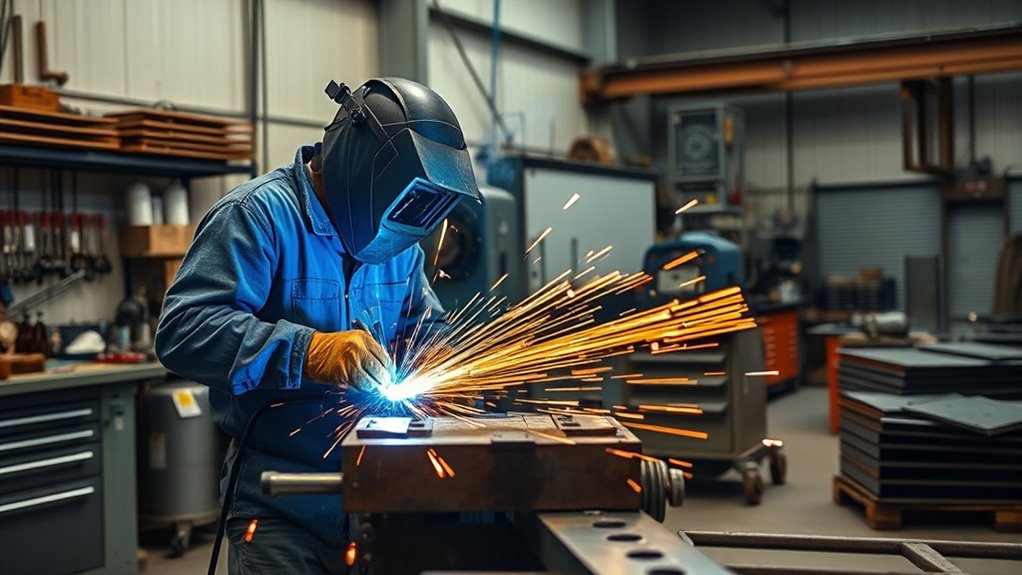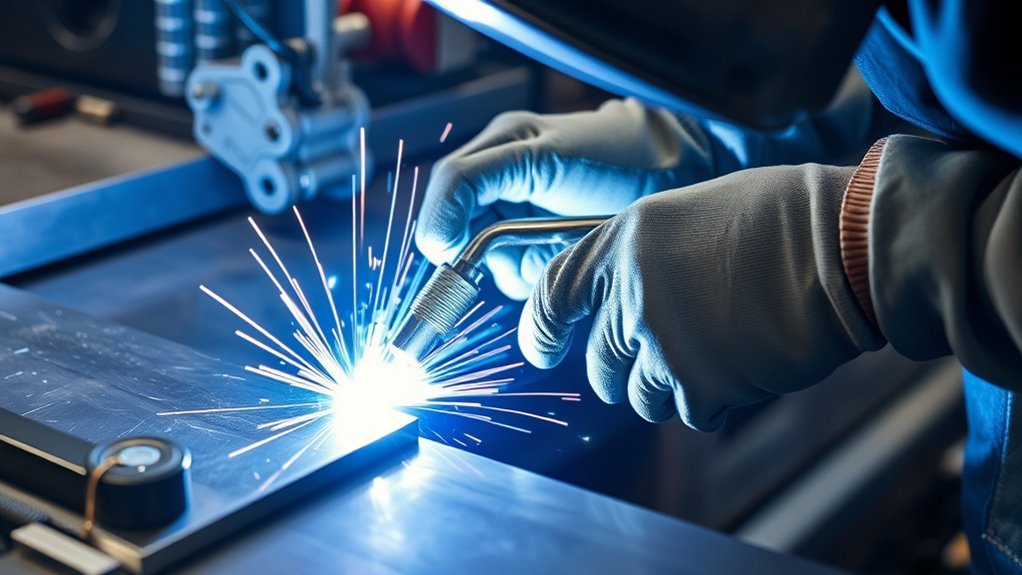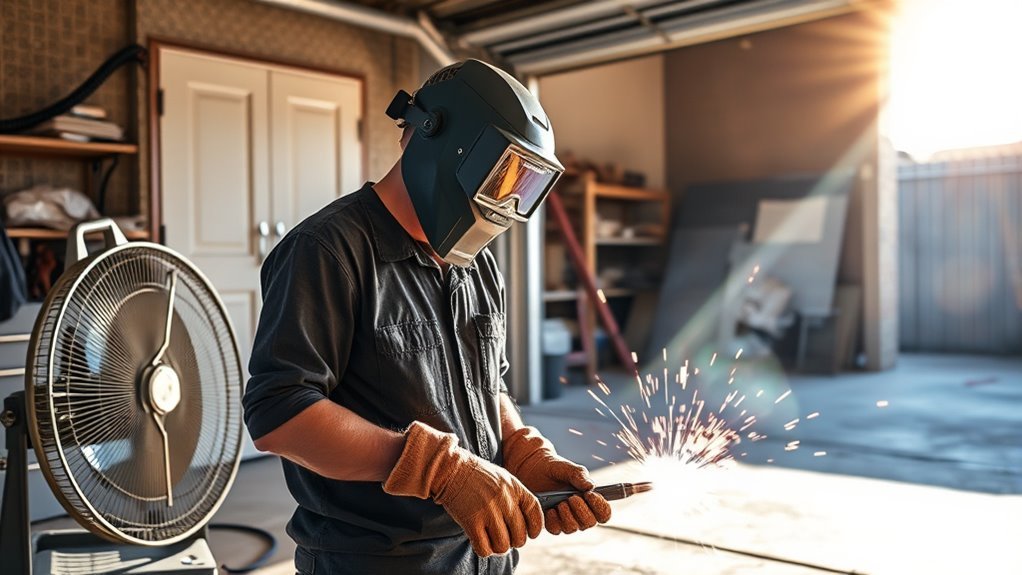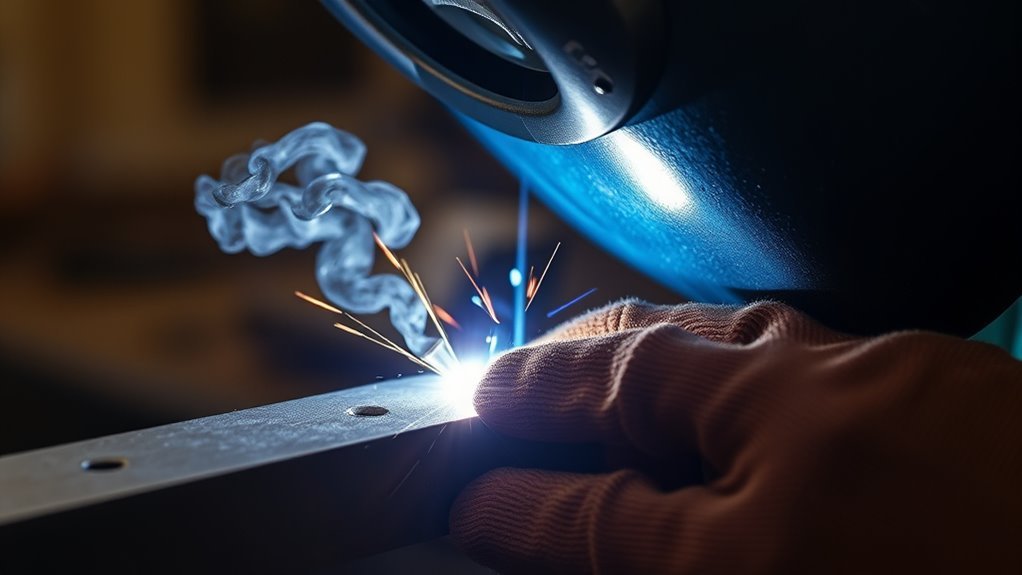
To tack weld before running a full bead, clean the joint, clamp the parts in their final position, and place small, sound tack welds where the metal is most likely to move. Use short tacks, jump around the joint to control heat, and inspect each tack before you commit to the final pass. Good tack welds hold alignment, preserve the joint gap, and make the full bead easier to control.
Quick Answer
Tack weld before a full bead by cleaning the metal, fitting the joint tightly, clamping it, and adding small tacks at corners, ends, gaps, and along longer seams. Start with tacks about 1 to 3 inches apart on thin or flexible work, then adjust based on heat, fit-up, and movement.
Key Takeaways
- Clean metal and tight fit-up matter more than adding more tack welds.
- Use enough tacks to hold the joint, but keep them small so they do not overheat or distort the work.
- Jump around the joint instead of tacking in one straight line from end to end.
- Grind or feather bulky tack ends before the full bead so the final weld ties in smoothly.
- Follow your welding procedure, machine chart, or instructor guidance for structural, pressure, vehicle-frame, or code work.
At a Glance
| Time Required | 5 to 20 minutes, depending on joint length and fit-up |
| Difficulty | Beginner to intermediate |
| Tools Needed | Welder, clamps, square or straightedge, wire brush or grinder, PPE, fire extinguisher, and ventilation |
| Cost | Usually no extra cost beyond normal welding consumables |
Warning: Tack welding still creates arc rays, hot metal, sparks, fumes, and fire risk. Wear proper eye and face protection, gloves, flame-resistant clothing, and closed leather footwear. Clear or shield combustibles, keep a suitable extinguisher nearby, and use ventilation or fume extraction when needed.
What Is Tack Welding and Why Is It Important?
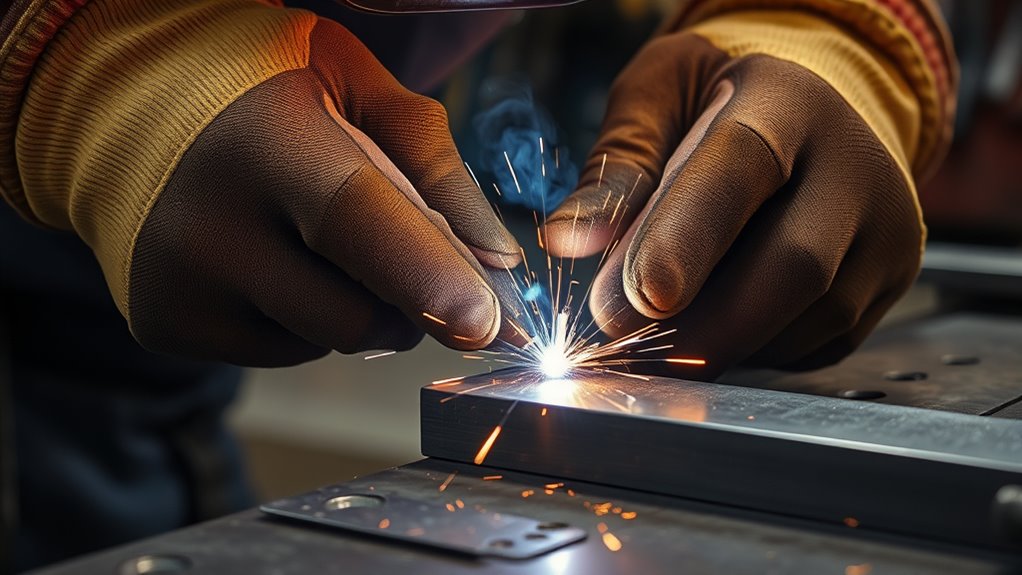
Tack welding is the process of making short welds that temporarily hold parts in position before the final weld is made. Think of each tack as a small anchor. It keeps the joint from shifting while you check alignment, control the gap, and prepare for the full bead.
Good tack welds help control movement and distortion during welding. Poor tack welds can crack, pull the joint out of square, trap slag, or create lumps that make the final bead harder to tie in. For structural or code work, the tacks should meet the welding procedure and be sound enough to become part of the finished weld or be removed before final welding.
A tack weld is not a shortcut. It is part of fit-up control, heat control, and final weld quality.
If the final weld is a fillet weld, the finished bead still needs the correct size and profile for the joint. A guide to maximum fillet weld size can help with final bead planning, but the tack weld itself should stay small and clean enough to blend into the finished pass.
Preparing Your Materials for Tack Welding
Start with fit-up. Tack welds cannot fix dirty metal, a twisted joint, or a gap that is too large for your process. Before you strike an arc, clean the weld area, clamp the parts, and check the joint from more than one angle.
Products Worth Considering

Light Duty and Tight Spot Holding: Build, hold and position steel in tight spots. The MagHold V-Pads hold and position round, flat and square parts in light-duty sub-assembly applications.

POWERFUL HOLDING FORCE: Featuring robust magnets embedded in the welding holder, these durable magnets boasts a strong magnetic holding force of up to 25/50 lbs, ensuring reliable performance.
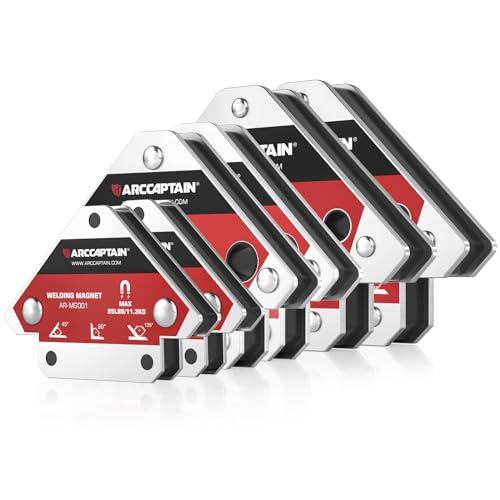
【MULTI-ANGLE WELDING MAGNETS】 45°, 90° and 135° three angles arrow design that provide quick and secure set up for common welding tasks. Magnets are rotated to the required angle and support the two or three workpieces during the welding operation.
Clean Material Edges
Clean edges are essential for strong tack welds. Remove rust, paint, oil, grease, dirt, heavy mill scale, and moisture from the weld zone. A wire brush, flap disc, grinder, scraper, or solvent wipe can all help, depending on the metal and contamination.
For stainless steel, use a stainless brush that is dedicated to stainless only. This helps reduce cross-contamination from carbon steel. For aluminum, remove oxide with a clean stainless brush and avoid grinding wheels that have been used on steel.
If the part is galvanized, remove the zinc coating from the weld area and use strong ventilation because zinc fumes can be hazardous. The cleaning step is different from paint prep, but the same idea applies: clean metal gives you fewer defects. For surface-prep basics, see this guide to proper cleaning.
Secure Proper Alignment
Once the edges are clean, bring the parts into position and clamp them before welding. Use C-clamps, locking pliers, magnets, tabs, fixtures, or a welding table to hold the joint steady. Check the angle with a square or level when the finished part needs to stay true.
- Clamp near the joint, but leave room for the torch, gun, or electrode holder.
- Check the gap before and after the first tack.
- Use more clamps on thin sheet, long seams, and parts that spring apart.
- Do not force a badly fitted joint closed with weld metal alone.
Minor misalignment becomes harder to correct after several tacks are in place, so check the assembly early.
What Tools and Safety Gear Do You Need?
You do not need special equipment just to tack weld, but you do need the same basic protection you would use for the final weld. The Canadian Centre for Occupational Health and Safety lists welding helmets, eye protection, respirators where needed, flame-resistant clothing, gloves, and boots as common PPE for welding tasks.
- Welder and consumables: MIG wire, TIG filler, stick electrode, or flux-core wire that matches the base metal and job.
- Fit-up tools: clamps, square, straightedge, magnets, shims, and a clean work surface.
- Cleaning tools: wire brush, grinder, flap disc, scraper, or approved solvent.
- PPE: helmet, safety glasses, gloves, flame-resistant clothing, and hearing protection when grinding.
- Fire setup: clear combustibles, shield nearby items, and keep a suitable extinguisher ready. OSHA welding rules require fire hazards to be moved or guarded and suitable fire-extinguishing equipment to be ready for use.
- Ventilation: use local exhaust, a fume extractor, or open-air ventilation when fumes may build up.
Note: If you are welding inside a vehicle, tank, frame cavity, trailer, or other confined area, treat it as a higher-risk hot-work job. Check for fuel, vapors, coatings, insulation, and hidden combustibles before welding.
Products Worth Considering

Long lasting quality

Crafted with precision, our steel plates are laser-cut, offering unparalleled edge smoothness and dimensional accuracy compared to stamped and sheared parts.

●High carbon steel chipping hammer,heat treated,10-1/2-Inch overall length.1-1/16" width chisel to remove welding slag faster,●Leather welding gloves are heat and flame resistant,have a comfortable cotton lining,fully welted seams,and lock-stitch construction
How to Select Effective Tack Weld Locations?
Selecting effective tack weld locations is vital for keeping the joint stable during the final weld. Start by tacking the highest-movement points first: corners, ends, open gaps, curves, and spots where clamps cannot hold the metal tightly.
For thin or flexible work, a starting point of about 1 to 3 inches between tack welds often gives good control. For thicker and more rigid work, the spacing may be wider. For uneven gaps, curved seams, or sheet metal that wants to move, place tacks closer together.
Use staggered tack welds on long seams. Instead of starting at one end and moving straight to the other, place a tack near one end, then the opposite end, then the center, then split the remaining gaps. This spreads heat more evenly and helps reduce warping.
Good preparation of metal matters even more with flux-core welding because slag, spatter, and contamination can hide small tack defects.
Best Techniques for Tack Welding
The best tack weld is small, fused, and placed exactly where it helps the joint. It should not be a cold blob sitting on top of the metal, and it should not be so large that it becomes a lump under the final bead.
- Set the machine for the material thickness. Use the door chart, procedure, or test coupon before welding the real part.
- Hold a steady angle. Use the same gun, torch, or rod angle you would use for the joint.
- Make a short weld. On thin metal, this may be a quick trigger pull or a one-second tack. On thicker metal, the tack may need slightly more time to fuse properly.
- Let it cool briefly. Do not stack heat in one area unless the procedure calls for it.
- Check the fit-up. Confirm the joint has not pulled out of line before adding more tacks.
Pay close attention to arc length. With MIG and flux-core, keep the correct contact-tip-to-work distance for your wire and settings. With TIG, use a short, stable arc without dipping the tungsten. With stick welding, avoid a long arc that overheats the tack and causes spatter.
If you are working on light sheet metal, heat control is the main challenge. This guide to thin metal explains why short welds, cooling time, and careful settings matter.
Pro Tip: Before tacking the real joint, make two or three tacks on scrap of the same thickness. If the tack sits high, cracks, burns through, or barely fuses, adjust before welding the part.
Managing Component Gaps
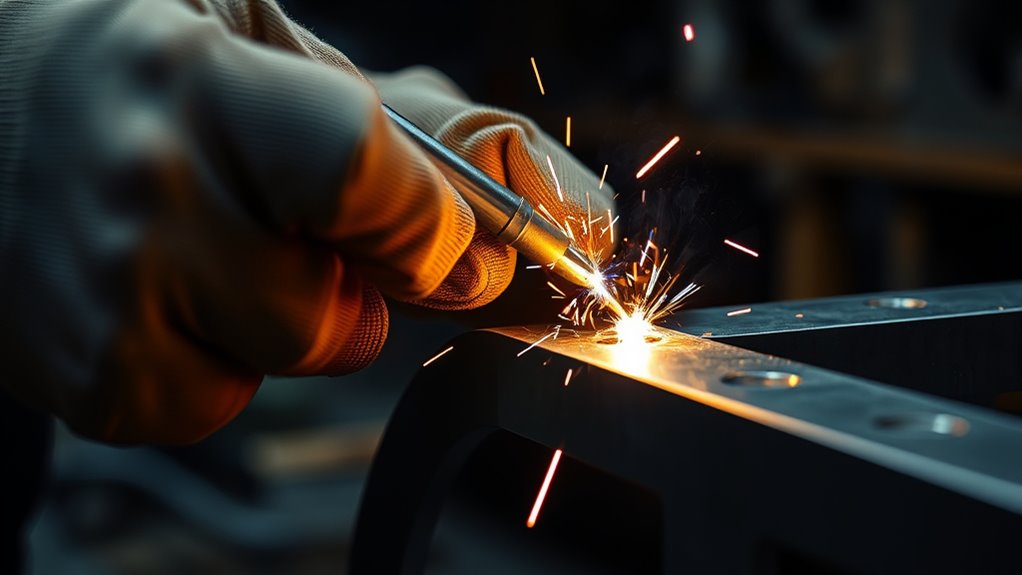
To manage component gaps during tack welding, focus on fit-up first and weld size second. A tack weld should hold the parts in the correct position, not replace missing metal from a poor fit.
For a consistent gap, tack the ends first, then the center, then fill in between. For a gap that changes along the seam, place closer tacks where the gap wants to open. If the joint pulls out of position after the first tack, stop and correct the fit-up before adding more weld.
Keep steady pressure on the parts with clamps or fixtures. Do not use your gloved hand to force metal into place near the arc. Hot metal can shift suddenly, and gloves do not make your hand safe from heat or electrical hazards. For more on clothing and burn protection, see this guide to flame-resistant clothing.
Tack Weld Spacing Techniques
There is no single tack spacing that fits every job. Use this as a practical starting guide:
- Thin sheet metal: start around 1 to 3 inches apart, then move closer if the seam opens or warps.
- Short brackets or tabs: tack both ends or opposite corners first.
- Long seams: tack the ends, center, and quarter points, then fill in as needed.
- Thick plate: use fewer but stronger tacks, sized according to the joint and procedure.
- Curved or stressed parts: use more tacks and check alignment often.
Jump between tack locations to spread heat. This helps prevent one side of the joint from shrinking faster than the other.
Monitoring Joint Alignment
After each tack, check the joint with your eyes and your measuring tools. Look for a gap that opened, a corner that lifted, or a part that rotated. On critical parts, measure twice before running the full bead.
Do not keep welding if the assembly is already moving out of position. Cut or grind out a bad tack, realign the part, and tack it again. Fixing a bad tack early is faster than grinding out a full bead later.
Controlling Heat Input During Tack Welding
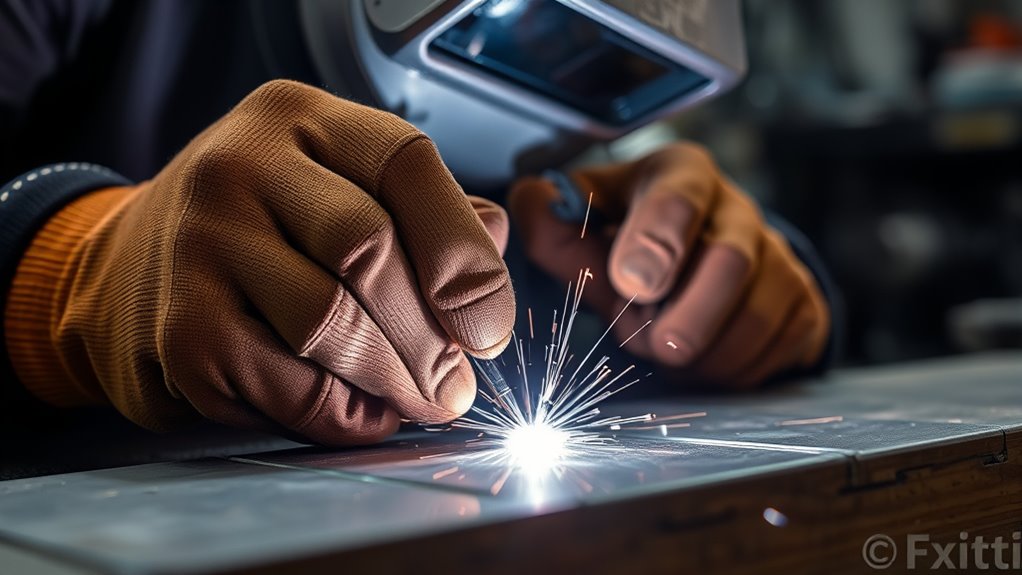
Heat control is one of the main reasons tack welding matters. Every tack heats the joint, and every cooling cycle can shrink the metal slightly. Too much heat in one spot can pull the part out of line before the full bead even starts.
Use short tacks, then move to another part of the joint. Let thin metal cool between tacks. On thicker steel, make sure each tack has enough fusion, but avoid oversized tacks that create unnecessary heat and grinding work.
Arc control matters too. A long arc can cause spatter and extra heat. A cold, quick tack may sit on top without tying into the base metal. Aim for a small tack that wets into both sides of the joint.
If you use flux-core wire, choose settings that match the material thickness and wire type. Self-shielded flux-core can be useful outdoors, but it does not remove the need for clean metal, proper fit-up, and heat control. This guide explains more about self-shielded flux core wire.
How to Tack Weld Before the Full Bead: Step by Step
- Clean the weld zone. Remove coatings, rust, oil, moisture, and heavy scale from both sides of the joint.
- Fit the parts dry. Check the gap, angle, and flushness before welding.
- Clamp the joint. Use enough clamps to stop the parts from shifting when the first tack shrinks.
- Set the welder on scrap. Make a test tack on matching material and adjust settings if needed.
- Tack the strongest reference points first. Usually this means corners, ends, or the center of a long seam.
- Jump around the joint. Move to the opposite side or a cooler area for the next tack.
- Check alignment often. Re-square, re-clamp, or correct the gap before adding more tacks.
- Inspect every tack. Look for cracks, porosity, undercut, lack of fusion, and tall lumps.
- Feather bulky tack ends. Grind only what is needed so the full bead can flow smoothly over or into the tack.
- Run the full bead. Start just before a tack or slightly ahead of it so the puddle remelts and ties in cleanly.
Top Mistakes to Avoid When Tack Welding
When tack welding, the most common mistakes come from poor fit-up, poor cleaning, and too much heat. Choosing the right process also matters. For example, MIG, TIG, stick, and flux-core each handle thin metal, gaps, wind, coatings, and out-of-position work differently. This guide to welding process selection can help with that choice.
Inconsistent Joint Gaps
Inconsistent joint gaps make the full bead harder to control. A tight spot may lack penetration, while a wide spot may burn through or swallow too much filler. Use shims, clamps, and measuring tools before welding instead of trying to correct everything with tack welds.
If the gap changes after the first tack, the metal has moved. Stop, correct it, and then continue.
Poor Cleaning Practices
Poor cleaning can cause porosity, inclusions, lack of fusion, and weak tacks. Paint, oil, zinc coating, rust, and moisture are common problems. If you are welding galvanized steel, remove the coating from the weld area and control fumes. This guide explains why it is important to work on metal where you have removed the zinc coating.
Oversized Tack Welds
Oversized tacks create extra heat and can leave high spots that interfere with the full bead. If a tack is too tall, feather the ends with a grinder before welding over it. Do not grind so deeply that you weaken the tack or gouge the base metal.
Tacking in One Direction Only
Running all the tacks from one end to the other can pull the joint in the same direction. Use a balanced pattern instead. Tack one end, the opposite end, the center, then the spaces between.
How to Check Your Tack Welds?
Inspect tack welds before the full bead. This is the last easy moment to fix fit-up problems.
- Size: The tack should be large enough to hold, but not so large that it becomes a lump under the bead.
- Fusion: The tack should tie into both sides of the joint.
- Cracks: Any cracked tack should be removed and replaced.
- Porosity: Pinholes or bubbles suggest contamination, poor shielding, or incorrect settings.
- Alignment: The joint should still be square, flush, and held at the planned gap.
- Access: The tacks should not block the torch angle or final weld path.
Do not bend or force the actual assembly just to test the tack welds unless a qualified procedure calls for it. A light handling check may be fine for a simple practice joint, but structural work, pressure parts, and vehicle-frame work need proper inspection and qualified procedures.
How to Transition From Tack Welds to Full Beads?
Shifting from tack welds to full beads requires clean tie-ins. Remove slag, spatter, and sharp tack ends before the full pass. With stick or flux-core welding, clean every tack with a chipping hammer and wire brush so slag does not get trapped under the final bead.
When you start the full bead, begin slightly before the tack or just ahead of it so the weld puddle remelts the tack and blends into it. Pause only long enough to tie in. Do not dwell so long that you overheat the joint.
Keep your travel speed steady. Watch the front edge of the puddle and the toes of the weld. If the bead climbs over a tack without melting into it, stop and correct the tack profile before continuing.
Consistent heat input levels are especially important on butt joints because a poor fit-up or cold tack can show up as lack of fusion in the final bead.
Tips for Achieving a Consistent Weld Appearance
A consistent final bead starts before the first tack. Clean metal, even gaps, balanced tack placement, and smooth tack ends all help the full weld look and perform better.
- Use the same stickout, arc length, and travel angle through the tack area.
- Grind high tacks smooth enough for the bead to flow over them.
- Keep tacks evenly sized when appearance matters.
- Avoid starting and stopping the full bead on top of a bulky tack.
- Practice on scrap before welding thin or visible parts.
Preheat is not a general appearance fix. Some cast iron and high-carbon materials may need controlled preheat, but mild steel sheet and many everyday tack-welding jobs do not need 400 to 600°F preheat. Use material-specific guidance, especially when working with cast iron or parts where hard, brittle zones can become a concern.
Troubleshooting Tack Weld Problems
| Problem | Likely Cause | Fix |
| Tack cracks | Contamination, too much restraint, wrong filler, or hardenable material | Remove the tack, clean the joint, check filler choice, and follow the procedure for that material |
| Burn-through | Too much heat, wide gap, or slow travel | Lower heat, shorten tack time, tighten the gap, and let the part cool between tacks |
| Tack sits on top | Low heat, poor arc length, dirty metal, or moving too fast | Clean again, adjust settings, and make a test tack on scrap |
| Joint pulls out of square | Unbalanced tack sequence or weak clamping | Clamp better, tack opposite sides, and check alignment after each tack |
| Porosity | Oil, paint, moisture, poor shielding gas coverage, or wind | Clean the metal, check gas flow, block wind, and replace contaminated consumables |
Frequently Asked Questions
How do you tack weld for beginners?
Clean the metal, clamp the joint, set the welder on scrap, and make small tacks at the ends, corners, center, and any area that wants to move. Check alignment after each tack. Keep the tacks small, but make sure they fuse into both pieces.
How far apart should tack welds be?
For thin or flexible work, start around 1 to 3 inches apart and adjust as needed. Use closer spacing at corners, wide gaps, curves, or areas that pull out of line. Thicker and more rigid assemblies may need fewer, stronger tacks.
What are common mistakes in tack welding?
Common mistakes include tacking dirty metal, using weak clamps, making oversized tacks, using too much heat, tacking in one direction only, and welding over cracked or porous tacks without fixing them first.
Do tack welds become part of the final weld?
They can, but only if they are clean, sound, properly fused, and allowed by the welding procedure. If a tack is cracked, contaminated, too tall, or poorly placed, grind it out or feather it before running the full bead.
What is the Rule of 33 in TIG welding?
Some welders use “Rule of 33” as a shop reminder to keep a tight TIG arc, but it is not a universal standard. For TIG tack welding, keep the arc short and stable, avoid dipping the tungsten, and follow your welding procedure or machine guidance.
What is the golden rule in welding?
The practical golden rule is to control the basics before adding more weld: clean metal, correct settings, safe setup, steady arc length, good fit-up, and proper heat control. A clean, well-fitted joint is easier to weld than a poor joint covered with extra filler.
Conclusion
Mastering tack welding gives you better control before the full bead begins. Clean the metal, clamp the joint, place small tacks in a balanced sequence, and inspect them before final welding. If a tack is cracked, dirty, oversized, or pulling the joint out of line, fix it before moving on. A few careful minutes of tack welding can save grinding, distortion, and rework later.
Sources
- OSHA 1910.252, General Requirements for Welding, Cutting, and Brazing — fire prevention, eye protection, PPE, ventilation, and hot-work precautions.
- CCOHS: Welding – Personal Protective Equipment and Clothing — welding PPE, eye protection, flame-resistant clothing, gloves, boots, and respiratory protection context.
- CDC/NIOSH: Welding Fumes and Manganese — welding fume health concerns, manganese exposure, and higher risk in confined spaces.
- American Welding Society Free Resources — AWS/ANSI Z49.1 safety standard and welding safety fact sheets.
- TWI: What Is Tack Welding? — tack welding purpose and fit-up role before final welding.