Manganese in welding fumes deserves serious attention because it can affect your lungs, nervous system, movement, mood, and memory when exposure is not controlled. Manganese is useful in steel and welding consumables, but the fine particles created during welding can be inhaled deep into the respiratory system. Your best protection is a layered plan: reduce fume at the source, use effective ventilation, monitor exposure, and use proper respiratory protection when controls are not enough.
Quick Answer
Manganese in welding fumes can be harmful when you inhale it repeatedly, especially in confined spaces or poorly ventilated shops. High or long-term exposure may cause manganism, a Parkinson-like neurological condition. Control risk with low-fume processes, local exhaust ventilation, air monitoring, training, and properly selected respirators.
Key Takeaways
- Manganese is common in steel, filler metals, rods, wire, and flux because it improves weld strength and helps control cracking.
- Inhaled manganese is more concerning than dietary manganese because fine fume particles can bypass some of the body’s normal defenses.
- Possible symptoms include coughing, chest tightness, mood changes, memory issues, tremors, slowed movement, poor balance, and reduced coordination.
- OSHA, NIOSH, ACGIH, and Cal/OSHA use different occupational exposure limits, so treat the strictest practical target as the safer planning point.
- Ventilation and source control come before respirators. PPE is important, but it should not be the only control when better options are available.
Warning: Stop work and report symptoms if you notice tremors, new balance problems, slowed movement, confusion, mood changes, short-term memory trouble, chest tightness, or flu-like symptoms after welding. These signs need evaluation by a qualified medical provider, preferably one familiar with occupational exposure.
What Is Manganese and Why Is It Present in Welding Fumes?
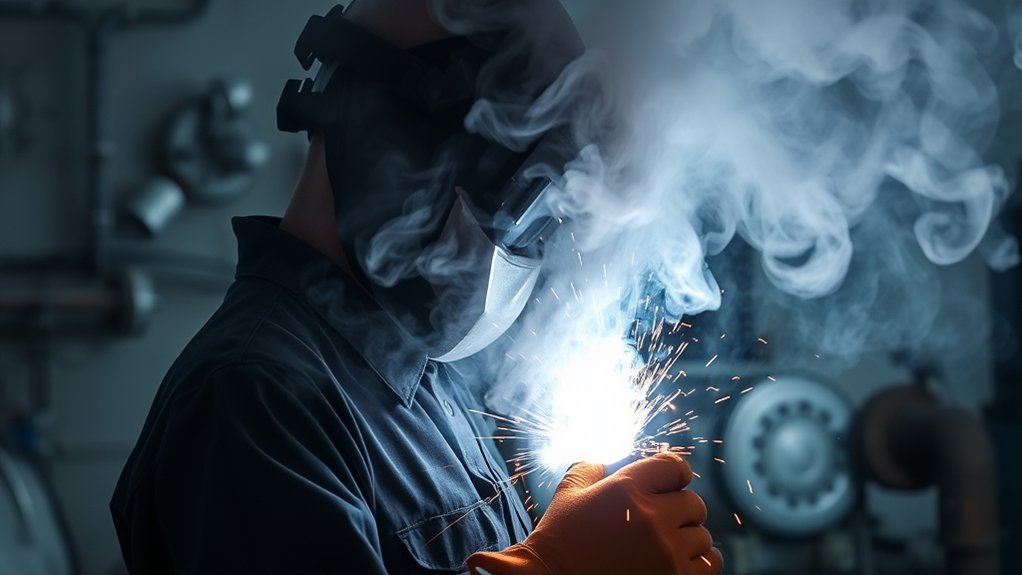
Manganese is a naturally occurring metal and an essential nutrient in small dietary amounts. In welding, it is also a useful alloying element. It helps improve steel strength, toughness, hardenability, and ductility. It can also help the weld resist cracking as the joint cools.
The problem begins when the arc vaporizes metal from the base material, electrode, wire, rod, or flux. That vapor cools quickly and forms fine metal particles known as welding fume. According to CDC/NIOSH guidance on welding fumes and manganese, welding fumes are made of metals, and most contain a small percentage of manganese.
Your manganese exposure can change from job to job. It depends on the welding process, amperage, the amount of manganese in the wire or rod, the base metal, the flux, your position relative to the plume, the size of the space, and how well fumes are captured at the source. Confined-space welding can raise exposure because fumes have less room to disperse.
Good proper ventilation and fume capture are not optional extras in high-fume work. They are core safety controls.
Why Inhaled Manganese Is Different From Dietary Manganese
Manganese in food is not the same exposure problem as manganese in welding fume. A healthy body can usually regulate dietary manganese through normal digestive and excretion pathways. Inhaled manganese is different because fine fume particles enter through the lungs and may bypass some of the body’s normal defenses.
That is why welding-fume exposure is treated as an occupational health concern, not a nutrition issue. The risk is not just the presence of manganese. The risk is how much airborne manganese reaches your breathing zone, how often you breathe it, and how long exposure continues without effective controls.
Health Risks of Manganese: Symptoms and Long-Term Effects
Breathing manganese-containing welding fumes can affect the respiratory system and the central nervous system. Short-term exposure may irritate the throat and lungs. Repeated or high exposure can increase the risk of neurological and neurobehavioral effects.
CDC/NIOSH notes that prolonged exposure to high manganese concentrations in air may lead to manganism, a Parkinsonian syndrome. Parkinson-like symptoms can include tremors, slowed movement, muscle rigidity, and poor balance. Some studies also suggest that welders exposed to lower manganese levels may perform worse on certain brain-function and motor-skill tests.
| Health concern | Possible signs | What to do |
|---|---|---|
| Respiratory irritation | Dry throat, cough, chest tightness, breathing discomfort | Improve fume capture, leave the plume, review ventilation, and seek care if symptoms continue. |
| Metal fume fever-like symptoms | Flu-like fever, malaise, chest tightness, cough | Report the exposure and get medical guidance, especially if symptoms are severe or recurring. |
| Neurobehavioral effects | Mood changes, memory issues, slower reaction time, reduced hand-eye coordination | Request exposure review, air sampling, and occupational-health evaluation. |
| Manganism or Parkinson-like effects | Tremor, rigidity, poor balance, slowed movement, impaired coordination | Stop high-exposure work until evaluated. Long-term neurological symptoms need prompt medical attention. |
Manganese accumulation in the central nervous system can affect work performance, fine motor control, and quality of life. Wearing essential safety gear helps reduce many shop hazards, but fume control also requires ventilation, exposure monitoring, and the right respiratory protection when needed.
Understanding Manganism: Neurological Impacts of Manganese Exposure
Manganism is a neurological syndrome linked to excessive manganese exposure. It can look similar to Parkinson’s disease, but it is not the same condition. Symptoms may include tremors, slowed movement, rigidity, poor balance, mood changes, and trouble with fine motor skills.
Workers are more likely to face risk when several exposure factors overlap: high-manganese consumables, long weld times, poor ventilation, confined spaces, and breathing directly in the plume. Keeping your head out of the smoke plume is helpful, but it is not enough by itself if the shop has poor fume capture.
- Cognitive and mood effects: Memory trouble, mood swings, irritability, slower reaction time, or trouble focusing.
- Movement effects: Tremors, stiffness, slowed movement, reduced coordination, or balance problems.
- Work-performance effects: Reduced hand-eye coordination, poor fine-motor control, and slower task response.
- Medical findings: Occupational clinicians may consider work history, symptom pattern, exposure records, neurological exam findings, and imaging when needed.
Proper PPE protects against burns, spatter, UV radiation, and other hazards. For manganese fume, however, PPE must be paired with exposure controls such as local exhaust ventilation, process changes, and air monitoring.
What Occupational Exposure Limits Apply to Manganese?
Occupational exposure limits help employers judge whether airborne manganese levels are too high. These limits are not all the same. OSHA’s federal limit is enforceable in covered U.S. workplaces. NIOSH and ACGIH limits are health-based recommendations often used for stronger exposure-control planning. Some states, including California, use more protective values than federal OSHA.
| Agency / value | Limit | What it means |
|---|---|---|
| OSHA PEL | 5 mg/m³ ceiling | Federal enforceable ceiling limit for manganese compounds and fume as manganese. |
| NIOSH REL | 1 mg/m³ TWA; 3 mg/m³ STEL | Recommended exposure limit for an 8-hour average and short-term exposure. |
| ACGIH TLV | 0.02 mg/m³ respirable fraction; 0.1 mg/m³ inhalable fraction | More protective threshold values used by many safety professionals. |
| Cal/OSHA value | 0.2 mg/m³ | California comparison value listed in OSHA’s annotated table for manganese compounds and fume. |
| NIOSH IDLH | 500 mg/m³ | Immediately dangerous to life or health concentration. |
Use the terms carefully. A PEL is a permissible exposure limit. A REL is a recommended exposure limit. A TLV is a threshold limit value. A STEL is a short-term exposure limit. A ceiling limit should not be exceeded during the work period.
A welding helmet protects your eyes and face from arc radiation and impact hazards, but it does not remove manganese fumes from the air you breathe. Use helmets for eye and face protection, and use ventilation and respiratory protection for fume exposure.
Note: Treat exposure limits as decision tools, not comfort zones. If air sampling shows manganese near or above a recommended limit, improve controls before workers develop symptoms.
How to Monitor Manganese Exposure in Your Workplace
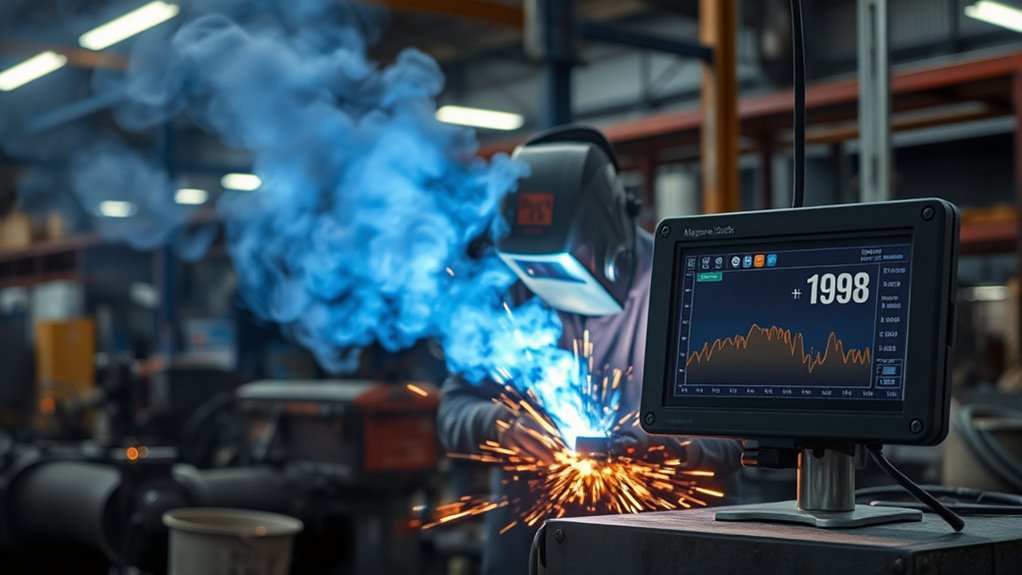
You cannot judge manganese exposure by smell or by how visible the smoke looks. Some fumes are easy to see, but visibility is not a reliable measure of manganese concentration. The most useful approach is personal breathing-zone sampling during real welding tasks.
Start With a Task and Material Review
Review the safety data sheets for the wire, rods, fluxes, and base metals used in the shop. Note which jobs involve high-fume processes, long arc-on time, confined spaces, stainless or specialty alloys, and poor airflow. Also check whether workers are welding with their heads directly above the plume.
Good maintenance matters too. Poor airflow, blocked filters, and overheated equipment can raise exposure. Keep ventilation and cooling systems in good condition, and review shop setup issues that may affect fume movement, including ventilation and cooling around the work area.
Use Personal Breathing-Zone Sampling
Personal breathing-zone sampling measures air near the worker’s face during normal work. A qualified industrial hygienist can place a sampling pump and filter cassette on the worker, collect a full-shift or task-based sample, and send it to a laboratory for manganese analysis.
Sampling should represent actual work conditions. Test the jobs with the highest expected exposure, not only the easiest or cleanest welds. Repeat sampling after major changes such as a new wire, new process, new ventilation hood, booth redesign, production increase, or confined-space task.
Compare Results to the Right Limit
Compare results against OSHA requirements and health-based guidance from NIOSH or ACGIH. If results are near a limit, act early. Do not wait for symptoms or a violation. Manganese risk is easier to prevent than reverse.
Keep records of sampling dates, welding processes, consumables, base metals, amperage ranges, ventilation settings, respirator use, and worker position. These records make it easier to spot trends and prove whether controls are working.
Effective Control Measures to Reduce Manganese Risks
The strongest control plan follows the hierarchy of controls: reduce or remove the hazard first, then add ventilation, work-practice controls, and PPE. Do not rely on respirators alone when fume can be reduced at the source.
Products Worth Considering

3.3ft long adjustable flexible hose duct, 75mm OD, 68mm ID
3.3ft long adjustable flexible hose duct, 50mm OD, 45mm ID

Multi-Application smoke extractor: The Solder Smoke Absorber can be used as a Solder Smoke Absorber for Soldering DIY Working Station. The solder smoke absorber can also be used in the kitchen, bathroom, grow tent fan,workshop or any space requiring clean air soldering
Substitute Lower-Fume or Lower-Manganese Options When Possible
When the job allows it, choose lower-fume consumables, adjust the process, or use welding methods that generate less fume. Any substitution should still meet the weld procedure, code, strength, and quality requirements. Never change consumables on critical work without proper review and approval.
Capture Fume at the Source
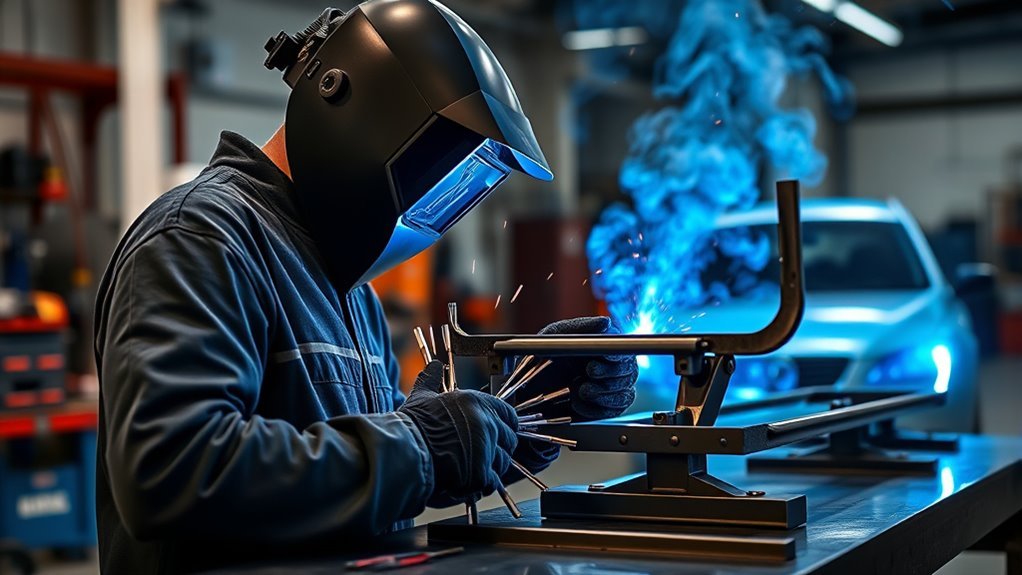
Local exhaust ventilation is often the most important engineering control for manganese welding fumes. Use capture hoods, fume extraction guns, downdraft tables, or extraction arms placed close enough to pull the plume away before it reaches the breathing zone. Keep the hood close to the arc without interfering with weld quality.
General shop ventilation can help dilute background fumes, but it should not replace local exhaust for high-fume work. Review airflow patterns so fans do not blow the plume across the welder’s face or into another worker’s breathing zone. Strong ventilation strategies are most effective when they capture fumes before they spread.
Improve Work Practices
- Keep your head out of the fume plume whenever possible.
- Position work so the plume moves away from your breathing zone.
- Use the lowest effective amperage and wire-feed settings allowed by the weld procedure.
- Clean coatings, oils, paints, and residues before welding when safe and permitted.
- Avoid welding in confined spaces without a written confined-space plan, air testing, ventilation, and rescue procedures.
- Inspect extraction arms, filters, ducts, and hoods on a routine schedule.
Use Respiratory Protection Correctly
Respirators may be needed when ventilation cannot keep exposure below required or target limits. OSHA’s respiratory protection standard requires proper respirator selection, medical evaluations, fit testing for tight-fitting respirators, training, cleaning, storage, and program evaluation when respirators are required.
For manganese welding fume, a disposable dust mask chosen at random is not a complete respiratory protection program. The respirator must be suitable for the measured exposure, the worker, the job, and the work environment. Powered air-purifying respirators may be useful for some welding tasks, especially when tight-fitting options are difficult to wear or exposure levels require stronger protection.
Pro Tip: If you upgrade ventilation, sample the air again after the change. A new extraction arm or fume gun only proves its value when breathing-zone results improve.
When to Get Medical Help
Get medical guidance if you develop tremors, poor balance, slowed movement, memory problems, mood changes, confusion, repeated chest tightness, or flu-like symptoms after welding. Tell the clinician that you weld and may have been exposed to manganese-containing fumes. Bring any air-monitoring results, safety data sheets, and a list of the processes and consumables you use.
If several workers report similar symptoms, treat it as a workplace exposure warning. Review ventilation, air sampling, job rotation, consumables, housekeeping, and respiratory protection right away. Welding fumes can contain more than manganese, so a full exposure review may need to include iron oxide, chromium, nickel, carbon monoxide, ozone, nitrogen oxides, coatings, and solvents.
Valuable Resources for Welders: Stay Informed and Safe
Reliable sources matter because manganese exposure limits and health guidance are technical. Use CDC/NIOSH pages, OSHA standards, safety data sheets, and qualified industrial hygienists when building a shop safety plan. Supplier recommendations can help, but they should not replace exposure monitoring.
For day-to-day improvement, focus on four records: air-sampling results, ventilation inspections, respirator fit tests, and worker training. Add symptom reports and medical referral notes when workers raise concerns. For related air-quality practices, dust control strategies can also help keep a cleaner work area, although welding fume still needs its own controls.
The best manganese safety plan does not wait for symptoms. It measures exposure, captures fumes at the source, and treats respirators as one layer of protection, not the whole solution.
Frequently Asked Questions
Is manganese toxic when welding?
Yes, manganese can be toxic when you inhale too much welding fume over time. Manganese is useful in steel and welding consumables, but airborne manganese particles can affect the nervous system, lungs, and other organs when exposure is not controlled.
What symptoms can manganese welding fumes cause?
Possible symptoms include coughing, dry throat, chest tightness, flu-like symptoms, mood changes, memory problems, slowed reaction time, tremors, muscle rigidity, poor balance, and reduced coordination. Symptoms should be reported early because neurological effects can become serious.
Why do welders face long-term health risks?
Welders can face long-term risks from metal fumes, gases, UV radiation, heat, noise, awkward postures, and confined-space work. Manganese is one important fume hazard, but it is not the only one. Strong ventilation, exposure monitoring, PPE, training, and medical follow-up reduce risk.
Can your lungs heal from welding fumes?
Some short-term irritation may improve after exposure stops, especially with medical care and better controls. Recovery depends on the type of fume, exposure level, exposure duration, smoking history, and existing lung health. Ongoing symptoms need medical evaluation.
Can you recover from manganese poisoning?
Recovery is more likely when exposure is identified and reduced early, but full recovery is not guaranteed. Some neurological effects may persist. Anyone with tremors, balance changes, slowed movement, or memory problems after welding should seek occupational-health or neurological evaluation.
Do respirators replace welding ventilation?
No. Respirators are important when exposure cannot be controlled enough by other methods, but ventilation and source control should come first. If respirators are required, they must be selected, fit-tested, maintained, and used under a proper respiratory protection program.
Conclusion
Manganese in welding fumes is manageable, but only if you treat it as a real exposure hazard. Know which consumables and processes create the most fume, keep your breathing zone out of the plume, capture fumes at the source, and verify exposure levels with air sampling. Use respirators when needed, but do not let PPE replace ventilation and source control. The safest shops prevent exposure first, monitor results, and respond quickly when symptoms or sampling data show a problem.
Sources
- CDC/NIOSH: Welding Fumes and Manganese — backs up health effects, exposure drivers, and occupational exposure limits.
- NIOSH Pocket Guide: Manganese Compounds and Fume — backs up NIOSH REL, OSHA PEL, IDLH, symptoms, target organs, and respirator information.
- OSHA Annotated Table Z-1 — backs up OSHA, Cal/OSHA, NIOSH, and ACGIH comparison values for manganese compounds and fume.
- OSHA 1910.134 Respiratory Protection — backs up respirator-program requirements and the need to use engineering controls first when feasible.
- CDC/NIOSH Hierarchy of Controls — backs up the order of controls: elimination, substitution, engineering controls, administrative controls, and PPE.
- ATSDR Toxicological Profile for Manganese — provides detailed toxicology background on manganese exposure and health effects.