Oxyacetylene vs MIG for Auto Body Work: Which Should You Use?
What’s in This Article
- Why Choose Oxyacetylene for Auto Body Work?
- Where MIG Welding Wins on Sheet Metal?
- Oxyacetylene vs MIG for Heat Control?
- Which Method Warps Thin Panels Less?
- How Do MIG and Oxyacetylene Handle Gaps?
- What Skill Level Does Each Method Need?
- Which Setup Costs Less?
- When Should You Use Brazing or Heat?
- How Do the Finishes Compare?
- Which Welder Should You Use for Auto Body?
- Frequently Asked Questions
- Conclusion
Thin auto body panels can warp fast when you use the wrong welding process. MIG usually makes more sense for thin sheet metal because it works fast and limits heat buildup. Use oxyacetylene when you need flame control, brazing, rust-tolerant repair, or panel shaping. The best choice depends on panel thickness, access, fit-up, and how much distortion you can accept.
Quick Answer
Choose MIG for most auto body sheet metal because it runs faster and puts less heat into thin panels. Choose oxyacetylene when you need to heat, braze, shrink, shape, or repair areas that need flame control. Many bodywork jobs use both methods for different repair steps.
Key Takeaways
- MIG works best for most thin auto body panels because it limits heat and speeds up tacking.
- Oxyacetylene gives you better flame control for brazing, heating, shrinking, and shaping metal.
- MIG handles small gaps better because the wire feed adds filler metal as you weld.
- Oxyacetylene takes more practice because you control heat, puddle, and filler by hand.
- Match the process to the repair, not just the tool you already own.
Why Choose Oxyacetylene for Auto Body Work?
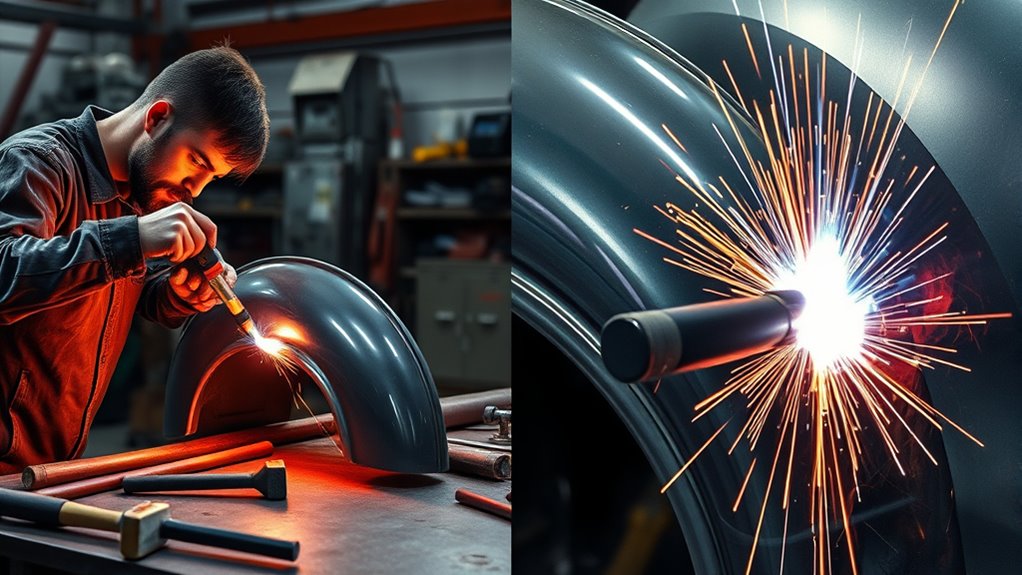
Oxyacetylene earns its place in auto body work because it gives you a soft, adjustable flame. You can use that flame to heat, braze, shrink, stretch, and shape metal.
With oxyacetylene, you can guide heat across a wider area instead of forcing energy into one small spot. That control helps when you work curved panels, older steel, or damaged areas that need slow shaping.
You’re not locked into one task. The same setup lets you braze, heat, and shape metal when a repair needs more than a weld.
For restoration work, oxyacetylene can help you make smooth repairs that respond well to hammer and dolly work. It also gives you more control when a panel needs careful heat correction.
It takes practice, but it rewards a steady hand. If you want practical control and room to grow, this method gives you both.
Use the right personal protective equipment before you light a torch or strike an arc.
Products Worth Considering

Complete Kit: Ideal for HVAC & Light Duty Brazing - Designed specifically for light-duty brazing and welding jobs, this kit is your go-to tool for HVAC repairs, metal crafts, and other precision tasks. Its portable design is perfect for on-the-go professionals

Dual Flame Torch Lighter: The butane torch gun has a precise flame that can heat items faster. The 2 flame modes of the kitchen blow torch for cooking can be switched at will(Turn the flame mode knob to switch). The kitchen butane torch lighter is easy to use.

【Exact OEM Replacement Part Number 0390-0057】 This complete cutting torch rebuild kit matches part number 0390-0057, specially designed as factory replacement repair parts for Victor CA2460 and CA2470 cutting torches. Precise size and thread design realize plug-and-play installation without extra cutting or modification
Where MIG Welding Wins on Sheet Metal?
MIG welding wins on sheet metal because it works fast and limits heat buildup. That helps you avoid warping thin auto body sections.
You can tack fast, bridge small gaps, and build seams with a continuous wire feed. This makes MIG a strong choice when you need steady, repeatable repairs.
Setup also stays simple. You use the machine, wire, ground clamp, gun, and shielding gas or flux-core wire, depending on the repair.
MIG welds often need less cleanup than poorly controlled torch welds. That matters when you want crisp panel lines and a clean surface after grinding.
With voltage and wire feed speed controls, you can tune penetration and bead shape for thin steel. For sheet metal, MIG gives you control, speed, and practical bodywork results.
Good bead shape still matters, so review proper bead profiles before you weld visible seams.
Oxyacetylene vs MIG for Heat Control?
Oxyacetylene gives you wider heat spread and strong flame control. That helps with shaping and heating, but it can warp thin metal if you move too slowly.
MIG puts heat into the joint quickly, then lets you stop and move. This makes it easier to control warpage on sheet metal.
Oxyacetylene gives you better residual heat control for forming metal. MIG gives you a smaller heat-affected zone for quick panel repair.
Strong flux core welding techniques can also help you manage heat when you weld outside or without shielding gas.
Heat Spread Control
For heat spread control, oxyacetylene gives you a broader heat zone. You can use that wider zone to warm larger areas and move metal with more control.
You can steer heat across the surface, preheat metal, and flatten weld areas without focusing energy in one spot. That freedom matters when you need to shape metal, not just join it.
MIG concentrates heat fast and keeps the heated area smaller. This helps you make quick tacks and short welds on thin panels.
Choose oxyacetylene when you need wide heat control. Choose MIG when you need focused, efficient heating and less change to nearby sheet metal.
Warpage and Penetration
Oxyacetylene can put more heat into the panel, so it can give you deep fusion on thicker steel. It also raises the risk of warpage in thin metal.
You can use that heat on thicker sections, but you need tight timing and steady torch control. If you stay too long in one spot, the panel can pull and buckle.
MIG gives you a narrower heat path, so you can make solid tacks and short welds with less thermal stress. For most auto body repairs, that means less warpage and faster progress.
Use MIG when you want speed and lower heat on sheet metal. Use oxyacetylene when you need controlled heat for forming, brazing, or thicker repair areas.
Warning: Clean coatings, paint, underseal, and zinc from the weld area before welding because fumes can harm you.
Which Method Warps Thin Panels Less?
MIG usually warps thin panels less because it adds heat for a shorter time. You can make a tack, cool the panel, and move to another area.
Oxyacetylene often heats a wider area, so you need stronger heat control. If you rush, the panel can stretch or pull out of shape.
MIG gives you better control on thin body panels when you use short tacks and proper spacing. If you weld stainless parts, this guide to MIG welding 304 stainless steel may help with setup and technique.
Heat Input Difference
When you work on thin auto body panels, MIG usually adds less total heat than oxyacetylene. That makes it less likely to warp the metal.
You get tighter control over the heat-affected zone. This helps you preserve panel shape while you repair dents, patches, and seams.
Compared with gas welding, MIG focuses energy quickly and lets you stop before heat spreads too far. That lower heat soak matters when you need clean, accurate welds on delicate bodywork.
Oxyacetylene can still do the job, but you must manage heat carefully. If you want speed and minimal thermal stress, MIG gives you a practical edge.
Thin Panel Warpage
MIG usually warps thin auto body panels less than oxyacetylene because it finishes the weld faster. It also lets you use short tack welds across the joint.
When you use MIG welding, you cut heat soak and keep the panel flatter. This helps you stay in control during patch and seam repair.
- Use short tacks to reduce distortion.
- Move around the panel so heat does not build in one area.
- Let the panel cool between welds to limit burn-through.
Oxyacetylene can work, but you must manage heat with precision. For beginners, MIG’s forgiving nature makes it the practical choice on thin panels.
How Do MIG and Oxyacetylene Handle Gaps?
Imperfect panel fit-up changes the job fast. MIG welding handles small gaps well because the continuous wire feed adds filler metal as you weld.
| Process | Gap Behavior |
|---|---|
| MIG welding | Fills small gaps quickly with wire feed |
| Oxyacetylene | Works best with tight fit-up or controlled joint gaps |
| Larger gaps | MIG usually gives you more margin |
You don’t need perfect edge contact with MIG, so you can keep the repair moving. That makes your seam more uniform and easier to control.
Oxyacetylene works differently. It often needs closer fit-up, better torch control, and careful filler use to avoid overheating the edge.
For panel work, MIG welding gives you more margin when fit-up isn’t ideal. If you work near coated metal, review safe setup tips for MIG welding galvanized steel.
What Skill Level Does Each Method Need?
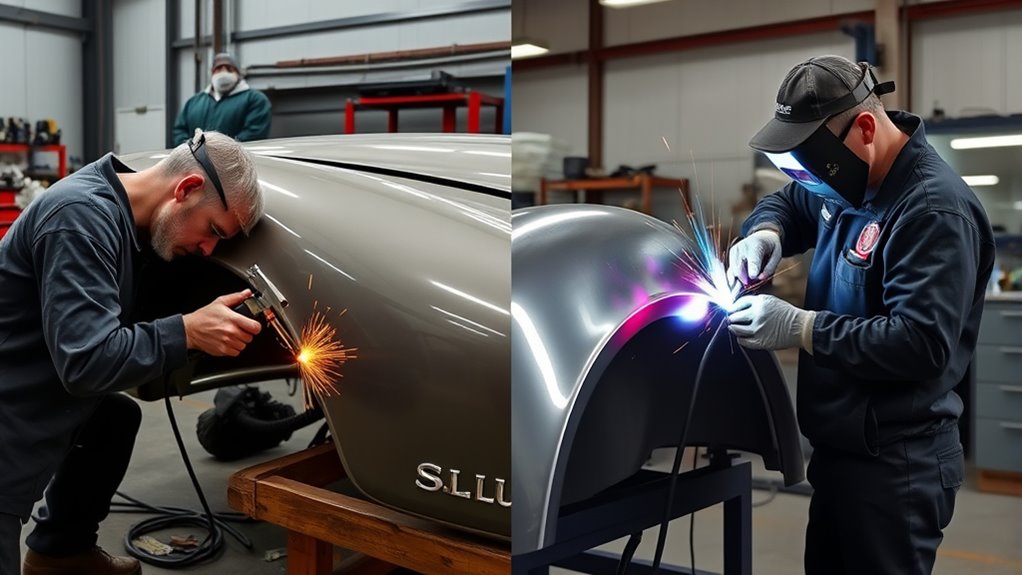
If you’re new to auto body work, MIG usually feels easier to learn. You can get consistent tacks with less setup and fewer hand movements.
Oxyacetylene takes more practice because you control heat, puddle, travel speed, and filler by hand. You’ll need more time to master torch angle and heat management.
Understanding arc length also helps you improve weld quality with arc welding processes.
MIG Beginner Friendly
For most beginners, MIG welding gives you the easiest start in auto body repair. It needs less hand coordination than torch welding.
- Set the machine for the metal thickness.
- Make short tack welds along the repair seam.
- Let the panel cool before you fill more of the joint.
That lower heat input helps you protect contours and keep repairs precise. If you want clean, workable results, MIG gives you a faster learning path.
Oxyacetylene Takes Practice
Oxyacetylene takes more practice than MIG because you must manage heat by hand. You also need to keep the panel from burning through or warping.
If you’re learning auto body repair, oxyacetylene makes you judge heat input against metal thickness. That skill takes practice, patience, and a feel for the puddle.
MIG is easier for beginners because you can set the machine, pull the trigger, and get solid tacks sooner. Oxyacetylene can still pay off when you need shaping, brazing, and flame control.
Which Setup Costs Less?
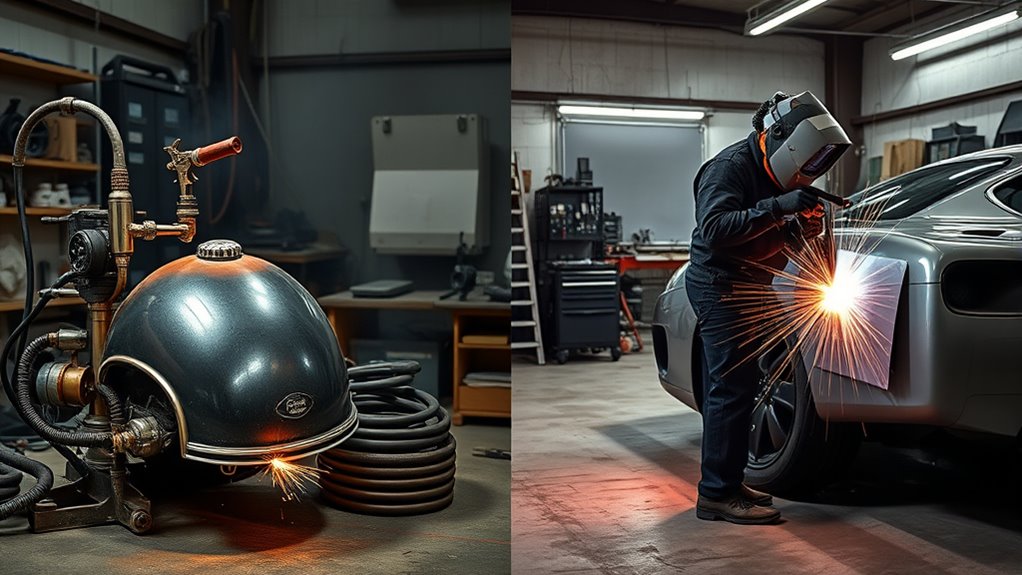
Setup cost depends on what you already own and how often you weld. MIG needs a machine, wire, tips, a gun, safety gear, and often shielding gas.
An oxyacetylene setup needs cylinders, regulators, hoses, a torch, tips, and safety gear. Used gear can lower the entry cost, but only buy equipment you can inspect and use safely.
Used oxyacetylene gear can lower your entry cost, but damaged hoses, bad regulators, or unsafe cylinders can cost more later.
- Oxyacetylene: useful for heating, brazing, cutting, and shaping.
- MIG: faster for tack welding, seam repair, and thin sheet metal.
- Used market: inspect hoses, regulators, leads, clamps, and cylinders before use.
If you only repair cars occasionally, oxyacetylene may make sense when you also need heat and brazing. MIG still makes sense when you value speed and convenience.
For outdoor repairs, MIG with flux-core wire can help in wind. Learn more about self-shielded capability before choosing wire.
Products Worth Considering

Powerful Flame Temperature Heat up to 5252°F (2900°C)
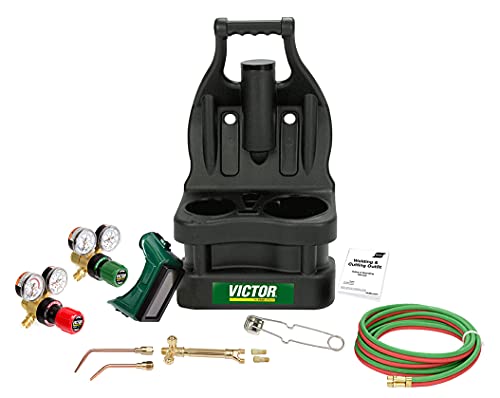
The Portable Tote from Victor features a molded, plastic carrying case with an ergonomic handle and balanced design for easy carrying.

1.High-quality materials: The carbohydrate cleaning tool is made of high-quality stainless steel, and is equipped with a lightweight and stable high-quality aluminum box, it is a good tool to carry and use
When Should You Use Brazing or Heat?
Brazing makes sense when you need a joint without melting the base metal like a fusion weld. It can help with brackets, non-structural repairs, and areas that need lower heat.
Use brazing when thermal distortion matters more than full fusion. It can join some dissimilar metals and reduce damage to surrounding sheet metal.
You can also use oxyacetylene heat to loosen parts, preheat thick pieces, or reshape bent panels before final fitment. That same controlled heat helps with shrinking stretched metal during restoration work.
Do not use brazing where the repair needs a true structural weld unless the repair method allows it. For restoration work, that flexibility gives you more control.
If your project involves cast parts, this guide on preheating cast iron explains why heat control matters.
How Do the Finishes Compare?
Finish quality depends on the process, panel thickness, and your skill. Both MIG and oxyacetylene can make clean repairs when you set them up correctly.
- Oxyacetylene: better for metal shaping and soft, workable weld areas.
- MIG welding: better for fast tacks and clean seams with less heat spread.
- Both: can support solid repairs when you clean, fit, weld, and finish the panel correctly.
If you’re chasing appearance and metal shaping, oxyacetylene can win. If you’re chasing speed and controlled finishes, MIG often makes more sense.
Wear proper protective clothing during both welding and grinding because sparks, heat, and ultraviolet light can injure you.
Which Welder Should You Use for Auto Body?
Use oxyacetylene when you need heat control, shaping, brazing, or a workable finish. Its flame lets you spread heat gradually, but you must manage warping carefully.
Choose MIG welding when you want speed, strong gap filling, and lower heat on thin sheet metal. It’s the practical choice for many modern body panels because it reduces distortion and speeds up tack welding.
If you’re new to auto body work, MIG usually gives you more consistent results with less practice. If restoration quality and shaping matter most, oxyacetylene still earns its place.
Remove coatings before welding when the metal has zinc or galvanizing. This guide on zinc removal explains why clean prep matters.
In practice, match the tool to the metal, the repair, and your control level. That gives you better welds and less rework.
Frequently Asked Questions
What Kind of Welding Is Best for Auto Body Work?
MIG is usually best for thin auto body panels because it works fast and reduces heat buildup. Use oxyacetylene when you need heating, shaping, brazing, or more flame control.
Is Oxyacetylene Better Than MIG for Restoration Work?
Oxyacetylene can be better for some restoration work because it gives you a softer, more controllable heat source. It helps when you need to shape metal, shrink stretched areas, or make a repair that responds well to hammer work.
Can You Use MIG on Thin Car Panels?
Yes, you can use MIG on thin car panels when you use short tacks, correct wire size, and proper machine settings. Let the metal cool between tacks to reduce warpage and burn-through.
Does Oxyacetylene Warp Panels More Than MIG?
Oxyacetylene can warp thin panels more if you hold heat in one area too long. MIG usually limits warpage better because it lets you weld in short, controlled bursts.
Should Beginners Start With MIG or Oxyacetylene?
Most beginners should start with MIG because it has a simpler learning curve for tack welds and small patch repairs. Oxyacetylene builds strong heat-control skills, but it takes more practice.
Conclusion
MIG usually gives you the best path for thin auto body sheet metal because it works fast and limits heat distortion. Oxyacetylene still matters when you need flame control, brazing, heat shrinking, or careful shaping.
Start by checking the panel thickness, joint fit-up, access, and finish goal. Then choose the process that gives you the most control with the least rework.
You don’t need one tool for every repair. You need the right tool for the metal in front of you.