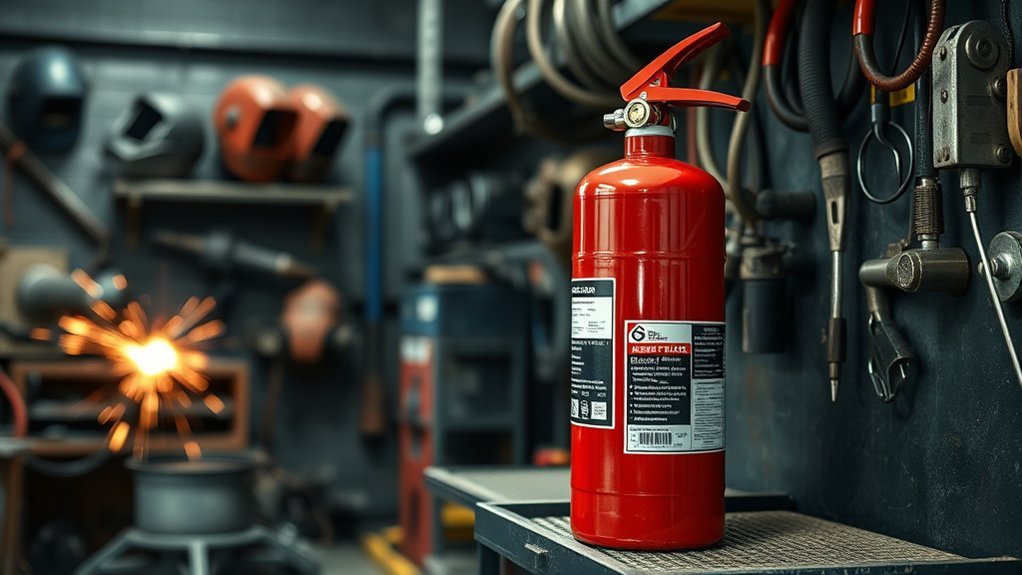
In a welding shop, the best fire extinguisher setup usually includes a multi-purpose ABC dry chemical extinguisher for general shop hazards, a Class D dry powder extinguisher if you cut or grind combustible metals, and optional CO2 or clean agent units for electrical panels, welders, CNC controls, or other sensitive equipment. The right choice depends on the materials you work with, the fire class, the size of the shop, and local fire-code requirements.
Quick Answer
For most welding shops, keep at least one UL-listed 10 lb ABC extinguisher near each welding area and exit path. Add a Class D dry powder extinguisher if you generate magnesium, titanium, aluminum, sodium, potassium, or other combustible metal dust, chips, or shavings. Use CO2 or clean agent units only as supplements for electrical or sensitive-equipment areas.
Key Takeaways
- ABC dry chemical is the baseline choice for common welding-shop fires involving paper, wood, packaging, oil, fuel, solvents, and energized electrical equipment.
- Class D dry powder is required when your shop creates combustible metal powder, flakes, shavings, or similar products often enough to create a metal-fire hazard.
- CO2 is useful for Class B and electrical fires, but it is not a good choice for Class A combustibles, metal fires, or confined spaces without proper controls.
- Keep extinguishers visible, charged, inspected monthly, serviced annually, and close enough for instant use during welding or cutting.
At a Glance
| Time Required | 15-30 minutes to assess shop hazards and placement; monthly for quick inspections |
| Difficulty | Moderate, because extinguisher type must match the actual fire hazard |
| Tools Needed | Shop hazard list, extinguisher labels, wall brackets, inspection tags, and local fire-code guidance |
| Cost | Usually low to moderate for ABC units; higher for Class D, CO2, clean agent, or wheeled extinguishers |
Best Fire Extinguisher Setup for a Welding Shop
The safest setup starts with the fire classes your shop can actually produce. Under OSHA portable fire extinguisher rules, extinguishers must be selected and distributed based on the classes of anticipated workplace fires and the size and degree of hazard. That means a small repair bench, a fabrication shop, and a CNC plasma area may need different combinations.
| Extinguisher Type | Use It For | Avoid It For |
| ABC dry chemical | Wood, paper, rags, packaging, many flammable liquids, and energized electrical equipment | Combustible metal fires and sensitive electronics where residue damage matters |
| Class D dry powder | Combustible metal dust, flakes, chips, and shavings from metals such as magnesium or titanium | General paper, oil, or electrical fires unless the label specifically allows it |
| CO2 | Small Class B liquid fires and energized electrical equipment where residue must be avoided | Class A smoldering materials, Class D metals, and confined spaces without proper respiratory protection |
| Clean agent | Electrical controls, computers, CNC equipment, and other areas where cleanup must be minimal | Combustible metal fires unless the unit is specifically rated and approved for that hazard |
Warning: Do not fight a fire unless you are trained, the fire is small and contained, the correct extinguisher is in your hand, the alarm has been raised, and you have a clear escape route. If you are unsure, evacuate and call emergency services.
Welding Hazards: Fire Risks and Safety Measures
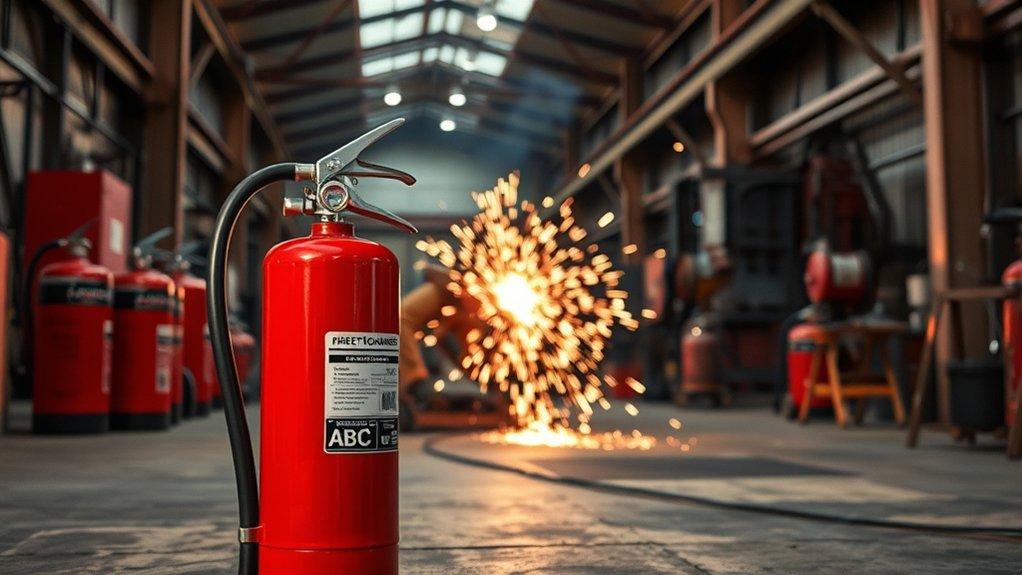
Welding, cutting, grinding, and brazing create heat, sparks, slag, and hot metal that can ignite nearby materials. Common shop hazards include cardboard, rags, oil, paint, solvents, sawdust, plastic parts, dust collectors, gas hoses, and fuel containers. Before hot work starts, remove or shield combustibles and check both sides of walls, partitions, floors, or vehicle panels that can transfer heat.
OSHA welding, cutting, and brazing rules require suitable fire extinguishing equipment to be ready for instant use. OSHA also requires a fire watch when welding or cutting is done where more than a minor fire could develop, including when appreciable combustible material is within 35 feet of the work area.
Good fire prevention also depends on ventilation, safe cleaning products, and PPE. Keep chlorinated solvent cleaners away from welding heat and arc radiation, because heated solvent residue can create dangerous fumes. Use welding-safe cleaners, let parts dry fully, and maintain effective ventilation when cutting or welding coated, painted, or contaminated material.
Why ABC Fire Extinguishers Are Essential in Welding
An ABC dry chemical extinguisher is the standard starting point for most welding shops because it covers Class A, Class B, and Class C hazards. Class A includes ordinary combustibles such as wood, paper, cloth, rubber, and many plastics. Class B includes flammable liquids and gases. Class C applies when energized electrical equipment is involved.
Keep ABC extinguishers near welding stations, cutting tables, grinders, storage areas, and exit routes. Choose a size that trained workers can handle quickly. A 10 lb ABC unit is often a practical shop choice because it offers more discharge than a small 5 lb unit while still being portable for many workers.
- Best for general shop hazards: sparks in rags, packaging, wood benches, oil, paint, and many fuel or solvent fires.
- Good first line of defense: useful in mixed-hazard work areas where the exact fire source may not be obvious at first.
- Easy to source: widely available, rechargeable, and familiar to most trained workers.
- Important limitation: ABC dry chemical is not a Class D metal-fire agent and can leave residue that damages motors, electronics, and controls.
ABC dry chemical should not be your only plan if your shop works with combustible metal dust or shavings. It is also messy, so sensitive equipment areas may benefit from CO2 or a listed clean agent extinguisher as a supplement.
Pro Tip: Mount ABC units along the path to an exit, not deep inside the hazard area. You should be able to grab the extinguisher while keeping a safe way out behind you.
Products Worth Considering

Reliable Fire Protection: Stop basic home fires involving trash, wood, paper, liquids, gases, and electrical equipment

Reliable Fire Protection: Stop basic home fires involving trash, wood, paper, liquids, gases, and electrical equipment

IMMEDIATE RESPONSE FROM A SAFE DISTANCE WITH PATENTED HANDLE DESIGN:Act swiftly from a safe distance up to fifteen feet when alarm rings at night or smoke fills a room; patented handle lets anyone—whether grandparent or child—activate the fire extinguisher without training, avoiding panic in emergencies
The Importance of Class D Fire Extinguishers for Metal Fires
Class D fire extinguishers are designed for combustible metal fires. In welding and fabrication shops, this can matter when you grind, cut, machine, or collect dust and shavings from metals such as magnesium, titanium, sodium, potassium, zirconium, or fine aluminum. Solid metal stock is usually less risky than dust, flakes, chips, or powder because small particles have far more exposed surface area.
Class D extinguishers use special dry powder agents that smother the fire and help absorb heat. The exact agent must match the metal hazard. Do not assume one Class D extinguisher is right for every metal in the shop. Check the extinguisher label, safety data sheets, and your fire-protection provider’s guidance.
Products Worth Considering

OSHA format Fire Extinguisher sign makes your Fire Safety / Equipment message clear

OSHA format Fire Extinguisher sign makes your Fire Safety / Equipment message clear

FIRE DOESN'T WAIT. NEITHER SHOULD YOU. — This ABC fire extinguisher with mount is a dry chemical fire extinguisher carrying 2.5 lb of agent for Class A, B and C fires involving wood, paper, flammable liquids and energized electrical equipment.
Essential for Metal Fires
A Class D unit is essential when combustible metal dust, shavings, or powder can ignite. OSHA’s portable extinguisher rule requires Class D extinguishing agent in combustible metal working areas where metal powders, flakes, shavings, or similar products are generated at least once every two weeks.
- Use Class D only on metals listed on the extinguisher label.
- Keep it near the metalworking area but positioned so workers can approach safely.
- Train welders and grinders not to use water, foam, CO2, or ordinary ABC dry chemical on metal fires unless the extinguisher label says it is appropriate.
- Keep metal dust and chips cleaned up so a small ignition source cannot spread through accumulated material.
Preventing Fire Spread
Metal fires can burn extremely hot and react badly with the wrong agent. Water can create steam, spread burning material, or react with some metals. CO2 may not smother a burning metal effectively. Dry chemical and dry powder are not the same thing, so do not substitute an ABC unit for a Class D unit.
Store combustible metal scrap in approved containers, separate incompatible metals, and keep collection systems clean. If you cut or grind aluminum, magnesium, or titanium near ordinary steel work, make sure dust does not build up under benches, inside grinders, or around ventilation pickups.
Proper Extinguisher Placement
For OSHA general-industry distribution, Class D extinguishing agent must be available so the travel distance from the combustible metal working area to the agent is 75 feet or less. That distance is a maximum, not a best-practice target. In a high-risk metalworking zone, closer access may be safer and may be required by your local fire code, insurer, or authority having jurisdiction.
- Mount Class D units where they are visible and not blocked by stock, carts, or scrap bins.
- Label the metal types the extinguisher is intended for.
- Keep a compatible scoop or applicator available if the agent requires it.
- Include Class D use in fire drills for workers who handle combustible metals.
When to Use CO2 Fire Extinguishers in Welding?
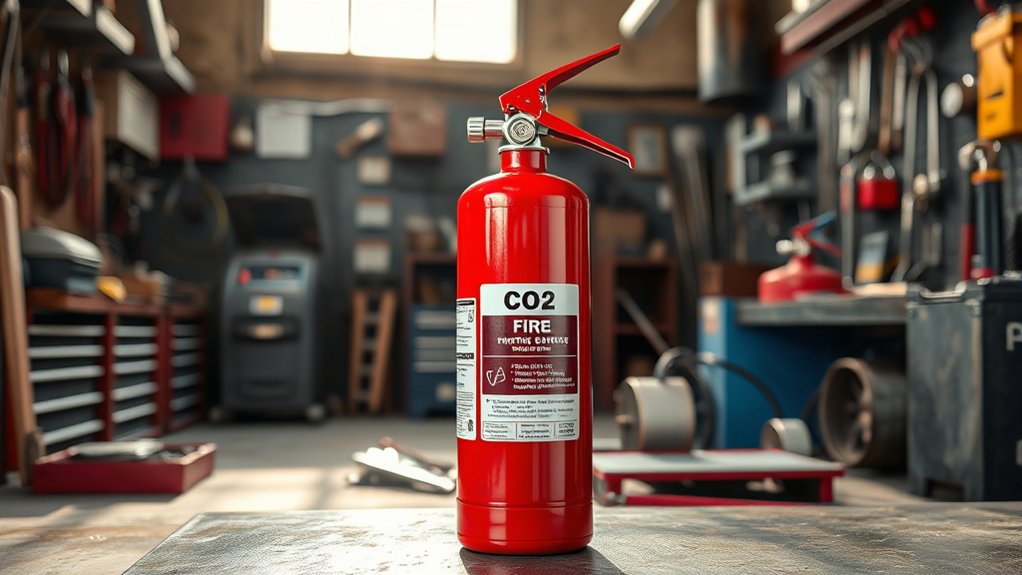
CO2 fire extinguishers can be useful in welding shops, but they are not a universal solution. CO2 is best for Class B flammable-liquid fires and Class C energized electrical equipment, especially where dry chemical residue would damage controls, motors, computers, or test equipment.
Ideal Scenarios for Use
- Electrical equipment: CO2 leaves no powder residue, so it can be useful near welders, panels, chargers, and electronic controls.
- Small flammable-liquid fires: CO2 can blanket the fuel surface and reduce oxygen around the flame.
- Sensitive equipment zones: CO2 may reduce cleanup compared with ABC dry chemical.
- Supplemental protection: CO2 works best as an added extinguisher, not as the only extinguisher in a welding shop.
Safety Considerations in Welding
CO2 has important limits. It can displace oxygen in the air, so do not use it in confined spaces unless the work has been properly evaluated and workers have appropriate protection. It is also a poor choice for ordinary Class A combustibles because the material may keep smoldering and reignite after the CO2 disperses.
Never use CO2 on Class D combustible metal fires. It may fail to control the fire and can create more danger. If a metal fire is possible, use the correct Class D dry powder extinguisher instead.
Warning: CO2 can make breathing difficult in enclosed or poorly ventilated areas. If a fire starts inside a tank, vehicle body cavity, pit, or confined work area, evacuate and follow your confined-space and emergency plan instead of trying to flood the area with CO2.
The Role of Clean Agent Fire Extinguishers in Safety
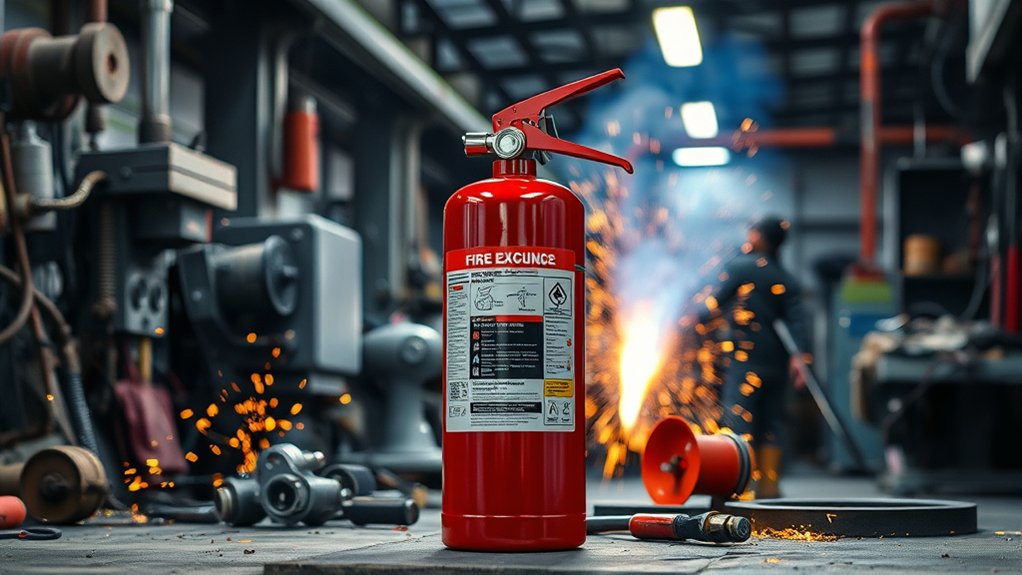
Clean agent fire extinguishers are useful where cleanup matters. They discharge gas or vaporizing liquid agents that leave little to no residue, making them a better fit around CNC controls, computers, battery chargers, diagnostic tools, robotics, and electrical cabinets than dry chemical units.
- Residue-free operation: helps protect sensitive equipment from powder damage.
- Electrically non-conductive agents: suitable for many energized-equipment hazards when the label rating allows it.
- Fast cleanup: helpful in shops where downtime is expensive.
- Supplemental role: clean agent units do not replace ABC or Class D coverage for general welding-shop hazards.
Check the extinguisher label before use. Some clean agent extinguishers are rated for Class A, B, and C; others may be rated only for B and C. They are usually more expensive than ABC dry chemical units, so place them where their residue-free benefit matters most. Also make sure your team uses proper protective clothing and safe hot-work habits so extinguishers remain a backup, not the main safety plan.
Choosing 5 lb, 10 lb, or Wheeled Extinguishers
Extinguisher size affects discharge time, reach, and who can handle the unit safely. Bigger is not always better if workers cannot lift, aim, and control it. For many welding shops, a mix of portable 10 lb ABC units, smaller specialty units, and larger wheeled extinguishers in high-hazard zones works better than using one size everywhere.
| Size | Best Use | Main Tradeoff |
| 5 lb | Small benches, service trucks, mobile welding carts, and tight areas | Shorter discharge and less agent for fast-growing fires |
| 10 lb | Most fixed welding stations, cutting tables, and general fabrication areas | Heavier than 5 lb units, so workers must be comfortable handling it |
| Wheeled | Large shops, fuel storage, paint areas, heavy cutting, or high-hazard industrial work | Costs more and needs clear floor access |
Choose the largest extinguisher your trained workers can safely and comfortably operate. For high-hazard work, ask a qualified fire-protection provider to size the units and confirm ratings, spacing, and mounting height.
Avoiding Common Fire Extinguisher Selection Mistakes
Selecting the wrong fire extinguisher can make a fire worse, damage equipment, or place workers in danger. Avoid these common welding-shop mistakes:
- Using water on electrical or flammable-liquid fires: water can conduct electricity and spread burning liquid.
- Using ABC dry chemical on combustible metal fires: ordinary dry chemical is not the same as Class D dry powder.
- Using CO2 in a confined space: CO2 can displace oxygen and create an asphyxiation hazard.
- Relying only on clean agent units: they protect electronics well, but they may not cover common shop combustibles or metal fires.
- Ignoring residue damage: dry chemical can harm motors, electronics, and CNC controls after discharge.
- Keeping old or damaged extinguishers: remove units with corrosion, damaged threads, missing pins, low pressure, blocked nozzles, or unclear labels.
Also review your cutting process. Better plasma cutting gas choices, cleaner work surfaces, and controlled sparks can reduce the chance of ignition before you ever need to reach for an extinguisher.
Proper Placement of Fire Extinguishers in the Workshop
Fire extinguishers should be easy to see, easy to reach, and placed so workers do not have to move toward the fire to get one. OSHA requires portable extinguishers to be mounted, located, and identified so they are readily accessible without subjecting employees to possible injury.
- Class A hazards: OSHA’s maximum travel distance is 75 feet or less.
- Class B hazards: OSHA’s maximum travel distance from the Class B hazard area is 50 feet or less.
- Class C hazards: place units based on the Class A or Class B hazards already present.
- Class D hazards: OSHA’s maximum travel distance from the combustible metal working area to the Class D agent is 75 feet or less.
- Hot work: suitable fire extinguishing equipment must be maintained ready for instant use.
Place extinguishers near exits, at welding areas, at cutting tables, near grinders, near flammable-liquid storage, and around high-risk equipment. Use clear signs in larger shops or anywhere machines, racks, curtains, or stored metal may block the view.
Keep the work area free of flammable materials that can catch from sparks. Where combustibles cannot be moved at least 35 feet away, shield them with flame-resistant covers, metal guards, welding curtains, or other approved protection.
Before Welding: Fire-Safe Setup Checklist
Use this checklist before welding, cutting, brazing, or grinding in any area where a fire could spread.
- Move combustibles at least 35 feet from the work area when practical.
- Shield immovable combustibles with approved fire-resistant covers or guards.
- Check cracks, floor openings, wall openings, and the opposite side of metal partitions for hidden combustibles.
- Remove oil-soaked rags, solvent cans, paint, cardboard, dust, and plastic parts.
- Confirm the correct extinguisher is charged, visible, and ready for instant use.
- Assign a trained fire watch when required by the hazard, permit, insurer, local code, or OSHA conditions.
- Continue fire watch for at least 30 minutes after welding or cutting when a fire watch is required.
- Inspect the area again after cooling, especially under benches, behind panels, and near dust collection points.
Note: Local fire code, your insurer, and the authority having jurisdiction can require stricter spacing, ratings, permits, or inspection routines than the general OSHA distances listed here.
Maintenance Tips for Fire Extinguishers
Regular maintenance keeps your extinguishers ready. At minimum, check each unit monthly, arrange annual maintenance by a qualified person, and track hydrostatic testing or replacement based on the extinguisher type, label, manufacturer instructions, and local code.
| Maintenance Task | Frequency | What to Check |
| Visual inspection | Monthly | Access, pressure gauge, pin, seal, hose, nozzle, label, mounting, corrosion, and damage |
| Professional maintenance | Annually | Service tag, charge, weight, parts, condition, and compliance record |
| Internal maintenance or recharge | After use or as required | Recharge, 6-year maintenance for certain dry chemical units, or replacement if not serviceable |
| Hydrostatic testing | Varies by type | CO2 is commonly 5 years; many stored-pressure dry chemical units are 12 years under OSHA Table L-1 |
Remove an extinguisher from service if it is blocked, discharged, undercharged, missing a pin, missing a seal, corroded, burned, dented, leaking, or has damaged cylinder threads. When a unit is removed for service, provide equivalent protection in its place.
Good maintenance should work with your overall shop process. For example, if you cut galvanized material, follow proper fire safety precautions and ventilation practices so fumes, coating residue, and sparks are controlled together.
How to Train Employees on Fire Extinguisher Use
Training matters as much as equipment. If extinguishers are provided for employee use, workers need education on extinguisher basics and the hazards of incipient-stage fire fighting. Workers designated to use firefighting equipment need training on the correct equipment for the hazards in your shop.
- Teach fire classes: A, B, C, D, and K, plus which ones apply to your shop.
- Show extinguisher labels: make sure workers can identify ABC, CO2, clean agent, and Class D units by label, not by color alone.
- Use PASS: Pull the pin, Aim low at the base of the fire, Squeeze the lever, and Sweep side to side.
- Practice evacuation decisions: workers should know when to fight a small fire and when to leave.
- Train the fire watch: fire watchers need extinguishing equipment ready, alarm access, and authority to stop work.
- Review unusual hazards: metal powders, fuel tanks, solvents, cylinders, batteries, coatings, and plasma cutting materials that can create fire hazards.
Run short drills often enough that workers can find the nearest extinguisher without searching. A good drill should include raising the alarm, checking the exit path, selecting the correct extinguisher, and deciding whether the fire is too large to fight safely.
Frequently Asked Questions
What type of fire extinguisher is best for a welding shop?
Most welding shops should start with ABC dry chemical extinguishers for general hazards. Add a Class D dry powder extinguisher if you generate combustible metal dust, flakes, chips, or shavings. CO2 and clean agent units can be useful near electrical or sensitive equipment, but they should not replace ABC or Class D protection.
When should you not use a CO2 fire extinguisher?
Do not use CO2 for combustible metal fires, smoldering Class A fires, or confined spaces without proper evaluation and respiratory protection. CO2 can displace oxygen and may allow Class A materials to reignite after the gas disperses.
Do I need a 5 lb or 10 lb fire extinguisher?
A 5 lb extinguisher is easier to carry and works well for service carts, small benches, and vehicles. A 10 lb extinguisher gives more agent and is often a better fit for fixed welding stations and cutting tables. Choose the largest unit trained workers can safely handle.
What does OSHA say about fire extinguishers in welding?
OSHA says suitable fire extinguishing equipment must be ready for instant use during welding or cutting. OSHA also requires extinguishers to be selected and distributed based on expected fire classes and hazards. For portable extinguisher travel distance, OSHA lists 75 feet for Class A, 50 feet for Class B hazard areas, and 75 feet for Class D combustible metal areas.
Is an ABC extinguisher enough for welding?
An ABC extinguisher is enough for many basic welding-shop hazards, but not all of them. If your shop creates combustible metal dust or shavings, you also need a compatible Class D dry powder extinguisher. If you have sensitive electronics, a CO2 or clean agent extinguisher may also be worth adding.
How often should welding-shop fire extinguishers be inspected?
Do a visual inspection every month and arrange professional maintenance at least once a year. Also inspect an extinguisher after it is moved, discharged, damaged, blocked, exposed to heat, or found with low pressure, corrosion, a missing pin, or a broken seal.
Conclusion
A safe welding shop needs more than one random extinguisher on the wall. Start with ABC dry chemical extinguishers for general shop fires, add Class D dry powder where combustible metal dust or shavings are present, and use CO2 or clean agent units where electrical or sensitive equipment needs residue-free protection. Place every extinguisher where workers can reach it fast without losing their escape route, inspect it monthly, service it annually, and train your team before a fire happens.
Sources
- OSHA 29 CFR 1910.252 – Welding, Cutting, and Brazing General Requirements – supports hot-work fire prevention, 35-foot combustible control, fire watch, and instant-use extinguishing equipment.
- OSHA 29 CFR 1910.157 – Portable Fire Extinguishers – supports extinguisher selection, placement, maintenance, inspection, training, and travel-distance requirements.
- U.S. Fire Administration – Choosing and Using Fire Extinguishers – supports fire classes, extinguisher labels, sizing concepts, PASS, and when to use an extinguisher.
- Canadian Centre for Occupational Health and Safety – Portable Fire Extinguishers – supports fire classes, CO2 limitations, monthly inspection items, and safe extinguisher use.
- NFPA 51B – Standard for Fire Prevention During Welding, Cutting, and Other Hot Work – supports hot-work fire prevention framework and fire watch planning.
- NFPA 10 – Standard for Portable Fire Extinguishers – supports portable extinguisher selection, installation, inspection, and maintenance practices.