Why 75/25 MIG Gas Works for Auto Body
What’s in This Article
- Why 75/25 MIG Gas Works for Auto Body
- What 75/25 Does to the Arc
- Why 75/25 Beats Straight CO2 on Sheet Metal
- When to Use 75/25 on Auto Body Panels
- How 75/25 Reduces Spatter
- Best Wire Size for Auto Body MIG Welding
- How to Set Up Your MIG Welder for 75/25
- Common Thin-Metal MIG Problems to Fix
- 75/25 Vs Other MIG Gas Mixes
- How to Dial In Cleaner Auto Body Welds
- Frequently Asked Questions
You use 75/25 argon-CO2 for auto body MIG because it gives you a stable, responsive arc with enough penetration for mild steel. It also creates far less spatter than straight CO2. That balance helps you control heat on thin sheet metal, reduce warping, and produce a cleaner bead with less cleanup. If you want better thin-gauge results, you need the right wire size, gas flow, stick-out, and travel speed.
Quick Answer
A 75/25 argon-CO2 mix works well for auto body MIG because it gives you a smooth arc, low spatter, and controlled penetration on mild steel panels. It helps you weld thin sheet metal with less burn-through and less distortion than straight CO2. For best results, pair it with small solid wire, clean metal, steady gas flow, and short stitch welds.
Key Takeaways
- Use 75/25 argon-CO2 for clean MIG welds on mild steel auto body panels.
- Choose 0.023 to 0.030-inch solid wire for better heat control on thin metal.
- Set gas flow around 15 to 20 CFH, then adjust for drafts and nozzle size.
- Keep a short contact-tip-to-work distance so the arc stays stable.
- Test every setting on scrap metal before you weld the actual panel.
Why 75/25 MIG Gas Works for Auto Body
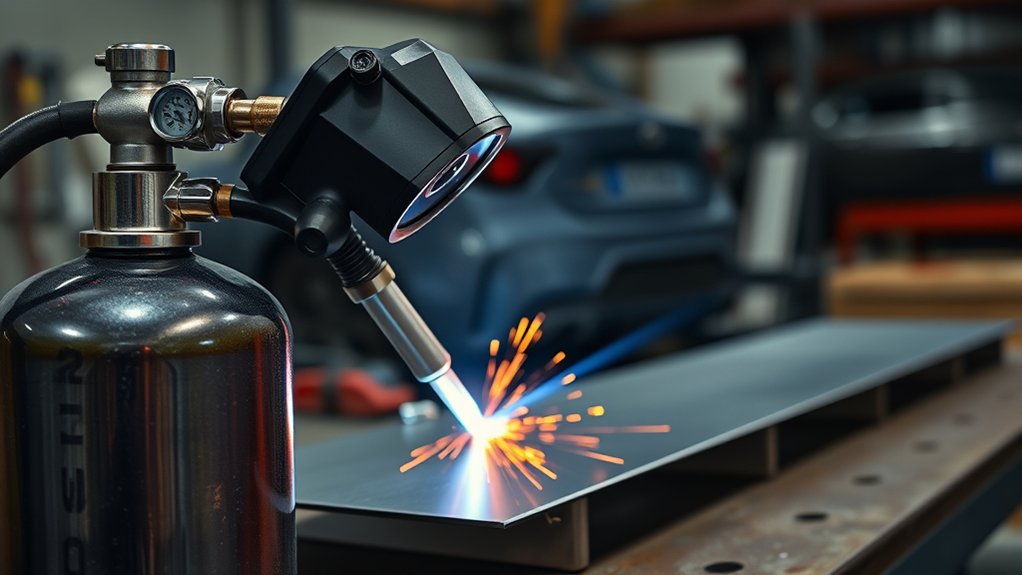
The 75/25 argon-CO2 mix works well for auto body MIG because it balances penetration with spatter control. That balance matters when you weld thin sheet metal. You get a shielding gas that stabilizes the arc and supports precise heat input, so you can join panels without chasing distortion.
That control matters when you repair bodywork that must stay flat and true. The mix also helps you form a cleaner bead profile, with less cleanup after the weld cools. Compared with 100% CO2, it feels more controlled and less aggressive, but it still gives enough penetration for solid repairs.
You can move faster, waste less time grinding, and keep warping risk lower. For you, that means more control over the metal and more freedom to restore panels with accuracy. The 75/25 argon and CO2 mix can also support better weld quality when you pair it with clean metal and proper ventilation.
Products Worth Considering

All HP cylinders come with a 10 year hydrotest date stamped.

【Argon Hose Material & Fittings】50FT Argon hose designed for inert gas welding hose systems, compatible with Miller/Lincoln TIG/MIG welders and argon/CO2/Helium mixtures. Fits standard welding gas hose regulators, flow meters, and welding accessories, ensuring seamless integration with argon regulator setups

Compatible with CGA-580 tanks: Easily attach this Gas Pressure Regulator/Flowmeter to your Argon, Helium, and CO2 tanks with its CGA-580 inlet connector
What 75/25 Does to the Arc
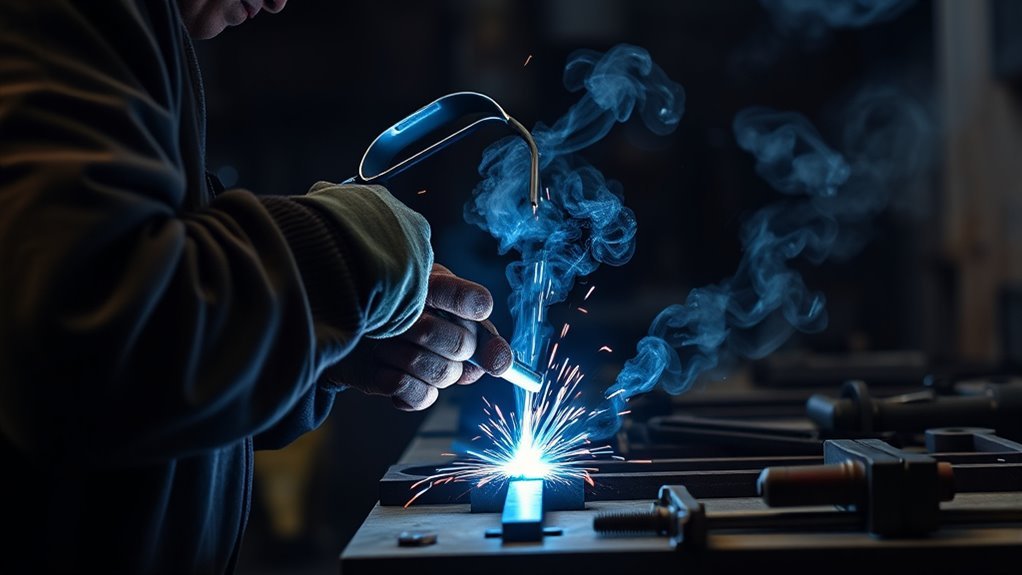
With bead shape and heat input under control, 75/25 also changes how the arc behaves at the torch. You get a steadier transfer, so your arc characteristics stay predictable as you move along the joint. This gas mixture keeps the arc tight and responsive, which helps you place heat where you need it.
Argon in the blend smooths energy delivery into the weld pool. That supports cleaner fusion and helps you hold a consistent profile. You’ll also notice less spatter, because the arc doesn’t break up as sharply as it can with straight CO2.
That means fewer stops, less cleanup, and more control over each pass. For you, the result is a stable, efficient arc that supports uniform penetration and a smooth bead. Proper PPE setup also helps protect you while you tune your weld settings.
Why 75/25 Beats Straight CO2 on Sheet Metal
When you weld sheet metal with 75/25, you get a steadier arc than straight CO2. That steadier arc keeps the puddle more controlled on thin panels. You’ll also see less spatter, which leaves cleaner welds and cuts down post-weld cleanup.
That added stability gives you better control on body panels without adding as much burn-through risk. The 75% argon/25% CO2 mix can also help you keep welds cleaner when the base metal is prepared well. If you weld galvanized steel, remove coatings safely and use strong ventilation because zinc fumes can be dangerous.
Warning: Never weld coated or galvanized metal without proper prep, ventilation, and respiratory protection.
Products Worth Considering
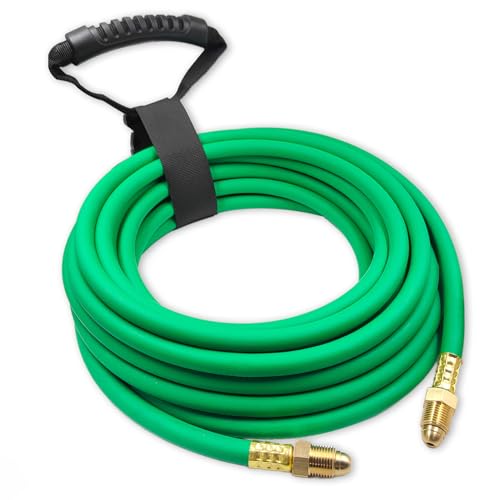
【Argon Hose Material & Fittings】30FT Argon hose designed for inert gas welding hose systems, compatible with Miller/Lincoln TIG/MIG welders and argon/CO2/Helium mixtures. Fits standard welding gas hose regulators, flow meters, and welding accessories, ensuring seamless integration with argon regulator setups

APPLICATION: The ARCCAPTAIN gas pressure regulator can be used with argon, helium, and carbon dioxide gas tanks.
Arc Stability On Sheet Metal
On thin sheet metal, 75/25 argon-CO2 gives you a noticeably steadier MIG arc than straight CO2. That helps the puddle stay controlled and the bead stay uniform. You get more predictable arc characteristics because argon softens the transfer and stabilizes voltage behavior.
That steadiness matters when you work close to burn-through limits. You can fine-tune heat input without fighting arc wander. The argon-rich shielding gas also covers the weld pool more consistently, so you reduce oxidation and contamination at the surface.
As a result, you can drive enough penetration for solid bodywork while keeping the bead narrow and deliberate. For you, that means less guesswork, more control, and a freer hand on vulnerable panel edges.
Less Spatter, Cleaner Welds
Because the 75/25 argon-CO2 mix produces a steadier arc than straight CO2, you get less spatter and a cleaner weld on sheet metal. You’ll see the puddle stay more controlled, so molten droplets don’t scatter across nearby panels. That means less post-weld cleanup and better surface quality right off the gun.
On thin automotive steel, the blend’s moderated penetration also helps you avoid burn-through, while still giving solid fusion. Since the mix reacts less sharply than pure CO2, it can reduce porosity and uneven bead formation. The result is cleaner welds with a smoother bead profile.
For auto body MIG, this gas choice gives you precise results without extra rework. That matters when appearance, fit, and repair time all count.
Better Control For Body Panels
The 75/25 argon-CO2 mix gives you tighter control over body panels by keeping the arc steadier than straight CO2 on thin sheet metal. In automotive repair, that stability lets you place heat exactly where you need it. You can shape repairs without fighting the puddle.
With argon and CO2 balanced, you get less aggressive penetration, fewer burn-throughs, and a more predictable bead on delicate skins.
- Keep the arc stable for finer torch control.
- Spread heat more evenly across thin panels.
- Lower burn-through risk on light-gauge steel.
- Keep welds consistent, strong, and easier to finish.
That precision helps you work cleanly, move faster, and keep the panel’s integrity intact.
When to Use 75/25 on Auto Body Panels
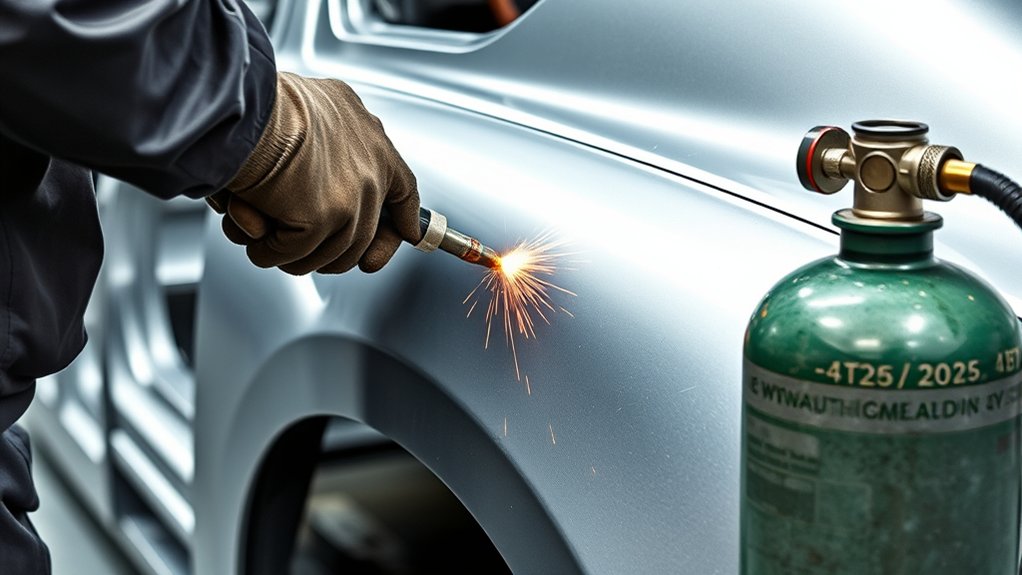
Use 75/25 argon-CO2 when you need clean, stable MIG welds on auto body panels, especially with mild steel. The 75/25 argon-CO2 mix gives you a controlled arc, so you can place heat with care. That helps you protect thin sheet metal from distortion.
When you’re welding mild steel, this blend balances penetration and cost. That makes it a practical choice for many collision repair and restoration jobs. Use it on panels where fusion matters, because the added CO2 helps drive the puddle into the base metal.
For thin body panels, short-circuit transfer is usually the practical choice. Avoid assuming spray transfer will suit body panels, because it often needs higher heat than thin sheet metal can handle. The mix can reduce porosity risk when you clean the metal, block drafts, and keep the gas shield stable.
If you want efficient, disciplined work that supports both form and function, this gas setup serves you well. Shielding gas also plays a key role in weld integrity and oxidation control on suitable metals.
How 75/25 Reduces Spatter
When you pair 75/25 argon-CO2 with auto body MIG work, you also get a clear spatter advantage. Argon and CO2 balance arc energy so you control the puddle instead of chasing it. That stability lowers spatter and gives you a cleaner path to precise repair.
- Argon sharpens arc focus, so molten metal transfers more smoothly.
- CO2 still supports penetration, but the mix avoids the harsh feel of pure CO2.
- The tighter heat zone reduces erratic melting, which cuts spatter at the source.
- You may see less spatter than with 100% CO2, but the exact amount depends on settings and technique.
That means you spend less time grinding and more time shaping panels with confidence. The result is a stable arc, a consistent bead profile, and cleaner welds. Proper metal preparation also helps you reduce defects before the arc starts.
Best Wire Size for Auto Body MIG Welding
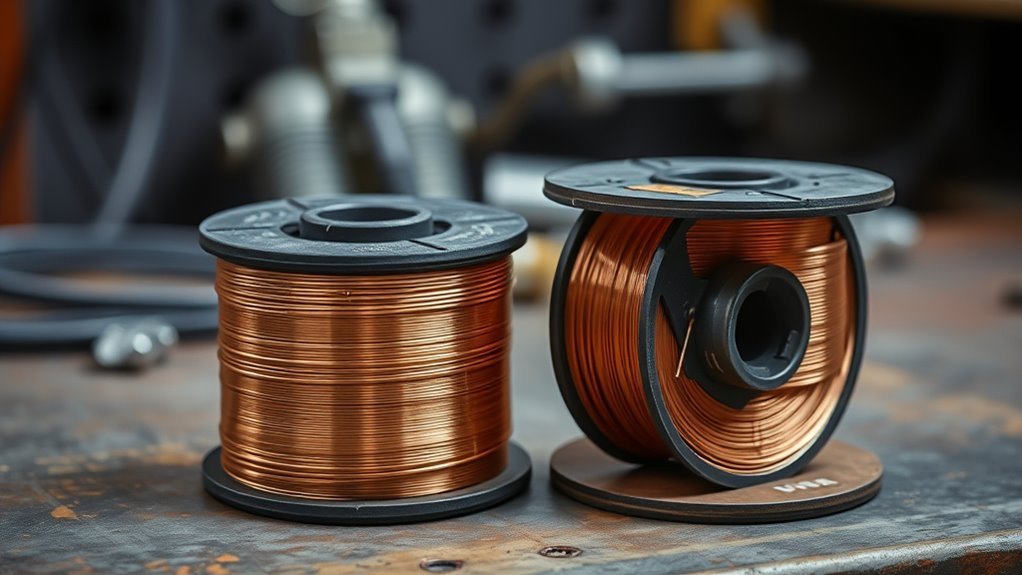
For auto body MIG welding, you’ll typically choose 0.023 to 0.030-inch wire. Many welders use 0.023 or 0.024-inch wire for better control on thin sheet metal and less burn-through. If you’re a beginner, 0.030-inch wire can also work well when your machine feeds it smoothly and the panel is not too thin.
Wire size directly affects arc stability, penetration, and control. You need to match it to the panel thickness and weld location. The correct wire size can also reduce spatter issues and improve overall weld quality.
0.6 mm Wire For Panels
Panel welding starts with the wire diameter. A 0.6 mm wire can suit delicate auto body panels because it deposits less metal and uses less heat. In MIG welding, shielding gas stabilizes the arc and protects the puddle, so you can focus on precision instead of contamination.
- Use 0.6 mm wire for very thin panels when your machine feeds it well.
- Use 0.8 mm wire when you want a wider setup range.
- Avoid oversized wire because it can add excess heat and distortion.
- Pair wire diameter with wire feed speed to tune arc stability and finish.
For clean bodywork, solid wire with shielding gas usually gives you cleaner control than flux-cored wire.
0.8 mm Wire For Beginners
If you’re just getting started with auto body MIG welding, 0.8 mm wire can give you a workable balance of penetration, bead control, and heat input across many common sheet-metal jobs. In your welding setup, this size lets you learn with less guesswork while keeping the gas-shielded arc stable and readable.
A 0.6 mm wire can suit very thin metal, but it demands tighter technique and smooth feeding. A 0.9 mm wire can suit thicker patches, but it can add heat on lighter sections. Your goal is simple: match wire diameter to metal thickness, then test on scrap.
That practice sharpens your judgment, reduces wasted material, and helps you weld with more control.
Wire Size And Control
Wire size has a direct effect on arc control, heat input, and weld quality, so choosing the right diameter matters as much as your machine settings. You’ll often get the best control on thin sheet metal with 0.023-inch wire because it helps limit heat input and warping.
- Use 0.023-inch wire for maximum control on panels.
- Choose 0.030-inch wire when you need a balance of strength and ease.
- Avoid 0.035-inch wire on thin metal unless you can manage higher heat.
- Match wire size to joint thickness for cleaner welds.
When you select the proper wire size, you reduce spatter, prevent burn-through, and preserve structural integrity. That gives you cleaner repairs and more accurate welds.
How to Set Up Your MIG Welder for 75/25
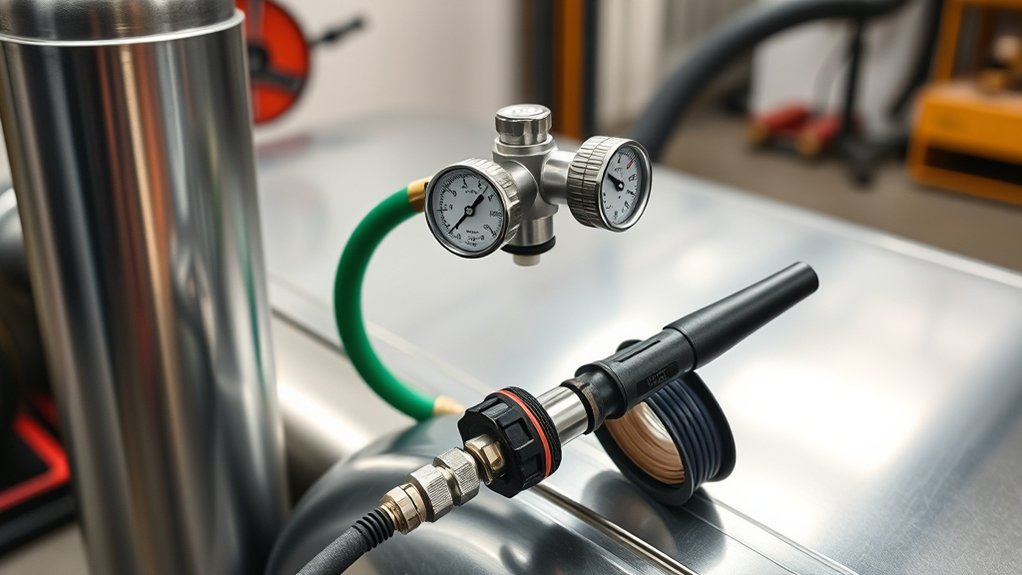
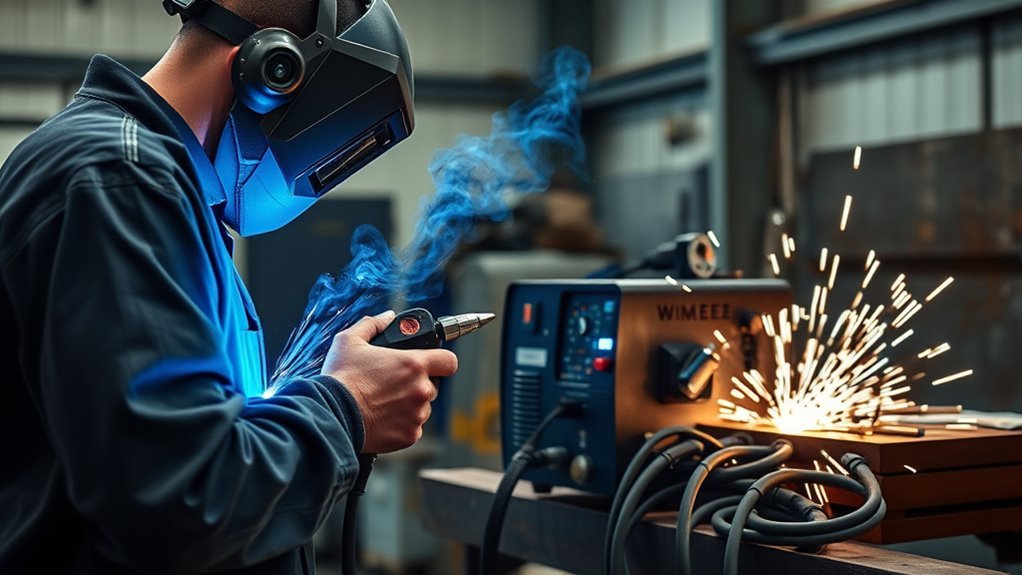
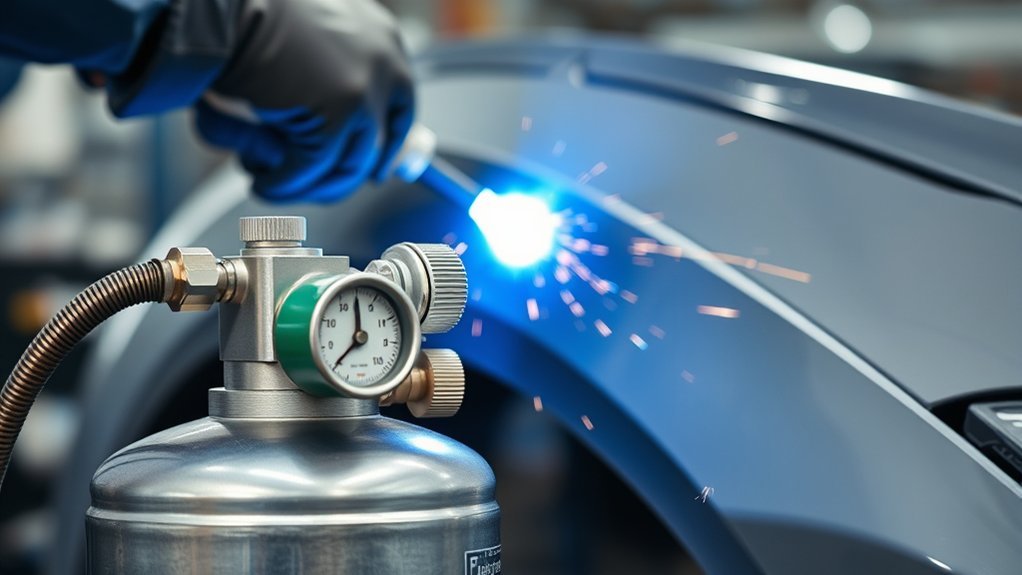
To set up your MIG welder for a 75/25 argon-CO2 mix, start by confirming that the gas regulator matches the bottle. Tighten the connection and check for leaks before you weld. Then set gas flow at 15 to 20 CFH so the shield stays consistent around the weld pool.
Keep contact-tip-to-work distance (CTWD) near 3/8 inch to stabilize the arc and protect coverage. Choose 0.023 to 0.030-inch wire for efficient fusion on thin panels. Understanding the maximum fillet weld size also helps you avoid oversized welds on thin material.
| Setting | Target |
|---|---|
| Regulator | Match bottle |
| Gas flow | 15 to 20 CFH |
| CTWD | About 3/8 inch |
| Wire size | 0.023 to 0.030 inch |
| Maintenance | Clean nozzle, contact tip, diffuser |
Inspect the nozzle, contact tip, and diffuser often. Contamination disrupts gas flow and weakens shielding. With these parameters set, you control heat, reduce uncertainty, and weld with more precision.
Pro tip: Run a test bead on scrap from the same panel before you weld the repair area.
Common Thin-Metal MIG Problems to Fix
When thin sheet metal gives you trouble, the cause is usually one of a few MIG variables: too much heat, poor travel speed, dirty metal, or weak shielding. You can regain control by isolating each fault and correcting it one step at a time.
- Burn-through: lower current, shorten dwell time, and keep travel speed steady so the arc doesn’t collapse the panel.
- Incomplete fusion: slow down, hold a 1/4 to 3/8 inch stick-out, and let the puddle wet both edges before advancing.
- Porosity: clean the nozzle, verify shielding gas flow, and block drafts that contaminate the arc.
- Distortion: use brief stitch welds, move around the panel, and let the metal cool between welds.
A 75/25 argon-CO2 mix helps you run a stable arc with less spatter, which matters when you weld thin auto body steel. Keep your settings deliberate because clean repair work comes from exact technique, not force. Flux core welding can also solve some thin-metal jobs, but it often needs more cleanup.
75/25 Vs Other MIG Gas Mixes
Compared with pure CO2, a 75/25 argon-CO2 mix gives you a steadier arc, less spatter, and a cleaner finish. That helps you weld mild steel body panels with better control and less cleanup. The 75/25 argon-CO2 mix also balances penetration and bead shape, which supports weld quality on visible repairs.
| Mix | Result | Best Use |
|---|---|---|
| Pure CO2 | Hotter arc, more spatter | Higher penetration on mild steel |
| 75/25 Argon-CO2 | Stable arc, cleaner welds | Auto body mild steel |
| 90/10 Argon-CO2 | Smooth arc, lower CO2 content | Specific mild steel applications |
| 100% Argon | Poor choice for MIG welding mild steel | Aluminum MIG with the right wire |
When you compare it with 90% argon/10% CO2, 75/25 still gives you excellent control and often costs less. That matters when you want practical performance without extra expense. You’ll also reduce porosity risk and inconsistent bead appearance when you clean and shield the weld correctly.
For auto body MIG, this blend gives you a disciplined middle ground. It also helps you keep a proper balance between wire speed and voltage, which improves weld quality.
How to Dial In Cleaner Auto Body Welds
To dial in cleaner auto body welds with a 75/25 argon-CO2 mix, verify steady gas flow and full coverage first. That keeps the arc stable and spatter low. Then match wire size, wire feed speed, and voltage to the panel thickness so you maintain controlled penetration without excess heat.
When you tune these settings correctly, you’ll get a smoother bead, less cleanup, and better fit on thin automotive sheet metal. Proper gas pressure needs also help prevent arc instability.
Gas Flow And Coverage
Dialed-in shielding gas separates a clean auto body weld from a contaminated one. Start with a gas flow rate of 15 to 20 CFH for many indoor jobs. Increase it only when nozzle size, draft, or joint shape requires more coverage.
- Set flow low enough to avoid turbulence.
- Hold CTWD near 3/8 inch for tighter coverage.
- Keep travel steady so you don’t break the gas envelope.
- Clean the nozzle and confirm a snug fit so flow stays consistent.
When you protect the molten metal correctly, you get cleaner fusion, fewer defects, and stronger repairs.
Wire Size And Settings
For thin auto body panels, 0.023-inch wire often gives you the cleanest control, with less heat input and a lower risk of burn-through than 0.030-inch wire. Set voltage and wire feed speed from your welder chart first, then fine-tune by sound and bead shape. Keep stick-out at 1/4 to 3/8 inch because that helps gas coverage and reduces contamination.
| Wire size | Effect | Use |
|---|---|---|
| 0.023 in | Low heat, precise puddle | Thin sheet |
| 0.030 in | More fill, more heat | Heavier patches |
| Settings | Use chart, then fine-tune | Match panel thickness |
Clean the tip and nozzle often so your 75/25 mix shields the weld. With disciplined wire size and settings, you keep control and reduce rework.
Frequently Asked Questions
What Is the Advantage of Using an Argon CO2 Mixed Shielding Gas?
You gain a more stable arc, better bead control, and cleaner welds with less spatter. The CO2 helps penetration, while argon smooths the arc and improves control.
Why Do Welders Not Live Long?
Welders do not automatically live shorter lives, but poor safety habits can expose you to serious risks. Fumes, ultraviolet light, burns, electric shock, and strain all need active control through ventilation, personal protective equipment, and safe work habits.
What Is the Best Gas for MIG Welding a Car Body?
For a mild steel car body, 75/25 argon-CO2 is usually the practical choice. It gives you a steadier arc, cleaner beads, and less spatter than pure CO2 on thin sheet metal.
Can You MIG Weld With Argon CO2 Mix?
Yes, you can MIG weld with argon-CO2 gas mixtures. Choose the ratio based on your material, wire, and weld goal because the mix affects penetration, arc feel, and bead quality.
Is 75/25 Argon-CO2 Good for Flux Core Wire?
Use the gas your wire requires. Some flux-cored wires need shielding gas, while self-shielded flux-cored wires do not need an external bottle. Check the wire label before you connect 75/25 gas.
How Much Gas Flow Do You Need for Auto Body MIG?
Many indoor auto body MIG jobs work well around 15 to 20 CFH. If you see porosity, check for drafts, leaks, dirty metal, or a clogged nozzle before you raise gas flow too high.
Safety Disclaimer: This article is for informational purposes only and does not replace hands-on welding training or professional safety guidance. Always use proper ventilation, eye protection, gloves, fire-safe clothing, and the correct respirator when the job requires it.
Conclusion
For most mild steel auto body MIG work, 75/25 argon-CO2 gives you the best mix of arc control, low spatter, and clean bead shape. You still need to match your wire size, gas flow, voltage, and travel speed to the panel.
Start with clean metal, test on scrap, and use short welds to control heat. When you dial in the setup before the repair, you give yourself a cleaner weld and a flatter panel. That extra control can save you time in grinding, filler work, and final finishing.