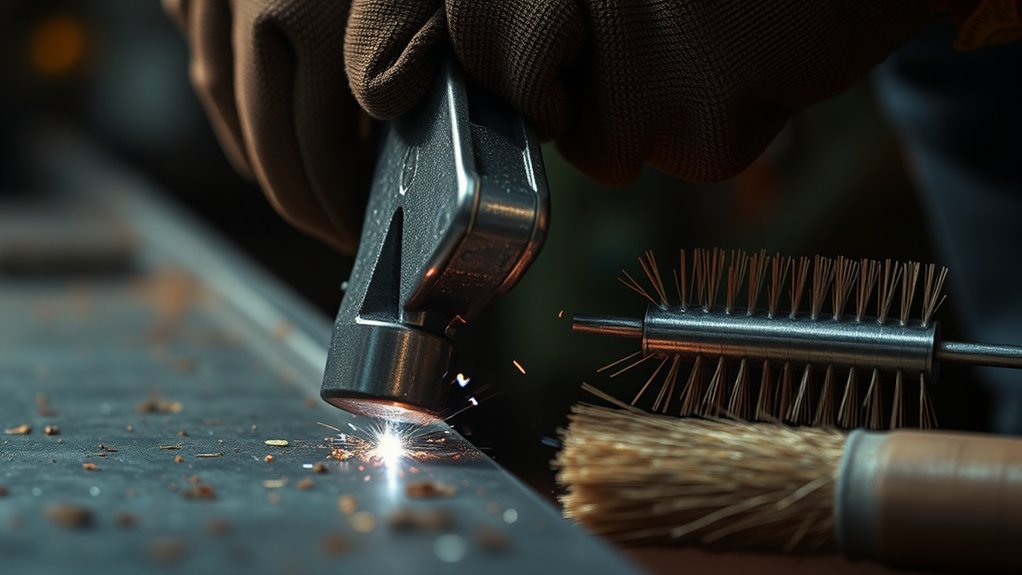
After flux-cored welding, clean the weld by letting the bead cool to a safe working temperature, chipping away the slag with light, controlled taps, brushing the bead clean, and inspecting the surface before you weld again or finish the part. A chipping hammer breaks the heavy slag loose, while a wire brush removes fine flakes, dust, and residue from the weld toes.
Quick Answer
Use a chipping hammer after flux-core welding to break loose the hard slag layer, then follow with a wire brush to clean the bead and weld toes. Hold the hammer at a shallow-to-moderate angle, use short taps instead of hard blows, and inspect the weld before painting, grinding, or adding another pass.
Key Takeaways
- Flux-core slag is normal, but trapped slag can become a weld defect if you weld over it.
- Use the pointed end of the chipping hammer for tight spots and the flat chisel end for wider flakes.
- Brush after chipping so you can see the bead, weld toes, and any defects clearly.
- Remove all slag before a second pass, because slag left between passes can cause inclusions.
- Wear eye protection, gloves, flame-resistant clothing, and hearing protection when powered tools are used.
At a Glance
| Time Required | About 5 to 15 minutes for a small weld, depending on bead length, slag thickness, and whether powered tools are used. |
| Difficulty | Beginner-friendly, but it still requires eye protection, heat awareness, and controlled force. |
| Tools Needed | Chipping hammer, wire brush, safety glasses or goggles, gloves, flame-resistant clothing, and good lighting. Optional: face shield, needle scaler, scraper, or angle grinder with wire wheel. |
| Cost | No added cost if you already own basic cleanup tools. Replacement hand tools are usually low-cost; powered cleanup tools cost more. |
How to Use a Chipping Hammer in Flux-Cored Welding
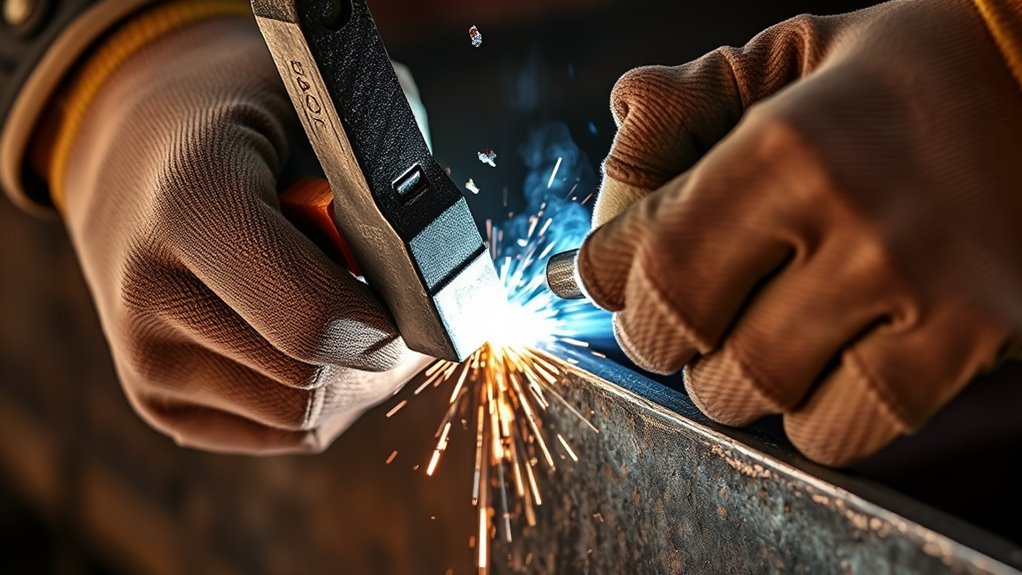
Flux-cored arc welding leaves a slag layer on top of the weld because the flux inside the wire melts and protects the puddle as it cools. That slag must come off before you judge the weld, paint the part, or run another pass. Technical guidance from TWI notes that slag inclusions are associated with flux welding processes, including FCAW, and that slag should be removed before the next run.
Hold the chipping hammer firmly and work in small sections. For most cleanup, use a shallow-to-moderate angle so the tool lifts the slag instead of digging into the bead. Start with the pointed pick end on stubborn islands, corners, and crater areas, then switch to the flat chisel end to scrape wider flakes from the bead face and weld toes.
Use short, controlled taps instead of heavy swings. Hard blows can dent the bead, chip the base metal, or send hot slag farther than expected. If the slag is still warm but no longer glowing, it usually breaks loose more easily than fully cold, glassy slag. If the weld is too hot to work near safely, wait longer.
Choose the hammer end based on the area you are cleaning. The pointed end works well in corners, along bead edges, and around spatter. The flat chisel end works better on larger slag sheets. If you are still learning, review basic flux core welding techniques so your travel angle, wire stickout, and heat settings do not create more slag problems than necessary.
Warning: Slag can break off like sharp glass. Wear safety glasses or goggles, and add a face shield when slag is heavy, overhead, or being removed with powered tools.
What Safety Gear Do You Need for Chipping and Cleaning?
Chipping and brushing look simple, but the hazards are real. OSHA lists welding, cutting, and brazing hazards such as metal fumes, UV radiation, burns, eye damage, electrical shock, cuts, and crushed fingers or toes. Cleanup adds more flying particles, sharp slag, dust, and noise.
At minimum, wear safety glasses or goggles, heat-resistant gloves, long sleeves, closed-toe footwear, and flame-resistant clothing. If you are brushing aggressively, using a grinder, or cleaning overhead, wear a face shield over your safety glasses.
Use ear protection when working with a needle scaler, grinder, or other powered cleanup tool. Keep the area ventilated, especially if you are welding or cleaning in a garage, corner, or enclosed area. OSHA ventilation rules for welding and cutting say mechanical ventilation or local exhaust should keep fumes and smoke within safe limits and remove fumes near the source when needed.
For respiratory protection, do not treat a paper dust mask as a universal fix. NIOSH explains that respirator selection depends on the hazard, and workplace respirator use may require a proper respiratory protection program. If fumes, dust, coatings, galvanized metal, or poor ventilation are involved, use the right NIOSH-approved respirator for the exposure and follow your workplace rules.
For more general PPE context, you can compare this with other cutting and welding safety basics in this guide to respiratory protection and protective gear.
| Equipment | Purpose | When It Matters Most |
|---|---|---|
| Safety glasses or goggles | Protects eyes from slag chips, dust, and wire bristles | Every chipping and brushing job |
| Face shield | Adds face protection from flying debris | Grinding, needle scaling, overhead cleanup, heavy slag |
| Heat-resistant gloves | Protects hands from hot metal and sharp slag | Fresh welds and rough workpieces |
| Flame-resistant clothing | Reduces burn risk from sparks and hot chips | Welding area cleanup and grinder use |
| Hearing protection | Reduces noise exposure | Needle scaler, pneumatic tools, grinders |
| Respirator | Reduces inhalation exposure when properly selected and fitted | Poor ventilation, coated metals, dusty cleanup, workplace-required use |
Products Worth Considering

HIGH IMPACT FACE SHIELD - Sellstrom's Advantage Face Shield is ideal for various types of machinery, welding, cutting, grinding, woodworking, and other types of work that present potential hazards to the face

✅Arc & Flame Resistant for Life - This 7 oz material is a soft, breathable cotton. They will remain arc and flame retardant regardless of the washes and wear cycles. These cotton fr balaclavas are NFPA 70E Compliant, HRC / CAT 2, EBT = 12 cal/cm² and meet ASTM F1506.

SUPERIOR PROTECTION — Experience all-around face protection thanks to the curved design of this faceshield. The visor of this face guard is ANSI Z87+ certified, and up to 2x thicker for increased durability. Plus, you can comfortably wear your grinding face shield over prescription glasses.
Cooling the Weld and Inspecting for Slag
After welding, let the bead cool until it is no longer glowing and can be cleaned safely without putting your hands near dangerous heat. Do not grab the workpiece barehanded. Use gloves, pliers, or clamps when repositioning hot metal.
For a single-pass hobby weld, you can usually clean once the slag has stopped glowing and the part is stable enough to work around. For multi-pass welds, follow the procedure, filler-wire guidance, or shop rules for interpass temperature. The goal is to remove slag without burning yourself, shocking the hot bead, or trapping residue under the next pass.
Before chipping, inspect the bead under strong light. Look for a dull, crusty, glassy, or flaky layer on top of the weld. Also check the weld toes, crater, starts and stops, and any tight corners. Slag often hides in these areas.
Good weld cleaning also starts before the arc. Remove rust, grease, paint, moisture, and dirt from the base metal whenever possible. Hobart Brothers notes that dirty base metal can contribute to porosity in self-shielded FCAW, and poor interpass cleaning can contribute to slag inclusions. You can also review how clean workpieces help reduce arc problems in this guide to reducing spatter when flux-core welding.
Step-by-Step Slag Removal Process
- Let the weld cool safely. Wait until the bead is no longer glowing. Keep gloves on and avoid touching the workpiece directly.
- Start at one end of the bead. Use the pointed end of the chipping hammer to crack stubborn slag at the edge or crater.
- Use light, controlled taps. Let the hammer do the work. Do not swing hard enough to gouge the weld bead.
- Scrape with the flat end. Use the flat chisel end to lift larger flakes and clean wider areas.
- Brush the weld. Use a wire brush along the bead and across the weld toes to remove fine residue.
- Inspect under bright light. Check for leftover slag, undercut, porosity, cracks, uneven bead shape, or areas that need another pass.
- Clean again before welding over it. If you are adding another pass, remove all slag first so you do not trap non-metallic material inside the weld.
Note: Slag left between passes can become a slag inclusion. If light chipping and brushing do not expose clean metal between runs, grind the area lightly before welding over it.
Chipping Hammer Techniques for Effective Slag Removal
To remove slag without damaging the bead, keep your wrist relaxed and work in short strokes. The hammer should break the slag layer, not flatten the weld. If the slag does not move, change the angle or start at a loose edge instead of hitting harder.
Use the pointed pick end for tight spaces, restarts, craters, corners, and small trapped islands. Use the flat chisel end for wider slag sheets and bead faces. Keep your other hand out of the strike path and keep bystanders away from flying chips.
Some slag peels off almost by itself. Other slag sticks because of low heat input, a convex bead profile, wrong travel angle, contamination, or poor access. If slag is consistently difficult to remove, check your settings and technique instead of blaming the hammer. For FCAW troubleshooting, Hobart Brothers notes that slag inclusions can be caused by incorrect bead placement, incorrect travel angle, low heat input, and poor interpass cleaning. If machine settings are also causing problems, review arc welding machine problems and solutions.
| Technique | How to Do It | Why It Helps |
|---|---|---|
| Shallow-to-moderate angle | Hold the tool low enough to lift slag rather than stab the bead. | Reduces gouging and bead damage. |
| Short taps | Tap repeatedly in small sections instead of swinging hard. | Improves control and limits flying debris. |
| Edge-first removal | Start where slag is cracked, lifted, or thin. | Lets the slag peel instead of shatter. |
| Flat chisel scrape | Scrape along the bead face after heavy slag is broken. | Cleans wider flakes and smooths the surface for brushing. |
| Frequent inspection | Stop and check the bead after each pass of the hammer. | Prevents over-chipping and helps you find missed slag. |
Using a Wire Brush for Maximum Efficiency After Chipping
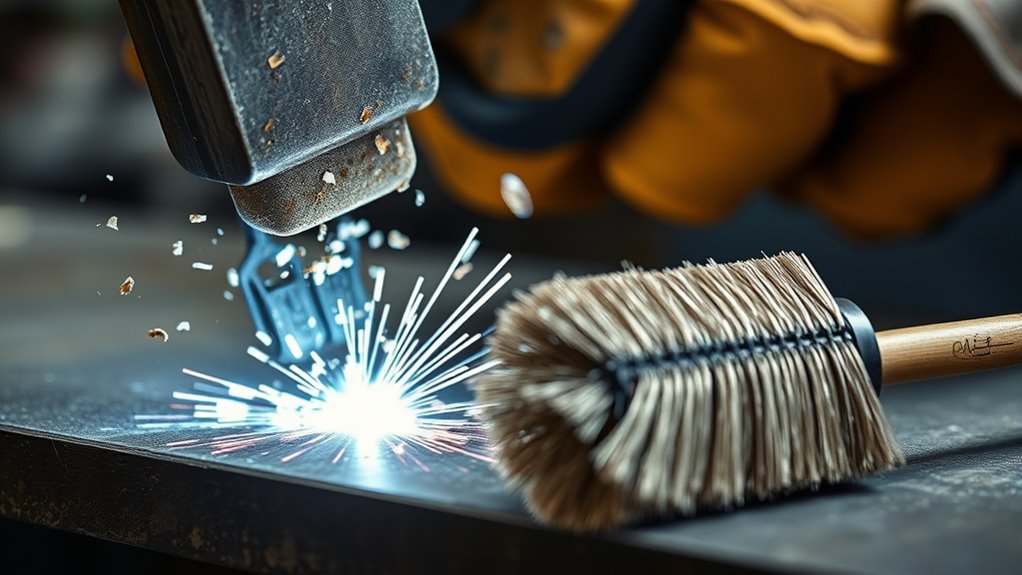
After the chipping hammer removes the heavy slag, use a wire brush to clear fine flakes, dust, and small particles from the bead. Brushing also makes the weld easier to inspect because it exposes the bead shape and weld toes.
For a hand brush, work along the bead first, then brush across the toes where residue collects. A 30- to 45-degree brush angle usually gives good contact without bending the bristles flat. Use firm pressure, not excessive force. If the brush skates over the surface, chip again before brushing.
Choose the brush material carefully. A carbon steel brush is fine for carbon steel, but do not use the same brush on stainless steel or aluminum. Cross-contamination can leave particles behind and create finish or corrosion problems later.
Pro Tip: Keep separate brushes for carbon steel, stainless steel, and aluminum. Mark the handles so you do not accidentally drag carbon steel particles onto a cleaner material.
For larger welds, a grinder with a wire wheel or cup brush can save time, but it also raises the risk. Use the correct wire wheel type, keep the guard in place, check the wheel speed rating, and wear eye and face protection. OSHA requires eye protection for abrasive wheel use and sets guarding requirements for many portable abrasive wheels.
Common Cleaning Mistakes to Avoid
The most common cleaning mistake is using too much force. A chipping hammer is not a demolition tool. If you strike too hard, you can dent the bead, chip the base metal, or hide the very defects you are trying to find.
Another mistake is brushing before chipping. A wire brush is for residue, not thick slag. If you brush over heavy slag, you may polish the slag instead of removing it.
Do not weld over slag. This is especially important on multi-pass welds. Trapped slag can create a non-metallic inclusion inside the weld, which can reduce strength and serviceability. If you see dark lines, glassy pockets, or slag stuck at the toes, clean again before continuing.
Do not ignore lighting. A weld can look clean in poor light and still have thin slag islands along the toes. Use a bright work light and inspect from more than one angle.
Do not use the wrong brush for the wrong material. A contaminated brush can leave unwanted particles on the weld surface. Also avoid using worn brushes that shed bristles or no longer reach the weld toes.
Finally, do not treat cleanup as a cure for every defect. If you keep seeing worm tracks, porosity, or trapped slag, check base metal cleanliness, voltage, wire feed speed, travel angle, and stickout. This guide to fixing worm tracks in flux-core welding can help if surface marks keep returning.
Maintaining Your Chipping Hammer for Longevity
A chipping hammer works best when the point and chisel end are clean, sharp enough to bite, and free of heavy rust. After each use, wipe off dust and slag. If the hammer gets wet, dry it before storage.
Inspect the pointed end and flat end for mushrooming, cracks, or chips. Replace a badly damaged hammer instead of grinding it into an unsafe shape. Check the handle, too. A cracked wooden handle, loose head, or damaged spring handle can make the tool harder to control.
A clean chipping hammer and a clean wire brush do more than improve appearance. They help you see whether the weld is ready for inspection, another pass, or final finishing.
Store the hammer in a dry drawer, toolbox, pegboard hook, or case. Keep it away from moisture so the working edges do not rust. If the weld still looks uneven after proper cleaning, the issue may be wire feeding, machine setup, or technique rather than the hammer. For that separate problem, see this guide on why a welder is not feeding wire.
Alternative Cleaning Tools to Consider
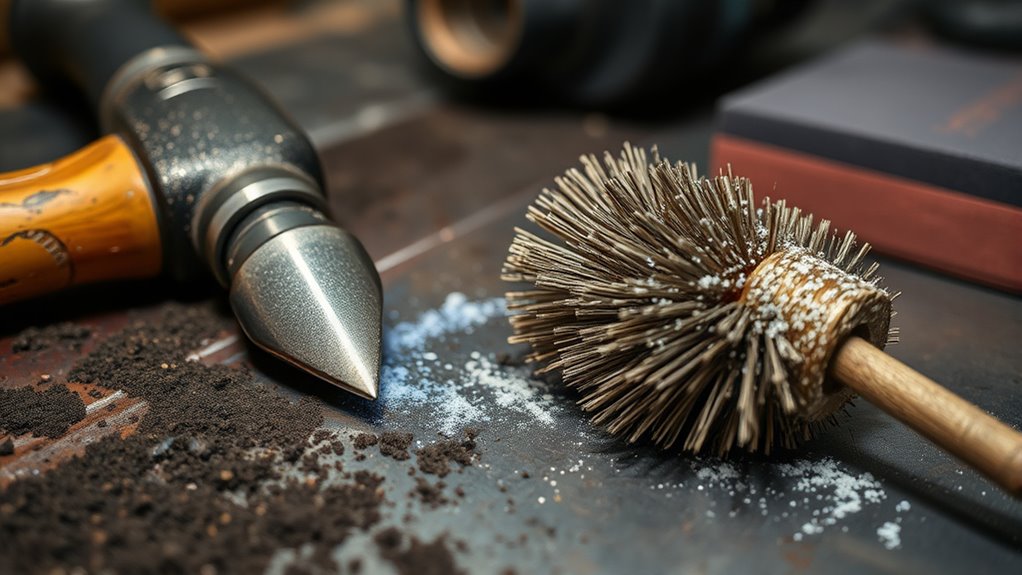
A chipping hammer and wire brush handle most flux-core cleanup, but other tools can help when slag is thick, access is poor, or the weld is long.
| Tool | Best Use | Safety Note |
|---|---|---|
| Hand wire brush | Fine residue after chipping | Watch for loose bristles and use the right brush material. |
| Wire wheel or cup brush | Long beads and faster surface cleanup | Use a guard, eye protection, face shield, and correct RPM rating. |
| Needle scaler | Heavy slag, rough surfaces, and hard-to-reach spots | Wear hearing protection and keep needles away from thin metal edges. |
| Scraper | Lifting thick flakes before brushing | Push away from your body and gloves. |
| Flap disc | Final smoothing when the weld profile allows it | Do not grind away required weld size or hide defects before inspection. |
For larger jobs, an angle grinder with a wire wheel can reduce cleanup time. Use the right wheel for the job and keep the grinder under control. This angle grinder guide can help with wheel selection and basic safety.
If you switch from cleaning to surface blending, choose the abrasive carefully. Selecting the right flap disc grit size can improve the finish, but do not grind so aggressively that you weaken the bead or remove evidence of a weld defect.
Products Worth Considering

Compatibility -- Fits all 4-1/2" angle grinders and grinders with 5/8"-11 threaded arbors. Easy to mount wire wheel for angle grinder for both professionals and DIY users. Do wear protective gear before operation for safe rust removal and cleaning!!!

【12Pcs Angle Grinder Wire Brush Set】3x aggressive 4"knotted wire wheel for angle grinder, 3x 4" coarse crimped angle grinder wire wheel, plus 3x 3"knotted and 3x 3" crimped cup brushes. Professional tailored combo, perfect for heavy-duty rust, paint and weld spatter removal on metal surfaces, covering all tough metal finishing & surface prep demands.

Compatibility -- Fits all 4-1/2" angle grinders and grinders with 5/8"-11 threaded arbors. Easy to mount wire wheel for angle grinder for both professionals and DIY users. Do wear protective gear before operation for safe rust removal and cleaning!!!
Final Touches for a Clean Weld Surface
After chipping and brushing, look closely at the weld. A clean weld surface should show the bead shape, edges, starts, stops, and crater clearly. You should not see glassy slag islands, dark trapped lines, or flakes sitting along the weld toes.
Use this final checklist before moving on:
- Check the bead under bright light from more than one angle.
- Look along both weld toes for thin slag lines.
- Brush the crater and restart areas again if residue remains.
- Clean all slag before adding another pass.
- Use separate brushes for different metals.
- Replace worn brushes and damaged hammers.
- Confirm grinder wheels, wire wheels, and cup brushes are rated for the tool speed before powered cleanup.
If the weld is clean but the bead profile is still poor, cleanup is not the main issue. Recheck travel angle, heat input, wire stickout, joint fit-up, and base metal cleanliness. Cleaner technique before the weld usually means less slag fighting after the weld.
Frequently Asked Questions
Do you need a chipping hammer for flux core?
Yes. Flux-core welding normally leaves slag on the bead, and a chipping hammer is one of the simplest tools for breaking that slag loose. A wire brush alone is usually not enough for thick slag.
What is the golden rule in welding cleanup?
The golden rule is to clean before you weld and clean between passes. Dirt, paint, rust, grease, moisture, and leftover slag can all contribute to weld defects.
When should you use a chipping hammer?
Use a chipping hammer after the weld is no longer glowing and can be cleaned safely. For multi-pass welds, remove all slag before placing the next bead.
Can you use a grinder instead of a chipping hammer?
You can use a grinder with a wire wheel, cup brush, or flap disc for some cleanup, but it should not replace inspection. Use the guard, wear eye and face protection, and avoid grinding away too much weld metal.
Why is flux-core slag hard to remove?
Slag can stick because of low heat input, incorrect travel angle, poor bead shape, contamination, or tight joint access. If slag keeps trapping at the toes, check the welding settings and technique, not just your cleanup tools.
What are common flux-core welding mistakes that make cleanup harder?
Common mistakes include welding over dirty metal, using the wrong travel angle, running too cold, moving too fast, leaving poor bead overlap, and failing to clean between passes. These issues can create slag pockets that are harder to remove.
Conclusion
A clean weld is easier to inspect, easier to finish, and less likely to hide slag-related defects. After flux-core welding, let the bead cool safely, break the slag with controlled chipping hammer taps, brush the weld clean, and inspect the toes, crater, and bead face under good light. If you are making another pass, remove every visible trace of slag first. Good cleanup is not just about appearance; it is part of making a stronger, more reliable weld.
Sources
- OSHA — Welding, Cutting, and Brazing Hazards and Solutions — backs up welding hazard and PPE context.
- OSHA 29 CFR 1910.252 — General Welding Requirements — backs up eye protection and protective clothing guidance.
- OSHA 29 CFR 1926.353 — Ventilation and Protection in Welding, Cutting, and Heating — backs up ventilation guidance.
- OSHA 29 CFR 1926.303 — Abrasive Wheels and Tools — backs up grinder guard and eye protection cautions.
- TWI — Defects/Imperfections in Welds: Slag Inclusions — backs up slag inclusion causes and interpass cleaning.
- CDC/NIOSH — Welding Fumes and Manganese — backs up welding fume health context.