Automotive brazing can make a clean, close-fitting repair without melting the base metal, but the torch is not suitable for every vehicle part. Before you light it, confirm that the vehicle maker allows the repair, remove fire and fume hazards, match the filler and flux to the metals, and use the pressure chart for your exact torch tip.
Quick Answer
Clean and fit the joint, confirm the repair is suitable for brazing, choose a compatible filler and flux, and set the gases from the exact tip chart. Purge each hose separately, light the torch with a striker, adjust a neutral flame, heat both base metals evenly, and let the hot joint melt and draw in the filler.
Key Takeaways
- Follow the vehicle-specific body or service manual before using heat on any structural, high-strength, fuel, brake, air-conditioning, airbag, hybrid, or electric-vehicle component.
- Do not use a universal pressure setting. Match both regulator pressures to the torch maker’s chart for the installed tip, and never use acetylene above 15 psig.
- Leak-test connections, purge oxygen and fuel hoses separately, and use approved reverse-flow and flashback protection as required by the equipment maker.
- Heat the base metals evenly. The filler should melt from contact with the hot joint, not from direct heating in the flame.
- After brazing, let the joint cool undisturbed, remove flux residue, inspect the bond, restore corrosion protection, and complete the manufacturer’s shutdown procedure.
At a Glance
| Time Required | About 20 to 45 minutes for a small prepared joint, plus setup, cooling, cleanup, and inspection |
| Difficulty | Intermediate; hands-on oxyfuel training is strongly recommended |
| Tools Needed | Oxyacetylene outfit, correct tip, striker, leak-detection solution, clamps, cleaning tools, PPE, and fire extinguisher |
| Cost | Usually limited to gas, filler, flux, abrasives, and corrosion-protection materials if you already own the torch |
What’s in This Article
- What Oxyacetylene Brazing Is and When to Use It
- Before You Begin
- Key Safety Tips for Brazing
- Preparing Metal Surfaces for Brazing
- How to Set a Neutral Flame for Brazing
- Selecting the Right Brazing Rod and Flux
- How to Braze an Automotive Joint Step by Step
- How to Control Heat During Brazing
- Identifying and Fixing Common Brazing Problems
- Inspect, Clean, and Protect the Repair
- Shutdown Procedures After Brazing
- Maintenance Tips for Your Oxyacetylene Torch
- Frequently Asked Questions
- Safety Disclaimer
- Conclusion
- Sources
What Oxyacetylene Brazing Is and When to Use It
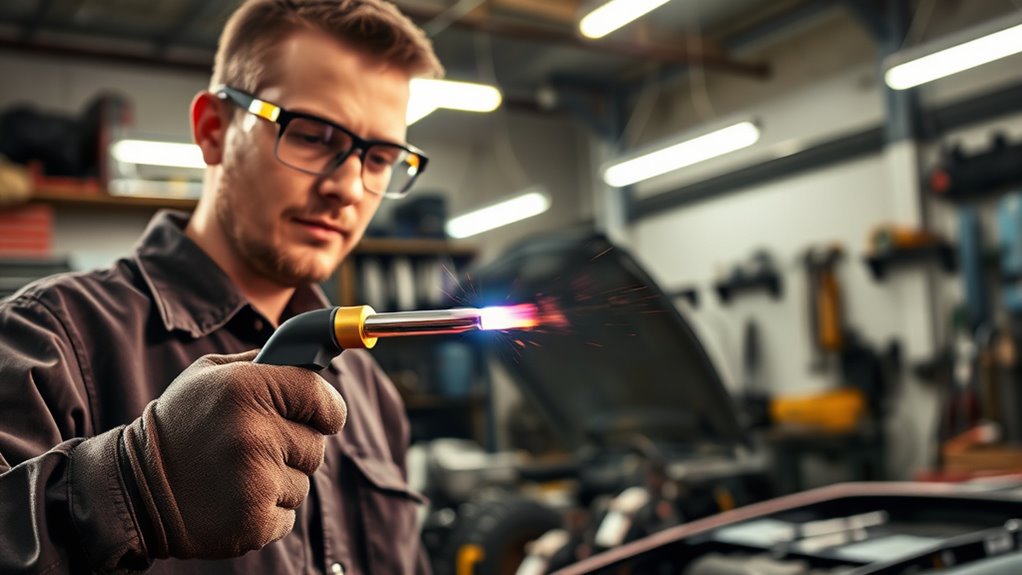
An oxyacetylene torch mixes oxygen and acetylene to produce a concentrated flame for heating, brazing, welding, and cutting. In automotive work, torch brazing may be useful for approved brackets, fittings, copper or brass parts, and non-structural bench repairs when the base metals, filler, joint design, and service temperature are compatible.
True brazing does not melt the base metals. A filler alloy with a lower melting range wets the heated surfaces and is drawn through a close joint by capillary action. An open seam filled with a bronze bead is more accurately called braze welding; it uses a fillet rather than capillary flow and needs a different joint design.
A neutral flame is the normal starting point for many steel and copper-alloy brazing jobs because it avoids a visible acetylene feather and an aggressively oxidizing inner cone. The filler manufacturer’s instructions may call for a slightly different flame for a specific alloy, so the product data always takes priority.
Do not assume that a traditional torch-brazed repair is interchangeable with modern MIG brazing. I-CAR explains that vehicle makers specify attachment methods for individual parts, and some high-strength or ultra-high-strength steels can be harmed by uncontrolled heat. Review the vehicle-specific procedure before heating a body panel or structure. For unrelated gas-process context, this article on gas choice and cut quality explains why settings from one thermal process should not be copied to another.
Warning: Do not use an open flame on or near a fuel tank, fuel or brake line, charged air-conditioning system, sealed container, airbag or pretensioner, high-voltage battery, or unknown coated metal. Remove the part and make the system safe under the vehicle maker’s procedure before hot work begins.
Before You Begin
Estimated total time: A small automotive brazing repair often takes 20 to 45 minutes, not counting cooling time. A complex joint can take longer when cleaning, fitting, test pieces, heat shielding, or corrosion protection are required.
Gather the equipment before opening a cylinder. A rushed setup makes leaks, poor fit-up, overheating, and fire more likely.
- Approved oxyacetylene torch, hoses, regulators, oxygen cylinder, and acetylene cylinder
- Correct welding or brazing tip for the metal thickness and heat demand
- Reverse-flow check valves and flashback arrestors where required by the torch maker or workplace rules
- Compatible brazing filler and the specified flux
- Approved leak-detection solution and a clean brush
- Dedicated stainless or clean wire brush, file, grinder, or abrasive pad
- Clamps, a vise, fire-resistant supports, and heat shields
- Shade-rated brazing eye protection, safety glasses with side protection, gloves, and flame-resistant clothing
- Suitable fire extinguisher and a fire-safe work area
Read the torch manual, tip chart, filler instructions, safety data sheets, and vehicle repair procedure. Confirm that the installed tip is intended for the torch and that both cylinders are upright, secured, undamaged, and positioned where heat, sparks, or hot metal cannot reach them.
Note: Pressure depends on the exact torch, mixer, tip, gas flow, and hose arrangement. Miller’s setup guidance calls for tip-specific pressure and separate purging. Do not use “5 psi for both gases” as a universal setting, and follow OSHA’s 15-psig maximum for acetylene use.
Key Safety Tips for Brazing
Oxyacetylene work combines combustible gas, high-pressure oxygen, radiant heat, molten filler, and fumes. Build the same safety routine every time.
- Inspect the complete outfit: Look for cracked hoses, burned areas, loose fittings, damaged regulator threads, blocked tips, missing seals, or signs of impact. Replace damaged parts; do not tape a gas hose.
- Keep oxygen equipment oil-free: Never apply oil, grease, thread tape, or ordinary lubricant to oxygen valves, regulators, fittings, or hands that will touch them.
- Leak-test without flame: After connecting the regulators and hoses, use an approved leak-detection solution on the connections. If bubbles grow, close the cylinders and correct the leak before lighting.
- Purge separately: Purge the oxygen hose and fuel hose one at a time, away from ignition sources, for the period specified by the equipment maker. Never open both torch valves together for purging.
- Protect your eyes and skin: Use filter lenses suitable for torch brazing, plus side protection, gloves, and flame-resistant clothing. OSHA’s filter-lens table lists shade 3 or 4 for torch brazing; use the darker suitable shade when glare, filler, or the job requires it.
- Control fire exposure: Move combustibles away, shield hidden areas and the opposite side of panels, keep an extinguisher ready, and check for smoldering material after the repair. A fire watch is required in higher-risk conditions and must continue for at least 30 minutes after hot work under OSHA’s general-industry rule.
- Control fumes: Use effective local exhaust or outdoor ventilation. Remove paint, oil, undercoating, zinc, lead, cadmium, and other coatings only by a safe method, and identify the filler before heating it.
Good protective clothing helps with sparks and radiant heat, but it does not replace eye filters, ventilation, fire control, or equipment training.
Warning: Do not clean a part with chlorinated brake cleaner or allow chlorinated-solvent vapor to enter the hot-work area. Heated solvent vapors can form highly toxic decomposition products. Use a non-chlorinated cleaner approved for the metal and let it evaporate fully.
Preparing Metal Surfaces for Brazing
Clean, correctly fitted metal is essential. Oil, paint, rust, mill scale, oxide, zinc coating, old filler, moisture, and cleaning residue can stop the filler from wetting the surface or can trap contamination in the joint.
- Identify both base metals: Confirm whether you are joining mild steel, cast iron, copper, brass, stainless steel, aluminum, or dissimilar metals. Do not guess from color alone.
- Remove coatings locally: Strip the joint area and enough surrounding material to keep coatings out of the flame. Capture dust and use ventilation suited to the coating.
- Degrease safely: Use a compatible non-chlorinated cleaner, wipe with a clean lint-free cloth, and let the part dry completely.
- Remove oxide and scale: Brush, file, grind, or abrade to bright metal without thinning or gouging the part.
- Set the joint clearance: Make the overlap or socket fit match the filler maker’s recommended clearance at brazing temperature; brazing fundamentals treat fit and clearance as core controls for capillary flow. A zero-gap press fit can block flow, while a wide gap can weaken capillary action.
- Clamp without stress: Hold the parts so they cannot shift when heated, but do not force a poor fit together.
A clean base metal improves other welding processes too, but brazing is especially sensitive because the filler must wet and travel across the prepared surfaces.
Pro Tip: Prepare a scrap joint from the same metals and thickness before touching the vehicle part. A test piece lets you confirm the flame, filler flow, joint clearance, and heat pattern without risking the repair.
How to Set a Neutral Flame for Brazing
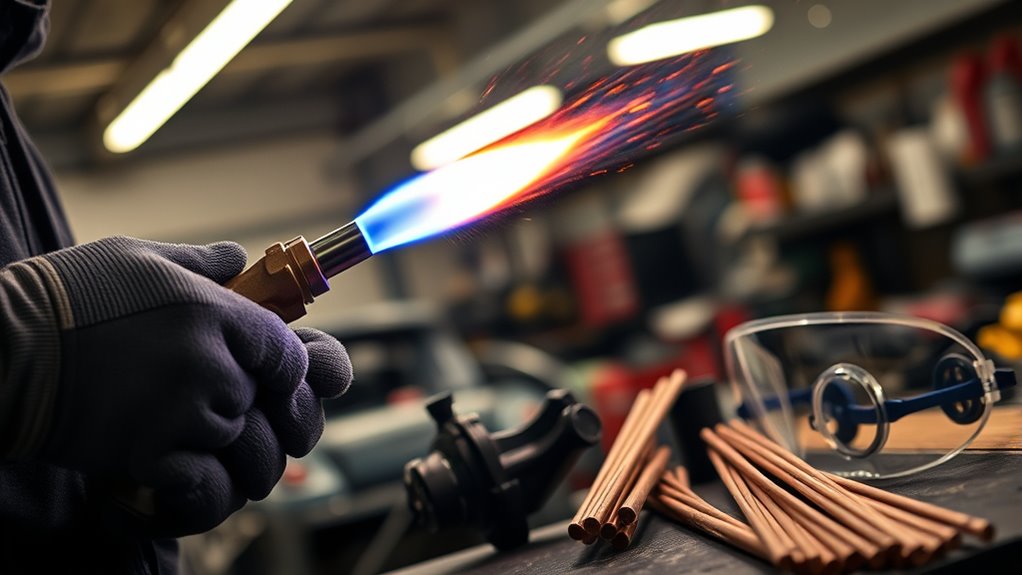
A stable flame starts with the correct tip, leak-free connections, separate hose purging, and operating pressures taken from the equipment chart. The steps below describe the common sequence for many equal-pressure oxyacetylene torches, but your torch manual controls if its sequence differs.
- Back out the regulator adjusting screws: Release spring pressure before opening either cylinder.
- Open the cylinders correctly: Stand to the side of each regulator and open the cylinder valve slowly. Follow the oxygen-cylinder valve instructions for your equipment. OSHA states that an acetylene valve should not be opened more than 1.5 turns and preferably no more than three-quarters of a turn.
- Set dynamic pressure and purge: Open one torch valve, set that gas to the tip-chart pressure while gas is flowing, purge for the specified time, and close the valve. Repeat with the other gas. Purge the gases separately.
- Open the fuel valve slightly: Use the opening specified by the torch maker.
- Light with a friction striker: Keep your hand and body out of the flame path. Never use a match, cigarette lighter, or another torch.
- Increase fuel until the flame leaves the tip cleanly: Avoid a smoky flame and do not let the tip overheat.
- Add oxygen gradually: Adjust until the acetylene feather disappears and a clear inner cone remains. That is the visual starting point for a neutral flame.
- Recheck stability: The flame should not pop, whistle inside the torch, lift off the tip, or change when the hoses move.
There is no universal 1-to-2-inch torch distance. Tip size, flame envelope, joint geometry, and metal response determine the working distance. Keep the inner cone off the surface unless the filler or torch instructions specifically say otherwise, and use proper PPE usage around every hot-metal process.
Selecting the Right Brazing Rod and Flux
The filler must be compatible with both base metals, the joint design, the required strength, corrosion exposure, and the part’s service temperature. It must melt below the solidus temperature of the base metals.
- Steel and cast iron: Use a filler specifically listed for the grade, joint type, and service. General-purpose bronze or silver fillers are not interchangeable.
- Copper and brass: Check whether the filler is approved for copper-to-copper, copper-to-brass, or copper-to-steel. A phosphorus-bearing filler that works without flux on copper may require flux on brass and may be unsuitable for ferrous or nickel-bearing metals.
- Stainless steel: Use a filler and flux listed for the stainless grade and service environment, then remove flux completely to limit corrosion.
- Aluminum: Aluminum torch brazing has a narrow temperature window and requires an aluminum-compatible filler, flux, and cleaning method. It is not a good first oxyacetylene project.
Choose rod diameter to match the joint and heat input rather than relying on a universal 1/16-to-1/8-inch rule. A small joint usually needs a smaller filler, while a larger fillet may need more deposition. Always follow the filler maker’s compatibility and temperature data.
Do not confuse brazing filler with welding wire. A product such as Blue Demon 309LFC-O welding wire is designed for a different process and is not a substitute for a brazing alloy.
Products Worth Considering


NO SOLDER POWDER NEEDED: These aluminum rods are flux cored welding rods, no need solder powder, no other materials are required, and it is easy to use.

50 Rods ,1/16 ''x13' 'aluminum welding wire,Chemical Composition Requirements: Si 12%, Mg≤0.10%, Fe≤0.21%, Cu≤0.05%, Zn≤0.05%, Mn≤0.10%,AL REM
How to Braze an Automotive Joint Step by Step
- Confirm the repair method: Check the vehicle-specific service or body repair manual. Move the part to a bench when practical, and isolate nearby wiring, trim, sealers, glass, fuel, refrigerant, and heat-sensitive components.
- Prepare and fixture the joint: Clean to bright metal, set the specified clearance, apply flux as directed, and clamp the parts in their final position.
- Set and test the torch: Leak-test, purge each hose separately, set dynamic pressures from the tip chart, light with a striker, and adjust the required flame.
- Preheat the assembly evenly: Sweep the flame over the heavier or more conductive part first, then balance the heat across both sides of the joint. Keep the torch moving.
- Test the joint temperature: Touch the filler to the joint just outside the direct flame. If it does not melt and wet the surface, continue heating the base metal rather than burning the rod.
- Feed the filler: Add only enough filler to fill the designed joint. Use the torch to lead the flow through the joint instead of piling filler on the surface.
- Finish without overheating: Stop adding heat once the filler has flowed through the required area. Do not keep heating to make the joint look smoother.
- Let it cool undisturbed: Keep the fixture in place until the filler has solidified. Do not quench unless the filler or repair procedure specifically requires it.
The filler should follow the heat through a clean, correctly fitted joint. If you must melt the rod directly in the flame and smear it onto the surface, stop and correct the temperature, fit, flux, or filler selection.
How to Control Heat During Brazing
Heat control determines whether the filler wets the metal, sits in a bead, burns the flux, or overheats the part. Warm the entire joint zone instead of concentrating the inner cone on one point.
Start on the thicker, larger, or more heat-conductive member, then sweep across the joint so both pieces reach brazing temperature together. The filler flows toward the hotter area, so use torch movement to guide it.
Thin auto-body steel needs a small tip, short heating cycles, broad movement, and room for the panel to expand. Thick brackets and castings need more total heat, but a larger tip is safer than holding an undersized flame on one spot for a long time. Stable pressure settings still must come from the exact tip chart.
Flame Adjustment Techniques
- Watch the inner cone and listen for a steady flame.
- Keep the cone off the surface unless the product instructions require closer heating.
- Use a wider sweeping motion for thin sheet and a slower, broader preheat for thick sections.
- Move the heat ahead of the filler so the alloy follows the joint.
- Stop immediately if the flame pops repeatedly, burns inside the torch, or changes after the tip touches the work.
Material Thickness Considerations
For thick metal, select a tip that can heat the joint without exceeding the approved pressure or cylinder withdrawal rate. Preheat both sides when access allows, and avoid a steep temperature difference across the joint.
For thin sheet, use the smallest tip that can bring the full joint to temperature, make quick passes, use heat sinks only when the repair procedure allows them, and let the panel cool naturally between short heating cycles.
Identifying and Fixing Common Brazing Problems
| Problem | Likely Cause | Fix |
| Rod balls up or will not wet | Joint too cold, oxide or oil present, wrong flux, or incompatible filler | Stop, cool, clean to bright metal, verify filler and flux, then reheat the base metal evenly |
| Filler sits on top of the joint | Poor clearance, one side colder, or filler melted directly in the flame | Correct the fit and balance heat across both members before adding filler |
| Flux turns black and crusty | Too much heat, long heating time, or oxidizing flame | Stop, remove residue, clean again, use the correct tip, and shorten the heat cycle |
| Panel warps | Heat concentrated in one area or joint held under stress | Use faster sweeping passes, smaller heat input, relaxed fixturing, and cooling pauses |
| Torch pops or backfires | Tip too close or overheated, blocked or damaged tip, low flow, or a loose connection | Shut down by the manual, cool and clean the tip, inspect the outfit, and correct pressures before relighting |
| Shrill sound or flame burns inside the torch | Possible sustained backfire or flashback | Use the emergency shutdown procedure immediately and do not relight until the torch and safety devices are inspected |
| Weak, porous, or leaking joint | Contamination, poor fit, incomplete flow, overheated filler, or wrong alloy | Remove the defective filler completely, restore the joint geometry, and repeat only after identifying the cause |
If the part is galvanized, follow the repair procedure before removing zinc. Heating zinc-bearing material indoors requires effective ventilation, and remaining zinc residues can interfere with some torch-brazed joints.
Inspect, Clean, and Protect the Repair
- Let the joint cool: Do not disturb it while the filler is solidifying.
- Remove flux residue: Follow the filler maker’s method. Many flux residues are corrosive and can hide defects.
- Inspect the full joint: Look for complete wetting, a continuous fillet or flow line, proper penetration through the designed clearance, and no cracks, voids, burned edges, or melted base metal.
- Test when appropriate: Make and break a matching scrap joint before a critical repair. Pressure or leak testing must follow the component’s service procedure.
- Restore corrosion protection: Clean the surrounding metal, then apply the specified primer, seam sealer, paint, undercoating, or cavity wax without trapping flux or moisture.
A shiny surface alone does not prove joint strength. For a safety-related or load-bearing component, use the inspection and test method required by the vehicle or component maker.
Shutdown Procedures After Brazing
Torch-valve shutdown order is manufacturer-specific. Some manuals direct oxygen first and others direct fuel first, so use the exact sequence printed for your torch instead of mixing procedures from different brands.
- Extinguish the flame: Close the torch valves in the order specified by the torch manufacturer.
- Close both cylinder valves: Shut off the gas supply at the cylinders.
- Bleed the oxygen line: Open the oxygen torch valve until both oxygen gauges fall to zero, then close it.
- Bleed the fuel line: Open the fuel torch valve until both fuel gauges fall to zero, then close it.
- Back out both regulator adjusting screws: Release spring pressure from the regulator diaphragms.
- Check the work area: Look behind panels, under the bench, and around shields for heat or smoldering material. Maintain the required fire watch.
- Let the equipment cool: Store the torch only when the tip and nearby parts are cool and the hoses are protected from damage.
Continue suitable ventilation practices while the part cools if heated coatings, flux, oil, or filler produced fumes.
Maintenance Tips for Your Oxyacetylene Torch
- Inspect hoses and fittings: Replace cracked, burned, stiff, contaminated, or leaking parts with approved components.
- Clean tips correctly: Use the proper-size tip cleaner without enlarging or distorting the orifice.
- Check safety devices: Follow the maker’s inspection and replacement schedule for check valves and flashback arrestors.
- Protect regulators: Keep them dry, oil-free, and protected from impact. Do not attempt internal repair unless you are qualified and authorized.
- Store cylinders upright and secured: Close valves, install caps where provided, keep cylinders ventilated and away from heat, and separate oxygen from fuel gas as required for storage.
- Keep hoses organized: Coil them loosely without sharp bends, hot-metal contact, or vehicle traffic.
Good cylinder storage protects the porous mass and solvent system inside an acetylene cylinder as well as the valve and regulator. Follow the gas supplier’s maximum withdrawal-rate guidance for your cylinder size and duty cycle.
Products Worth Considering

Powerful Flame Temperature Heat up to 5252°F (2900°C)

【Exact OEM Replacement Part Number 0390-0057】 This complete cutting torch rebuild kit matches part number 0390-0057, specially designed as factory replacement repair parts for Victor CA2460 and CA2470 cutting torches. Precise size and thread design realize plug-and-play installation without extra cutting or modification

【High Purity Brass Structure】Our oxyacetylene torch kit is mainly made of high-purity brass material, which is highly hard and wear-resistant, rust-proof and corrosion-resistant, sturdy and durable
Frequently Asked Questions
How do you light an oxy-acetylene torch for brazing?
Inspect and leak-test the outfit, set pressures from the exact tip chart, and purge each hose separately. Then follow the torch maker’s lighting sequence. For many equal-pressure torches, you open the fuel valve slightly, ignite it with a friction striker, increase fuel until the flame is stable, and add oxygen until a neutral flame forms.
Can you use an acetylene torch for brazing?
An oxyacetylene torch is suitable for many brazing applications when the filler, flux, tip, joint, and base metals are compatible. An air-acetylene torch is a different system with different heat output. Never add oxygen to equipment that is not designed and approved for oxygen service.
What psi should oxygen and acetylene be set for brazing?
There is no universal pressure. Use the pressure and flow listed for the exact torch, mixer, tip, fuel gas, and application, and set it as the equipment maker directs while gas is flowing. Never use acetylene above 15 psig.
What is the 1/7 rule for acetylene?
The 1/7 rule is a traditional maximum withdrawal guideline based on cylinder capacity per hour. Current supplier guidance may use more conservative limits, such as 1/10 for intermittent use or 1/15 for continuous withdrawal, to reduce solvent carryover. Use the limit supplied for your cylinder and application rather than relying on one fraction.
Why does my brazing rod ball up instead of flowing?
The joint may be too cold, oxidized, oily, too wide, or missing the correct flux. The filler may also be incompatible with the base metal. Stop heating, clean the joint, verify the filler and flux, and let the hot base metal melt the rod.
What flame should you use for automotive brazing?
A neutral flame is the normal starting point for many automotive steel and copper-alloy brazing jobs. Use the flame specified by the filler maker when it calls for something different, and stop if the flame becomes unstable, oxidizing, or sooty.
Can you braze thin auto-body metal?
Some non-structural thin sheet can be brazed with a small tip, broad torch movement, short heating cycles, and careful fixturing. Do not torch-braze a structural or high-strength panel unless the vehicle-specific repair procedure approves that exact process and location.
Is torch brazing the same as automotive MIG brazing?
No. MIG brazing uses an electric arc and a copper-alloy wire, while torch brazing uses a fuel-gas flame. Vehicle makers may approve MIG brazing at specific locations without approving an oxyacetylene flame. Follow the exact attachment method in the body repair manual.
Do you always need flux for torch brazing?
No. Flux requirements depend on the filler and base metals. Some copper-phosphorus fillers can be self-fluxing on copper, but the same filler may need flux on brass or be unsuitable for another metal. Follow the filler manufacturer’s data.
What should you do after a flashback?
Use the emergency shutdown procedure in the torch manual, close the cylinder valves when it is safe, and remove the equipment from service. Do not relight it until the torch, tip, mixer, hoses, check valves, and flashback arrestors have been inspected and the cause has been corrected.
Safety Disclaimer
Safety Disclaimer: This article is general information, not a substitute for hands-on oxyfuel training, the torch and filler manufacturers’ instructions, workplace hot-work rules, or the vehicle-specific repair manual. A qualified technician should handle structural repairs, pressure-containing parts, fuel systems, restraint systems, and hybrid or electric vehicles.
Conclusion
Good oxyacetylene brazing starts before the flame is lit. Confirm that the repair is approved, choose a compatible filler and flux, clean and fit the joint, leak-test the outfit, purge each hose separately, and set pressure from the exact tip chart.
During brazing, use a stable flame and guide the filler with even heat in the base metals. Afterward, remove flux, inspect the joint, restore corrosion protection, complete the correct shutdown sequence, and watch the work area for hidden heat. Practice on matching scrap until you can make repeatable joints without overheating the part.
Sources
- OSHA 29 CFR 1910.253, Oxygen-Fuel Gas Welding and Cutting — acetylene pressure, cylinder handling, valve operation, oil and grease controls, and oxygen-fuel equipment safety
- OSHA 29 CFR 1910.252, General Welding, Cutting, and Brazing Requirements — fire prevention, fire watch, ventilation, coatings, eye protection, and hot-work precautions
- OSHA 29 CFR 1910.133, Eye and Face Protection — filter-lens and eye-protection requirements
- Miller, 10 Steps for Safe Oxy-Fuel Torch Setup — tip-specific pressure, separate purging, setup, and leak-check guidance
- I-CAR, Factory Built vs. Repair Procedure — vehicle-specific joining methods and heat-sensitive high-strength steel repairs
- Lucas Milhaupt, Brazing Fundamentals — joint clearance, cleanliness, flux, heating, filler flow, and post-braze cleaning