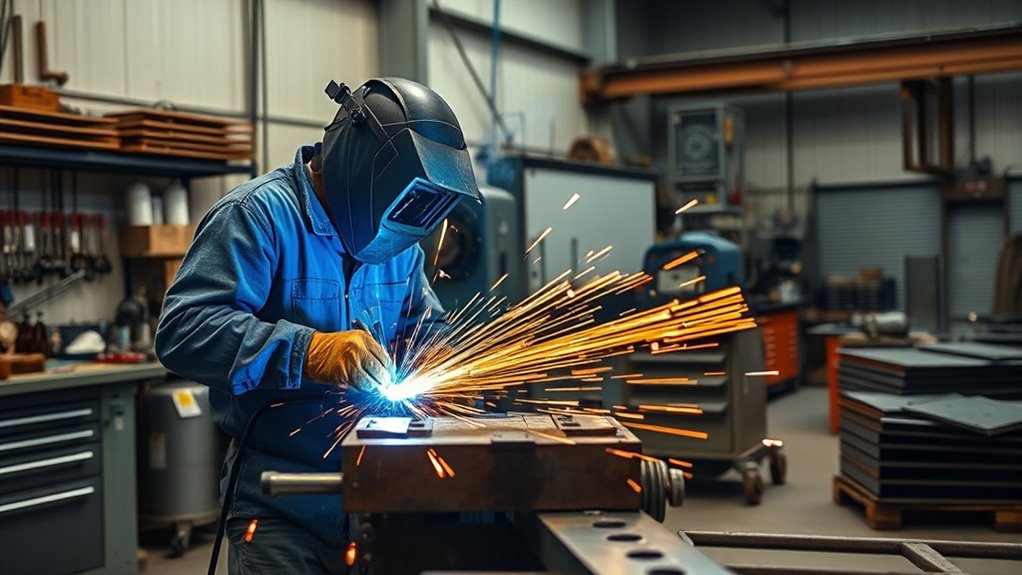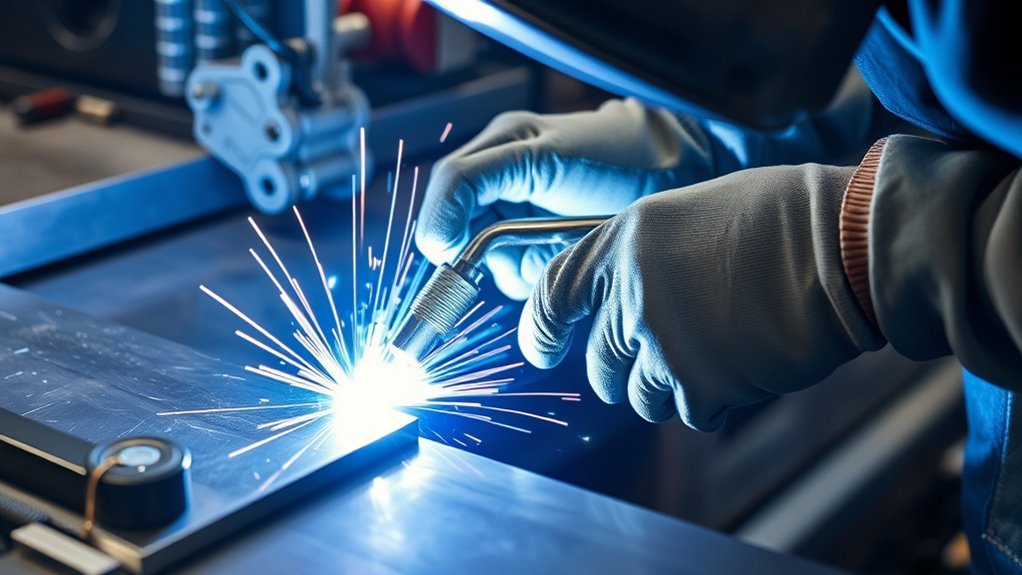
Using a wire brush after welding auto body metal helps remove loose slag, spatter, oxidation, and dust so the repair area is ready for inspection, primer, seam sealer, or paint. The key is to use the right brush for the metal, keep each brush dedicated to one material, use light pressure on thin panels, and clean the surface again after brushing.
Quick Answer
After welding auto body metal, let the area cool, inspect it, remove heavy slag or spatter, then brush with a clean wire brush matched to the metal. Use light, steady strokes along the panel or weld direction, wipe away residue, inspect the weld, and protect bare metal quickly with the correct primer or coating.
Key Takeaways
- Use a dedicated brush for each metal type to avoid cross-contamination between mild steel, stainless steel, and aluminum.
- For thin auto body panels, use light pressure and short passes. Heavy pressure can scratch the panel, bend sheet metal, or shed bristles.
- Wear proper eye and face protection, gloves, and respiratory protection when dust, coatings, or fumes are a concern.
- Wire brushing is surface cleanup. It does not repair poor penetration, cracks, pinholes, or a structurally weak weld.
- After brushing, remove residue and coat bare metal soon to reduce flash rust and improve paint adhesion.
At a Glance
| Time Required | 5 to 20 minutes for most small auto body weld cleanup jobs |
| Difficulty | Easy to moderate, depending on access, metal type, and coating condition |
| Tools Needed | Dedicated wire brush, clean rag, vacuum, suitable cleaner or degreaser, PPE, and optional end brush or cup brush for tight areas |
| Cost | About $5 to $30 for most hand brushes; powered brush accessories usually cost more |
Choosing the Right Wire Brush for Your Metal Type
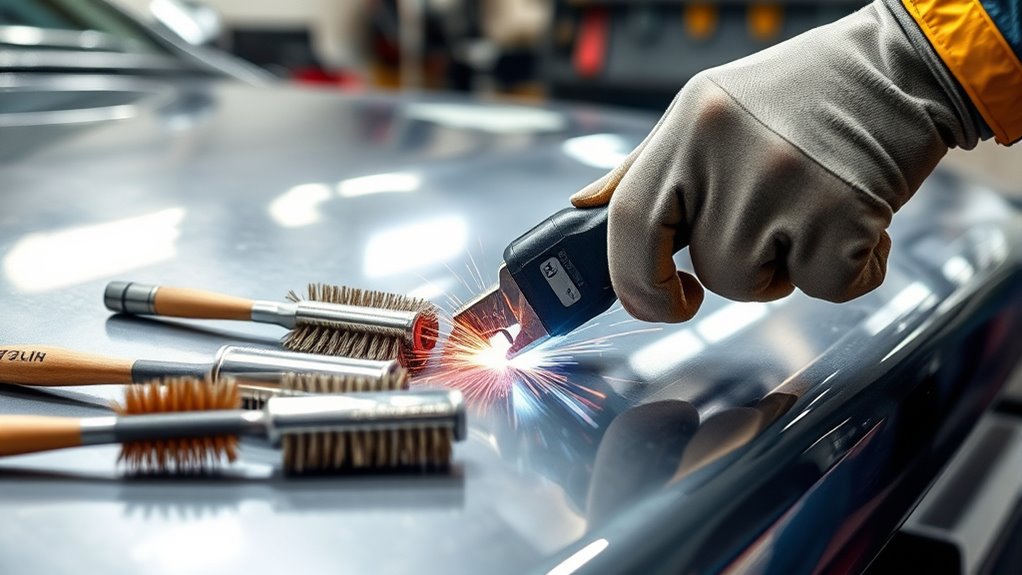
Choose the brush before you touch the weld. A wire brush can clean a weld area well, but the wrong brush can leave embedded metal particles, scratch softer panels, or spread contaminants into a repair area.
The safest rule is simple: one brush, one metal type. Do not use a brush on aluminum or stainless steel after using it on carbon steel. Even if the bristles still look clean, they can carry fine steel particles that later show up as rust spots or coating problems.
| Auto Body Material | Best Brush Choice | Important Note |
|---|---|---|
| Mild steel or bare carbon steel | Carbon steel wire brush | Use only on steel. Do not reuse this brush on aluminum or stainless steel. |
| Stainless steel | Dedicated stainless steel wire brush | Keep it separate from carbon steel tools to reduce rust contamination. |
| Aluminum body panels | Clean, dedicated stainless steel brush used only for aluminum | Use light pressure. Aluminum scratches easily and forms oxide quickly. |
| Copper, brass, or soft non-ferrous parts | Brass or bronze brush | Good for softer metals where an aggressive steel brush may gouge the surface. |
| Galvanized or coated steel | Brush only after the weld area has been prepared safely | Follow the coating-removal and ventilation steps for the job. Zinc and some coatings can create hazardous fumes. |
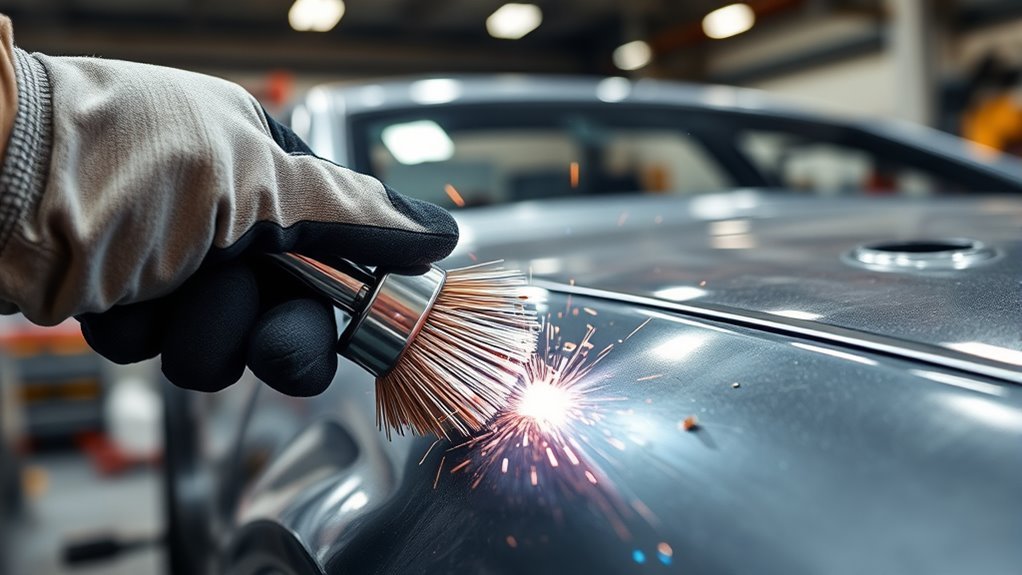
Brush shape matters too. A handheld brush gives you the most control on thin panels and small plug welds. A wire end brush reaches corners and lap joints. A cup brush or wire wheel can clean faster, but it can also remove too much metal if you lean on it.
Pro Tip: Mark your brushes with paint or tape labels such as “steel,” “stainless,” and “aluminum.” Store them separately so you do not accidentally contaminate a clean panel.
Products Worth Considering

PRACTICAL: Wire brushes are ideal for removing paint stains, rust, welding slag,solder,scale, Great for remove corrosion and more from parts, equipment, machinery and other surfaces. Also great for cleaning threads, grills or tile.
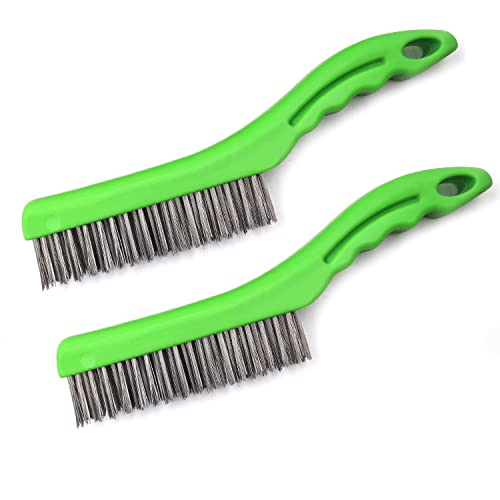
Super decontamination ability: Brush head is made of stainless Steel, it can quickly remove rust, paint, rust, welding slag and scale. Clean and remove loose paint on metal parts, suitable for heavy scrubbing. Hardened steel wire for reduced wire breakage & longer life
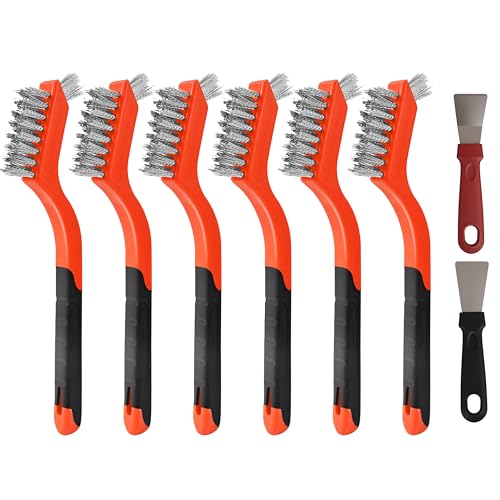
【What do you get】: The wire brush set includes 6 Stainless Steel brushes and 2 cleaning scrapers, Wire Brushes Set will help you cope with all kinds of daily cleaning efficiently
Preparing the Surface Before Brushing
Good weld cleanup starts before the brush hits the metal. Let the welded area cool enough to handle safely, then inspect the bead and surrounding panel under bright light. Brushing a hot weld near solvent, paint, undercoating, or seam sealer can create fire and fume hazards.
Inspect for Contaminants
Look for slag, weld spatter, soot, heat tint, paint residue, grinding dust, body filler dust, seam sealer, oil, and undercoating. These contaminants can interfere with primer, paint, or later welding work.
- Check the weld first. Look for cracks, pinholes, missed edges, weak plug welds, or areas that need more welding before you clean for appearance.
- Remove heavy buildup. Use a chipping hammer, scraper, or pliers to remove loose slag or large spatter before brushing.
- Clean grease and solvent residue. Use a cleaner that is safe for the surface and follow the product directions. Keep solvent vapors away from hot work.
- Dry the surface. Moisture left on bare steel can start flash rust quickly.
For mild steel preparation before welding or cleanup, removing common contaminants helps the weld and the finish. After welding, the same idea applies: clean metal gives primer and paint a better surface to bond to.
Choose the Appropriate Brush
Match the brush to the metal and the job. Use a light hand brush for thin outer sheet metal, an end brush for tight flanges, and a cup brush only where the panel is strong enough to handle it. If you use a powered brush, check the tool guard, the brush’s maximum RPM, and the brush condition before starting.
Warning: Powered wire wheels can throw bristles and debris. Wear safety glasses with side protection and a face shield, keep guards in place, and do not use a damaged or out-of-round brush.
Clean Loose Debris
Before detailed brushing, clear loose chips and dust from the work area. A vacuum is usually better than blowing debris around the shop. If compressed air is used in a workplace setting, OSHA’s hand-tool rule limits cleaning air to less than 30 psi and requires effective chip guarding and PPE.
Step-by-Step: How to Use a Wire Brush After Welding
Use this sequence for most auto body weld cleanup jobs:
- Let the weld cool safely. Do not spray solvent on hot metal and do not touch the area without gloves.
- Put on PPE. Wear gloves, safety glasses with side protection, and a face shield for powered brushing. Use hearing protection when using grinders or drills.
- Ventilate the area. Welding and cleanup dust can contain harmful metals, coating residue, and fine particles. OSHA’s welding fume guidance recommends ventilation, safe positioning, and respiratory protection when work practices and ventilation do not reduce exposure enough.
- Remove heavy slag or spatter first. Do not force the wire brush to do the job of a scraper, chipping hammer, or file.
- Hold the brush at a shallow working angle. Let the wire tips do the cleaning. Pressing harder does not clean better; it bends bristles and can scratch the panel.
- Brush with short, controlled strokes. Work along the weld bead or panel grain when possible. On thin sheet metal, keep the brush moving to avoid heat and gouging.
- Use the right brush shape for access. Use a hand brush for broad control, an end brush for corners, and a cup brush only on sturdy areas.
- Wipe and inspect. Use a clean rag and suitable cleaner to remove fine residue. Look for remaining slag, pinholes, cracks, or contamination.
- Protect the metal. If the repair is ready for finishing, apply the correct primer, weld-through product, seam sealer, cavity wax, or coating according to the repair plan and product directions.
Note: If the welded area includes galvanized steel, e-coat, paint, undercoating, or old seam sealer, treat coating removal as a safety step, not just a cleaning step. Coatings can create hazardous fumes when heated.
Products Worth Considering

6 Pack Wire Brush Set: This package includes: 2 pcs carbon steel cup brush, 2 pcs wheel brush, 2 pcs pen brush with 1/4 inch hex shank. Hardened steel wire long maximum 4500 RPM.

DRILL WIRE-BRUSH SET: Our set includes a variety of small wire brushes for cleaning rust, dirt, and corrosion from battery-terminal clamps, light sockets, and more. The 1/4-inch hex allows these brushes to be mounted on a power drill or die grinder.

Multi Size Cleaning Brush Kit: The 16 pcs round wire brush kit includes 8 brass brushes and 8 stainless steel brushes, which is in various sizes meet all cleaning needs: Micro straw cleaning brushes, medium-sized tube brushes, heavy-duty hole brushes for automotive parts.
Best Techniques for Brushing Welds to Remove Imperfections
Wire brushing works best for loose surface imperfections. It is not a substitute for proper weld settings, penetration, or grinding where a weld must be dressed flush. Use the brush to reveal the weld, not to hide a problem.
Use Light Pressure on Thin Auto Body Metal
Outer body panels and many patch panels are thin. Heavy brushing can leave deep scratches, ripple the panel, or remove more coating than needed. Keep your wrist relaxed, use short strokes, and stop as soon as the weld area is clean enough to inspect.
Brush in the Right Direction
When possible, brush along the weld bead or along the panel’s natural direction. Cross-scrubbing can leave visible scratches that take more sanding to remove before paint. On aluminum, use even lighter pressure and a clean brush dedicated only to aluminum.
Use End Brushes for Tight Spots
A wire end brush helps clean corners, plug weld edges, brackets, and lap-joint seams. Do not force a large wheel into a tight area. If the tool chatters or jumps, switch to a smaller brush or finish by hand.
Know When to Stop Brushing
Stop when the weld is clean enough to inspect and the surface is ready for the next step. More brushing is not always better. If the weld needs to be flush, use the correct grinding or sanding method after brushing, then clean the area again before primer.
A clean weld area should look consistent, dry, and free of loose debris. If you still see pinholes, cracks, heavy undercut, or trapped slag, fix the weld before you move to primer or paint.
Staying Safe While Using Wire Brushes
Wire brushing looks simple, but it can throw metal bristles, rust, slag, grinding dust, and coating residue. Safety matters even when the welding arc is off.
- Protect your eyes and face. Use safety glasses with side protection. Add a face shield when using a powered brush. OSHA’s eye and face protection standard covers hazards such as flying particles, molten metal, and injurious light radiation.
- Wear gloves and durable clothing. Sharp wire ends and fresh weld edges can cut skin.
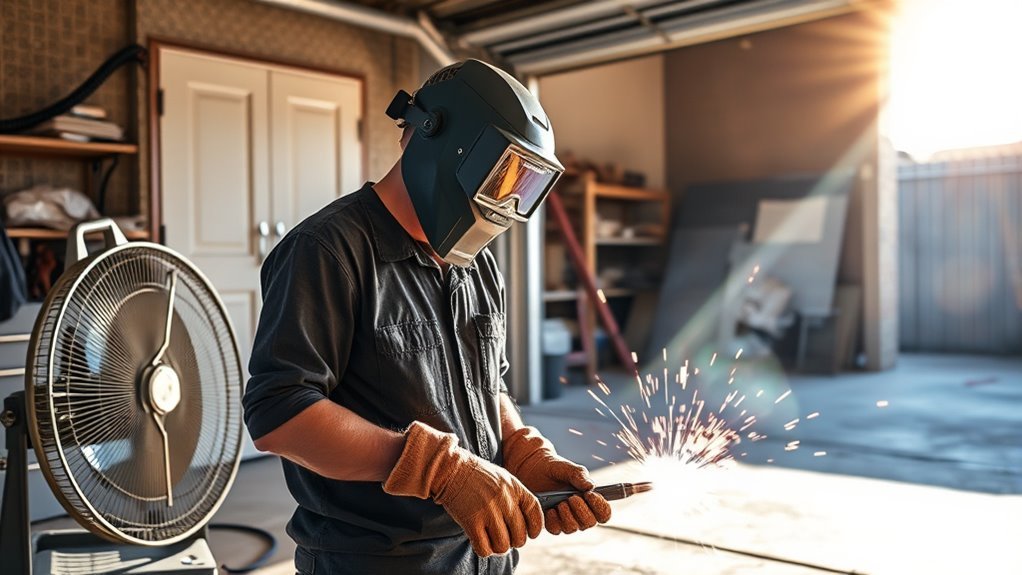
- Use ventilation. Welding fumes and cleanup dust can contain hazardous metal particles. Keep your breathing zone away from the plume and dust.
- Be careful with cleaners. Follow manufacturer instructions. OSHA’s welding standard warns that cleaning materials may need special precautions because of toxicity or flammability.
- Control fire risk. Keep solvent, paper, rags, interior trim, and undercoating away from hot metal and sparks.
- Inspect powered brushes. Never exceed the brush’s rated speed, and do not use a brush with a cracked hub, missing wires, or strong vibration.
Avoiding Common Mistakes When Cleaning Welds
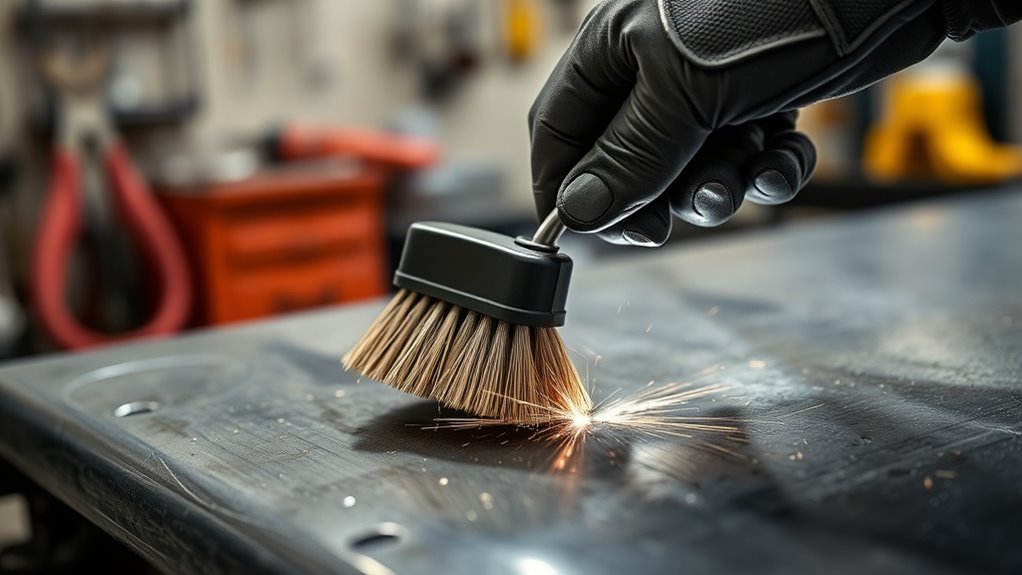
The most common wire-brushing mistakes come from rushing. Slow down, match the brush to the material, and clean only what needs cleaning.
- Using one brush for every metal: This can transfer steel particles to stainless steel or aluminum and cause rust staining or coating issues later.
- Pressing too hard: Heavy pressure bends bristles, scratches panels, and can make a powered brush harder to control.
- Skipping inspection: A shiny weld is not always a good weld. Brush, wipe, and inspect before finishing.
- Brushing over paint, seam sealer, or undercoating: Remove coatings safely before hot work, and do not grind or brush unknown coatings without ventilation and PPE.
- Painting over dust: Wire brushing leaves fine residue. Always wipe or vacuum before primer.
- Leaving bare steel exposed: Clean steel can flash rust. Prime or protect the repair area as soon as practical.
If the welded area needs to be dressed flatter after brushing, move from coarse to finer abrasives as needed, then clean the surface again before coating. Brushing alone usually will not create a paint-ready finish on visible outer panels.
Maintaining Your Wire Brush for Long-Lasting Use
A clean, straight brush works better and is safer. After each job, remove trapped slag, dust, and metal particles from the brush. Store brushes dry so the bristles do not rust.
- Clean after use. Tap out loose debris and wipe the handle or shank. Use a vacuum around the workbench instead of spreading dust.
- Keep brushes separated. Store steel, stainless, and aluminum brushes in different drawers, bags, or marked containers.
- Keep powered accessories dry. Rusted or bent wires shed more easily and can make the tool vibrate.
- Check the label. For powered brushes, keep the brush rating visible so you can match it to the tool speed later.
When to Replace Your Wire Brush
Replace a wire brush when it no longer cleans evenly or when it becomes unsafe. Do not wait for a calendar date. Watch the brush condition instead.
Replace the brush if you see any of these signs:
- Bristles are missing, loose, badly bent, or shedding during use.
- The brush leaves more wire fragments than debris removed.
- The brush is loaded with paint, seam sealer, grease, or old coating residue that will not clean out.
- The brush is rusty and contaminates the work surface.
- A powered brush vibrates, wobbles, or looks out of round.
- The hub, shank, or mounting point is cracked or damaged.
- The brush has been used on the wrong metal and could cross-contaminate the next job.
A worn brush slows you down and can damage the repair area. For stainless steel or aluminum work, replacing a questionable brush is cheaper than fixing contamination under primer or paint.
Effective Cleaning Methods After Brushing

Brushing is not the final cleaning step. It loosens contamination, but it also leaves fine dust and metal particles behind. Clean again before primer, seam sealer, paint, or another weld pass.
- Vacuum the area. Remove dust from seams, flanges, plug weld holes, and nearby panels.
- Wipe with a clean rag. Use a lint-free rag so you do not leave fibers in the repair area.
- Use the right cleaner. Choose a cleaner approved for the metal and coating system you plan to use. Follow the cleaner’s flash time and safety directions.
- Scuff or sand if needed. If the surface is going to primer or paint, use the abrasive grit recommended by the coating manufacturer.
- Apply corrosion protection. Use primer, seam sealer, cavity wax, or weld-through products where appropriate for the repair area.
For galvanized or zinc-coated steel, cleanup and coating removal need extra care. Learn how to handle zinc coating from galvanized steel before welding or heating the area.
Troubleshooting Wire Brush Cleanup Problems
| Problem | Likely Cause | Fix |
|---|---|---|
| Rust spots appear after brushing stainless or aluminum | Carbon steel contamination from the brush or nearby grinding dust | Clean again with a dedicated brush and keep steel tools away from non-ferrous or stainless work. |
| Deep scratches on thin panel | Too much pressure or too aggressive a brush | Switch to a finer hand brush, reduce pressure, and finish with the correct sanding steps. |
| Primer does not adhere well | Dust, grease, solvent residue, or coating residue left after brushing | Vacuum, wipe with the correct cleaner, scuff as required, and re-clean before primer. |
| Brush throws wires | Worn brush, excessive pressure, wrong tool speed, or damaged hub | Stop using it. Replace the brush and check the tool speed, guard, and mounting. |
| Weld still looks dirty after brushing | Trapped slag, coating residue, porosity, or poor access | Use an end brush, scraper, or appropriate abrasive. Recheck the weld quality before finishing. |
Frequently Asked Questions
Why wire brush after welding?
You wire brush after welding to remove loose slag, spatter, oxidation, soot, and debris. This makes the weld easier to inspect and helps prepare the surface for primer, paint, seam sealer, or other finishing steps.
How do you use a wire end brush?
Use a wire end brush for corners, plug weld edges, brackets, and tight seams. Keep the tool steady, let the wire tips do the work, and avoid forcing the brush into the joint. Wear eye and face protection because end brushes can throw debris.
How do you clean metal after welding before paint?
After welding, remove slag and spatter, wire brush the area, vacuum dust, wipe with a clean rag and an approved cleaner, then scuff or sand as required by the coating system. Prime bare metal soon so it does not flash rust.
Can I use the same wire brush on steel and aluminum?
No. Keep separate brushes for steel and aluminum. A brush used on carbon steel can carry steel particles into aluminum, which may cause contamination and finish problems later.
Should I wire brush galvanized steel after welding?
You can brush the welded area after it cools, but the bigger concern is safe coating removal and ventilation before and during welding. Zinc coatings can create hazardous fumes when heated, so follow the repair procedure and use proper ventilation and PPE.
Is a powered wire wheel better than a hand wire brush?
A powered wire wheel is faster, but it is not always better on auto body panels. A hand brush gives more control on thin sheet metal. Use powered brushes only when the panel is strong enough and you can control the tool safely.
Conclusion
Using a wire brush after welding auto body metal is a small step that has a big effect on inspection, cleanliness, and finish quality. Choose a dedicated brush for the metal, use light pressure on thin panels, protect yourself from flying debris and dust, and clean the surface again after brushing. Once the welded area is clean and sound, protect the bare metal with the right primer, sealer, or coating so the repair lasts.
Sources
- OSHA Fact Sheet: Controlling Hazardous Fume and Gases during Welding — supports ventilation, coating cleanup, fume exposure, and respiratory protection guidance.
- OSHA 1910.133: Eye and Face Protection — supports eye and face protection guidance for flying particles and welding-related hazards.
- OSHA 1910.242: Hand and Portable Powered Tools — supports the compressed-air cleaning safety note.
- OSHA 1910.252: Welding, Cutting, and Brazing General Requirements — supports welding safety, protective clothing, ventilation, and cleaning-compound precautions.
- OSHA Welding, Cutting, and Brazing Safety Topic Page — supports the overall safety framing and standards references for welding operations.