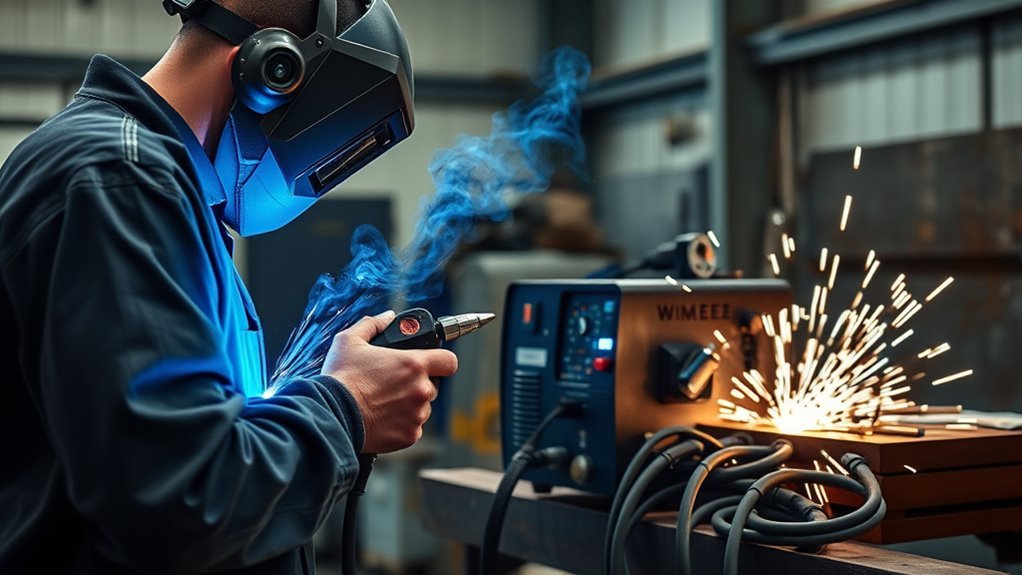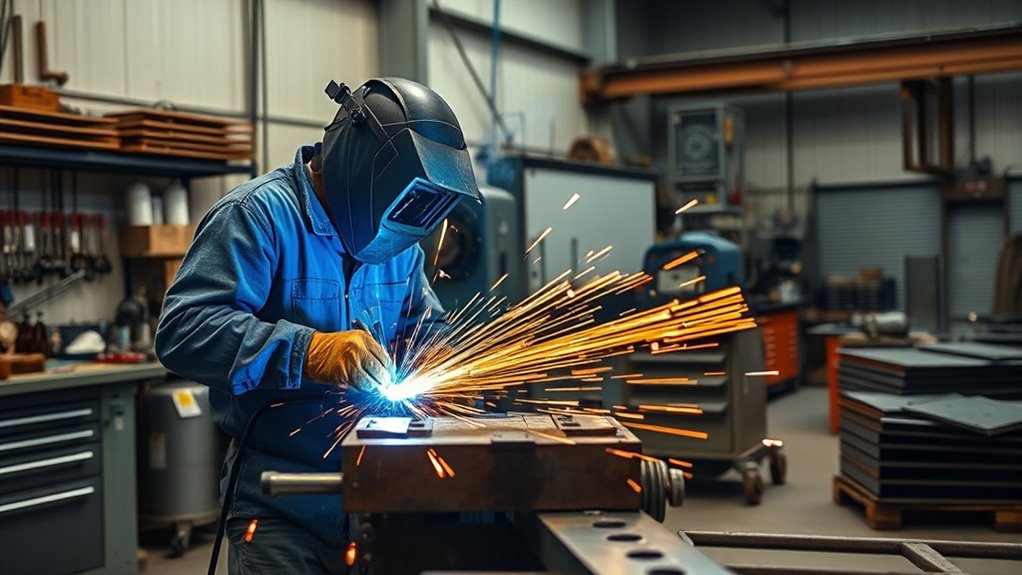
When you compare MIG and TIG welding for auto body work, the right choice depends on the vehicle, the metal, the joint, and the finish you need. MIG, more formally called gas metal arc welding (GMAW), is usually the practical choice for mild-steel patches, plug welds, and general restoration work. TIG, or gas tungsten arc welding (GTAW), offers precise puddle and filler control for clean custom fabrication. On late-model collision repairs, however, personal preference comes second to the vehicle maker’s repair procedure.
Quick Answer
MIG is the better all-around choice for most mild-steel auto body patches, plug welds, and routine restoration work because it is faster and easier to learn. TIG is better for clean, visible custom seams and precise aluminum or stainless fabrication. For structural collision repair, always use the exact joining method in the vehicle-specific OEM procedure.
Key Takeaways
- MIG suits most mild-steel body repairs: It is fast, repeatable, and practical for patches, plug welds, floor pans, and hidden repairs that will be finished and painted.
- TIG suits precision fabrication: It gives you separate control of the arc and filler rod, with very little spatter and a clean bead when fit-up is excellent.
- TIG does not automatically mean less warping: Its amperage control is excellent, but slow travel can still put too much total heat into a panel.
- Modern collision repairs follow OEM procedures: A vehicle may require GMAW, pulsed aluminum GMAW, resistance spot welding, MIG brazing, rivet bonding, or another approved method.
- Thin panels need disciplined heat control: Use clean metal, tight fit-up, spaced tacks, short welds, cooling time, and careful grinding.
MIG vs. TIG for Auto Body Work
MIG and TIG are both arc welding processes, but they work differently. Gas metal arc welding uses a continuously fed consumable wire electrode. The wire carries the current, melts into the joint, and supplies filler metal. Gas tungsten arc welding uses a non-consumable tungsten electrode to create the arc, while you add a separate filler rod only when the joint needs it.
In everyday shop language, people usually call GMAW “MIG,” even when welding steel with an argon and carbon-dioxide blend. Technically, an active gas makes that setup MAG rather than true MIG, but “MIG welding” remains the common auto body term.
The simple comparison is useful for restoration and fabrication: choose MIG for speed and repeatability on common body steel, and choose TIG for fine puddle control and a clean visible finish. For a late-model vehicle, first identify the material and read the body repair manual. The required attachment method may not be either of those options.
| Factor | MIG Welding | TIG Welding |
| Best use | Mild-steel patches, plug welds, floor pans, brackets, and routine restoration work | Visible custom seams, hand-formed panels, stainless parts, and precise aluminum fabrication |
| Learning curve | Easier for most beginners | Harder because torch control, filler timing, arc length, and amperage must work together |
| Welding speed | Usually faster | Usually slower |
| Heat control | Controlled with settings, tack duration, spacing, and travel | Fine live amperage control on equipped machines, but slow travel can still add excessive heat |
| Finish | Good, with more spatter and grinding possible | Low-spatter, precise bead when the metal and tungsten stay clean |
| Fit-up tolerance | More forgiving of small variations | Works best with very clean metal and tight, consistent gaps |
| Typical shop cost | Usually lower entry cost and shorter practice time | Usually higher equipment, accessory, and training cost |
| Late-model structural repair | Use only where the vehicle-specific OEM procedure approves it | Do not substitute TIG unless the OEM procedure specifically permits it |
On a late-model vehicle, the correct joining method comes from the vehicle-specific repair procedure, not from which welding process produces the prettiest bead.
Understanding MIG Welding: Basics and Benefits
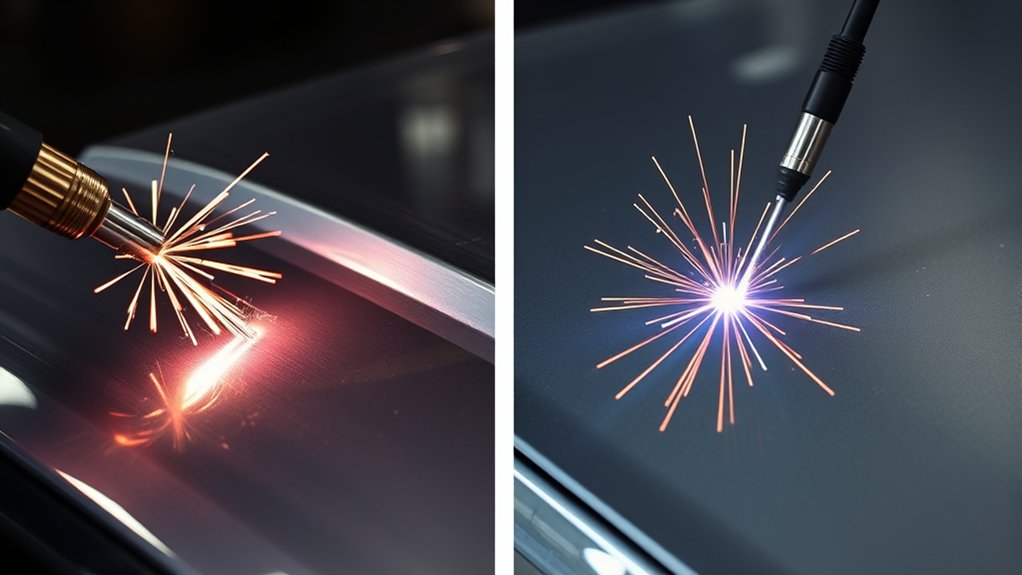
MIG welding is popular in auto body work because the gun feeds wire automatically. Once the machine is set correctly, you can focus on gun angle, travel speed, tack placement, stickout, and heat control instead of feeding filler rod with your other hand.
For mild-steel restoration work, MIG is practical for plug welds, patch panels, lap joints, butt joints, floor pans, tabs, and small brackets. It also fits repairs that will be ground carefully, corrosion-protected, seam-sealed, primed, and painted.
MIG is not automatic or foolproof. You still need bare clean metal, sound ground contact, correct polarity, the correct wire and shielding gas, tight fit-up, and settings matched to the material. Dirty metal, excessive wire stickout, drafts, poor gas flow, or incorrect voltage and wire speed can cause porosity, burn-through, excess spatter, and lack of fusion.
Pro Tip: Tune the welder on clean scrap from the same material and thickness as the repair. Make test tacks and short welds, then inspect both sides. You want fusion without a tall cold bead, heavy oxidation, or a hole blown through the sheet.
Understanding TIG Welding: Precision and Applications
TIG gives you separate control over the arc and filler metal. On a machine with a foot pedal or fingertip control, you can also reduce amperage as the panel warms. This makes TIG valuable for visible custom seams, hand-formed sheet metal, stainless parts, and carefully fitted aluminum fabrication.
TIG normally uses a tungsten electrode and an inert shielding gas, commonly argon. The filler rod is separate, and a close-fitting joint can sometimes be fused without filler when the design and procedure allow it. Cleanliness is critical. Oil, paint, rust, zinc, moisture, dirty filler rod, or a contaminated tungsten can cause porosity, oxidation, arc instability, and inclusions. For steel setup details, see this guide to TIG welding steel with 100% argon.
The trade-off is time and coordination. TIG is slower, it exposes the panel to heat for longer if you linger, and it demands steady control of torch angle, arc length, travel, amperage, and filler timing. TIG gives you excellent control over the heat at any moment, but it does not guarantee lower total heat input. A slow TIG seam can warp thin sheet just as easily as poor MIG technique.
Note: TIG is most defensible as a choice for restoration and custom fabrication. Do not assume it is approved for a structural collision repair simply because it can make a clean weld.
Which Process Is Best for Common Auto Body Jobs?
The right process depends on whether you are doing restoration, custom fabrication, general non-structural repair, or OEM collision repair. Use this practical guide as a starting point, then check the vehicle maker’s information before touching any structural or safety-related part.
- Mild-steel patch panels: MIG is usually the best all-around choice because you can place short, spaced tacks quickly and build the seam in stages.
- Plug welds on replacement panels: MIG is common, but the plug size, spacing, wire, welder settings, and test requirements should follow the repair procedure.
- Visible custom seams: TIG can produce a small, clean bead with little spatter when the joint fit-up is excellent.
- Classic-car restoration panels: MIG is practical for most patches. TIG can be useful on hand-formed panels where appearance and minimal grinding matter.
- Thin aluminum custom panels: AC TIG can offer precise control. For OEM collision repair, manufacturers commonly specify pulsed aluminum GMAW, rivet bonding, or another documented method rather than leaving the choice to the technician.
- Stainless trim, tanks, exhaust, or custom parts: TIG is often preferred for appearance and filler control, though the exact process depends on the part and alloy.
- Rocker panels, pillars, rails, reinforcements, and crash structures: Follow the vehicle-specific OEM repair manual. Do not select MIG or TIG by habit.
Warning: Do not weld frame rails, suspension or seat-belt mounts, airbag-related structures, pillars, roof rails, rockers, ultra-high-strength steel, aluminum crash structures, hybrid or EV battery enclosures, or other safety-critical parts without the current vehicle-specific repair procedure, approved equipment, and proper training.
Products Worth Considering
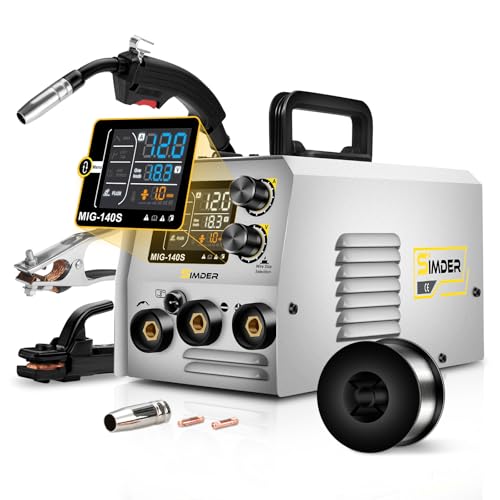
THREE-PROCESS WELDING STATION BUILT FOR FIRST-TIME USERS - Flux Core MIG, Lift TIG and Stick in one machine, so you can find the process that fits your projects without buying three separate welders. Runs on a standard 110V household outlet or 220V for heavier work - no electrician, no special wiring. Welds carbon steel, low-alloy steel, stainless steel, titanium, copper and cast iron

ER70S-6 MIG WIRE: It's the most common wire of the copper-coated mild steel GMAW (MIG) wires for single or multiple pass welding.

[Wide Lincoln Welder Compatibility] This welding gun direct K530-6 replacement for Lincoln Magnum 100L. Fits SP-140T, SP-180T, Weld-Pak 125HD/140HD, Pro MIG 140/180, MIG-Pak 140/180, SP-140/180T, Weld-Pak 125/ 140HD, Power MIG 140C/180C, Easy-Core 140/180 and etc.
OEM Procedures Matter More Than MIG vs. TIG
Modern vehicles use multiple steel strengths, aluminum alloys, adhesives, rivets, weld bonding, squeeze-type resistance spot welds, GMAW plug welds, and MIG brazing. The correct method may change by model year, location, and joint. I-CAR states that the vehicle-specific workshop manual supplies the required welding and sectioning method, and that ignoring those procedures can compromise repair safety and quality.
MIG brazing is another reason not to treat every wire-fed process as ordinary MIG welding. Brazing uses a lower-melting filler and does not melt the base metal in the same way as fusion welding. Use it only where the OEM procedure specifies it. Never replace a specified weld, rivet, adhesive, or resistance spot weld with TIG because the TIG bead appears cleaner.
Aluminum collision repair also needs special attention. Many aluminum-intensive vehicle procedures that allow arc welding call for a pulse-capable GMAW machine, a specific filler wire, 100% argon, dedicated contamination-controlled tools, and technician qualification. That is different from choosing AC TIG for a custom aluminum panel on a restoration project.
Before welding, identify the part, material, steel strength or aluminum alloy when available, attachment method, joint design, approved consumable, corrosion-protection steps, and any pre- or post-repair scanning or calibration requirements.
Why MIG Welding Is Ideal for Quick Auto Body Repairs
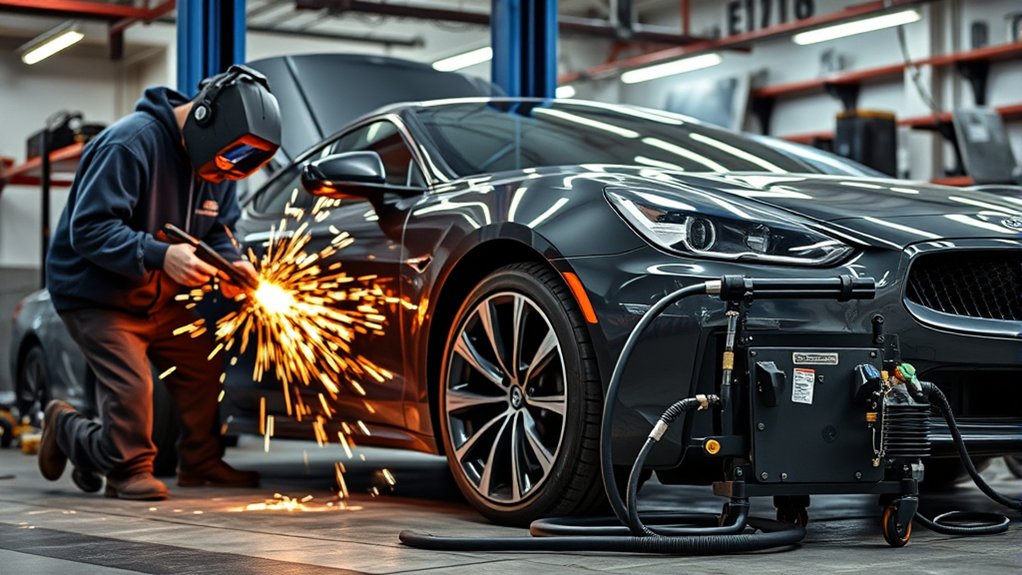
For general mild-steel body work, MIG lets you make repeated tacks and short stitches without stopping to add filler rod by hand. That makes it practical for floor pans, non-structural rocker patches, quarter-panel patches, wheel arches, and many restoration-panel replacements.
MIG also works well when the finished joint will be dressed with a grinder and protected with epoxy primer, seam sealer, cavity wax, and paint. It can leave more spatter than TIG, but a well-tuned short-circuit setup on clean steel should not create uncontrolled spatter.
Gas-shielded MIG needs protection from moving air. A draft can disturb the shielding gas and cause porosity. Build a windbreak or move the job indoors rather than accepting a contaminated weld. A flux-core welding technique can be useful on thicker, non-cosmetic steel in outdoor conditions, but self-shielded flux-core is usually a poor choice for thin visible body panels because it runs hotter, produces slag, and requires more cleanup.
Benefits of TIG Welding for High-Quality Auto Body Projects
TIG is most useful when a project needs a neat bead, minimal spatter, precise filler placement, and a clean visible finish. You can add filler only when needed and keep the bead narrow when the joint is tight. These advantages suit custom engine bays, stainless brackets, aluminum tanks or panels, hand-formed restoration pieces, and exposed fabrication.
A well-controlled TIG weld can reduce grinding. That helps preserve thin original metal on a restoration because aggressive grinding can thin the panel, create low spots, and make the finished surface harder to straighten. The benefit disappears if you overheat the panel, use too much filler, or build a bead that still requires heavy dressing.
Precision and Control
TIG gives you precise control of arc length, puddle size, and filler placement. Many machines also provide foot-pedal or fingertip amperage control. As the panel warms, you can back off the current instead of holding the same output through the entire weld.
| Feature | TIG Advantage |
| Instantaneous heat control | Adjust amperage while welding on equipped machines |
| Filler control | Add a small amount of filler only where the joint needs it |
| Spatter | Very low when the setup and technique are correct |
| Common materials | Clean mild steel, stainless steel, and aluminum with the correct machine and setup |
| Main limitation | Slow travel and poor fit-up can increase heat, distortion, and labor time |
Aesthetic Quality Enhancement
For visible auto body work, TIG can create a clean, consistent bead that needs little finishing. This is useful on custom engine bays, exposed brackets, stainless parts, aluminum fabrication, and restoration pieces where the weld will remain visible.
TIG is not a shortcut around preparation. The metal must be clean, the gap must be consistent, the filler must match the application, and the tungsten must stay uncontaminated. If the joint fit-up is poor, TIG often becomes slower and more frustrating than MIG.
Choosing MIG for Your Project: When to Use It
Choose MIG when a non-structural restoration or fabrication project needs speed, repeatability, and practical strength on common mild steel. It is especially useful for replacement patches and repairs that will be finished smooth and painted.
Before starting, confirm that your machine can run steadily at the low output needed for thin sheet. Use the wire type, diameter, polarity, and gas recommended by the machine maker and, where applicable, the vehicle maker. Do not copy a setting from a different welder and assume it will behave the same.
Speed and Efficiency
MIG is often faster because the wire feeds continuously. On a long butt seam, you can place a tack, move to a distant area, place another tack, and repeat until the panel is locked in place. Then you can add short welds between cooled areas without running one long bead.
Do not run a continuous seam across a large thin body panel unless a qualified procedure specifically calls for it. The concentrated shrinkage can pull the panel out of shape. Short welds, wide spacing, frequent alignment checks, and cooling time give you more control.
Material Thickness Suitability
MIG can cover a wide thickness range, but the true limit depends on the power source, wire, gas, transfer mode, joint design, metal type, and operator skill. A small home-shop machine may work well on sheet metal and light fabrication but lack the output or duty cycle for a thick bracket. A powerful machine may also be difficult to tune low enough for fragile sheet.
On body panels, the main problem is often avoiding burn-through and distortion rather than chasing maximum penetration. Use clean metal, small controlled tacks, short arc time, and good fit-up. Understanding how heat application can expand and stretch metal helps explain why overheated sheet becomes harder to finish.
Selecting TIG for Your Work: When It’s Best
Choose TIG for restoration or custom fabrication when you want maximum puddle control, minimal spatter, and a clean finished bead. It is a strong option for thin hand-formed panels, stainless components, visible seams, and aluminum work when you have the correct AC-capable machine and preparation.
TIG demands clean metal and more skill. You control torch angle, arc length, puddle size, filler timing, travel speed, and often amperage at the same time. Keep the tungsten clean. If it touches the puddle or filler rod, stop and regrind or replace it before continuing.
For delicate body work, live amperage control is the main TIG advantage. Work in short sections and keep the arc tight. Do not confuse a slow, careful pace with low heat input. Pause before the panel becomes heat-soaked. If you are comparing processes for stainless work, this separate guide covers welding stainless steel with a stick welder.
Thin Sheet Metal Heat Control
Thin automotive sheet metal can warp quickly with either process. A sound repair depends on managing fit-up, arc time, weld sequence, and shrinkage. Clean the panel to bare metal, trim the patch accurately, clamp it in its final shape, and confirm access to both sides before welding.
- Fit the patch closely: Large or uneven gaps demand more filler and more heat. Keep the gap consistent for the process and joint design.
- Place locating tacks: Start at spaced points around the patch and keep checking alignment.
- Skip around the seam: Move to a cool area rather than stacking heat into one section.
- Use short arc time: Build the joint with small controlled welds instead of a long pass.
- Allow cooling: Let heat spread and leave the panel naturally. Avoid quenching unless a qualified procedure specifically calls for it because rapid cooling can create additional shrinkage or metallurgical problems.
- Use backing only where appropriate: A clean copper backing bar can support the puddle and reduce burn-through on accessible non-structural work, but it does not replace correct settings or fit-up.
- Inspect before grinding: Confirm fusion and fill any missed areas before removing bead height.
- Grind in stages: Use light pressure, keep the abrasive moving, and stop before you thin the surrounding sheet.
Note: A perfectly flat-looking seam is not automatically a sound seam. Over-grinding can remove weld metal, thin the panel, create low spots, and weaken the repair.
Joint Preparation and Weld Quality Checks
Good results start before you pull the trigger or strike the arc. Remove paint, undercoating, seam sealer, rust, oxide, oil, and moisture from the weld zone and from the back side where contamination can reach the puddle. Protect nearby glass, wiring, trim, and finished surfaces from sparks and grinding debris.
- Confirm fit-up: The panel should sit in its final position without using weld heat to pull it into place.
- Check the work clamp: Attach it to clean metal close to the weld area, following OEM precautions so current does not take an unintended path through bearings, modules, or wiring.
- Make test welds: Use representative scrap and reproduce the joint type, layers, gap, and access where possible.
- Inspect both sides: Look for fusion, incomplete fill, burn-through, porosity, cracks, heavy oxidation, or a tall cold bead.
- Use destructive practice tests when appropriate: Before a critical repair, practice coupons can reveal weak plug welds or poor penetration that a surface glance may miss.
- Restore corrosion protection: Follow the repair procedure for weld-through primer, epoxy primer, seam sealer, cavity wax, topcoat, and any required adhesive.
Materials: Mild Steel, Aluminum, Stainless, and Coated Metal
Mild steel is common in restoration and older body panels, and MIG is usually the easiest process for it. Use clean bare metal, a suitable solid wire, and the shielding gas recommended for your setup. On a modern vehicle, do not identify a panel as mild steel by appearance alone.
High-strength and ultra-high-strength steel can lose designed properties when heated, sectioned, or welded incorrectly. The repair manual determines whether the part can be repaired, where it may be sectioned, and which joining method is allowed. Do not apply ordinary patch-panel methods to a structural HSS or UHSS part.
Aluminum conducts heat quickly and carries a tough oxide layer. For custom work, AC TIG can be excellent on thin material, while aluminum GMAW is faster and better suited to many production repairs. The American Welding Society’s aluminum guidance notes that GMAW commonly needs a spool gun or push-pull system, while GTAW needs an AC-capable machine. Automotive OEM procedures may also require pulsed GMAW and a specific filler wire.
Stainless steel needs correct filler, shielding, and heat control. Excessive heat tint signals oxidation and can reduce corrosion performance if the surface is not cleaned and restored correctly. TIG is often chosen for visible stainless components because it produces little spatter.
Galvanized or coated metal needs extra caution. Zinc, paint, undercoating, adhesives, and seam sealer can contaminate the weld and create hazardous fumes. Remove coatings only as required for the approved repair, use source capture or adequate ventilation, and use respiratory protection when your hazard assessment and applicable safety program require it. Review these safety precautions for galvanized steel before welding zinc-coated material.
Warning: Never weld an unknown coated panel in a poorly ventilated area. Older coatings may contain lead or other hazardous substances, and heating modern coatings can also release harmful decomposition products.
Common Applications for MIG Welding in Auto Body
MIG balances speed, control, and equipment cost for many everyday restoration and non-structural body jobs. Common examples include patch panels, floor pans, wheel-arch patches, small tabs, brackets, and approved plug welds on replacement panels.
Sheet Metal Repairs
For sheet metal repairs, MIG works best when you build the seam gradually. Tack the panel, verify its shape, and then add small welds in widely separated locations. If the panel starts to oil-can, pull away from the opening, or show a large heat-affected area, stop and let it cool.
Use stable shielding gas coverage, a clean work clamp, and the correct wire. For outdoor work, shield the weld from wind or move inside. Self-shielded flux-core can help on thicker steel, but it is usually too aggressive and messy for thin cosmetic panels. Do not assume you can weld aluminum with ordinary self-shielded flux-core wire; aluminum body repair normally uses GTAW or gas-shielded GMAW with the correct equipment and procedure.
Panel Fabrication Techniques
MIG is practical during panel fabrication because it lets you tack pieces quickly while checking fit. This helps when shaping small patches, adding tabs, or repairing non-visible supports. Clamp the panel in its relaxed final position and avoid forcing it into alignment with weld shrinkage.
| MIG Welding | TIG Welding |
| Fast and practical | Slower but more precise |
| Strong choice for many mild-steel panels | Strong choice for clean visible custom seams |
| Easier for beginners | Requires more coordination |
| More spatter and grinding are possible | Very low spatter when done correctly |
| Best for speed and repeatability | Best for finish and independent filler control |
Common Applications for TIG Welding in Auto Body
TIG stands out in custom auto body fabrication when the project calls for precision, clean appearance, and careful filler placement. It is useful for hand-formed sheet metal, aluminum tanks or panels, stainless trim, motorsport fabrication, visible engine-bay parts, and classic-car restoration.
TIG is also helpful when you want to minimize grinding. A small, controlled bead can preserve thin metal, but only when fit-up is tight and the operator avoids excessive heat. These TIG welding techniques for aluminum can help with custom fabrication where the final appearance matters.
For modern aluminum collision repair, do not substitute TIG for a documented pulsed-GMAW, rivet-bonding, or adhesive procedure. The correct process depends on the vehicle, alloy, joint, and approved repair plan.
Safety Before MIG or TIG Welding
MIG and TIG both create intense arc radiation, hot metal, fumes, electric-shock risk, sparks, and fire hazards. Vehicle welding adds hidden fuel, brake, refrigerant, restraint, electrical, sound-deadening, adhesive, undercoating, and interior hazards. Plan the job before removing paint or striking an arc.
- Follow the OEM electrical procedure: Battery disconnection, module protection, high-voltage shutdown, and post-repair steps vary by vehicle. Do not use a one-rule-fits-all battery method.
- Control the current path: Put the work clamp on clean metal close to the weld area as the repair procedure allows. Keep current away from bearings, hinges, wiring, control modules, and sensitive components.
- Inspect both sides: Check for fuel and brake lines, wiring, airbags, seat-belt components, insulation, carpet, foam, seam sealer, adhesive, cavity wax, and undercoating.
- Protect eyes and skin: Use a welding helmet with an appropriate shade, safety glasses, welding gloves, flame-resistant clothing, and closed leather footwear. Use face and hearing protection for grinding.
- Control fumes: Use local fume extraction or adequate ventilation. Keep your breathing zone out of the plume. A respirator must be selected, fitted, and used correctly when ventilation alone is not enough.
- Control fire: Remove combustibles, shield what cannot be moved, keep suitable extinguishing equipment ready, and check hidden cavities during and after welding.
- Handle cylinders safely: Keep shielding-gas cylinders upright, secured, capped during transport, and away from heat and impact.
- Use extra controls on hybrids and EVs: High-voltage systems require vehicle-specific disabling, verification, PPE, and technician qualification. Never weld on or near a battery enclosure without an approved procedure.
OSHA 1910.252 covers fire prevention, ventilation, eye protection, and other general welding safeguards. Where a formal fire watch is required, OSHA specifies continued monitoring for at least 30 minutes after hot work. A vehicle can smolder inside a rocker, pillar, insulation pad, or seam long after the visible sparks stop, so continue checking the repair area and adjacent cavities.
Warning: Never weld near a fuel leak, an uncleared fuel tank, a deployed or live restraint component, an energized high-voltage system, or an enclosed cavity that you cannot inspect for combustible material.
Cost Comparison: MIG vs. TIG for Your Auto Body Work
For many home shops, MIG has the lower entry cost. A capable welder, shielding-gas cylinder, wire, helmet, gloves, clamps, sheet-metal tools, and grinder can cover a wide range of mild-steel restoration work. The process is easier to learn, so you may reach acceptable practice results sooner.
TIG often costs more because the machine, torch parts, tungsten, filler rods, gas, pedal or remote, and practice time add up. An AC/DC TIG machine suitable for aluminum also costs more than a basic DC-only unit. TIG usually takes longer to weld, which raises labor cost in a professional shop.
Equipment price is only part of the repair cost. MIG can save welding time, but poor heat control can create extra metal finishing. TIG may reduce spatter and grinding on a visible custom joint, but slow work can increase labor and distortion. For a late-model collision repair, the real cost also includes OEM-approved equipment, training, test welds, corrosion protection, scanning, calibration, and quality control.
A plasma cutter and a MIG welder perform different jobs, so do not treat cutting capacity as a guide to welding capability. Match the machine to the material, transfer mode, minimum stable output, duty cycle, and repair procedure.
Products Worth Considering

Wires diameter :0.6-1.0mm(0.023‘’-0.04‘’)

【LOW SPATTER & EASY CLEANUP】Minimal Spatter, Flawless Beads: Experience exceptionally low spatter and minimal post-weld cleanup. This ER70S-6 solid wire allows you to achieve smooth, visually appealing beads with ease, saving both time and grinding effort on your metal fabrication.

Replacement & Compatible Welders: This 250A MIG welding gun is the replacement for Magnum Pro 250L gun, compatible with Lincoln Power MIG 256 and 260 welders (Please confirm the model of the welder and the compatibility of the welding gun before purchasing for best match)
Frequently Asked Questions
Is TIG or MIG better for car body work?
MIG is better for most mild-steel patches, plug welds, and routine restoration work because it is faster and easier to learn. TIG is better for clean visible custom seams and precise stainless or aluminum fabrication. Structural collision repair must follow the vehicle-specific OEM joining procedure.
Does TIG cause less warping than MIG?
Not automatically. TIG gives you precise live amperage and puddle control, but it is slower. If you linger, total heat input can still warp thin sheet. Either process can control distortion when you use tight fit-up, short welds, a planned sequence, and cooling time.
Can you MIG weld thin car panels without warping them?
Yes. Clean the metal, fit the patch closely, tune the machine on matching scrap, place spaced tacks, skip around the seam, and allow cooling time. Avoid a long continuous bead, and grind lightly so you do not add more heat or thin the panel.
Is TIG approved for structural auto body repair?
Only when the vehicle-specific repair information explicitly allows it. Modern structural repairs may require GMAW, pulsed aluminum GMAW, resistance spot welding, MIG brazing, rivet bonding, adhesive bonding, or replacement at factory joints. Never substitute TIG based on preference.
Can you use flux-core wire for auto body panels?
Self-shielded flux-core can work on thicker non-cosmetic steel, especially outdoors, but it is usually too hot and messy for thin visible body panels. Gas-shielded MIG is cleaner and easier to control. Do not use ordinary steel flux-core wire on aluminum.
Should you disconnect the car battery before welding?
Follow the vehicle maker’s procedure. Some repairs require battery disconnection, module isolation, high-voltage shutdown, memory-saving steps, or post-repair initialization. Battery disconnection alone does not replace correct work-clamp placement or other electronic-protection steps.
What is the best TIG rule for thin auto body metal?
There is no universal amperage rule. Start with the machine maker’s guidance, practice on matching scrap, keep a short arc, use clean metal, and apply only enough heat to form a controlled puddle. Reduce amperage as the panel warms and stop before the area becomes heat-soaked.
Why can welding a vehicle be dangerous?
Vehicle welding can expose you to arc rays, burns, electric shock, fire, fumes, hidden fuel or brake lines, live restraint components, sensitive electronics, and high-voltage systems. Inspect both sides of the work, follow the OEM procedure, use proper PPE and ventilation, and keep fire-control equipment ready.
Conclusion
For most mild-steel auto body patches and restoration work, MIG welding is the practical first choice. It is fast, easier to learn, and well suited to plug welds, floor pans, patch panels, and repairs that will be finished and painted. TIG welding is the better choice for clean visible custom seams, precise filler control, stainless parts, and carefully fitted aluminum fabrication.
The process name alone does not make a repair safe. Clean metal, tight fit-up, correct consumables, test welds, heat control, careful grinding, corrosion protection, and fire prevention all matter. On a late-model vehicle, identify the material and follow the current vehicle-specific repair procedure before choosing any joining method.
Sources
- OSHA 1910.252, Welding, Cutting, and Brazing General Requirements — supports fire prevention, ventilation, PPE, and fire-watch guidance.
- American Welding Society, What Is GMAW? — supports the MIG/GMAW process description, wire feed, shielding gas, and basic setup factors.
- American Welding Society, What Is GTAW Welding? — supports the TIG/GTAW process description, tungsten electrode, separate filler, and heat-control discussion.
- American Welding Society, How to Weld Aluminum — supports AC GTAW, aluminum GMAW wire-feeding equipment, argon shielding, and aluminum preparation.
- I-CAR, Structural Sectioning Procedures: Ford/Lincoln — supports using vehicle-specific repair manuals for structural joining and sectioning methods.
- I-CAR, Pulse Transfer Mode Needed for Aluminum Welding? — supports pulse-capable GMAW requirements in aluminum-intensive collision repair procedures.