A plasma cutter helps you cut automotive steel, aluminum, stainless steel, and other conductive metals faster and cleaner than many saws or grinders. For auto repair, it is especially useful for trimming sheet metal, removing brackets, opening access holes, cutting exhaust tubing, and shaping patch panels. You still need the right setup: strong ventilation, proper eye and hand protection, a secure ground clamp, dry compressed air, and machine settings that match the metal thickness.
Quick Verdict
A plasma cutter is a smart tool for automotive work if you often cut sheet metal, brackets, exhaust tubing, or custom fabrication parts. It gives you more control than a cutoff wheel in many tight areas, but it also needs safe setup, clean air, correct consumables, and practice.
- Best for: body repair, rust removal, bracket trimming, restoration work, and exhaust modification
- Not ideal for: non-conductive materials, fuel-contaminated parts, or areas where sparks and fumes cannot be controlled
- Biggest beginner mistake: using the wrong amperage, air pressure, torch angle, or travel speed for the metal
What Is a Plasma Cutter for Auto Work?
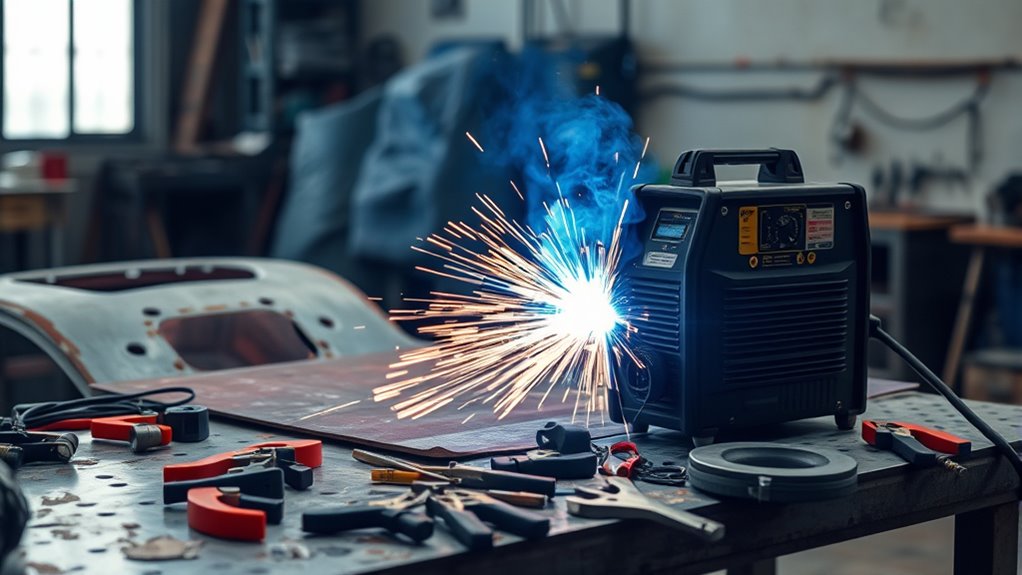
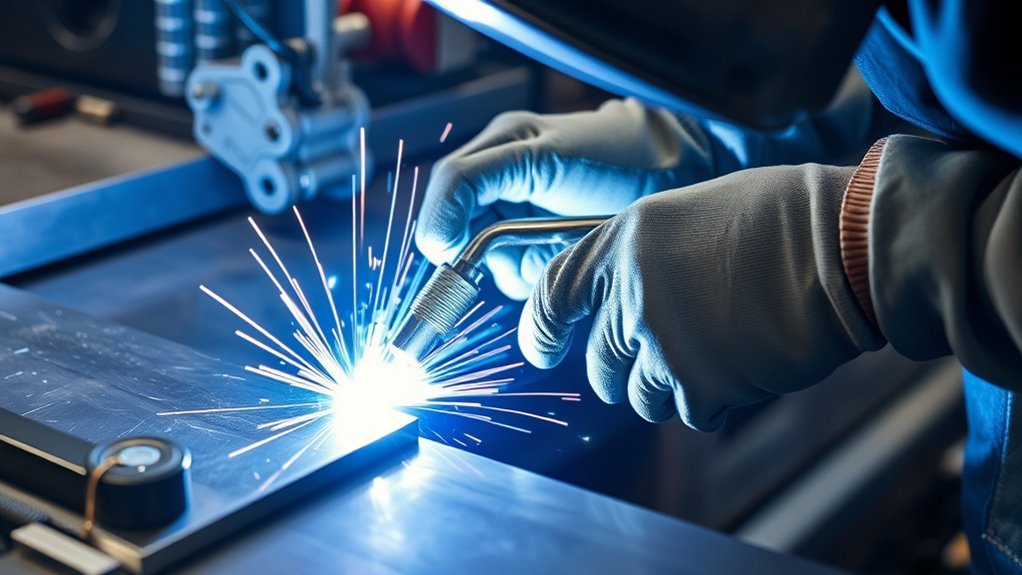
A plasma cutter for auto work is a cutting tool that uses an electric arc and compressed gas to create a hot, focused plasma stream. That stream melts the metal while the air blast pushes molten material out of the cut path. Because the arc needs an electrical path, plasma cutters are used on electrically conductive metals such as mild steel, stainless steel, aluminum, brass, and copper.
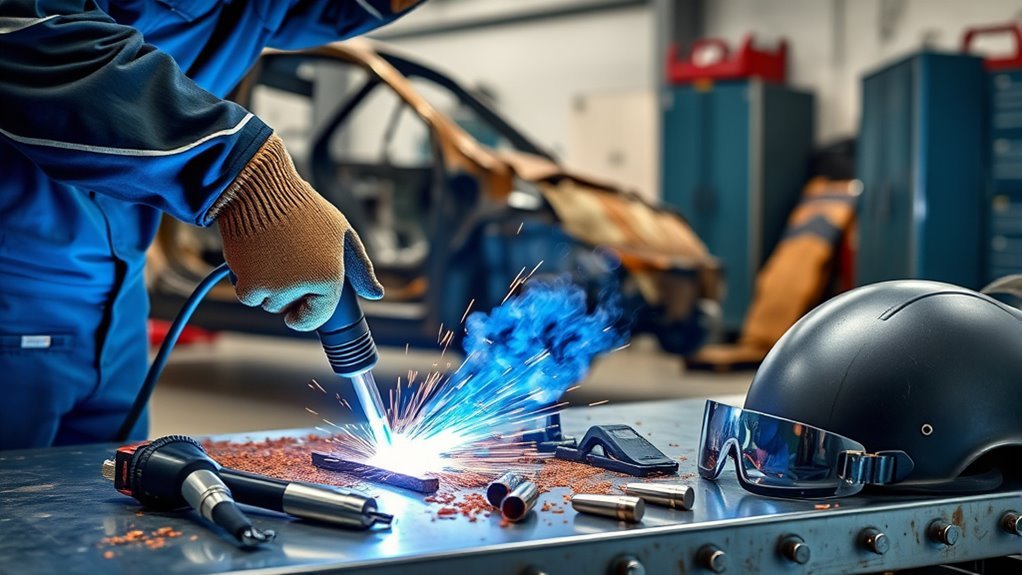
In automotive repair, you can use a plasma cutter to trim damaged body panels, cut rusted sections, remove welded brackets, slice exhaust tubing, and make custom patch panels. It can work well on thin automotive sheet metal because the heat is concentrated in a narrow area, but you still need steady movement to avoid distortion.
Cutting capacity depends on the machine. A small beginner unit may handle light sheet metal and thin brackets, while a stronger shop unit may cut thicker frame tabs or fabrication plate. Always compare the machine’s rated cut, severance cut, duty cycle, and air requirements before you start. Additionally, using a plasma cutter can improve cutting precision and efficiency when it is set up correctly.
Why Plasma Cutters Are Great for Auto Repair
Plasma cutters fit auto repair because they combine speed, control, and portability. You can reach areas where a saw or cutoff wheel feels awkward, and you can make curved or irregular cuts without changing tools.
With plasma cutting technology, you can cut steel, aluminum, and stainless steel for many shop tasks. Handheld units are useful around wheel wells, rocker panels, brackets, floor pans, and tight seams where grinder access is limited.
Plasma cutters are useful in auto repair because they cut conductive vehicle metals quickly while giving you control in tight or irregular areas.
They are not magic, though. Clean results depend on the right amperage, air pressure, consumable condition, torch angle, and travel speed. When those details are correct, a plasma cutter can reduce grinding time and help you finish repairs faster.
- Cut a rusted fender edge with better control
- Trim a replacement bracket to fit cleanly
- Open access around a frame rail or boxed section
- Shape patch panels for restoration work
- Modify exhaust tubing with less effort than a saw in tight spaces
That speed and control make plasma cutters useful when you need clean cuts, faster turnaround, and the freedom to modify, restore, and build without dragging out the job. Additionally, plasma cutting technology can reduce waste when your layout, torch path, and settings are dialed in.
Before You Cut: Quick Shop Checklist
Use this checklist before striking an arc:
- Read the machine manual for the correct input power, air pressure, duty cycle, and consumable setup.
- Remove flammable items, oily rags, fuel vapors, aerosols, and loose paper from the work area.
- Clean the workpiece enough to reduce paint, undercoating, oil, and rust contamination near the cut.
- Confirm strong ventilation, especially when cutting painted, coated, galvanized, or dirty automotive metal.
- Wear proper eye protection, gloves, flame-resistant clothing, hearing protection, and closed-toe footwear.
- Attach the ground clamp to clean, bare metal as close to the cut area as practical.
- Check the torch, electrode, nozzle, shield cup, air hose, and power lead for wear or damage.
How to Set Up a Plasma Cutter Safely
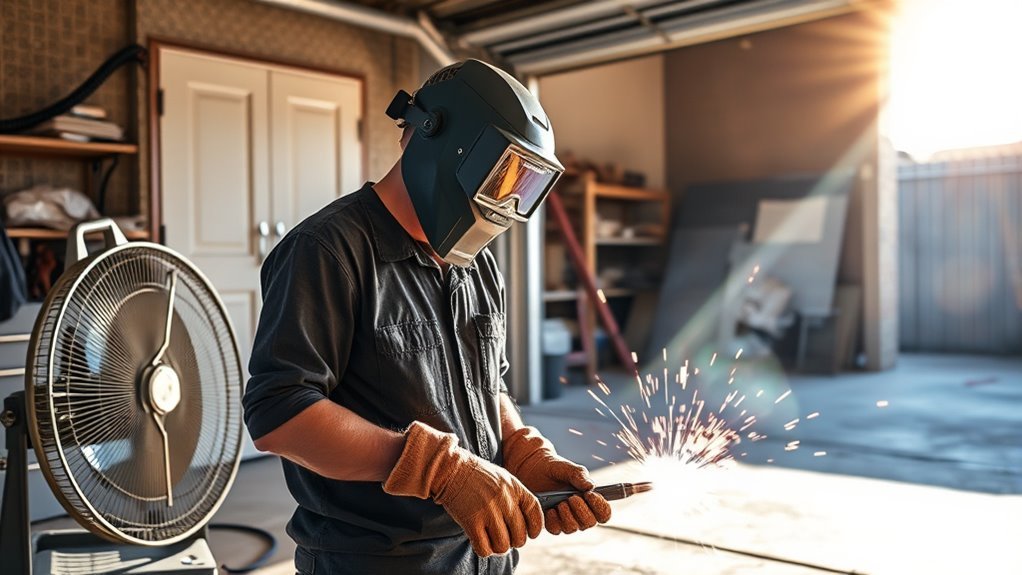
Before you start, make sure your workspace is well ventilated and that you are wearing suitable personal protective equipment. At minimum, use safety glasses or approved eye protection, a welding helmet or face shield with the correct filter shade for your machine and amperage, flame-resistant gloves, durable clothing, hearing protection, and protective footwear.
Turn the plasma cutter off before connecting power, air, torch parts, or the ground clamp. Confirm whether your machine requires 110V, 120V, 220V, or 240V input. Many small units can run on household power, while stronger cutters may need a higher-voltage circuit.
Connect a compatible air compressor that meets the cutter’s required CFM and pressure. Many light-duty machines operate around the 60-70 psi range, but the correct setting is always the one listed in your cutter’s manual. Dry, steady air matters because moisture and pressure drops can cause rough cuts, arc problems, and faster consumable wear. Additionally, always wear protective footwear to help protect against falling metal and hot sparks.
Safety Gear Essentials
Safety gear is nonnegotiable when you set up a plasma cutter for automotive work. Sparks, hot metal, bright arc light, noise, and fumes can all create hazards. Your Safety Gear and Personal Protective Equipment should include properly rated eye and face protection, flame-resistant gloves, durable clothing, hearing protection, and closed-toe work footwear.
Use a welding helmet or face shield with the correct shade for plasma cutting. The right shade depends on arc visibility, amperage, and manufacturer guidance, so do not rely on sunglasses or ordinary clear safety glasses alone. Keep ventilation strong so fumes do not build up around coated or dirty metal.
- Safety glasses or approved eye protection
- Welding helmet or face shield with proper shade
- Flame-resistant gloves
- Long sleeves or flame-resistant jacket
- Earplugs or earmuffs
- Closed-toe leather or work footwear
Inspect every item before each cut. Replace cracked lenses, worn gloves, damaged helmet parts, or burned clothing. When your gear works, you can cut with more control, confidence, and less risk.
Power And Air Setup
With your protective gear on, move to the power and air setup. First, switch the plasma cutter off and connect it to the correct power supply. Do not use undersized extension cords, loose outlets, or circuits that cannot support the machine’s input requirements.
Next, attach a compatible air compressor. Check both pressure and CFM. A tank may be large enough, but the compressor still needs to deliver enough continuous airflow for your cutter. If the air supply drops during the cut, you may see more dross, a rougher edge, or arc instability.
Check that the electrode, nozzle, shield, and drag tip are installed correctly and are not worn out. Then secure the ground clamp firmly to the workpiece. A clean electrical path improves arc stability and cut quality.
Inspect all power and air connections for damage before you start, and keep checking them during use. A tight setup gives you control, safety, and cleaner results.
Torch And Ground Clamp
Set the torch and ground clamp only after the plasma cutter is off and safe to handle. Secure the ground clamp to clean, bare metal on the workpiece so the electrical circuit closes cleanly and the cutting process stays stable. Avoid clamping over thick paint, rust, grease, or undercoating.
Hold the torch at a steady angle, usually close to 90 degrees for straight cuts. Keep the correct standoff or use a drag tip if your machine supports drag cutting. Do not force the torch forward. Let the arc cut while you guide it smoothly.
- Bare metal contact
- Tight clamp jaw
- Correct torch standoff
- Straight, steady torch path
- Clean, even arc
When you set up this way, you reduce erratic arcs, improve efficiency, and make it easier to get a crisp cut.
Common Auto Cuts You Can Make
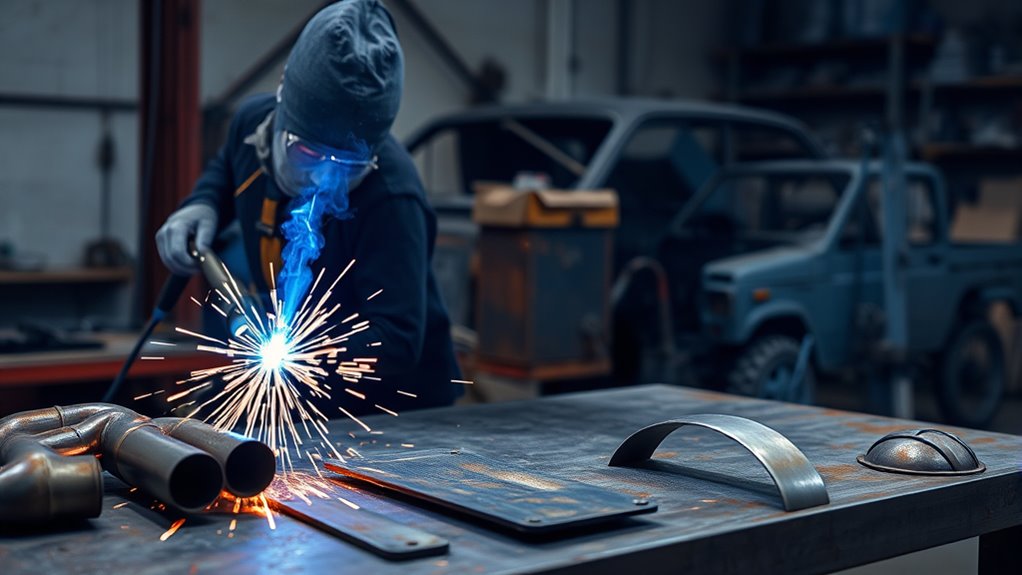
You can use a plasma cutter to make clean panel and sheet cuts when removing damaged body sections or shaping replacement metal. It can also cut brackets, mounts, tabs, and exhaust tubing quickly when you need accurate edges and less grinding. Additionally, plasma cutting allows precise cuts in ferrous metals and other conductive metals when the machine is matched to the material.
Panel And Sheet Cuts
Panel and sheet cuts are where a plasma cutter can really help in automotive work. It can cut steel and aluminum sheet with a narrow kerf and a controlled heat zone when your settings and speed are correct.
You can shape patches, trim skins, and open custom profiles faster than with many manual cutting methods. Your cutting techniques matter: keep the torch steady, match speed to thickness, and use the right consumables to avoid excess dross.
For thin body panels, use conservative amperage and steady movement. Too much heat or a slow torch path can still warp sheet metal. Practice on scrap from the same material before cutting a visible panel.
- Door skins
- Floor pans
- Fender sections
- Rocker repair patches
- Curved custom openings
With proper maintenance, you get cleaner edges and more freedom to fabricate without fighting the metal.
Bracket And Mount Removal
Bracket and mount removal is another job where a plasma cutter saves time. It can slice through welded supports, old tabs, and custom mounts with less effort than grinding everything away.
Clamp the part firmly, set amperage for the metal thickness, and keep the torch moving. On thicker steel, you may need more current and slower travel. On lighter mounts, use a more conservative setup to limit distortion and damage to nearby panels.
This approach gives you cleaner bracket removal without fighting seized hardware for hours. Check nozzles and electrodes often because worn consumables can hurt arc stability and edge finish.
With the right setup, you can cut free stubborn brackets, reclaim space, and work with more precision on repair or fabrication jobs.
Exhaust And Pipe Work
Exhaust and pipe work is one of the most useful plasma-cutter tasks in auto repair. A plasma cutter can make fast cuts on stainless and mild steel tubing without preheating.
Clamp the tube in a vise or with sturdy clamps so it will not shift. Set amperage to match the tubing wall thickness and guide the torch steadily around the curve. For cleaner results, mark the cut line clearly and rotate the part when possible instead of reaching around awkwardly.
- Bright arc on stainless steel
- Pipe held solid against vibration
- Clean edge with reduced dross
- Tight bend traced in one controlled pass
How to Cut Clean Edges With a Plasma Torch
To cut clean edges with a plasma torch, control four things: travel speed, torch angle, amperage, and air quality. Move too slowly and you may create more dross and heat. Move too quickly and the arc may not fully cut through the metal.
Hold the torch close to 90 degrees for straight cuts unless you are intentionally beveling the edge. Match amperage to the job. For example, many 40-amp machines can handle common light fabrication tasks, but the correct setting depends on the cutter, material thickness, and consumables.
Clean plasma cuts come from matching amperage, air pressure, torch angle, standoff distance, and travel speed to the metal you are cutting.
Use a drag tip only if your machine and consumables are designed for drag cutting. Otherwise, keep the recommended standoff distance. Check nozzles and electrodes often, and replace worn consumables before they start ruining the edge. Remember, maintaining the correct standoff distance is crucial for preventing angular cuts and improving consistency.
When you control speed, angle, amperage, air supply, and tip condition, you cut faster with less rework and more freedom to move on to the next panel.
Troubleshooting Plasma Cut Quality
| Problem | Likely Cause | How to Fix It |
|---|---|---|
| Heavy dross under the cut | Travel speed, amperage, air pressure, or standoff is wrong | Adjust speed, confirm air pressure, and check consumables |
| Beveled or angled edge | Torch angle is not square or nozzle is worn | Hold the torch closer to 90 degrees and inspect the nozzle |
| Arc stops during the cut | Poor ground, low air supply, duty cycle limit, or bad consumables | Clean the clamp area, check compressor output, and let the unit cool if needed |
| Panel warping | Too much heat, slow movement, or cutting too close to unsupported metal | Use lower heat when possible, move steadily, and support the panel |
Plasma Cutter Safety Tips for Beginners
Clean cuts matter, but safe setup matters just as much when you are new to plasma cutting. Follow these plasma cutter safety tips so you can work with control and confidence.
Wear personal protective equipment: proper eye and face protection, gloves, durable clothing, and hearing protection. Keep ventilation flowing so fumes do not build up around you. This is especially important when cutting painted, galvanized, coated, oily, or rusty vehicle parts.
Clear your bench and floor, then move flammables well away from the arc. Automotive work can involve fuel lines, brake cleaner, undercoating, interior insulation, wiring, seam sealer, and oily residue, so inspect both sides of the cut area before starting.
Inspect your torch, leads, and consumables before each cut. Replace worn parts before they fail. Know your emergency shutdown steps before you strike an arc so you can stop fast if something acts up.
- Bright sparks snapping across clean steel
- A helmet shielding your face from arc glare
- Fresh air moving through the shop
- A clear floor free of oily rags
- A fire extinguisher within reach
Stay alert, work methodically, and let your setup support your freedom to cut without fear. Remember, proper ventilation is crucial to help reduce harmful fumes during cutting.
How to Choose the Best Plasma Cutter for Your Shop
How do you choose the best plasma cutter for your shop? Start with material thickness. Match the cutter’s rated capacity to the metal you cut most often, such as thin body panels, exhaust tubing, brackets, tabs, or light plate.
Then check power output. Many automotive users can handle common sheet metal and light fabrication with a compact machine, while heavier brackets and thicker plate require more amperage. A dual-voltage unit can be useful if you want flexibility between home-garage power and a stronger shop circuit.
Next, look at duty cycle. Duty cycle tells you how long the cutter can run within a set period before it needs to cool. If you plan to make longer cuts or repeated cuts, a stronger duty cycle will feel less frustrating.
Check the air compressor requirement. A plasma cutter needs enough CFM at the required pressure. A large tank alone does not guarantee steady cutting if the compressor cannot keep up.
If you repair cars on-site, choose a compact, lighter unit that you can move easily. If you mostly work in one shop, you may prefer more cutting capacity and a stronger duty cycle over portability.
Finally, compare consumable costs. Tips, electrodes, shields, and drag tips should be easy to find and affordable. A tool that is cheap to maintain keeps your shop moving with less downtime. Additionally, ensure that the tip size to amperage selection is appropriate for the materials you frequently cut to optimize performance and consumable life.
Products Worth Considering
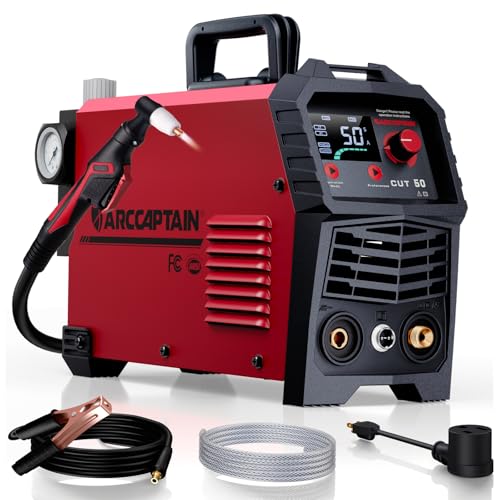
【Powerful Cutting Ability】Switch effortlessly between 110V and 220V for home or workshop use. Achieve professional 1/2" clean cuts on steel, aluminum, and copper with advanced LGBT technology. Perfect for DIY projects and heavy-duty tasks. Recommended maximum cutting thickness: 12mm @ 35A / 110V / 55 PSl; 18mm @ 50A / 220V / 75 PSI. Note: Requires compressed air (compressor sold separately).

[Powerful Cutting Ability] Dual voltage 110/220V good for home, workshop and hardware shop use. Professional performance 1/2" clean cuts on Iron, Steel aluminum and copper with Inverter IGBT Technology. Very powerful for DIY and heavy duty project. The Maximum cutting thickness is recommended to 1/2" @35A 110V 50PSI; 2/3" @50A 220V 65PSI. Dry and compressed air is required. Power breaker up to 60A@110V 35A; Up to 50A@220V 50A.

【Non-Touch Pilot Arc Function】The plasma cutter features a high frequency non-touch arc starting mode. It allows for cutting steel surfaces with dirt, rust or coatings. The torch head does not need to touch the metal plate, reducing energy consumption, minimizing electrode burning, and extending service life. NOTE: DO NOT power on until the screen turns off and the fan stops working!
Plasma Cutter Features That Matter for Auto Work
- Rated cut capacity: Choose a machine that matches your usual steel thickness, not just the thickest severance number on the box.
- Pilot arc: Helpful when cutting rusty, painted, expanded, or uneven metal, depending on the machine design.
- Dual voltage: Useful if you move between home outlets and shop power.
- Consumable availability: Easy-to-find nozzles and electrodes reduce downtime.
- Air quality needs: Dry air helps protect consumables and improve cut quality.
- Portability: A lighter unit is easier to use around a vehicle, driveway, or mobile repair setup.
Products Worth Considering

POWERFUL CUTTING THICKNESS: This plasma cutter handles 1/2" (12mm) steel at 120V/35A and 5/8" (16mm) at 240V/60A. Dual voltage auto-detection (10-35A@120V / 30-60A@240V) with PSI guidance (70-75 PSI / 0.48-0.52MPa). Optimized for quick, efficient cuts in automotive repairs and metal fabrication

[55A 110V/220V Cutting Power]: The SILATU STC550P plasma cutter delivers up to 55A of cutting power with advanced IGBT inverter technology. Use 110V at 15-40A for home garage and lighter-duty jobs, or switch to 220V at 15-55A for thicker metal and more demanding projects. Maximum cutting capacity reaches 1/2" (12mm) at 110V/40A and 7/10" (18mm) at 220V/55A under recommended air pressure (Note: For circuit protection, this machine must be used with 40A circuit breaker)

【Non-Touch Pilot Arc Function】The ARCCAPTAIN 55A plasma cutter features a pilot arc function. It utilizes a high-frequency non-touch arc starting mode. The torch head does not need to touch the metal plate, reducing energy consumption during non-cutting work, minimizing electrode burning, and extending service life. NOTE: Do not switch voltages until the screen turns off and the fan stops.
Frequently Asked Questions
Is It Hard to Learn How to Use a Plasma Cutter?
No, the basics are not hard to learn, but clean cutting takes practice. Start on scrap metal, use the manual’s recommended settings, keep your torch angle steady, and adjust travel speed until the arc cuts through without leaving heavy dross.
What Is a Good Plasma Cutter for Beginners?
A good beginner plasma cutter is portable, easy to set up, and sized for the metal you cut most often. For automotive work, many beginners look for a unit that handles thin sheet metal, light brackets, and exhaust tubing, with clear controls, available consumables, and air requirements their compressor can support.
Will a 30 Gallon Air Compressor Run a Plasma Cutter?
A 30-gallon compressor may run some plasma cutters, but tank size is not the only factor. Check the compressor’s CFM rating at the pressure your plasma cutter requires. If the compressor cannot keep up, the cut may become rough, the arc may drop, and consumables may wear faster.
What Is a Common Issue When Plasma Cutting?
Dross is one of the most common plasma cutting issues. You can reduce it by matching amperage and speed to material thickness, keeping the torch at the right angle, maintaining proper standoff, using dry air, and replacing worn consumables.
Can You Use a Plasma Cutter on Painted Car Metal?
You can cut painted automotive metal, but it is safer and cleaner to remove paint, undercoating, oil, seam sealer, and heavy rust near the cut whenever possible. Coatings can create fumes and may interfere with arc stability, so use strong ventilation and proper PPE.
Does a Plasma Cutter Warp Sheet Metal?
It can if you move too slowly, use too much heat, or cut unsupported thin panels. Use the right amperage, move steadily, practice on scrap, and support the panel to reduce distortion.
Conclusion
When you add a plasma cutter to your auto shop, you gain a fast and flexible way to cut body panels, brackets, tubing, and custom repair pieces. It can save time compared with grinding or sawing, especially in tight spaces, but the results depend on safe setup and correct settings.
Use proper PPE, keep ventilation strong, secure the ground clamp to clean metal, match amperage to thickness, and keep dry air flowing to the torch. Start with scrap pieces, practice straight and curved cuts, and replace worn consumables before they affect the edge. Once you build those habits, a plasma cutter can become one of the most useful metal-cutting tools in your automotive repair workflow.