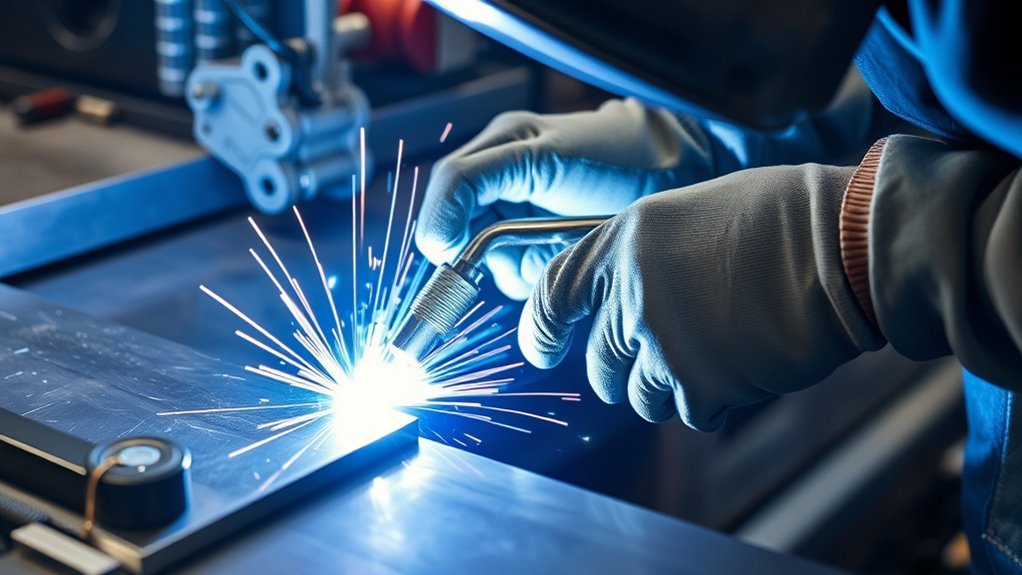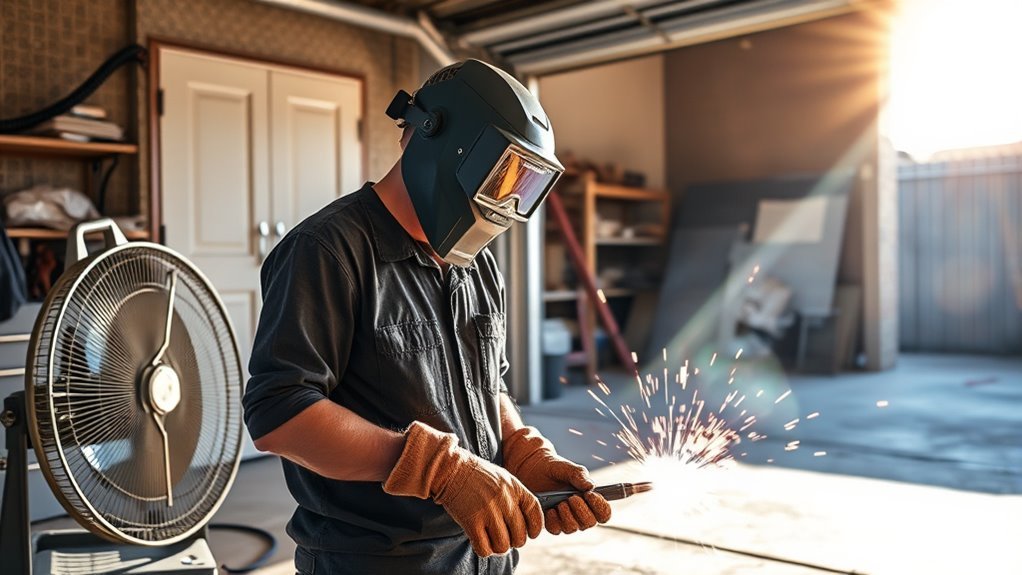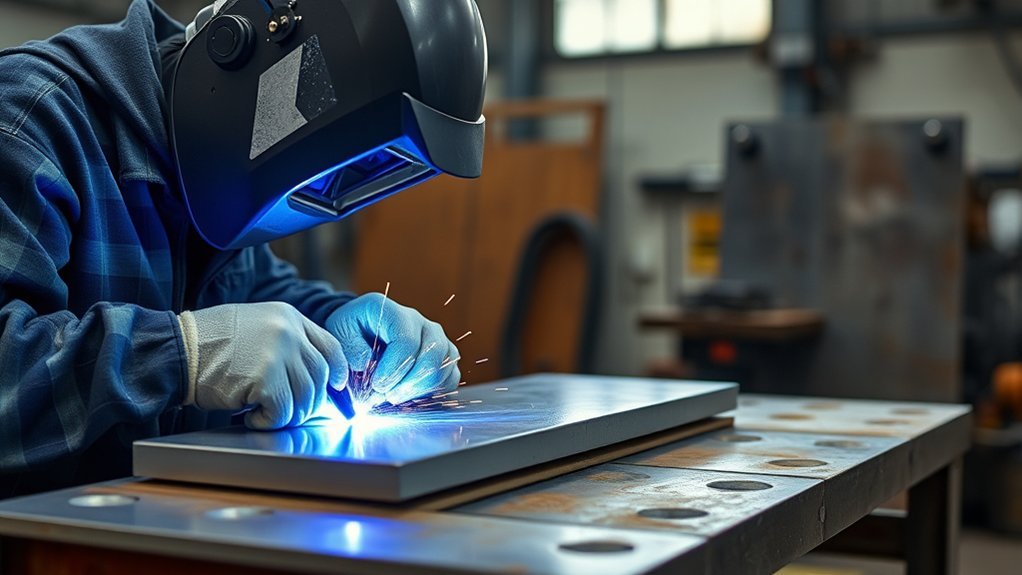
You should start with the flat welding position, also called 1G for groove welds or 1F for fillet welds. It gives you the easiest setup, the clearest view of the puddle, and the most control while you learn arc length, travel speed, work angle, and bead placement. Once your flat beads look even and consistent, move to horizontal, then vertical, and save overhead welding for last.
Quick Answer
Beginners should learn the flat welding position first. Flat 1G and 1F welds let the workpiece sit level while gravity helps hold the molten weld pool in the joint. That makes it easier to see the puddle, control heat, keep a steady arc, and build clean practice beads before trying harder positions.
Key Takeaways
- Start with flat welding because it gives you the best visibility, access, and puddle control.
- Use 1G for flat groove welds and 1F for flat fillet welds.
- Practice arc length, travel speed, work angle, tack welds, and bead consistency before moving on.
- The best learning order is flat, horizontal, vertical, then overhead.
- Wear proper PPE, control fumes, remove fire hazards, and do not practice on structural or safety-critical parts without qualified supervision.
At a Glance
| Time Required | 30 to 60 minutes per practice session, repeated over several sessions |
| Difficulty | Beginner, if you start with clean scrap metal and flat practice beads |
| Tools Needed | Welder, correct filler metal, clean scrap steel, clamps, wire brush or grinder, chipping hammer if needed, welding hood, gloves, jacket, safety glasses, and ventilation |
| Cost | Low if you already own a welder; mainly filler metal, shielding gas if used, and scrap practice material |
Warning: Welding can expose you to arc flash, burns, electric shock, fire, fumes, and hot metal. Work in a ventilated area, remove combustibles, wear proper PPE, and follow the safety guidance in your welder manual. Do not practice on vehicle frames, pressure vessels, trailers, lifting parts, or load-bearing repairs unless a qualified person is supervising the work.
Where Should Beginners Start?
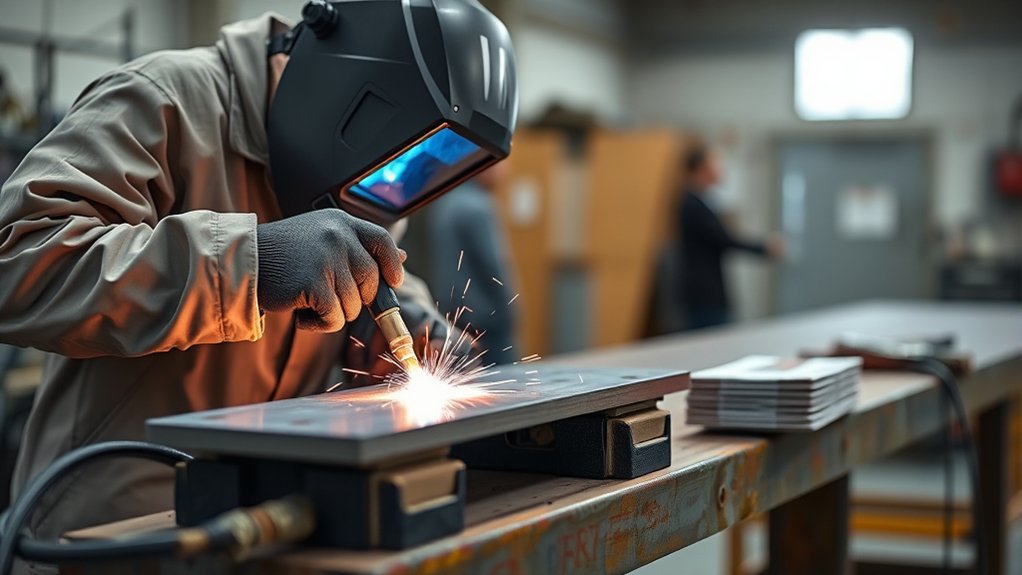
If you’re just starting out, begin with the flat welding position. In the standard position system, 1G means a flat groove weld and 1F means a flat fillet weld. In both cases, the joint sits in a position where you can weld from above, which gives you better puddle visibility and easier hand control.
The standard welding-position system uses numbers for position and letters for weld type. The number 1 means flat. The letter G means groove weld. The letter F means fillet weld. That simple code helps welders, instructors, and inspectors describe the joint without guessing.
Flat welding is the best first practice position because gravity helps the molten metal settle into the joint instead of pulling it down the face of the work. You can focus on the basics: keeping a stable arc, moving at a steady pace, watching the weld pool, and stopping before the puddle overheats.
Before you strike an arc, clean the metal, clamp the workpieces level, set your machine for the material thickness, and practice steady passes on scrap. If you are flux-core welding, maintaining a proper stick-out length also helps arc stability and bead control.
Welding Position Chart for Beginners
Welding positions describe how the joint sits while you weld. The four basic plate positions are flat, horizontal, vertical, and overhead. Each one changes how gravity affects the puddle, so each position needs different heat control, body position, and torch or electrode handling.
| Position | Code | What It Means | Beginner Difficulty |
|---|---|---|---|
| Flat | 1G / 1F | You weld from above while the joint is easy to see and reach. | Easiest |
| Horizontal | 2G / 2F | The bead runs across the joint while gravity tries to pull the puddle down. | Moderate |
| Vertical | 3G / 3F | You weld up or down a vertical joint, so heat and puddle size matter more. | Hard |
| Overhead | 4G / 4F | You weld above your body while sparks, slag, and molten metal can fall. | Hardest |
Note: Pipe welding positions such as 5G and 6G are more advanced. Learn flat, horizontal, vertical, and overhead plate practice first before moving into fixed pipe positions.
Why Flat Welding Is the Best First Step
You should start with flat welding because gravity works with you. The weld pool sits in the joint more easily, the bead is easier to see, and your body position is more comfortable. This lowers frustration while you learn the small hand movements that make a weld clean and repeatable.
Flat practice also gives you room to try different welding processes. MIG, flux-core, stick, and TIG can all be practiced in flat position when the machine, filler metal, and base metal are matched correctly. That makes flat welding a good place to compare how each process sounds, feels, and leaves a bead.
Safety still matters in the easiest position. Wear flame-resistant clothing, gloves, a welding helmet with the correct shade, and safety glasses under the hood. If you need a fuller PPE checklist, review the basics of flame-resistant clothing before practicing.
Easy Gravity Control
Flat welding, also called 1G or 1F, is the easiest position for beginners because you apply the weld from above and gravity helps control the molten metal. Your work stays horizontal, so the puddle is less likely to sag, drip, or run away from the joint.
| Focus | What You Do | Effect |
|---|---|---|
| Arc length | Hold it steady | Better control and less spatter |
| Travel speed | Move consistently | Smoother bead shape |
| Weld pool | Watch the leading edge | Fewer defects |
Use this setup to refine timing, aim, and rhythm. Once those habits feel natural in flat position, harder positions become easier to understand.
Accessible Joint Setup
An accessible joint setup makes flat welding the best first step because you can work directly above the seam. You can see the puddle, hear the arc, and adjust your hand position without twisting your body around the work.
- Place the metal on a stable bench or welding table.
- Clean the joint area until bright metal is exposed.
- Clamp the pieces so they cannot shift when heated.
- Tack the joint before running a longer bead.
This layout supports bead placement, arc length control, and fit-up practice without adding extra difficulty from position.
Builds Core Skills
Start in the flat position because it lets you build the core skills used in every other welding position. You’ll learn how a good puddle looks, how a bead changes when you slow down, and how too much heat can cause undercut, overlap, or burn-through.
Flat welding also teaches patience. Run short beads, stop, inspect the result, and adjust one thing at a time. Change travel speed on one pass. Change angle on the next. Then compare the bead height, width, toe lines, and penetration profile.
Flat Welding Position Basics
In the flat position, you place the workpieces horizontally and weld from above the joint. This makes 1G and 1F the easiest starting points for most beginners. The position works well for basic plate practice, fillet welds, groove welds, and bead-on-plate drills.
Your workspace matters as much as your position. A stable table, clean metal, good lighting, and enough room for your lead or torch cable can prevent many beginner mistakes. For more on arranging the area around your welder, review this guide to workspace setup.
Why Flat Is Easiest
Flat welding is easiest because you are not fighting the puddle as much. The molten metal can settle into the joint, so you can focus on arc control, movement, and heat. That does not mean every flat weld is automatically strong. You still need clean metal, correct settings, good fit-up, and enough practice.
- Place flat plate or a simple T-joint on the bench.
- Set the machine from the welder chart or filler-metal guide.
- Keep the puddle small enough to control.
- Let the weld cool before handling or inspecting it.
1G And 1F Basics
1G is a flat groove weld. You use it when two pieces meet edge to edge with a groove or gap to fill. 1F is a flat fillet weld. You use it on joints such as T-joints, lap joints, and corner joints where the weld forms a triangular bead between two surfaces.
For a fillet weld, a work angle near 45 degrees is a common starting point because it aims heat into both pieces. For a groove weld, keep the arc centered in the joint unless your procedure says otherwise. Travel angle depends on the welding process, joint type, electrode, and direction of travel, so use the machine chart, rod package, or manufacturer guide as your starting point.
Beginner Skills To Practice
Now that you’ve started with 1G and 1F, focus on the skills that make flat welding repeatable. Do not rush into long beads. Short, consistent practice passes teach you more than one long overheated bead.
- Strike and restart the arc without leaving deep craters.
- Hold a stable arc length or stick-out.
- Keep the weld pool centered in the joint.
- Use a steady travel speed from start to stop.
- Make tack welds that hold the joint without pulling it out of alignment.
- Brush or chip the weld, then inspect it before the next pass.
Flat welding gives you clear visibility and enough control to see what each change does. When you practice with intention, your hands learn the movement before harder positions add more gravity and body-position challenges.
Before You Strike an Arc: Safety Checklist
Beginner welders often focus on the bead and forget the work area. That is risky. OSHA covers welding, cutting, and brazing hazards in workplace standards, and welding safety rules focus on fire prevention, PPE, ventilation, and safe work practices.
- Protect your eyes and skin: Wear a welding helmet, safety glasses, gloves, long sleeves, and flame-resistant clothing.
- Control fumes: Use local exhaust, outdoor airflow, or approved ventilation. Do not weld coated, galvanized, painted, oily, or unknown metal without proper controls.
- Remove fire hazards: Clear paper, rags, sawdust, fuel, aerosols, and other combustibles from the area.
- Check the work clamp: Attach it to clean metal so the circuit is stable.
- Secure the work: Clamp the joint so it cannot move from heat or cable pull.
- Keep a fire extinguisher nearby: Sparks can travel farther than beginners expect.
Welding fumes can irritate the eyes, nose, throat, and lungs, and long-term exposure may increase serious health risks depending on the metal and process. The NIOSH Pocket Guide for welding fumes lists inhalation exposure and respiratory-system concerns, so do not treat ventilation as optional.
How to Set Up a Flat Weld
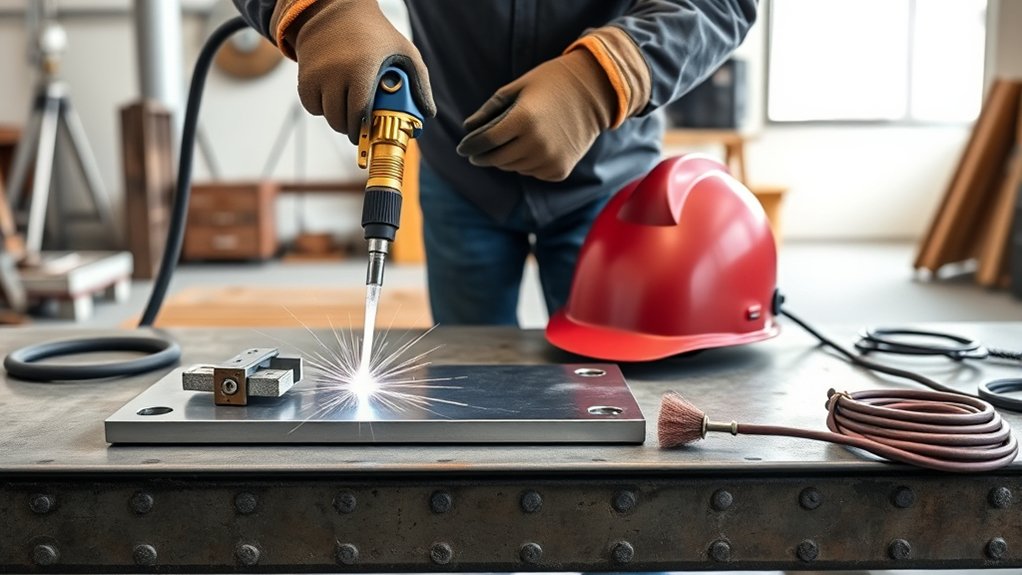
To set up a flat weld, position your workpieces on a level surface so they stay stable and give you full access to the joint. Clamp them tight, then check alignment before you tack or strike the arc. Clean both sides of the joint area so rust, paint, oil, and mill scale do not contaminate the puddle.
Choose a filler metal that matches the process, material, thickness, and position. For stick welding, rods with a third digit of 1, such as many E7018 electrodes, are designed for all positions, while rods with a third digit of 2 are limited to flat and horizontal fillet welding. Miller explains this position digit in its stick electrode guide.
Set your welding parameters to suit the material thickness and filler metal. If your machine has a chart inside the door, start there. If your weld is too tall and cold, you may be moving too fast or using too little heat. If the bead is wide, flat, or undercut at the toes, you may be too hot or moving too slowly.
| Setup Step | Why It Matters |
|---|---|
| Secure position | Stops movement and poor fit-up |
| Clean base metal | Reduces porosity and contamination |
| Correct filler metal | Improves compatibility and position control |
| Dialed welding parameters | Balances heat, fusion, and bead shape |
| Steady work and travel angle | Keeps the puddle aimed into the joint |
Remember, proper fillet weld sizing is important when the weld needs real strength. For practice coupons, focus on consistency first. For real parts, follow the drawing, procedure, or qualified instruction.
Pro Tip: Change only one variable at a time during practice. If you change amperage, travel speed, and angle all at once, you will not know which change improved or ruined the bead.
Products Worth Considering

E7018 Welding Rod: Diameter: 3/32''; Length: 14"; Weight: 5 lb.

MODEL: E6013 is a mild-steel general purpose rod. It operates on AC or DC welding current and works well on low voltage AC machines.

MODEL: E7018 is a low-hydrogen iron powder type electrode that produces high quality x-ray welds. It can be used in all positions on AC or DC reverse polarity welding current.
Should Beginners Learn MIG, Stick, or TIG First?
Many beginners learn MIG first because it is easier to start and restart, and the wire feeds continuously. It is a good choice for learning flat beads on clean mild steel. Flux-core is useful when you do not want shielding gas, but it creates slag and more smoke, so cleanup and ventilation matter.
Stick welding is a strong training tool because it teaches arc length, rod angle, puddle control, and electrode choice. It can be harder at first because the rod gets shorter as you weld and the arc can stick. TIG gives excellent control, but it usually has the steepest learning curve because you control the torch, filler rod, and often a foot pedal at the same time.
The best first process depends on your goal. For general home practice, MIG or flux-core in flat position is often the least frustrating. For structural skills and outdoor repair practice, stick welding teaches useful habits. For thin, clean, precise work, TIG can be worth learning after you understand the puddle.
Products Worth Considering
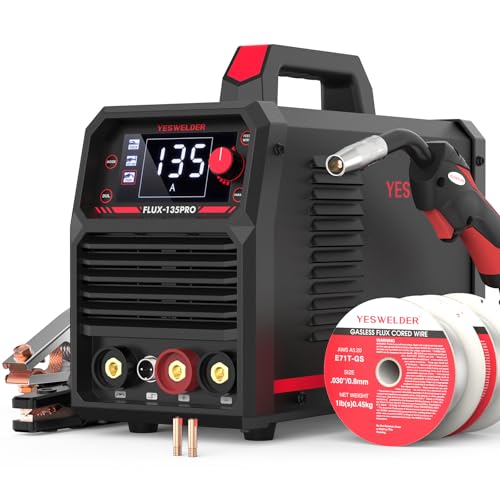
READY OUT OF THE BOX: Start welding immediately! It masterfully handles Gasless Flux Core MIG, Stick, and Lift TIG (Extra Lift TIG torch required). This budget-friendly 3-in-1 machine includes extra E71T-GS .030''&.035'' flux core wires, known for its smooth arc and high feedability. Say goodbye to heavy shielding gas cylinders—perfect for outdoor, windy, or all-position welding.

MULTIFUNCTIONAL: A 4-in-1 welder, capable of Flux Core MIG/Gas MIG/ Stick/Lift TIG (need to purchase extra tig lift torch). This unit caters to a wide range of welding applications and meets your various welding needs.

Which Welding Position Comes Next?
After you’ve mastered the flat position, move on to horizontal welding. Horizontal welding teaches you to control the puddle while gravity pulls the molten metal down. Keep your heat controlled, keep the puddle small, and avoid weaving wider than you can manage.
After horizontal, move to vertical welding. Vertical work asks you to control the puddle as it climbs or drops along the joint. From there, try overhead only after you can make consistent flat, horizontal, and vertical beads while staying safe and comfortable.
As you move through positions, adjust your amperage settings, travel speed, and technique to match the joint. Harder positions often need a smaller puddle and more careful heat control.
Horizontal Position Practice
Once you’re comfortable with flat welding, the next step is horizontal welding, often called 2G for groove welds or 2F for fillet welds. The work is no longer as forgiving because the molten metal wants to sag toward the lower edge of the joint.
Use a controlled puddle, steady travel angle, and stringer beads before trying wider movement. If the bead droops, reduce heat slightly, travel a little faster, or shorten the puddle. If the upper toe does not fuse, slow down enough to let the edge tie in.
- Run short horizontal beads before full-length passes.
- Keep the puddle small and centered.
- Watch the upper toe for fusion.
- Clean between passes if the process leaves slag.
Vertical Position Progression
With horizontal welding under your belt, the next logical step is vertical position work, or 3G/3F. Here, gravity pulls the puddle down the joint, so travel speed and heat input become more important.
Vertical up and vertical down are not interchangeable shortcuts. Vertical up is often used when you need more buildup and fusion on thicker material. Vertical down is often faster on thinner steel when the procedure, filler metal, and joint allow it. Lincoln Electric notes that vertical down can be used for faster welding on 18 gauge to 3/16-inch steel, while vertical up gives deeper penetration on plate over 3/16 inch.
Keep your safety gear on and practice in short runs. Vertical welding builds control by forcing you to read the puddle instead of simply moving the torch.
Why Horizontal Welds Are Harder
Horizontal welds are harder because you have to control the puddle against gravity, not with it. The bead wants to sag, the lower toe can build up too much metal, and the upper toe can lose fusion if you rush.
Horizontal welding is the first real test of puddle control because gravity starts pulling the weld metal out of shape.
Keep the bead narrow at first. Use stringer beads, not wide weaves, until your control improves. Watch for the puddle to roll or hang at the bottom edge. If it does, stop and adjust before repeating the same mistake.
- Keep the arc aimed into the joint, not just at the lower edge.
- Hold a steady travel speed so the bead does not pile up.
- Use enough heat for fusion without letting the puddle sag.
- Clean and inspect every pass before adding another one.
Joint prep matters here. Poor fit-up and dirty metal make horizontal welding harder than it needs to be, so review proper joint preparation before blaming your machine settings.
Vertical Welding: Up or Down?
Vertical welding gives you two choices: vertical up, also called uphill, or vertical down, also called downhill. Each one changes how you control heat and puddle shape.
Vertical up usually moves slower and builds a stronger shelf for the puddle. It is often preferred on thicker material when deeper fusion and controlled buildup are needed. Vertical down moves faster and can work well on thinner material when the procedure allows it, but it can also trap defects if you outrun the puddle.
In both techniques, watch heat input and travel speed closely. Too much heat can cause sagging. Too little heat can leave incomplete fusion. Do not guess on important work. Follow the rod, wire, or procedure guidance, and use a trusted recommended amperage range as a starting point.
Why Overhead Welding Comes Last
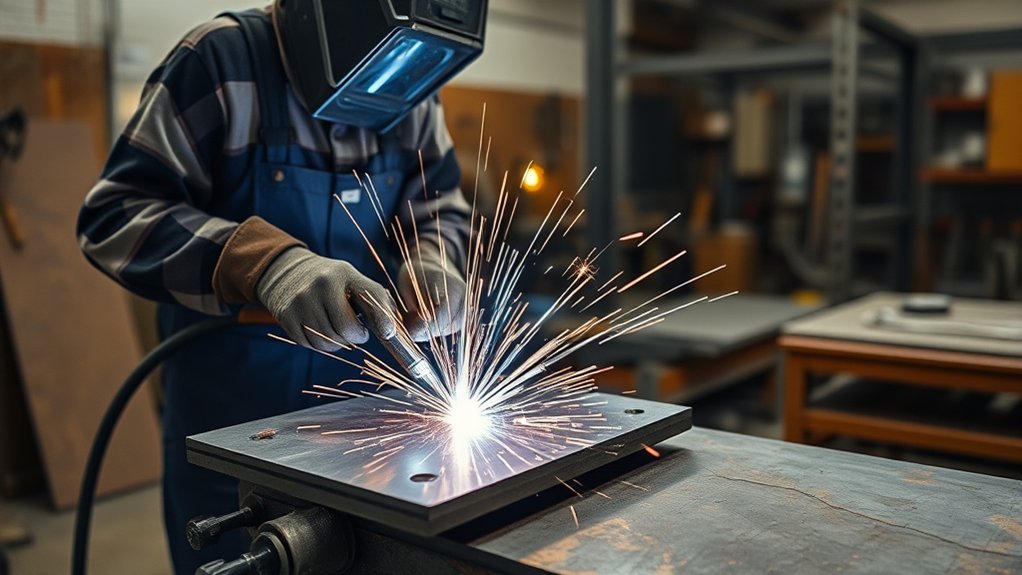
Overhead welding comes last because it asks the most from your body and your skill. You work below the joint, which means sparks, slag, and hot metal can fall toward your gloves, sleeves, helmet, and body. That makes PPE and body position more important than they are during flat practice.
Overhead welding demands a small, controlled puddle and full protection from falling sparks, slag, and hot metal.
Puddle control matters most here because gravity wants to pull the bead away from the joint. If you are a beginner, build confidence in the earlier positions first. Master flat and horizontal welding so you can read the puddle, move with purpose, and recognize when a bead is getting too hot.
Flux-core welding can be practiced out of position only when the wire is rated for it. If you are using flux-core for auto or repair work, understanding flux core welding techniques can help you control heat and avoid burn-through.
How Filler Metal Affects Position Choice
Filler metal can decide which welding position is realistic for practice. Some rods and wires are designed for all positions. Others are made mainly for flat and horizontal work. Always check the package, product data sheet, or machine chart before using a filler metal out of position.
For stick electrodes, the position digit gives an important clue. Miller explains that a third digit of 1 means the electrode can be used in all positions, while a third digit of 2 means flat and horizontal fillet welds only. That is why an E7018 rod is commonly used for all-position practice, while some other rods have tighter limits.
Flux-cored wire also varies by product. Some E70T-1 and E70T-9 gas-shielded flux-cored wires are sold for flat and horizontal welding, while many E71T1 wires are designed as all-position options. Lincoln Electric lists all-position gas-shielded flux-cored wires in its product catalog, but individual product data still matters.
TIG and MIG can be used in many positions with the right setup, but position ability is not only about the process. It also depends on filler, shielding gas, material thickness, joint design, and welder skill. For stainless work, choosing the right filler, such as ER308L filler wire for 304 stainless steel, matters as much as position.
Common Beginner Weld Defects and Fixes
Flat welding makes defects easier to see, which is one reason it is the best starting point. Inspect every practice bead while the lesson is still fresh. Look at bead width, toe lines, spatter, slag removal, and crater shape.
| Defect | What It Looks Like | Common Fix |
|---|---|---|
| Undercut | A groove melted along the edge of the bead | Lower heat slightly, slow your angle changes, or pause long enough to fill the toe. |
| Porosity | Small holes or pinholes in the weld | Clean the metal, check shielding gas or flux coverage, and avoid welding over paint, oil, or rust. |
| Overlap | Weld metal rolls over the base metal without tying in | Increase travel control, reduce puddle size, and aim heat into the joint. |
| Poor fusion | The bead sits on top instead of bonding well | Use enough heat, clean the joint, slow down slightly, and keep the arc aimed at the root or joint line. |
| Excessive spatter | Many BB-like metal droplets around the weld | Check voltage, wire speed, arc length, polarity, and surface cleanliness. |
How to Practice for Harder Welds
Once you’ve matched your filler metal to the process and position, use practice to build toward tougher welds with less frustration. Start in the flat position, where gravity helps you control puddle shape and bead uniformity. Use scrap plate and short practice sessions to repeat the same joint until arc length and travel speed feel natural.
- Run bead-on-plate: Make straight beads on flat scrap without joining two pieces.
- Practice a 1F fillet: Weld a T-joint and aim for even legs on both sides.
- Practice a 1G groove: Keep the bead centered and fill the joint evenly.
- Move to horizontal: Keep the puddle small and stop sagging before it becomes a habit.
- Try vertical up and down: Learn how puddle speed changes with direction.
- Save overhead for last: Practice only when your PPE, body position, and puddle control are ready.
Keep notes after each run. Record the machine setting, filler metal, material thickness, position, and what the bead looked like. A simple notebook helps you spot patterns faster than memory alone.
Frequently Asked Questions
Which welding position is the easiest for beginners?
The easiest welding position for beginners is the flat position, also called 1G for groove welds or 1F for fillet welds. The work sits level, the joint is easier to see, and gravity helps the molten weld pool stay in place.
Why do welders face health risks?
Welders can face health risks from fumes, gases, UV radiation, heat, noise, awkward posture, and burns. The risk depends on the process, metal, coatings, ventilation, and PPE. Good ventilation, respiratory protection when required, eye protection, flame-resistant clothing, and safe work habits reduce exposure.
Is it better to learn MIG or TIG first?
Most beginners find MIG easier to learn first because the wire feeds automatically and the arc is easier to restart. TIG gives more precision, but it requires more coordination. Stick welding is also useful because it teaches arc length, electrode angle, and puddle control.
What is the golden rule in welding?
The golden rule is to control the puddle. A stable arc length, clean material, proper machine settings, correct travel speed, and steady angle all support that goal. If you can see and control the puddle, you can make better decisions during the weld.
What order should I learn welding positions in?
Learn flat first, then horizontal, then vertical, then overhead. Flat welding builds the base skills. Horizontal teaches puddle sag control. Vertical teaches heat and direction control. Overhead comes last because it is the most physically demanding and has more falling spark and slag hazards.
Conclusion
Start with flat welding because it gives you the most control and the clearest view of your puddle. Use 1G and 1F practice to learn clean setup, safe work habits, steady arc length, travel speed, filler placement, and bead inspection without fighting gravity.
Once your flat welds look consistent, move to horizontal, then vertical, and finally overhead. Do not treat the sequence like a race. Treat it like skill building. With clean metal, proper PPE, correct filler metal, and focused practice, you’ll build the control needed for tougher welding positions safely and cleanly.
Sources
- MillerWelds: What Are the 4 Basic Welding Positions? — supports flat, horizontal, vertical, and overhead position explanations.
- MillerWelds Welding Positions Poster — supports 1G/1F, 2G/2F, 3G/3F, and 4G/4F position codes.
- OSHA Welding, Cutting, and Brazing Standards — supports safety guidance for welding operations.
- CDC/NIOSH Pocket Guide: Welding Fumes — supports welding-fume exposure and health-risk guidance.
- MillerWelds Stick Electrode Guide — supports electrode position-code guidance.
- Lincoln Electric Gas-Shielded Flux-Cored Wires — supports flux-cored wire position-rating guidance.