When to Use Spot Welding on Car Panels
What’s in This Article
- Where Spot Welding Works Best
- When to Use Spot Welding on Car Panels
- Best Metals for Spot Welding
- Panel Thickness and Weld Access
- OEM Repair Steps That Require Spot Welds
- When Spot Welding Is the Wrong Choice
- Spot Welding vs. MIG Plug Welding
- Follow OEM Welding Rules
- Tools and Training for Spot Welding
- How to Check Spot Weld Quality
- Frequently Asked Questions
A wrong weld choice can weaken a car panel repair, even when the weld looks clean from the outside. You should use spot welding on car panels when you’re joining overlapping steel sheets, especially thin low-carbon or stainless steel panels in OEM-style repairs. It’s the right choice when you need fast welds, low distortion, and factory-correct strength on seams where the manufacturer calls for spot welds.
Quick Answer
Use spot welding on car panels when the joint uses overlapping steel sheets and the OEM repair procedure calls for it. It works best on clean, thin steel panels with tight fit-up and enough tool access. Avoid it when the panel is plastic, composite, too thick, poorly aligned, or made from a metal stack the process cannot handle well.
Key Takeaways
- Use spot welding when the OEM procedure specifies it for overlapping steel car panels.
- Clean metal, tight fit-up, correct pressure, and proper current help create strong weld nuggets.
- Low-carbon steel and stainless steel usually suit spot welding better than aluminum or mixed metals.
- Choose another repair method when the electrodes cannot clamp the joint squarely.
- Check weld quality before release, especially on structural seams and collision repairs.
Where Spot Welding Works Best
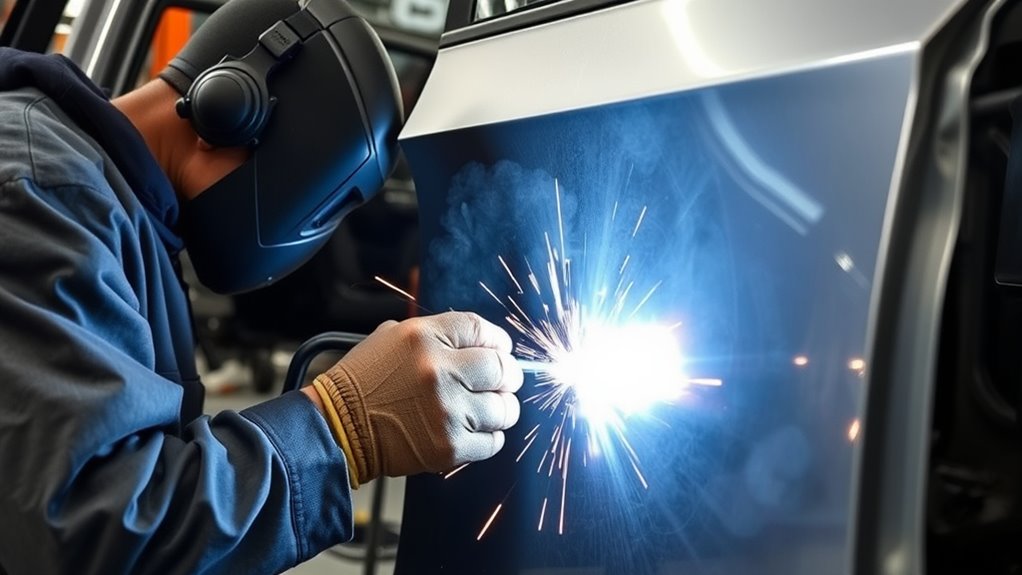
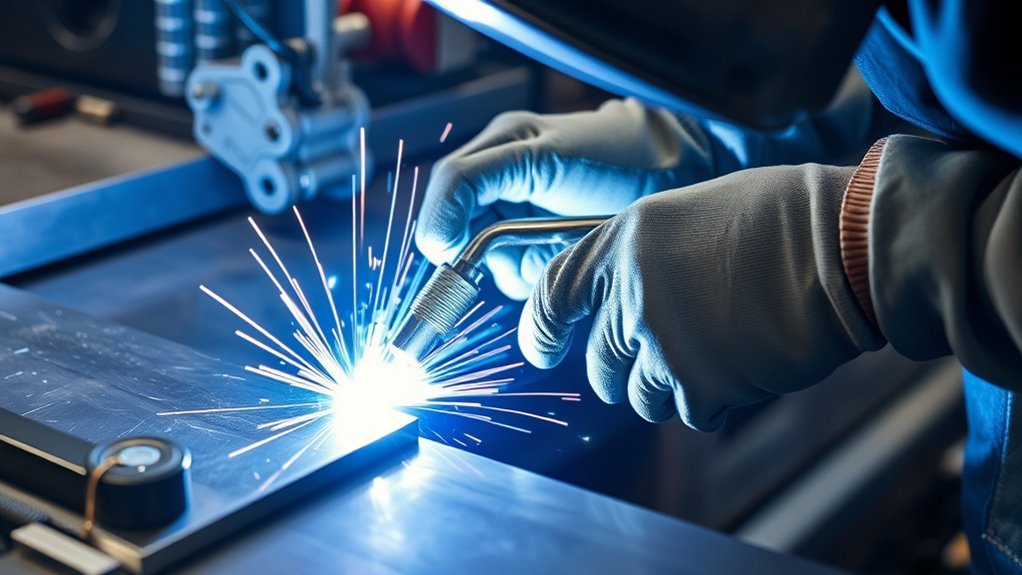
Spot welding works best when you’re joining overlapping steel car panels, especially thin sheets up to about 3 mm thick. In automotive body repair, you use it for precise, low-distortion joints that help protect structural integrity.
Because spot welding needs no filler metal, you can make fast, repeatable welds on thin metal sheets. The process also helps keep assembly work efficient.
In collision repair, spot welding can work well on approved high-strength steels when the OEM procedure allows it. The right settings help protect the panel’s strength and restore the intended crash structure.
You’ll also find it valuable in automotive manufacturing, where each weld can finish in seconds and support high-volume production.
When you follow OEM procedures, spot welding helps you meet safety compliance requirements and keep the vehicle’s structure aligned with factory intent. Proper welding techniques also help protect panel integrity during repair.
Use it where clean overlap, tight fit-up, and controlled heat matter most. That approach helps you maintain strength without damaging the panel’s shape or function.
When to Use Spot Welding on Car Panels
You should use spot welding when you’re repairing overlapping steel panels and the OEM specifies it for the joint. It’s the right choice when you need fast, high-strength attachment on thin steel without filler or shielding gas.
For collision repairs, always check the manufacturer’s requirements before choosing spot welding over another method. Thin metal suitability also makes spot welding useful for many automotive applications.
Warning: Don’t replace an OEM-required structural weld with another method unless the repair procedure allows it.
OEM Spot Weld Requirements
When OEM repair procedures call for spot welding, you should use it to join overlapping steel panels. This matters most in high-stress areas like the chassis, pillars, rocker panels, and body shell.
You’re matching automotive manufacturing methods that protect structural integrity and safety compliance. Follow OEM specifications for weld spacing, electrode setup, squeeze time, weld time, and heat control.
Spot welding also supports quality assurance because you can inspect each weld and perform peel tests when required.
Repair professionals should verify material compatibility before they start. Low-carbon steels and stainless steels often respond well, while aluminum, plastic, and composite panels need different processes or special procedures.
Steel Panel Repair Use
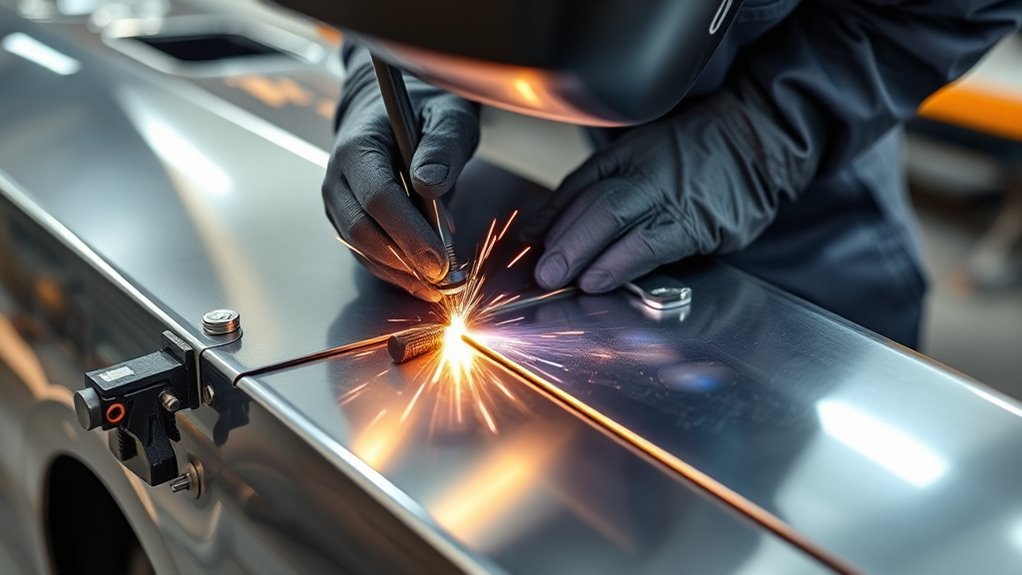
For steel panel repair, spot welding works well when you need a strong, OEM-style joint without overheating the metal. You’ll use it on steel panels, especially thin sections under 3 mm, where the welding process helps preserve material properties and structural strength.
In the automotive industry, it fits collision repair when you need speed, repeatability, and precision.
| Check | Action |
|---|---|
| Fit-up | Align panels tightly |
| Pressure | Apply correct electrode force |
| Current | Use the OEM-approved current range |
| Quality control | Verify weld nuggets |
Because welding time is usually short, you can cut downtime and keep the repair moving. When you control alignment and quality checks, spot welding gives you reliable joints that help return the vehicle to service with confidence.
Best Metals for Spot Welding
Low-carbon steel and stainless steel are often the best choices for spot welding car panels. Their electrical resistance helps concentrate heat at the weld point and form a strong bond.
You’ll get the most reliable weld quality when your machine settings match the metal stack. You also need high surface cleanliness.
Remove rust, oil, paint, coatings, and seam sealer from the weld area before you weld. Contamination can weaken the joint, waste energy, and create inconsistent nuggets.
Aluminum can work with resistance spot welding, but it needs specialized equipment and much higher current. Don’t expect standard steel settings to handle aluminum panels correctly.
Avoid spot welding dissimilar metals when you can, because their heat and resistance differences make consistent fusion harder. Plastic and composite panels aren’t suitable for spot welding at all.
For car-panel work, choose metals that let you control heat, protect the joint, and keep the process direct. Understanding maximum fillet weld size can also help you plan stronger joints in other welding applications.
Products Worth Considering

MODEL: E7018 is a low-hydrogen iron powder type electrode that produces high quality x-ray welds. It can be used in all positions on AC or DC reverse polarity welding current.

E7018 Welding Rod: Diameter: 3/32''; Length: 14"; Weight: 5 lb.

E7018 Welding Rod: Diameter: 3/32''; Length: 14"; Weight: 10 lb.
Panel Thickness and Weld Access
You’ll get the best spot welds on car panels when the sheet thickness stays at or below about 3 mm. Thinner stock lets you form strong joints without excess heat distortion.
You also need precise overlap and tight fit-up. Any gap or misalignment can weaken the weld, especially in thin sheet metal.
Make sure you have enough weld access and clamp clearance for the electrodes to press squarely on the joint. Proper clamping techniques can help maintain tight joints and reduce burn-through risk during welding.
Thin Sheet Compatibility
Spot welding works best on thin sheet metal, typically 3 mm or less. Thicker panels can reduce fusion quality and create weak joints if the equipment cannot supply enough current and force.
When you choose spot welding for automotive panels, keep the stack tight and use proper access. This helps you hold electrode alignment and form high-quality welds.
You’ll get the most reliable results on thin sheet metals made from low-carbon steels or stainless steels. These materials support consistent nugget formation when you use the correct settings.
If the sheet gets much thicker than 3 mm, expect the process to lose effectiveness. Move to another OEM-approved method when the panel stack exceeds your equipment’s range.
Match the material to the process, not the other way around. Tight fit-up, clean surfaces, and correct current let you join panels without excess heat or distortion.
Access and Clamp Clearance
Even when panel thickness fits the process, you still need enough access and clamp clearance. The electrodes must close squarely on the joint.
In resistance spot welding, you only get a dependable repair when welding electrodes reach the seam without obstruction.
- Check open access around the flange.
- Confirm clamp clearance around braces and seams.
- Hold both panels flush before welding.
- Keep clean contact points for stable current flow.
If anything blocks the path, weld quality drops and failure risk rises. Thicker panel stacks need higher current, so you must measure accurately and keep pressure even.
In automotive repair, tight access can distort the joint. Choose spot welding only when the tool can clamp, align, and fuse the panels cleanly.
OEM Repair Steps That Require Spot Welds
When OEM procedures call for replacing or rejoining overlapping metal sheets, spot welding often becomes the required method. It recreates the factory-style joint needed for structural integrity.
You use spot welding in OEM repair when the vehicle design depends on factory joint characteristics. This often applies to thin steel panels used in body shells, flanges, pillars, and rails.
In body repair shops, you follow the manufacturer’s weld schedule. Set the right current, time, and pressure, then verify weld quality at every step.
That precision helps you meet safety standards and restore the original load path in chassis and body structure connections.
Spot welds also let you match the speed and repeatability OEMs expect in production. When you’re repairing critical seams, this process isn’t optional craftsmanship. It’s a specification.
Achieving good results also requires understanding welding parameters such as amperage and voltage so you can make strong, consistent welds.
When Spot Welding Is the Wrong Choice
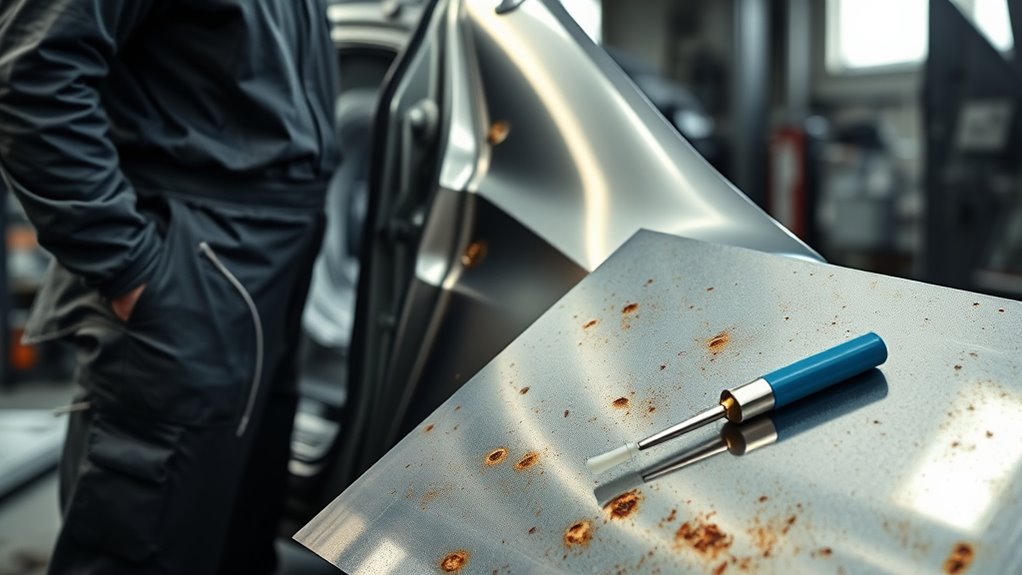
You shouldn’t use spot welding on plastic panels, composite panels, unsupported aluminum repairs, thick sheet metal, or unsuitable dissimilar metals. The process depends on compatible materials, controlled thickness, and firm electrode pressure.
When you choose it anyway, you risk poor weld quality, weak nuggets, panel damage, and failed repairs.
Keep these limits in mind:
- Aluminum panels can shed heat too fast for standard steel settings.
- Thick metal sheets can resist current until the joint won’t form correctly.
- Dissimilar metals can cool unevenly and create weak bonds.
- Dirt, oil, paint, or misalignment can turn a clean repair into a failed joint.
You need disciplined surface preparation before any spot welding job. Remove contaminants, align the panels precisely, and verify the material stack-up before you squeeze the electrodes.
Correct amperage is essential for achieving a solid weld.
If the parts don’t match the process, don’t force it. Choose a method that fits the metal, protects the structure, and gives you real control over the repair.
Spot Welding vs. MIG Plug Welding
Once spot welding is off the table, MIG plug welding is often the next repair method to evaluate. Spot welding uses electrical resistance and high current to join panels quickly, so it’s faster and cleaner than MIG plug welding in many approved panel repairs.
When spot welding isn’t an option, MIG plug welding is often the next repair method to consider.
MIG plug welding adds filler metal and usually needs more time per joint. It can still help when access, panel design, or the OEM procedure allows it.
If you’re working with thin steel substrates or approved high-strength steels, spot welding often gives you the strongest and most efficient result. In automotive manufacturing, that speed helps create reliable joints with limited heat spread.
TIG welding offers precise control over arc and heat input, which can make it useful for certain non-structural applications.
MIG plug welding still has value when you face thicker sections or areas where spot welder access is limited. Always confirm that the repair procedure accepts it before you use it.
You’ll need different inspection methods, too. Spot welding often relies on destructive peel tests to verify weld integrity, while MIG plug welds need visual checks and other approved tests.
Choose the process that matches the panel, the load, and the repair goal.
Note: MIG plug welding should copy the OEM-approved weld location and count when the procedure allows substitution.
Products Worth Considering

Package Including 10pcs x 0.035" Contact Tip, 2pcs x Gas Nozzle, 2pcs x Gas Diffuser.

Time-Saving MIG Welding Helper:Achieve precise spot welding in seconds without cutting or grinding. This kit delivers efficient, clean results, saving time and material costs. Perfect for professionals and DIY enthusiasts.

Gel eliminates erratic operation with a film that will not clog orifices and threads on MIG nozzles and contact tips
Follow OEM Welding Rules
OEM welding rules define the repair’s structural integrity and safety. When you do collision repair, follow the OEM spot welding specs for each automotive panel.
Most makers use spot welding because it matches factory assembly and supports consistent weld quality. Check the repair manuals for current levels, weld times, electrode type, and weld count.
These settings control heat, nugget size, and joint strength.
If you drift from the OEM range, you risk weak bonds, corrosion points, and failed inspections. Stay precise, and you keep the vehicle’s structure working as intended.
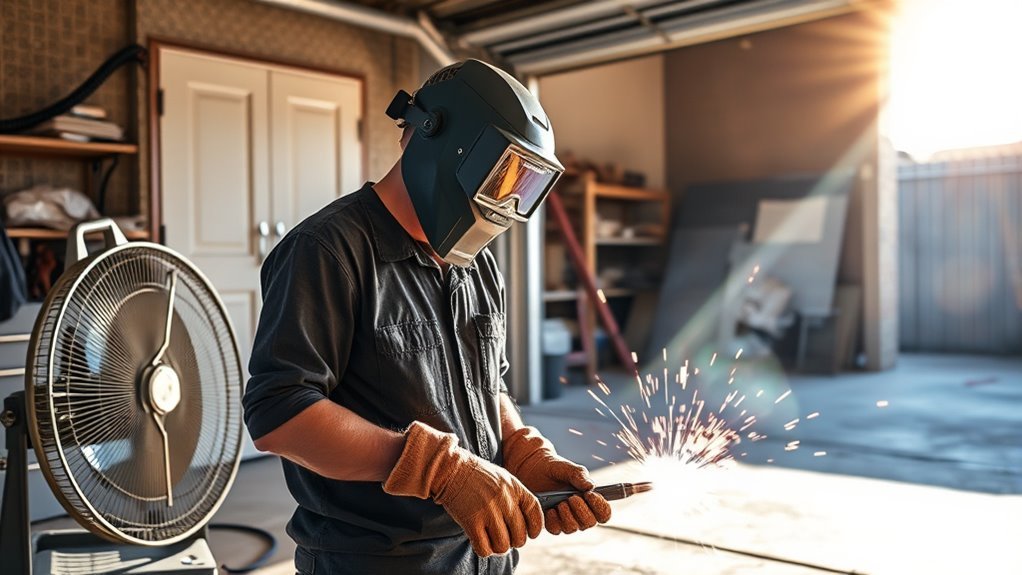
You also need proper ventilation because welding can create fumes, heat, and airborne contaminants.
- Clamp a clean steel flange tightly for spot welding.
- Check the OEM page for current levels and weld count.
- Use shaped, clean, and aligned electrodes on the panel.
- Inspect the finished seam for a factory-correct result.
For you, compliance isn’t red tape. It’s the path to reliable repairs, safer roads, and fewer claim delays.
Tools and Training for Spot Welding
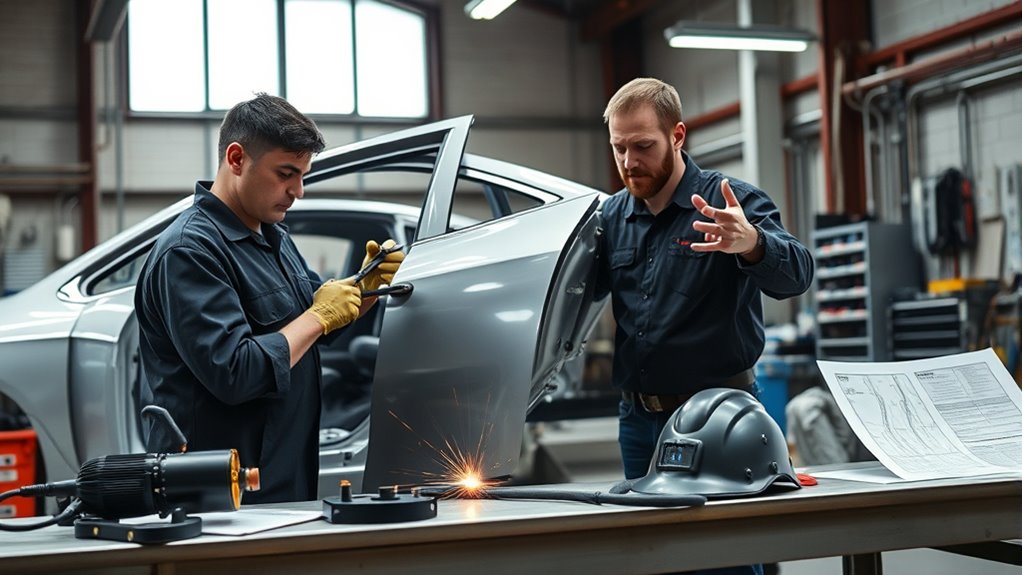
Spot welding calls for the right gear and the right training, because consistent panel bonding depends on both. You need specialized equipment, including high-current spot welders, transformers, and copper alloy electrodes.
In the automotive industry, you can’t guess settings. Follow each maker’s timing, pressure, and current specs.
Strong training helps technicians hit those parameters, adapt to different steels, and make manual adjustments when a repair manual demands it.
Keep your skills current with hands-on education, since materials and process rules can change. You also need disciplined maintenance: clean the electrodes, inspect the tips, and service the machine on schedule.
Proper personal protective equipment is essential for safety while performing spot welding tasks.
That routine protects weld quality, reduces inconsistency, and helps you stay in control of the job.
How to Check Spot Weld Quality
A solid weld can look simple, but you still need to verify it. To check spot welds, run a peel test when the OEM procedure or shop standard requires destructive testing.
During a peel test, you pull the metal sheets apart and inspect the nugget. The nugget should stay intact and show proper fusion.
Measure the nugget diameter against the OEM requirement or approved shop standard. Many weld checks use nugget size, appearance, and sheet separation behavior to judge reliable weld quality.
Then inspect the face and edges for even shape. Irregular marks can point to bad alignment, worn electrodes, or unstable heat settings.
Look closely for burn-through, splash, or warped panels. Those signs often point to poor electrode contact, too much heat, or bad fit-up.
Keep these checks tight:
- Feel for firm resistance during the peel test.
- Compare the nugget to OEM specs.
- Scan for uniform, clean marks.
- Review destructive test results before release.
In automotive applications, you protect every repair by rejecting weak welds early and keeping each joint safe. Proper gas flow matters in other welding methods, and gas flow rate can affect MIG weld quality.
Pro tip: Test welds on scrap panels with the same stack-up before welding the vehicle.
Frequently Asked Questions
What Is the Best Welding for Car Panels?
Spot welding is often the best choice for overlapping steel car panels when the OEM procedure calls for it. MIG plug welding, TIG welding, brazing, and other methods may fit certain repairs, but the vehicle maker’s procedure should guide your choice.
What Are the Disadvantages of Spot Welding?
Spot welding has limits with access, thickness, material compatibility, and equipment cost. It can also create weak welds when the panels are dirty, misaligned, coated, or clamped with the wrong pressure.
What Is the Golden Rule in Welding?
The golden rule is simple: match the process to the material, joint design, and repair requirement. For spot welding, clean metal, tight fit-up, correct pressure, and proper current matter most.
When Should You Use Spot Welding?
Use spot welding when panel thickness is thin, the joint uses overlap, and the OEM procedure requires or allows resistance spot welds. It works best when the tool can reach both sides and clamp the panels squarely.
Can You Spot Weld Over Paint or Rust?
You should not spot weld over paint, rust, oil, or heavy coatings. Clean the weld area first so the current flows through the metal and forms a strong nugget.
Safety Disclaimer: This article is for informational purposes only and does not replace OEM repair procedures, shop training, or professional judgment. Always follow the vehicle maker’s repair manual, use proper personal protective equipment, and get qualified training before welding structural car panels.
Conclusion
Spot welding is the right choice when the OEM calls for it, the metal stack-up matches the process, and you can reach both sides of the panel joint. It works fast, keeps heat controlled, and creates strong welds on the right materials.
Before you weld, confirm the material, clean the joint, check access, and set the machine to the approved procedure. Then test and inspect the welds before you release the repair.
When you choose the process with care, you protect the panel, the vehicle structure, and the people who depend on the repair.